We understand the ever changing needs of our customers

we provide a high level of service dedicated to fulfilling all your shipping requirements

Watch Video
Road Freight

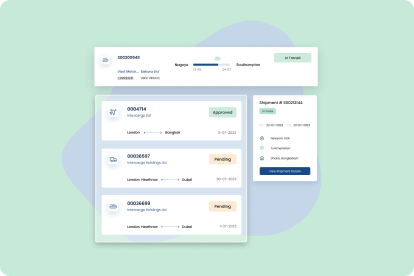
Keep all your data in one place which can be accessed from anywhere and anyplace

Let us help you 24/7 manage your supply chain needs

Back to Global Coverage

Zambia Freight Forwarding Services
Air & Sea Freight Between Zambia and the UK

Intercargo provides reliable freight forwarding services between Zambia and the United Kingdom, helping businesses import and export cargo efficiently by air and sea.

Whether you are importing goods from Zambia into the UK, exporting products from the UK to Zambia, or managing regular international shipments, our experienced freight forwarding team provides complete end-to-end logistics solutions. From collection and customs clearance to final delivery, we manage every stage of the shipment process.
Logistics solutions
Air Freight Zambia to UK
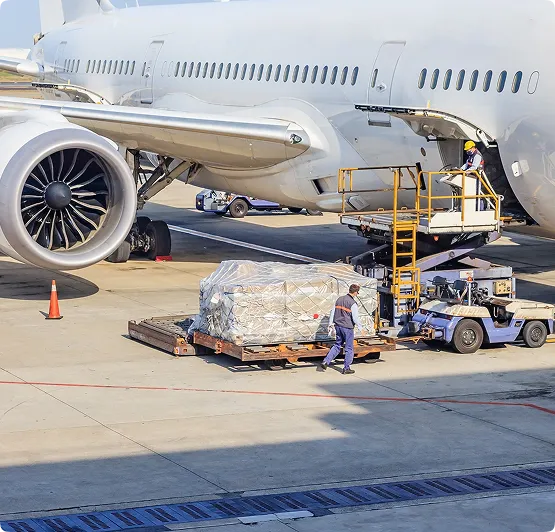
When speed matters, our Zambia air freight services provide fast, secure and reliable transportation between Zambia and the United Kingdom.
We arrange air freight through Kenneth Kaunda International Airport (Lusaka), Simon Mwansa Kapwepwe International Airport (Ndola), Harry Mwanga Nkumbula International Airport (Livingstone) and Mfuwe International Airport, with UK arrivals through London Heathrow, London Stansted, Manchester Airport, Birmingham Airport and East Midlands Airport.

Our air freight solutions include:

  • Air freight from Zambia to the UK
  • Express and economy air cargo
  • Door to door delivery
  • Time critical shipments
  • Air freight from the UK to Zambia
  • Airport to airport services
  • Customs clearance support
  • High value and commercial cargo

Whether you need urgent delivery of mining equipment, copper products, agricultural goods, pharmaceuticals, machinery, electronics or commercial cargo, our air freight specialists can provide the most efficient solution.
Logistics solutions
Sea Freight Zambia to UK
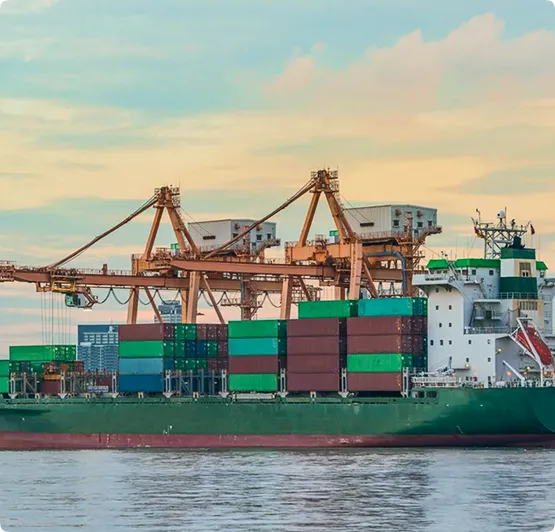
For larger shipments and cost effective transportation, our multimodal sea freight services provide dependable shipping solutions between Zambia and the UK.
As Zambia is a landlocked country, sea freight shipments are typically routed through regional ports including the Port of Dar es Salaam (Tanzania), Port of Durban (South Africa), Port of Beira (Mozambique) and Port of Walvis Bay (Namibia) before continuing by ocean freight to the United Kingdom. UK arrivals can be arranged through Port of Felixstowe, Southampton, London Gateway, Liverpool, Tilbury and Immingham.

Our sea freight services include:

  • Full Container Load (FCL)
  • Port to port shipping
  • Customs documentation
  • Project cargo
  • Less than Container Load (LCL)
  • Door to door logistics
  • Cargo insurance
  • Oversized and heavy-lift shipments

Whether shipping machinery, mining equipment, construction materials, industrial equipment, manufacturing products or commercial cargo, we can tailor a multimodal sea freight solution to suit your budget and transit requirements.
Logistics solutions
Import from Zambia to the UK
Intercargo helps UK businesses import products and cargo from Zambia through a fully managed freight forwarding service.

Our import services include:

  • Supplier coordination
  • Air and multimodal sea freight transportation
  • Duty and VAT guidance
  • Final delivery throughout the UK
  • Collection from Zambian mines, farms, factories, warehouses and commercial premises
  • UK customs clearance
  • Warehousing and distribution

We regularly support imports including:

  • Copper and copper products
  • Minerals and mining products
  • Agricultural products
  • Fresh fruit and vegetables
  • Tobacco
  • Textiles and leather goods
  • Manufacturing components

Our experienced team ensures your cargo moves efficiently from Zambia to the UK while remaining compliant with all customs and import requirements.
Logistics solutions
Export from the UK to Zambia
We also help UK businesses export goods to customers, distributors and partners throughout Zambia.
Whether shipping to Lusaka, Ndola, Kitwe, Livingstone, Kabwe, Chingola or other commercial and industrial locations across Zambia, our export specialists can arrange a seamless freight solution by air or multimodal transport.
Our export services include:

  • Air freight exports
  • Export documentation
  • Cargo insurance
  • Commercial and industrial shipments
  • Sea freight exports
  • Customs compliance
  • Door-to-door delivery

From single shipments to regular freight movements, we provide scalable logistics solutions designed around your business requirements.
Logistics solutions
Customs Clearance & Freight Forwarding
Successful international shipping depends on accurate customs documentation and compliance.

Intercargo provides:

  • Import customs clearance
  • Commodity code guidance
  • Duty and tax assistance
  • End-to-end shipment visibility
  • Export customs clearance
  • Shipping documentation
  • Freight forwarding management

Our experienced freight forwarding team helps minimise delays and keeps your cargo moving smoothly between Zambia and the United Kingdom.
Logistics solutions
Why Choose Intercargo for Zambia Freight?
We support importers, exporters, manufacturers, distributors, mining companies, agricultural businesses and industrial organisations moving cargo between Zambia and the UK.
Air Freight And Multimodal Sea Freight Specialists
Uk And Zambia Trade Lane Expertise
Import And Export Solutions
Customs Clearance Support
Door To Door Logistics
Dedicated Account Management
Global Carrier Network
Competitive Freight Rates
Get a Zambia Freight Quote

Looking for air freight from Zambia to the UK, multimodal sea freight from Zambia to the UK, or export services from the UK to Zambia?
Contact Intercargo today for a tailored freight forwarding quotation and expert advice on the most efficient shipping solution for your cargo.
Logistics solutions
Latest News & Updates

US forwarders call for action after Monday's flight disruption

The US Airforwarders Association (AfA) has called for action after a communication failure resulted in the grounding of flights in the northeast of the country on Monday. The AfA said the outage resulted in the cancellation or delay of around 7,000 flights and disrupted cargo operations. This highlighted the need for the US Federal Aviation Administration (FAA) to implement Government Accountability Office (GAO) recommendations to strengthen aviation communications resilience. "The FAA has identified serious threats to critical aviation systems, but this report makes clear that it has not completed the basic risk assessments or built the monitoring needed to address them," said AfA executive director Brandon Fried. "That is not good enough when the threats facing aviation are becoming more sophisticated, and the consequences of failure can spread across airports, airlines, freight networks, and the wider economy." The AfA said the GAO report identified significant gaps in the protection of aviation communications systems, that the FAA had not completed risk and mitigation assessments for identified spectrum-related threats, including spoofing and jamming, and lacked a defined capability to continuously monitor and detect such threats. The report was published on the same day that the communications equipment failures caused widespread disruption across the US northeast that saw the FAA issue ground stops affecting major airports including Philadelphia International, Newark Liberty International, John F. Kennedy International, and LaGuardia. This happened as world leaders arrived in New York for the United Nations General Assembly, the AfA pointed out. The three major New York airports affected by the outage handled more than 2.2m tons of cargo last year. "While Monday's disruption was not reported as a cyberattack, it showed how quickly problems with critical communications infrastructure can cascade across the aviation system," said Fried. "We cannot afford to wait for a malicious actor to exploit a weakness before treating resilience as an urgent priority." The GAO issued nine recommendations covering risk management, threat monitoring, information sharing, authentication, and data protection, all of which the Department of Transportation has agreed with, the AfA said. "The FAA now has a clear set of recommendations and no reason to wait; it must now close these gaps before they are exploited and invest in our ageing infrastructure," said Fried.

Source: aircargonews.net

Read more

Uber Freight bets on European 4PL services, as distinction with 3PL blurs

Uber Freight is stepping up investment in its European 4PL business, despite acknowledging that shippers increasingly care less about whether their logistics provider is labelled a 3PL or 4PL. The company yesterday announced plans to expand its European fourth-party logistics operation, investing in technology, operations, and staff, and adding a second location, with a new control tower and operations hub in Krakow to open next year. It has also appointed Mike Doucleff as head of Europe, affective 28 September. Uber Freight said the number of new 4PL deals it won in Europe doubled last year, and it sees further opportunities among North American customers looking to reduce the number of logistics partners they use globally. The investment comes as Uber Freight's wider business has returned to top-line growth, although it remains loss-making. Freight revenue jumped 25% year on year, to $1.58bn, in the second quarter, while the division reported a $24m operating loss. But it remains committed to the European expansion. Uber Freight is investing further resources to managed transportation and 4PL, while its overall freight division is still working towards sustainable profitability. Its first 4PL engagement, designed to span North America and Europe, is with chemicals manufacturer OXEA, covering transportation in the US, Canada, Mexico, and Europe. Uber Freight's European 4PL operation was inherited through its acquisition of Transplace, and is separate from the European freight brokerage business it sold in 2020. However, the expansion comes amid an increasingly blurred distinction between the traditional roles of 3PLs and 4PLs - something the company itself acknowledges. "We're seeing the lines blur," a spokesperson told The Loadstar. "Customers don't necessarily think about their problems as '3PL' or '4PL' - they're looking for partners that can solve more of their transportation needs and help them manage increasingly complex networks." Indeed, 30% of Uber Freight customers now use two or more of its services, up from 24% last year, while more than 80% of its large managed transportation customers have also used its capacity solutions. "The label matters less to the customer than the outcome," the spokesperson added. It marks an interesting tension in Uber Freight's strategy: its European expansion is being explicitly marketed as growth of its 4PL business, while its wider proposition increasingly combines elements traditionally associated with both 3PL and 4PL services. Just a week before announcing the European expansion, Uber Freight began promoting Gartner research entitled 3PL & 4PL: How to Combine for the Best Logistics Outsourcing Model, which, rather than presenting 3PL and 4PL as an either/or decision, examines how shippers can combine the two outsourcing models as their supply chains become more complex. That commercial blurring can, however, create legal and contractual questions. Matthew Gore, partner at law firm HFW, said there was already considerable confusion over the nature and scope of 3PL and 4PL roles. "Broadly, 3PL means acting as carrier/principal, and 4PL is acting as control tower/agent," he explained. "What also gets confusing is when the same LSP provides both services, particularly if this is done under the same contract, and with the same legal entity - flagging the neutrality/ethical walls issues we see." Mr Gore said 4PL remained predominantly the preserve of larger shippers with high volumes and complex supply chains, and these companies often retained responsibility for deciding which 3PLs received particular volumes, leaving the 4PL to manage those allocations. He also noted a wider trend towards shippers seeking to bundle logistics services, and LSPs offering them, under the same contracts. Uber Freight stressed that it did not currently operate a freight brokerage business in Europe, and that carrier and capacity decisions made through its European 4PL operation were based on customer requirements, including service, cost, performance, and network needs. But the picture is more complicated for global customers. Some European 4PL customers may also use Uber Freight brokerage or other transport services in North America. The company said customers were not required to use its own capacity as part of a 4PL relationship, and that it had "operational firewalls" to govern how sensitive customer information was accessed and used. That question could become increasingly pertinent as Uber Freight seeks to sell more services to the same customers - particularly given that more than 80% of its large managed transportation customers already also use its capacity solutions. The company's European investment is, in part, predicated on that: extending relationships with North American customers into Europe, while offering them the prospect of managing more of their global transportation through fewer logistics partners.

Source: theloadstar.com

Read more

Leading European cargo airport Istanbul adds another runway

Fast-growing Istanbul Airport has added a fourth main runway as part of its phase-two expansion. The concrete runway, designated 09/27, was opened on 18 September and is aligned east-west, the first runway at the airport with this configuration, and has a length of 2,820m (9,250ft), reports FlightGlobal. Istanbul airport's operator describes the new facility as the "fourth main runway", stating that it previously had three main and two auxiliary runways. This configuration enabled the Turkish hub to implement triple-independent parallel runway operations last year. "Addition of the fourth main runway to the system will further increase [Istanbul airport's] operational capacity, efficiency and flexibility," said airport operator iGA. It puts the investment in the runway at €890m and said it will reduce holding and taxi times for domestic services and eastbound flights. "We've worked with all our efforts to achieve the goal of establishing a leading global transfer hub in Istanbul," says the airport operator's chair, Cemal Kalyoncu. The additional runway comes shortly after the airport became Europe's busiest cargo hub after picking up extra volumes as a result of the Iran War. Figures from Airports Council International (ACI) Europe show that the Turkish airport saw first-half cargo volumes increase 10.8% year on year to just over 1m tonnes. The increase comes as the airport has been one of the prime beneficiaries of cargo volumes diverting away from the Middle East hubs, instead transiting through alternative airports. Indeed, the airport's key carrier, Turkish Airlines, saw its own cargo volumes increase by 11.3%, while cargo revenues rose by 58% to nearly $1.3bn. Meanwhile, Frankfurt Airport, which has in recent years been the busiest airport on the continent, slipped to second place as its volumes grew by the lower amount of 1.3% year on year to 980,731. Airport operator Fraport said that performance had been affected by restrained economic growth in the Eurozone, a six-day strike in April at Lufthansa, and the grounding of Lufthansa Cargo's Airbus A321 freighters. Additional reporting by Damian Brett, Air Cargo News.

Source: aircargonews.net

Read more

Privacy Preference Center

This website uses cookies and similar technologies, (hereafter “technologies”), which enable us, for example, to determine how frequently our internet pages are visited, the number of visitors, to configure our offers for maximum convenience and efficiency and to support our marketing efforts. These technologies incorporate data transfers to third-party providers based in countries without an adequate level of data protection (e. g. United States). For further information, including the processing of data by third-party providers and the possibility of revoking your consent at any time, please see your settings under “Consent Preferences” and our


Privacy Notice


Privacy Preference Center

Strickly Necessary Cookies
Always Active

Performance Cookies

Functional Cookies

Targeting Cookies