We understand the ever changing needs of our customers

we provide a high level of service dedicated to fulfilling all your shipping requirements

Watch Video
Road Freight

Keep all your data in one place which can be accessed from anywhere and anyplace

Let us help you 24/7 manage your supply chain needs

Back to Global Coverage

Oman Freight Forwarding Services
Air & Sea Freight Between Oman and the UK

Intercargo provides reliable freight forwarding services between Oman and the United Kingdom, helping businesses import and export cargo efficiently by air and sea.

Whether you are importing goods from Oman into the UK, exporting products from the UK to Oman, or managing regular international shipments, our experienced freight forwarding team provides complete end-to-end logistics solutions. From collection and customs clearance to final delivery, we manage every stage of the shipment process.
Logistics solutions
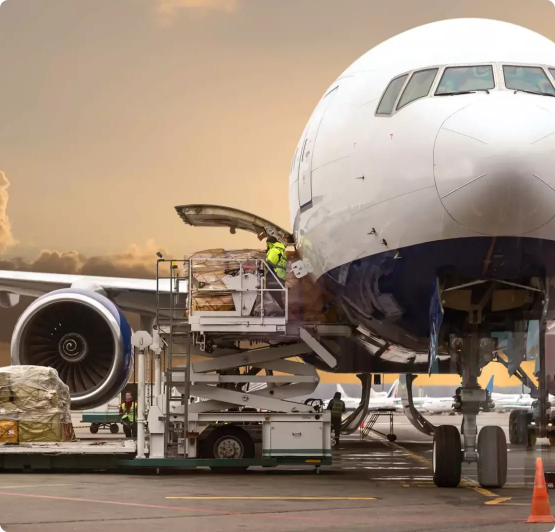
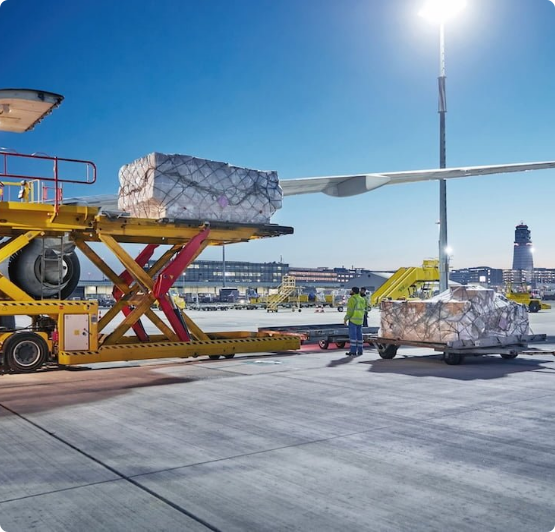
Air Freight Oman to UK
When speed matters, our Oman air freight services provide fast, secure and reliable transportation between Oman and the United Kingdom.
We arrange air freight through Muscat International Airport (MCT) and Salalah International Airport (SLL), with UK arrivals through London Heathrow, London Stansted, Manchester Airport, Birmingham Airport and East Midlands Airport.
Our air freight solutions include:

  • Air freight from Oman to the UK
  • Express and economy air cargo
  • Door to door delivery
  • Time critical shipments
  • Air freight from the UK to Oman
  • Airport to airport services
  • Customs clearance support
  • High value and commercial cargo

Whether you need urgent delivery of industrial equipment, automotive parts, electronics, retail stock or commercial goods, our air freight specialists can provide the most efficient solution.
Logistics solutions
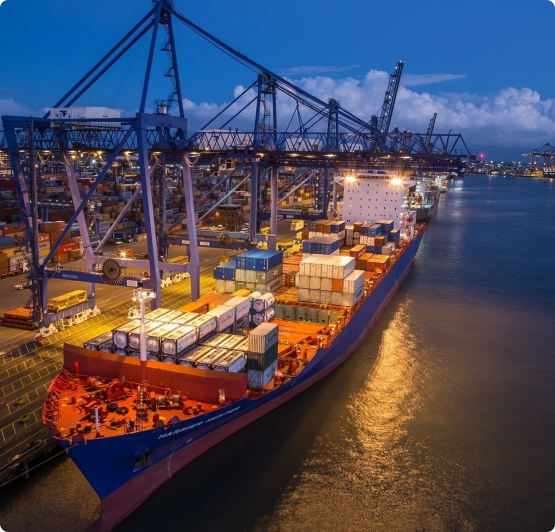
Sea Freight Oman to UK
For larger shipments and cost-effective transportation, our sea freight services provide dependable shipping solutions between Oman and the UK.
We regularly arrange cargo movements through Port of Sohar, Port of Salalah and Port of Duqm, with UK arrivals through Port of Felixstowe, Southampton, London Gateway, Liverpool, Tilbury and Immingham.
Our sea freight services include:

  • Full Container Load (FCL)
  • Port to port shipping
  • Customs documentation
  • Project cargo
  • Less than Container Load (LCL)
  • Door to door logistics
  • Cargo insurance
  • Oversized and heavy lift shipments

Whether shipping machinery, construction materials, industrial equipment, manufacturing equipment or commercial goods, we can tailor a sea freight solution to suit your budget and transit requirements.
Logistics solutions
Import from Oman to the UK
Intercargo helps UK businesses import products and cargo from Oman through a fully managed freight forwarding service.
Our import services include:

  • Supplier coordination
  • Air and sea freight transportation
  • Duty and VAT guidance
  • Final delivery throughout the UK
  • Collection from Omani factories, warehouses and commercial premises
  • UK customs clearance
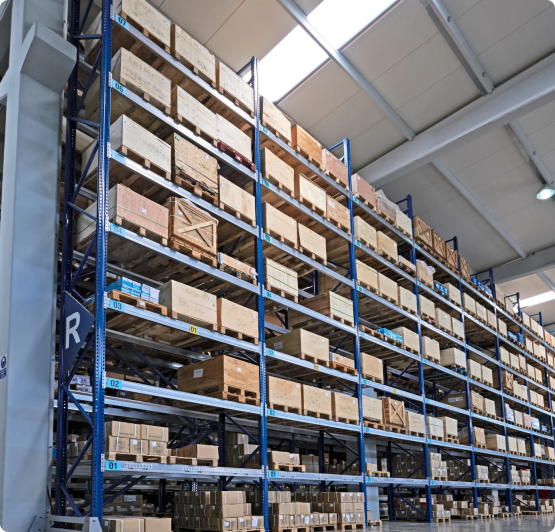
  • Warehousing and distribution

We regularly support imports including:

  • Petrochemical products
  • Machinery
  • Commercial goods
  • Plastics and polymers
  • Aluminium products
  • Industrial equipment
  • Manufacturing components
Our experienced team ensures your cargo moves efficiently from Oman to the UK while remaining compliant with all customs and import requirements.
Logistics solutions
Export from the UK to Oman
We also help UK businesses export goods to customers, distributors and partners throughout Oman.
Whether shipping to Muscat, Sohar, Salalah, Nizwa, Sur, Duqm or other commercial and industrial locations across Oman, our export specialists can arrange a seamless freight solution by air or sea.
Our export services include:

  • Air freight exports
  • Export documentation
  • Cargo insurance
  • Commercial and industrial shipments
  • Sea freight exports
  • Customs compliance
  • Door-to-door delivery

From single shipments to regular freight movements, we provide scalable logistics solutions designed around your business requirements.
Logistics solutions
Customs Clearance & Freight Forwarding
Successful international shipping depends on accurate customs documentation and compliance.
Intercargo provides:

  • Import customs clearance
  • Commodity code guidance
  • Duty and tax assistance
  • End-to-end shipment visibility
  • Export customs clearance
  • Shipping documentation
  • Freight forwarding management

Our experienced freight forwarding team helps minimise delays and keeps your cargo moving smoothly between Oman and the United Kingdom.
Logistics solutions
Why Choose Intercargo for Oman Freight?
We support importers, exporters, manufacturers, distributors, retailers, construction companies and e-commerce businesses moving cargo between Oman and the UK.
Air Freight And Sea Freight Specialists
Uk And Oman Trade Lane Expertise
Import And Export Solutions
Customs Clearance Support
Door To Door Logistics
Dedicated Account Management
Global Carrier Network
Competitive Freight Rates
Get an Oman Freight Quote

Looking for air freight from Oman to the UK, sea freight from Oman to the UK, or export services from the UK to Oman?
Contact Intercargo today for a tailored freight forwarding quotation and expert advice on the most efficient shipping solution for your cargo.
Logistics solutions
Latest News & Updates

Carriers' November rate hikes 'doomed' say analysts, as demand goes flat

Container spot freight rates on the transpacific eastbound trade, as recorded by Drewry, saw its steepest one-week fall since June 2025 after this year's protracted peak season came to an end. Drewry's World Container Index (WCI) saw the spot rate on its Shanghai-Los Angeles decline 6% week on week, to end at $7,514 per 40ft, while the Shanghai-New York route was down 5%, to $9,631 per 40ft. "Strong US import demand is easing," Drewry noted. "According to the US National Retail Federation, US ocean import volumes are forecast to decrease 11% month on month in November, which could put further downward pressure on freight rates," it added. However, in a sign that the market is in a state of flux, US forwarders reported a "stable" week, rather than one characterised by falling prices. "Pricing carried over from last week, while space availability improved and vessel schedules became more consistent," explained US west coast forwarder Freight Right. "As the traditional pre-holiday ocean shipping peak fully closes out, pricing has settled into a steady holding pattern across both coasts." However, it added that, with demand weakening and the remaining urgent pre-holiday shipments now transferring to air freight, the chances of the new general rate increase (GRI), scheduled for Sunday (1 November) - ranging from $2,000 to $3,000 per 40ft depending on carrier - sticking, were diminishing. "China-to-US ocean rates are expected to remain broadly stable through the first half of November, with the possibility of modest declines. Improving space availability and more consistent schedules suggest limited near-term upward pressure on pricing," said Freight Right. The WCI on the Asia-Europe was essentially flat this week, as the surprising spot rate strength in October continued. The WCI's Shanghai-Rotterdam leg was up 1%, to $3,686 per 40ft, while Shanghai-Genoa route was held steady, at $4,151 per 40ft, although this masked some discounting by carriers keen to fill ships amid weak demand, and despite new FAK (freight all kinds) levels due to be implemented on Sunday. These will see MSC target a spot rate of $4,500 per 40ft on Asia-North Europe, $5,000 on Asia-west Mediterranean and $5,100 on Asia-east Mediterranean, while CMA CGM is aiming for $4,900 on Asia-west Mediterranean and $5,200 on Asia-east Mediterranean ports. However, Linerlytica this week noted: "Asia-North Europe rates remain under pressure, with carriers undermining their 1 November rate hike efforts with persistent discounts. "Gemini carriers are offering the lowest rates in the spot market for early November shipments, with Hapag-Lloyd at $3,000-$3,200 per 40ft and Maersk at $3,200-$3,400 per 40ft. "Their rivals at MSC, the Ocean Alliance, and Premier Alliance have reacted by lowering their rate offers to $3,400 to $3,500 per 40ft. The 1 November rate hike is effectively doomed," it added. Meanwhile, with the Asia-Europe contract tendering season now in full swing, carriers are trying to push up spot rates that act as a guide for annual rate negotiations, and yesterday announced another set of FAK increases for 15 November, with MSC upping its Asia-North Europe spot rate to $4,600, and to $5,300 per 40ft on West Mediterranean destinations, and CMA CGM aiming for $5,500 per 40ft on Asia-west Med shipments. According to Drewry's Container Capacity Insight, four blanked sailings have been announced for next week, down from eight this week, as the analysts also doubted success for the new FAK levels. "Given available capacity and weak demand, it remains uncertain whether these increases will hold. Hence, Drewry expects rates to remain stable next week," it said.

Source: theloadstar.com

Read more

Ocean disruption offers no easy windfall for airfreight, warns DSV

Disruption to ocean shipping is not triggering a large-scale switch to airfreight - the cost of emergency lift is keeping most shippers at sea, according to DSV. Speaking at TIACA's Air Cargo Forum in Miami last week, head of global airfreight Achim Martinka said such decisions depended on whether the business impact of a delay justified paying the airfreight premium. "Most of the customers still stay on the seafreight side because they are not used to having shipments on time anyway," he said. "If you have two or three weeks' delay, this is a normal thing. And if you would switch to airfreight, it could be up to 20 times more expensive. So this is really a very tough financial decision to take." Conversion volumes remained limited, he said and added: "The conversion to air is still not in huge numbers. It's still on a lower level, from what we see." But shippers that wait too long before seeking an alternative risk are finding any available airfreight capacity has become prohibitively expensive. "Usually, our contracts are already signed for six or 12 months with the airlines. So everything which comes on a spontaneous, ad hoc basis will be even more expensive than the base load already on the aircraft," Mr Martinka explained. Where the duration of a disruption was uncertain, he said, shippers needed to begin arranging an airfreight solution. "Otherwise, you're going to be the last one, and then capacity is not affordable anymore." The competition to secure lift is also evident at Atlas Air, where Martin Drew, chief strategy and transformation officer, told The Loadstar forwarders and shippers increasingly wanted the certainty of dedicated capacity. "The contract durations we have are very lengthy, because forwarders, in particular, and shippers want that capacity locked-in," he said. "It helps from a planning perspective, knowing they've got that capacity, especially in an environment where supply is constrained." Atlas itself has demand for dedicated aircraft it cannot currently accommodate. Mr Drew said: "We've got a pipeline today of business that is tens of aircraft, and we can't service that demand." However, finding space is only one obstacle to switching modes. Mr Martinka warned that ocean shipments required new documentation and operational preparation, including checks on dangerous goods, aircraft dimensions, and how cargo would need to be rebuilt for flight. The practical difficulties were illustrated by Emir Pineda, director of air service development at Miami-Dade Aviation Department, who described an attempt to establish a sea-air movement of Honduran okra to the UK via Miami and Amsterdam. "We were able to get a permit from USDA to transport perishable product from Central America via ship to Miami, then take it from Miami, without opening it, to the airport and then put it on an airplane and fly it to Europe. Sounds pretty simplistic, but it was actually quite complicated. "It got to Miami: two containers - that's a lot of cargo for one airplane. "We had to find the capacity on a freighter, because it had to go all in one shipment [and the] capacity had to be available on the day the ship was arriving, because you only had two days to move it. Those were the conditions USDA set. "We also had to maintain the cool chain throughout the logistics supply chain, because it had to keep a certain temperature. "Once it got to Amsterdam, refrigerated trucks trucked it over to the UK. In the end, it worked. One time. "Why only one time? Because of the complexity behind that. You had to get a shipper to agree to get it on the ship to Miami, and then you had to find the capacity on a consistent basis to move 60 tonnes for several weeks. "What do you tell that customer when the season's over? 'Could you bring back the freight?'," asked Mr Pineda."That doesn't work for forwarders; they want consistency. They want capacity availability when they need it." Mr Martinka said most shippers had developed some form of emergency plan since Covid, but he was not seeing a regular shift of ocean volumes into airfreight simply to maintain a contingency route. "It is certainly a part of a resilience plan, which perhaps needs to be tested from time to time," he said. Forwarders and airlines had, nevertheless, become faster at adapting their networks to disruption, he added. DSV's ACMI capacity allowed it to change destinations when customers needed alternatives. "We have our own network, so we can decide every day with our ACMI flights where to fly. We can switch immediately if that's needed for the customer. "The good thing in air cargo is that airfreight is like water: it's going to find its way."

Source: theloadstar.com

Read more

A platform to challenge 'death by a thousand [D&D] invoices'

For smaller drayage businesses, even small bills can threaten their survival, while the cost of hiring lawyers or dedicating staff to lengthy complaints processes often makes fighting individual invoices uneconomical. She has designed Provar, which approaches its first anniversary in December, a platform to address that imbalance by collecting and preserving the evidence needed to challenge improper charges. It documents terminal conditions, appointment availability, and empty-return restrictions, preserving evidence to establish whether operators had a reasonable opportunity to collect or return containers during periods in question. Provar covers terminals in Los Angeles, Long Beach, Oakland, and Seattle. Users submit their active containers, allowing the platform to automatically identify the relevant terminal and compile the supporting evidence. A dispute function helps users easily prepare formal fee challenges by combining invoices, dispute reasons, and supporting documentation into a downloadable PDF letter for submission to the shipping line. The platform also incorporates digital integrity verification to help establish that the underlying evidence has not been altered, addressing concerns about the reliability of evidence submitted in disputes. Ms Dandan said the aim was to make challenging charges viable for businesses of every size, rather than leaving operators to absorb costs because the administrative burden outweighed the invoice. "Whether you're a humongous trucker with thousands of containers, or whether you only have a dozen, it's still the same principle," she said. "It empowers them to do more and do it more effectively." However, she warned that shipping lines' evidentiary requirements were becoming "increasingly demanding", with some requiring documentation of empty-return restrictions extending beyond the date of the disputed charge. FourOneOne has introduced a 'plus one' feature to document those conditions in advance. Ultimately, Ms Dandan believes that making disputes quicker, cheaper, and better supported by objective evidence could also change behaviour among shipping lines.

Source: theloadstar.com

Read more

Privacy Preference Center

This website uses cookies and similar technologies, (hereafter “technologies”), which enable us, for example, to determine how frequently our internet pages are visited, the number of visitors, to configure our offers for maximum convenience and efficiency and to support our marketing efforts. These technologies incorporate data transfers to third-party providers based in countries without an adequate level of data protection (e. g. United States). For further information, including the processing of data by third-party providers and the possibility of revoking your consent at any time, please see your settings under “Consent Preferences” and our Privacy Notice.


Manage Consent Preferences
Strictly Necessary Cookies
Always Active

Performance Cookies

Functional Cookies

Targeting Cookies