We understand the ever changing needs of our customers

we provide a high level of service dedicated to fulfilling all your shipping requirements

Watch Video
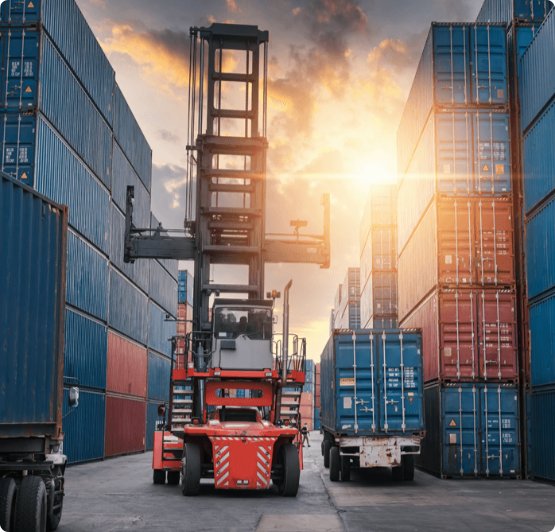
Road Freight

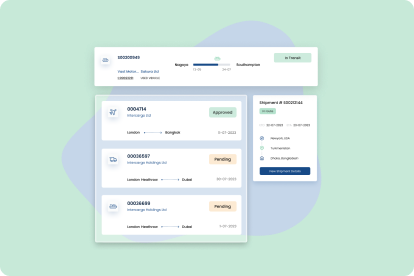
Keep all your data in one place which can be accessed from anywhere and anyplace

Let us help you 24/7 manage your supply chain needs

Back to Global Coverage

Hong Kong Freight Forwarding Services
Air & Sea Freight Between Hong Kong and the UK

Intercargo provides reliable freight forwarding services between Hong Kong and the United Kingdom, helping businesses import and export cargo efficiently by air and sea.

Whether you are importing goods from Hong Kong into the UK, exporting products from the UK to Hong Kong, or managing regular international shipments, our experienced freight forwarding team provides complete end-to-end logistics solutions. From collection and customs clearance to final delivery, we manage every stage of the shipment process.
Logistics solutions
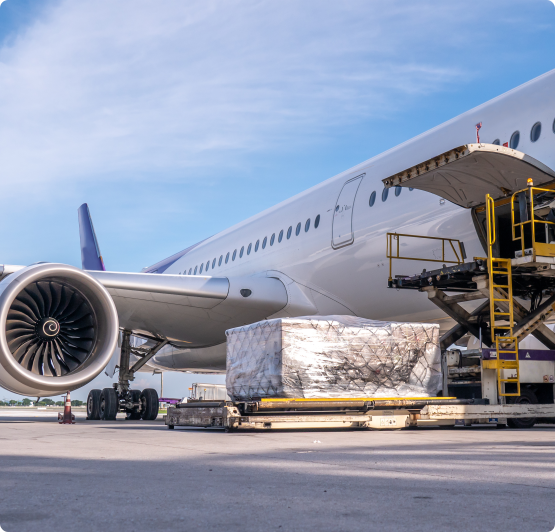
Air Freight Hong Kong to UK
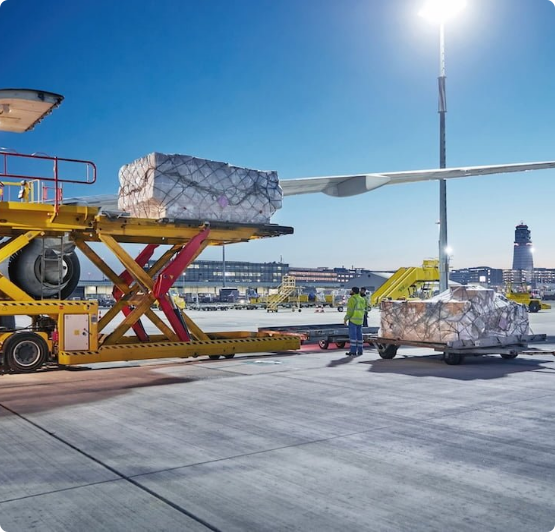
When speed matters, our Hong Kong air freight services provide fast, secure and reliable transportation between Hong Kong and the United Kingdom.
We arrange air freight through Hong Kong Changi Airport (SIN), with UK arrivals through London Heathrow, London Stansted, Manchester Airport, Birmingham Airport and East Midlands Airport.
Our air freight solutions include:

  • Air freight from Hong Kong to the UK
  • Express and economy air cargo
  • Door to door delivery
  • Time critical shipments
  • Air freight from the UK to Hong Kong
  • Airport to airport services
  • Customs clearance support
  • High value and commercial cargo

Whether you need urgent delivery of electronics, pharmaceuticals, industrial equipment, retail stock or commercial goods, our air freight specialists can provide the most efficient solution.
Logistics solutions
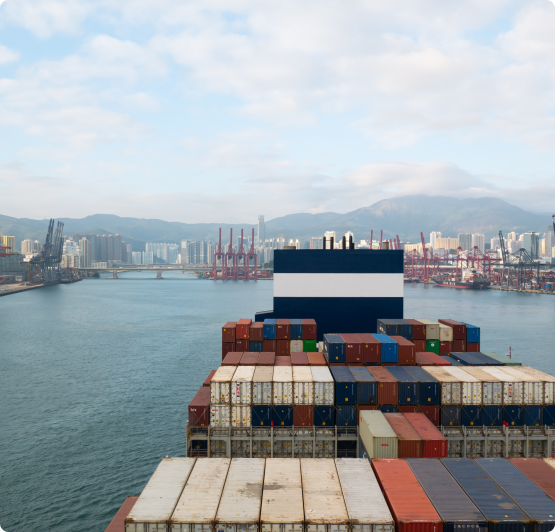
Sea Freight Hong Kong to UK
For larger shipments and cost-effective transportation, our sea freight services provide dependable shipping solutions between Hong Kong and the UK.
We regularly arrange cargo movements through the Port of Hong Kong, one of the world's busiest container ports, with UK arrivals through Port of Felixstowe, Southampton, London Gateway, Liverpool, Tilbury and Birmingham.
Our sea freight solutions include:

  • Full Container Load (FCL)
  • Port to port shipping
  • Customs documentation
  • Project cargo
  • Less than Container Load (LCL)
  • Door to door logistics
  • Cargo insurance
  • Oversized and heavy lift shipments

Whether shipping machinery, electronics, commercial products, manufacturing equipment or retail stock, we can tailor a sea freight solution to suit your budget and transit requirements.
Logistics solutions
Import from Hong Kong to the UK
Intercargo helps UK businesses import products and cargo from Hong Kong through a fully managed freight forwarding service.
Our import services include:

  • Supplier coordination
  • Air and sea freight transportation
  • Duty and VAT guidance
  • Final delivery throughout the UK
  • Collection from Hong Kong factories, warehouses and commercial premises
  • UK customs clearance
  • Warehousing and distribution

We regularly support imports including:

  • Electronics and semiconductors
  • Medical devices
  • Manufacturing components
  • Industrial equipment
  • Consumer goods
  • Machinery
  • Food and beverage products
Our experienced team ensures your cargo moves efficiently from Hong Kong to the UK while remaining compliant with all customs and import requirements.
Logistics solutions
Export from the UK to Hong Kong
We also help UK businesses export goods to customers, distributors and partners throughout Hong Kong.
Whether shipping to Hong Kong's commercial and industrial districts, our export specialists can arrange a seamless freight solution by air or sea.
Our export services include:

  • Air freight exports
  • Export documentation
  • Cargo insurance
  • Commercial and industrial shipments
  • Sea freight exports
  • Customs compliance
  • Door-to-door delivery

From single shipments to regular freight movements, we provide scalable logistics solutions designed around your business requirements.
Logistics solutions
Customs Clearance & Freight Forwarding
Successful international shipping depends on accurate customs documentation and compliance.
Intercargo provides:

  • Import customs clearance
  • Commodity code guidance
  • Duty and tax assistance
  • End-to-end shipment visibility
  • Export customs clearance
  • Shipping documentation
  • Freight forwarding management

Our experienced freight forwarding team helps minimise delays and keeps your cargo moving smoothly between Hong Kong and the United Kingdom.
Logistics solutions
Why Choose Intercargo for Hong Kong Freight?
We support importers, exporters, manufacturers, distributors, retailers and e-commerce businesses moving cargo between Hong Kong and the UK.
Air Freight And Sea Freight Specialists
Uk And Hong Kong Trade Lane Expertise
Import And Export Solutions
Customs Clearance Support
Door To Door Logistics
Dedicated Account Management
Global Carrier Network
Competitive Freight Rates
Get a Hong Kong Freight Quote

Looking for air freight from Hong Kong to the UK, sea freight from Hong Kong to the UK, or export services from the UK to Hong Kong? Contact Intercargo today for a tailored freight forwarding quotation and expert advice on the most efficient shipping solution for your cargo.
Logistics solutions
Latest News & Updates

Post-peak spot rates tumble as ocean carriers eye price increases

China's Golden Week holiday appears to have marked the end of the protracted transpacific peak season, as container freight spot rates out of Asia to the US declined this week. According to Drewry's World Container Index (WCI), the spot rate on its Shanghai-Los Angeles route declined 3% week on week, to finish at $7,624 per 40ft, while the Shanghai-New York leg was down 2%, to $10,220 per 40ft. US west coast forwarder Freight Right said the market had, basically, been static over the past week due to the holiday in China. Meanwhile, spot rates on the Asia-Europe routes fell for the 13th consecutive week as contracting season gets under way, potentially putting shippers and their forwarders in a stronger negotiating position than they have seen this year. "For European shippers, tender season is in full force, and falling short-term rates are a welcome development as they negotiate long-term contracts, because they also benchmark against the short-term market," said Peter Sand, Xeneta's chief analyst. "Demand has been very strong all year, not least into Europe, but it could not keep growing at double-digits indefinitely. "As demand eases from a very high level, the fight for capacity eases too, and even freight forwarders are now getting better deals from carriers in long-term contract negotiations," he added. According to this week's XSI by Xeneta, the Far East-North Europe spot rate fell 2.5% on the previous week, to end at $3,645 per 40ft, while the XSI's Far East-Mediterranean route was down 5.9% week on week, to end at $4,007 per 40ft. "Spot rates on the Far East to Europe trades have fallen heavily since the post-Hormuz crisis peak in July. The Mediterranean is taking the biggest hit, down 43% since 1 July, while North Europe is down 34%," explained Mr Sand. In comparison, the WCI's Shanghai-Rotterdam route fell 2%, to $3,337 per 40ft, while the Shanghai-Genoa leg was essentially flat, at $3,696 per 40ft. The next two-to-three weeks will likely determine the course of pricing for the remainder of the year, with carriers attempting to reverse the declines by seeking higher FAK rates in the second half of October. "However, the successful implementation of these increases remains uncertain - the faster-than-expected return to the Suez route remains the biggest threat to carrier efforts to support rates," Drewry noted. Mr Sand added: "The pace of the decline has eased a little, but rates are still elevated and the trend is still downward, so we are not at the floor yet." Speaking on an Asia-Europe webinar hosted by the Journal of Commerce yesterday, Drewry Supply Chain Advisors' head of advisory, Chantal McRoberts, agreed that early signs from shippers now running tenders were that rates could fall further. "We think they will soften, in terms of what we're seeing right now - shippers that have opened up competitive tenders are seeing a variety of different strategies. "We're seeing some better rates than this time last year last year," she added, but warned that price increases could come through surcharges rather than base rate levels. "It's the surcharges that are causing the biggest consternation - we're seeing inflated fuel prices appear; we're seeing some inflated pre-peak season surcharges coming in, so it's really important that shippers put up guardrails around contract rates. "There is scope to save some cost, but it will depend on the market, the risks, and the framework of whether it's the right time to go to bid, or whether it's better to try and extend. "And it's also whether the providers are also open to that, which is really important in terms of forwarders because they also have a role in setting the market expectation on rates as well," Ms McRoberts said.

Source: theloadstar.com

Read more

AI shippers still looking for capacity risk sharp airfreight peak squeeze

AI infrastructure shippers, still seeking peak-season capacity, could push air freight rates sharply higher, as demand for servers, chips, and data centre equipment adds pressure to an already firm market. According to TAC Index, sources have reported that ecommerce customers and other major shippers with product launches had secured peak-capacity, while some AI hyperscalers had yet to book their space. The warning comes despite a Golden Week dip in TAC's global Baltic Air Freight Index, which fell 2.1% in the seven days to 12 October, leaving it 24.3% above a year earlier. China's holiday ended on 7 October. While overall rates from China to Europe and the US softened over the week, nearly all TAC's spot rates out of Hong Kong, Shanghai, and Korea rose, with increases particularly evident in recent days. New analysis of US imports underlines the scale of technology-related demand. Supply chain professor Jason Miller's seasonal adjustment of Census Bureau trade data showed August air freight imports by weight reaching another record, up 20% year on year, and 42% above the 2023 average. Computer parts, including GPUs, contributed an additional 12,932 tonnes, compared with August last year, while prepared unrecorded media, including memory, added 11,111 tonnes. Electrical power equipment and insulated wire and cables were also among the leading contributors. Mr Miller said these categories pointed to the "disproportionate role" of investment in the physical infrastructure supporting AI computing in generating freight demand. His findings concern US air imports, but forwarder Forto also identified a broad shift towards technology in its third-quarter market analysis. Semiconductors, AI hardware, servers, and data centre infrastructure were the principal growth drivers, it said, while ecommerce had declined in relative importance. And the changing demand picture is also influencing how forwarders secure capacity. Speaking at an industry event in Liège last month, DSV's global head of airfreight, Stefan Krikken, said forwarders needed to balance firm capacity commitments with more flexible airline bookings and their own flying programmes, taking account of hyperscaler demand and constraints at cargo gateways. Hyperscaler demand was among the factors shaping those decisions, alongside the ability of gateways to accommodate the cargo. Morrison Express has also identified growing hyperscaler production in South-east Asia, and exceptionally high Taiwanese volumes as factors prompting a reassessment of its gateways. However, stronger demand and higher rates may offer carriers less financial relief than the headline figures suggest. TAC reported that jet fuel prices rose a further 3.1% in the week to 9 October, citing IATA's Jet Fuel Price Monitor, taking the year-on-year increase to 111.2%. And in his latest JTD Advisory briefing, founder David Kerr warned that fuel costs were rising faster than freight rates, putting pressure on operating margins. He expects fuel surcharge resets in the second half of October, and identified four-engine freighters as the aircraft most likely to face pressure to reprice, or be parked. Published surcharges already illustrate the pressure on shipping costs. Cathay Cargo's Hong Kong-origin long-haul fuel surcharge rose almost 26%, from HK$11.20 to HK$14.10 (US$1.42-$1.79) per kg, for the first half of October. DHL Air UK's equivalent charge increased 4.1% week on week, to HK$12.80 per kg for 12-18 October, although it remained below its late-September level. Japan Airlines will raise its fuel surcharge on domestic exports bound for the Americas and Europe from ¥185 ($1.16) to ¥192 per kg on 16 October, an increase of 3.8%. Its medium-haul and short-haul Asian surcharges will rise by around 4%. The impact on individual operators will depend on their fuel exposure and ability to recover costs, but the combination adds another pricing risk for shippers seeking remaining peak-season space. For those AI customers still to secure capacity, the question is how much room remains, and what it will cost.

Source: theloadstar.com

Read more

Coaching adds mileage to air cargo careers

Career coaching is a valuable but sometimes overlooked tool to craft professional development and performance in the workplace, say the coaching partners for the Air Cargo News Awards' Young Airfreight Professional of the Year winner. Recruitment and retention of air cargo professionals is an ongoing industry topic but coaching and how it can nurture talent is frequently underestimated and undervalued. Sadiya Khan, founder & managing director at SHK Solutions and Ariaen Zimmerman, who founded and leads neAira Executive Performance, are both passionate about helping people fulfil their career potential through coaching. This extends to young people at the start of their career as well as more seasoned professionals. In fact, the 2026 Air Cargo News Awards will mark the third time that the winner of the Young Airfreight Professional Award has been offered a personal coaching package from Khan and Zimmerman, who are experts in executive coaching within the air cargo and logistics industry. This category was introduced to the Awards in 2024 to recognise dynamic young individuals helping to shape the future of airfreight. Khan and Zimmerman partnered to donate four months of executive performance coaching delivered over six sessions to award winner Anna Balan, head of Awery Aviation Software's CargoBooking portal, as well as a highly discounted introductory team coaching session for Awery. Zimmerman explains that neAira Executive Performance already had a coaching relationship with Awery and so he had previously worked with Balan. "For us, it was a case of more or less continuing working with her." In comparison, working with 2025's Young Airfreight winner, Ekaterina Andreeva, head of business development - cargo at Chapman Freeborn, was a new experience for both Khan and Zimmerman. Like Balan, Andreeva also benefited from six coaching sessions, plus a prize of £500, while Chapman Freeborn was also offered a team coaching session, although this did not take place. Value of coaching Due to the confidential nature of coaching, Khan and Zimmerman cannot disclose the details of the coaching they have undertaken with the Young Airfreight Award winners, but Khan says this also means "you can have necessary conversations that you can't have anywhere else". And for coaching to work, there needs to be honesty between coaches and clients. Career coaching offers a one-on-one opportunity to discuss individual career goals and challenges, and develops a bespoke career development plan or goal(s) outside the confines of standard job-linked performance objectives. Coaching can be especially helpful when changing careers, taking on a leadership role, starting a business, or navigating other significant life changes. Having independent coaches who work within the air cargo sector lends both an objective and informed perspective to career coaching. Coaching is immensely useful to help people tackle the highs and lows of the air cargo market, not just situations where capacity is plentiful and rates are low and jobs are potentially at risk, but the pressure that different stakeholders put on each other to maintain and build market share, stress Khan and Zimmerman. Constantly juggling demand, capacity, and rates is a constant pressure and "there's a high stress factor", says Zimmerman. Another challenge can be balancing frequent international travel with an individual's personal life and, in the case of more senior positions, relocating. Understanding the specific needs of the coachee is key, and both coaches attest to adaptability and agility being the key to a successful working relationship. The tailored approach extends to all techniques of coaching as well as aspects of planning and delivery. "It is very bespoke. You have to tailor and adjust your approach and be quite agile, according to the coachee in front of you," stresses Zimmerman. "That's how the best coaching happens." Different techniques are also determined by how far along someone is in their career. Younger coachees are generally at an earlier stage of their career, while older people are usually at a more advanced stage. "People younger in their career, very generally speaking, are more likely to be wondering who they are and looking for what they want, and when they're further down their career, they've found their path and what they want to do and are more looking for how they can make the best of their career," reflects Zimmerman. More than training Khan explains that while regular workplace training is based on an agenda, coaching is individualised. "You need to lean into the dialogue to read between the lines of what the coachee is saying. "You've got to adapt on the fly according to what you are hearing, and what you are not hearing. "Sometimes there is an underlying theme that the coach picks up that indicates what the fears of the person are, or the struggles and challenges they are facing. "And sometimes that's where the gold is because the coachee is saying one thing, but you notice a pattern to those words and realise what's happening under the surface. "So, for me, the coaching space is very much about responding in that moment according to what you are listening to, so that the person can really see what's going on in their own minds." But, Khan adds, the job of a coach is not to provide the solutions to issues, but rather to enable the coachee to do this themselves. "The idea isn't to solve their problem," she says. "It's about helping them to see their problem clearly, and asking those powerful questions at the right moment, so that they can find the solutions that are going to make sense to them. "The solutions are inside them already. They just need a little bit of help to find it. And that's okay, because when you come up with the answer for yourself, you're going to own that and go away and do something about it. Zimmerman also agrees that coaching is distinct from training. "Training is putting the necessary stuff in. Coaching is getting the best out," he stresses. "We cannot know what that best is if we don't listen and ask the right questions to our clients." "Some clients already have a particular problem they want to address, or challenge in mind," he explains. Others are more coaching-curious, or they're not sure what they want to focus on and in this instance, it helps to get to know the client, find out how they see themselves developing and what direction they want to go in. A coach may ask a coachee to do a personality test as a starting point to establish what issues the client recognises, how they feel about it/them, how it influences their day-to-day working life and what they want to do about it. Though Zimmerman emphasises that individuals shouldn't be defined by these tests, he says: "From there on, we find out what they want and then we start working on that." Echoing Khan's mindset, he adds: "That is such a bespoke process, and we provide the questions, because the best answers that people will get, they will find within themselves. "If they find their own answer, the chances of them living that life is so much more infinite than when I tell them. "So yes, bespoke is the only way to go for coaching in my perspective." Recontracting for results Clients will take the lead on determining factors of the coaching, like how many objectives there are and the pace of the sessions. "In general, the coachee is the master of their life, and they will know best what their focus should be. So as a coach, we are there to provide accountability," says Zimmerman. "You agree with your coach to do something, and then the coach will remind you that's what you agree to." However, an important part of coaching progression involves reframing the focus of the sessions, something the coaches call "recontracting". Zimmerman explains that because the coachee is not always aware of what they want to achieve straight away, there is a tendency to change the direction of the coaching partway through, sometimes multiple times. "When you enter into a coaching process, a lot of it is about finding out what you want, and then when you start working on that, there may be a moment that you realise, okay, but to get there, there could be a need to look at something completely different than expected. "That's called re-contracting and is quite common in the coaching process. After three sessions or so, we ask our clients whether they think we are still addressing their challenges and whether the challenges they see are still those identified at the beginning." Fuelling development While it is important to understand the coaching process, awareness of the potential professional development and performance benefits is of course essential to grasping the real value of coaching. One of the core benefits of coaching is greater self-awareness. Through exploring the answers to questions and feedback from coaches, those receiving coaching can gain insight into their career strengths and weaknesses, habits, blind spots, and decision-making patterns. This clarity on strengths and weaknesses also helps challenge assumptions about ability. Coaching also helps coachees understand what direction they'd like to take their career in and establish a solid plan for carrying this out. The coachee is supported in choosing and defining goals, identifying obstacles to these goals and working out how to prioritise them. Regular reviews of measurable goals with a coach provide accountability and make it more likely the coachee will follow through on commitments and maintain momentum. Overall, coaching can help establish a solid pathway for better long-term decision-making, improve leadership, communication and time management skills, as well as improve conflict resolution, resilience and work performance under pressure. These benefits also apply to team coaching, alongside better collaboration and collective performance. More recognition needed The main message the coaching partners aim to get across is that coaching holds a huge amount of value for individuals. Zimmerman believes there isn't enough recognition of the role that coaching in the workplace plays in the context of recruitment and retention. For example, the cost of hiring can be 30-40% of the first year's annual salary, he points out. "The risks that you run as a company hiring new employees are tremendous. One of the ways to reduce that risk is making sure that whoever you hire is embedded in an environment where they can get feedback and support." Zimmerman asserts that coaching shouldn't be seen as an unusual luxury when it comes to becoming more successful in your career as there is a clear link to performance. "I think that if you are a young, eager professional and you are ambitious, or at least you want to be, and you have a need to achieve, then making the case for coaching is relatively easy. "There is no professional sports player out there that I know of that is successful without having at least some personal coaching and a team around them. "Even if you're just running on a Saturday as an amateur, you'll have a coach." "I think increasingly managers and potential leaders realise that it's quite weird if it's your job to be successful in a company and you're doing it all by yourself." With all the value that it offers, coaching should become more common in the industry, believes Zimmerman. "I think there's a lot of potential market out there. But I don't think there's enough understanding and appreciation of coaching." Views from 2025's winner For last year's young airfreight winner, Ekaterina Andreeva, head of business development at Chapman Freeborn, coaching was an experience that she had already been considering. "I planned to have some career coaching in the next three to five years, so it was very helpful indeed." Andreeva told Air Cargo News that she didn't have any preconceptions about what the coaching process would be like, but her overall experience has been positive. "I did not know what to expect, but I was pleasantly surprised." Summarising the overall coaching experience, she says: "The coaches helped me assess my current professional situation and we explored potential scenarios for the future. We also reviewed some internal blockers and challenges. I think everything went well." One challenge that did crop up concerned how to think about future career development without the certainty of knowing what will happen in the future. "It is quite hard to make assumptions for the future, so it was probably the hardest part," Andreeva reflects. Overall, she says she would "definitely" recommend coaching to another airfreight professional. To find out more about coaching contact: Sadiya Khan Founder and Managing Director, SHK Solutions enquiry@shksolutions.co.uk https://www.shksolutions.co.uk Ariaen Zimmerman Founder and Leader, neAira Executive Performance info@neaira.ch https://www.neaira.ch/

Source: aircargonews.net

Read more

Privacy Preference Center

This website uses cookies and similar technologies, (hereafter “technologies”), which enable us, for example, to determine how frequently our internet pages are visited, the number of visitors, to configure our offers for maximum convenience and efficiency and to support our marketing efforts. These technologies incorporate data transfers to third-party providers based in countries without an adequate level of data protection (e. g. United States). For further information, including the processing of data by third-party providers and the possibility of revoking your consent at any time, please see your settings under “Consent Preferences” and our Privacy Notice.


Manage Consent Preferences
Strictly Necessary Cookies
Always Active

Performance Cookies

Functional Cookies

Targeting Cookies