We understand the ever changing needs of our customers

we provide a high level of service dedicated to fulfilling all your shipping requirements

Watch Video
Road Freight

Keep all your data in one place which can be accessed from anywhere and anyplace

Let us help you 24/7 manage your supply chain needs

Back to Global Coverage

Yemen Freight Forwarding Services
Restricted Air and Sea Freight Between Yemen and the UK

Intercargo provides restricted freight forwarding services between Yemen and the United Kingdom, helping businesses import and export cargo by restricted air and sea freight with careful route planning, carrier screening, customs support, and prior approval checks.

Whether you are importing goods from Yemen into the UK, exporting products from the UK to Yemen, or managing international shipments, our freight forwarding team helps plan air freight with careful route planning, carrier screening, customs support, and prior approval checks. We coordinate airport to airport and door to door services, but carrier availability, route limitations, port access, and prior shipment approval requirements can affect lead times and service availability. Please note that security restrictions, carrier availability, route limitations, port access, and prior shipment approval requirements may apply to certain shipments involving Yemen.
Restricted Air Freight Yemen to UK
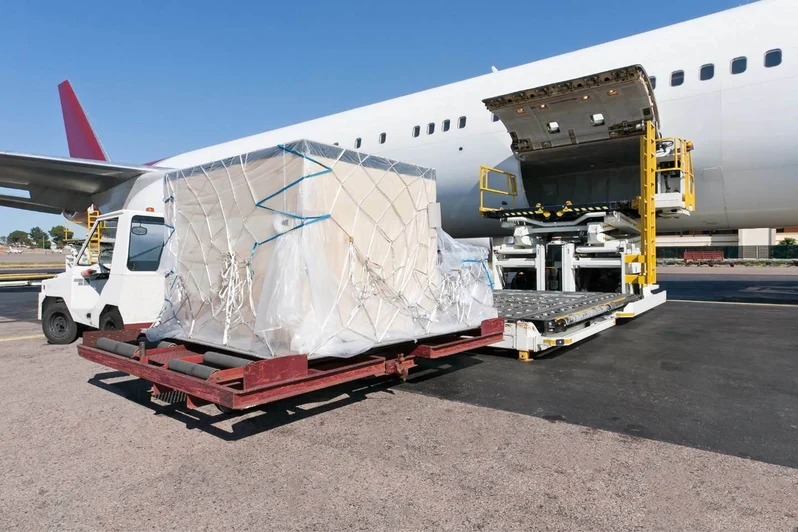
When speed matters, our Yemen air freight services provide fast, secure and reliable transportation between Yemen and the United Kingdom.
We arrange air freight via regional hubs such as Dubai, Jeddah, or Cairo, with onward connections to the UK through London Heathrow, London Stansted, London Luton, Manchester Airport and Birmingham Airport. Carrier availability, route limitations, port access, and prior shipment approval requirements can affect lead times and service availability. Security restrictions, carrier screening, and customs support are essential for shipments involving Yemen.
Our air freight solutions include:

  • Air freight from Yemen to the UK
  • Express and economy air cargo
  • Door to door delivery
  • Time critical shipments
  • Air freight from the UK to Yemen
  • Airport to airport services
  • Customs clearance support
  • High value and commercial cargo

Whether you need urgent delivery of textiles, automotive parts, tobacco products, iron and steel, food products, electronics or commercial goods, our air freight specialists can help plan the most efficient solution for your shipment, subject to carrier availability, route limitations, port access, and prior shipment approval requirements.
Logistics solutions
Restricted Sea Freight Yemen to UK
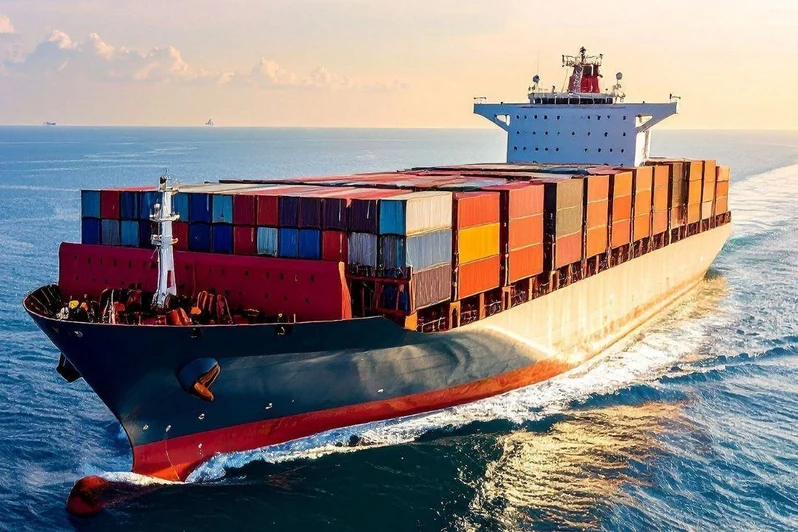
For larger volumes, our restricted sea freight services provide shipping solutions between Yemen and the UK, subject to port access, carrier availability, route limitations, and prior shipment approval requirements.
Sea freight from Yemen may involve transshipment via regional ports such as Jeddah, Dubai, or Jebel Ali, with onward connections to the UK through Felixstowe, Southampton, or other major ports. Security restrictions, carrier screening, customs support, and prior approval checks are essential for shipments involving Yemen.

Our restricted sea freight services include:

  • FCL and LCL sea freight
  • Port to port and door to door options
  • Duty and tax guidance
  • Carrier screening and route planning
  • Transshipment via regional ports
  • Customs clearance support
  • Prior shipment approval checks
  • End to end shipment visibility

Whether shipping textiles, automotive components, iron and steel products, tobacco, agricultural produce, food products, electronics or commercial goods, our restricted sea freight specialists can help plan the most efficient solution for your shipment, subject to carrier availability, route limitations, port access, and prior shipment approval requirements.
Logistics solutions
Import from Yemen to the UK
Intercargo helps UK businesses import products and cargo from Yemen through a fully managed freight forwarding service, subject to carrier availability, route limitations, port access, and prior shipment approval requirements.
Our import services include:

  • Supplier coordination
  • Air and sea freight transportation
  • Duty and VAT guidance
  • Final delivery throughout the UK
  • Collection from Yemeni factories, warehouses and commercial premises
  • UK customs clearance
  • Warehousing and distribution

We regularly support imports including:

  • Textiles and clothing
  • Tobacco and tobacco products
  • Agricultural and food products
  • Wine and beverages
  • Machinery and mechanical equipment
  • Iron, steel and metal products
  • Automotive parts and components
Our experienced team ensures your cargo moves efficiently from Yemen to the UK while remaining compliant with all customs and import requirements, subject to carrier availability, route limitations, port access, and prior shipment approval requirements.
Logistics solutions
Export from the UK to Yemen
We also help UK businesses export goods to customers, distributors and partners throughout Yemen.
Whether shipping to Sana'a, Aden, Hudaydah or other destinations, our export specialists can arrange freight solutions by restricted air or sea freight, subject to security restrictions, carrier availability, route and port limitations, and prior shipment approval requirements.
Our export services include:

  • Air freight exports
  • Export documentation
  • Cargo insurance
  • Commercial and industrial shipments
  • Sea freight exports
  • Customs compliance
  • Door to door delivery

From single shipments to regular freight movements, we provide scalable logistics solutions designed around your business requirements, subject to carrier availability, route limitations, port access, and prior shipment approval requirements.
Logistics solutions
Customs Clearance & Yemen Freight Forwarding
Successful international shipping between Yemen and the UK depends on accurate customs documentation, compliance, carrier screening, and prior approval checks.
Intercargo provides:

  • Import customs clearance
  • Commodity code guidance
  • Duty and tax assistance
  • End to end shipment visibility
  • Export customs clearance
  • Shipping documentation
  • Freight forwarding management

Our experienced freight forwarding team helps minimise delays and keeps your cargo moving smoothly between Yemen and the United Kingdom, in full compliance with all applicable regulations.
Logistics solutions
Why Choose Intercargo for Yemen Freight?
We support importers, exporters, manufacturers, distributors, retailers and e commerce businesses moving cargo between Yemen and the UK, with careful route planning, carrier screening, customs support, and prior approval checks.
Restricted Air And Sea Freight Specialists
Uk And Yemen Trade Lane Expertise
Import And Export Sea Freight Solutions
Customs Clearance Support
Door To Door Logistics
Dedicated Account Management
Global Carrier Network
Competitive Freight Rates
Get a Yemen Freight Quote

Looking for restricted air freight from Yemen to the UK, restricted sea freight from Yemen to the UK, or export services from the UK to Yemen?
Contact Intercargo today for a tailored freight forwarding quotation and expert advice on the most efficient shipping solution for your cargo, including carrier availability, route limitations, port access, and prior shipment approval requirements.
Logistics solutions
Latest News & Updates

Hyundai Glovis eyes more third-party airfreight with new Incheon hub

Hyundai Motor's logistics arm, Hyundai Glovis, has unveiled plans to broaden its third-party customer base as it goes all out to expand into air freight. At the opening of its dedicated logistics centre in Incheon International Airport on Tuesday, Glovis said it saw opportunities from rising ecommerce volumes and demand for high value-added cargo transport. Primarily an operator of car-carrier vessels, Glovis is expanding its third-party customer base through its air freight business. It transports APR's cosmetics and SM Entertainment's albums to North America and Europe, and provides air express services to Japan for major South Korean beauty brands. A spokesperson said: "Our vision is to expand services that integrate land, sea, and air transportation, tailored to the specific characteristics and transportation objectives of customers' cargo." Global air cargo demand rose 3.4% year on year in 2025 to a record high, according to IATA. The AI boom this year is expected to add to the growth, with more demand to transport servers and microchips. Construction of a five-storey, 44,420 sq metre logistics facility - around 3km from the Incheon Airport Cargo Terminal - began in 2023, and by 2 November, Glovis had announced it had received Customs approval to handle express imports. The first floor handles imports and can process over a million shipments a month. Four high-speed X-ray machines inspect 5,000 shipments an hour and transmit scanned information to Incheon Airport Customs in real time. The third and fourth levels are responsible for export logistics for cross-border ecommerce sales to overseas consumers, mainly cosmetics, health supplements, and entertainment-related products. It sorts cargo by country, region, and delivery company using 20 sorting conveyors. Glovis plans to expand the scope of its logistics services by adding the warehousing, sorting, and packing capabilities to its air forwarding expertise.

Source: theloadstar.com

Read more

Container spot rates set to rise as carriers launch peak season surcharges

Container spot freight rates on the Asia-Mediterranean trade were the only deepsea route prices that gained this week, as Transpacific and Asia-Europe rates further diverged. According to this week's World Container Index (WCI) by Drewry, its spot rate for Shanghai-Genoa saw an 8% week-on-week increase, to end at $4,802 per 40ft, while Shanghai-Rotterdam was unchanged for a second week. at $3,485 per 40ft. Meanwhile, next week could see a renewed hike in Asia-Europe spot rates, with carriers clearly shaping up to push for higher short-term prices for December with a series of peak season surcharges (PSS) scheduled to be applied on 1 December. Justified on the basis of an early Chinese New Year in 2027, both CMA CGM and Hapag-Lloyd have set a PSS of $1,000 per 40ft on Asia-North Europe shipments. Hapag-Lloyd also introducing a $1,500 per 40ft PSS on Asia-Mediterranean bookings on the same day. These are expected to be supported by further surcharges and new FAK levels introduced by other carriers next month. Maersk has set a PSS of $1,500 per 40ft for Asia-North Europe and $2,000 per 40ft to the Mediterranean, both for implementation on 14 December. On the same day, MSC will revise its FAK pricing on the two routes - rising from $4,600 to $5,600 per 40ft on Asia-North Europe, and a much more aggressive $7,500 per 40ft on Asia-Mediterranean shipments, currently $5,300 per 40ft, following its 15 November FAK notice. Xeneta chief analyst Peter Sand said the price hikes were beginning to filter into the platform's short-term rate outlook. "Early Xeneta data indicates average spot rates to Mediterranean will increase a further 10% to 15% at the start of December, having already increased 27% since 14 October. "An uptick is also expected into North Europe," he added. While next week's rate increases are set to be accompanied by a higher degree of blanked sailings - Drewry's Container Capacity Insight records seven - three Asia-North Europe and four Asia-Mediterranean - for next week, compared with four that took place this week, three Asia-North Europe and one Asia- Mediterranean. The forecast December rate increases will coincide with predictions that capacity next month could be among the highest on record. "Rates for the last week of November range from $2,700 to $3,200 per 40ft, against last week's SCFI [Shanghai International Freight Index] assessment at $3,356 per 40ft, with capacity pressure building and December sailings expected to reach a new record high," Linerlytica noted this week. The analyst's forward-looking capacity projections are for a monthly average of 400,000 teu capacity a week in December, up from around 350,000 teu a week this month. According to Xeneta data, current capacity into North Europe is 4.9% higher than a month ago, and up 6.7% to the Mediterranean. With yesterday's Thanksgiving holiday bringing a quiet week on the Transpacific trade, rates on the WCI's Shanghai-Los Angeles route fell 8% week on week, to end at $6,437 per 40ft, while its Shanghai-New York leg was down 7%, to $7,615 per 40ft. "The upward trend into Europe contrasts with fronthauls into the US, where early Xeneta data indicates further spot rate declines at the start of December," Mr Sand said. "Average spot rates have already fallen 12% into US east coast and 7.6% into US west coast since 14 October. "The most recent Xeneta data paints a rosier picture for US shippers, but a wider market perspective changes the situation dramatically: despite the softening in October and November, average spot rates to US west coast remain up 310%, compared with pre-Hormuz crisis levels on 28 February. Into the US east coast, average spot rates are up 283%. "From the Far East to Mediterranean and North Europe, the recent increases mean average spot rates are up a much smaller 54% and 53% respectively, compared with pre-Hormuz crisis levels," he added.

Source: theloadstar.com

Read more

Cargo owners will foot the bill for IMO net-zero framework, warns FMC chair

Maritime decarbonisation costs will ultimately be passed on to cargo owners under the present structuring of the proposed IMO Net-Zero Framework, according to the Federal Maritime Commission's (FMC) chair Laura Di Bella. With industry leaders backing her assessment, Ms Di Bella said the competitive nature of shipping would see additional compliance expenses eventually fed through to cargo owners, with ongoing regulatory uncertainty already forcing costs up. When asked precisely how much of the IMO Framework's estimated cost - which could be anywhere from $50bn-$260bn - would be passed on to shippers, Ms Di Bella told The Loadstar, "a very large percentage of it". "Shippers are hit with so many pass-through expenses. We're constantly looking at all of the ways to tamp down any sort of inflationary measures, be it fuel surcharges or any surcharges, but what makes us think that this isn't going to be treated the same way?" she explained. Managing director of OceanScore Albrecht Grell agreed that the financial burden would ultimately be shouldered by cargo owners, arguing that shipping companies would seek to recover additional expenses through their commercial arrangements. "Shipping is highly competitive - any cost will eventually be passed on to the cargo owners," Mr Grell told The Loadstar, before warning that the redistribution of costs will not affect all shipping companies equally. He said those able to adapt more effectively to the changing regulatory and operational environment would be able to pass on a higher share of their compliance expenses, adding "the profit pool will not change but be redistributed within the industry". Similarly, zero44 co-founder and managing director Friederike Hesse told The Loadstar uncertainty surrounding the regulatory framework is itself creating additional costs for the industry, as companies factor potential risks into their commercial decisions. "Uncertainty is a cost too, companies price in risk premiums, put their eggs in multiple baskets instead of focusing investments, add contractual buffers and spend more on legal and administrative work, and that ends up in freight rates," Ms Hesse said. She added that this financial burden is then distributed through charter contracts, with responsibility depending on which party controls the operational decisions affecting fuel consumption and emissions. "Whoever controls speed, route and fuel consumption pays for the emissions. Under time charters that is usually the charterer; under voyage charters it is priced into the freight. Cargo owners and consumers pay their share through rates and surcharges." Reiterating that the cost of transitioning could be anywhere between $50bn-$260bn, Ms Di Bella said there were clear questions as to whether the infrastructure required for it had been properly accounted for in discussions surrounding the framework. Pointing to an infrastructure study commissioned by the IMO in April, which Ms Di Bella said has not yet been completed, she called for clearer understanding of the investment required before moving ahead. "There is no infrastructure to support many of these alternative fuels. LNG is probably the closest that we have. So, we need to know what is it going to cost to get there? And then we work backwards." But Ms Hesse warned delaying emissions reductions would not cut decarbonisation's eventual costs and could make the transition more expensive by leaving companies with less time to prepare through investment in vessels, fuels and infrastructure. "Postponing cuts now does not make them disappear, it means much steeper targets later, at a point when companies will not have had time to prepare through early investment in ships, fuels and infrastructure," she added.

Source: theloadstar.com

Read more

Privacy Preference Center

This website uses cookies and similar technologies, (hereafter “technologies”), which enable us, for example, to determine how frequently our internet pages are visited, the number of visitors, to configure our offers for maximum convenience and efficiency and to support our marketing efforts. These technologies incorporate data transfers to third-party providers based in countries without an adequate level of data protection (e. g. United States). For further information, including the processing of data by third-party providers and the possibility of revoking your consent at any time, please see your settings under “Consent Preferences” and our Privacy Notice.


Manage Consent Preferences
Strictly Necessary Cookies
Always Active

Performance Cookies

Functional Cookies

Targeting Cookies