We understand the ever changing needs of our customers

we provide a high level of service dedicated to fulfilling all your shipping requirements

Watch Video
Road Freight

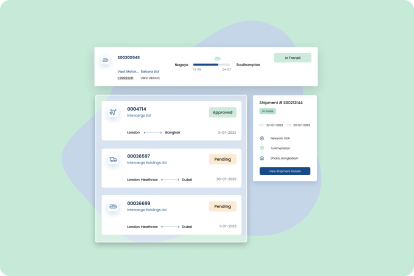
Keep all your data in one place which can be accessed from anywhere and anyplace

Let us help you 24/7 manage your supply chain needs

Back to Global Coverage

Vatican City Freight Forwarding Services
Air & Road Freight Between Vatican City and the UK

Intercargo provides reliable freight forwarding services between Vatican City and the United Kingdom, helping businesses import and export cargo efficiently by air and road.

Whether you are importing goods from Vatican City into the UK, exporting products from the UK to Vatican City, or managing regular international shipments, our experienced freight forwarding team provides complete end to end logistics solutions. From collection and customs clearance to final delivery by road, we manage every stage of the shipment process.
Air Freight Vatican City to UK
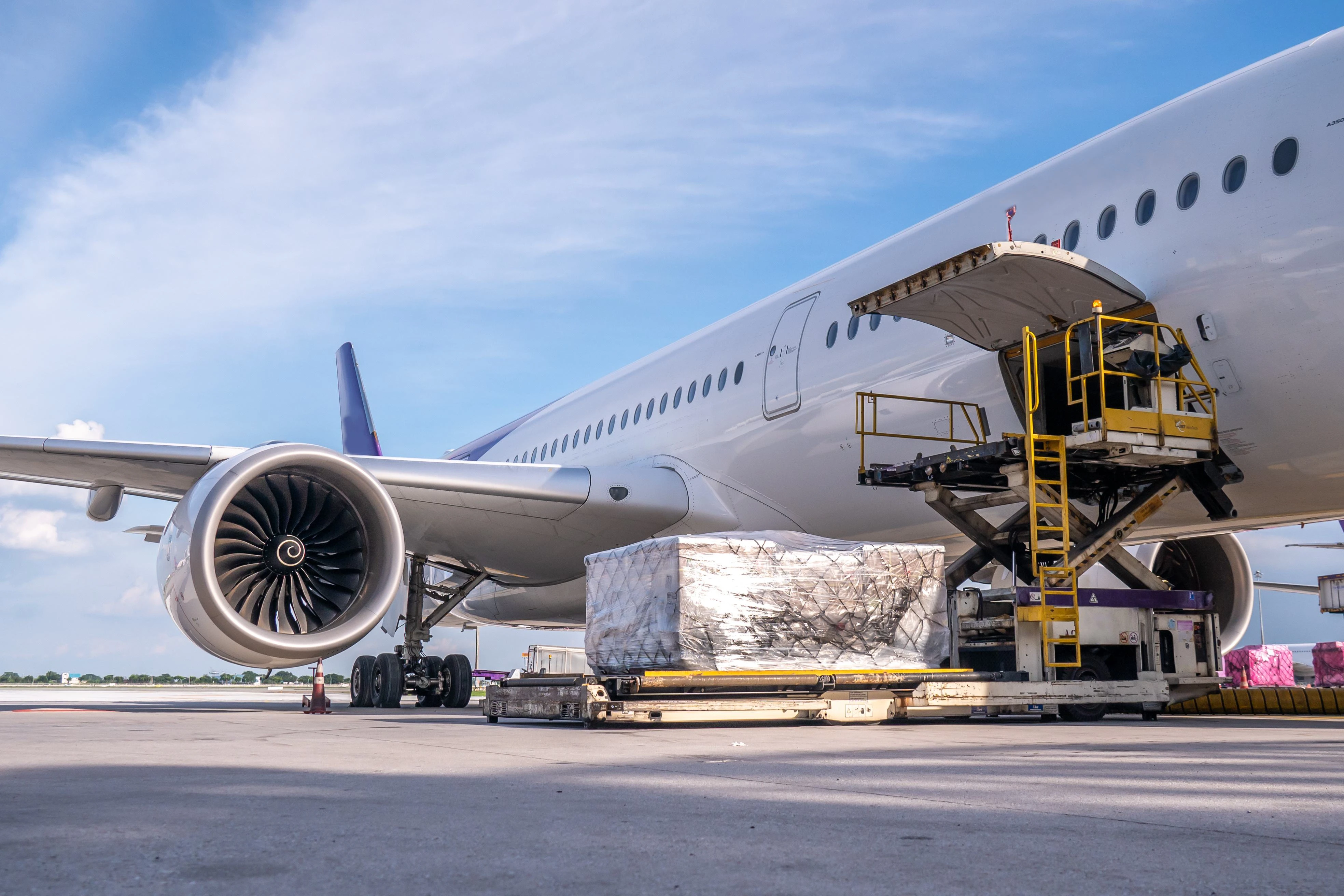
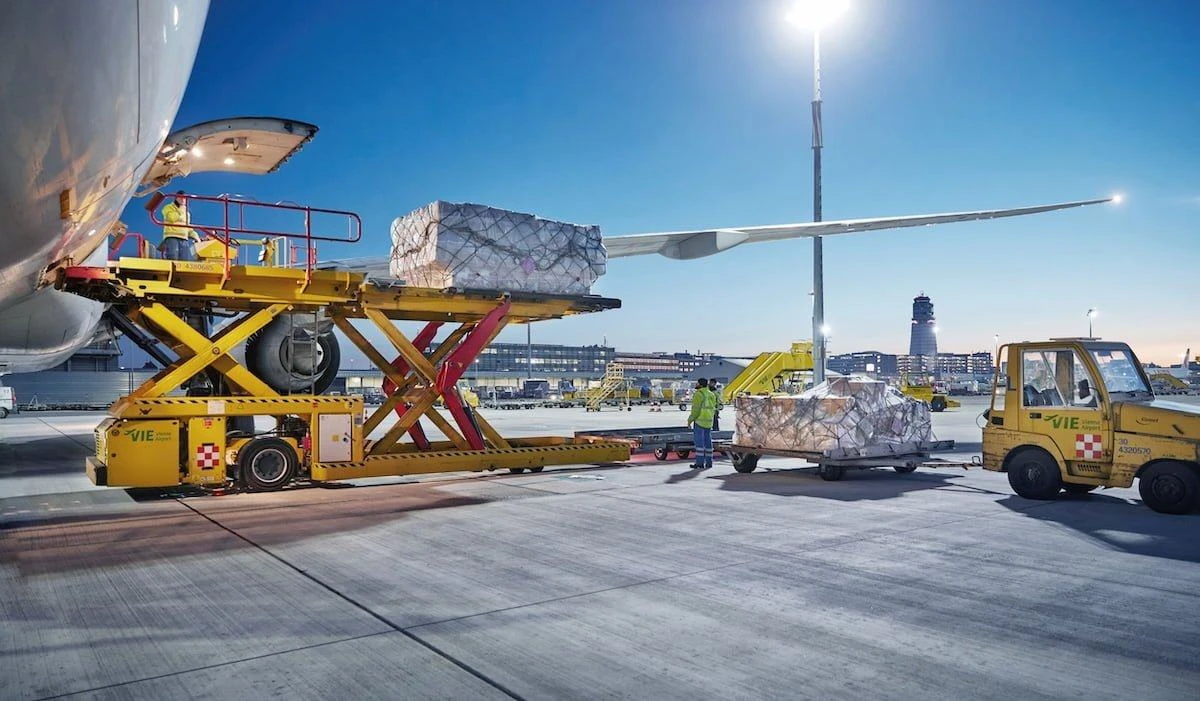
When speed matters, our Vatican City air freight services provide fast, secure and reliable transportation between Vatican City and the United Kingdom.
As Vatican City has no commercial airport, we arrange air freight via nearby Rome gateways (Rome Fiumicino FCO and Ciampino CIA), with road transfer to and from Vatican City. UK arrivals are handled through London Heathrow, London Stansted, Manchester Airport, Birmingham Airport and East Midlands Airport.
Our air freight solutions include:

  • Air freight from Vatican City to the UK
  • Express and economy air cargo
  • Door to door delivery
  • Time critical shipments
  • Air freight from the UK to Vatican City
  • Airport to door services via road transfer
  • Customs clearance support
  • High value and commercial cargo

Whether you need urgent delivery of retail goods, luxury products, art, pharmaceutical supplies or commercial goods, our air freight specialists can provide the most efficient solution with seamless road connections into Vatican City.
Logistics solutions
Road Freight Vatican City to UK
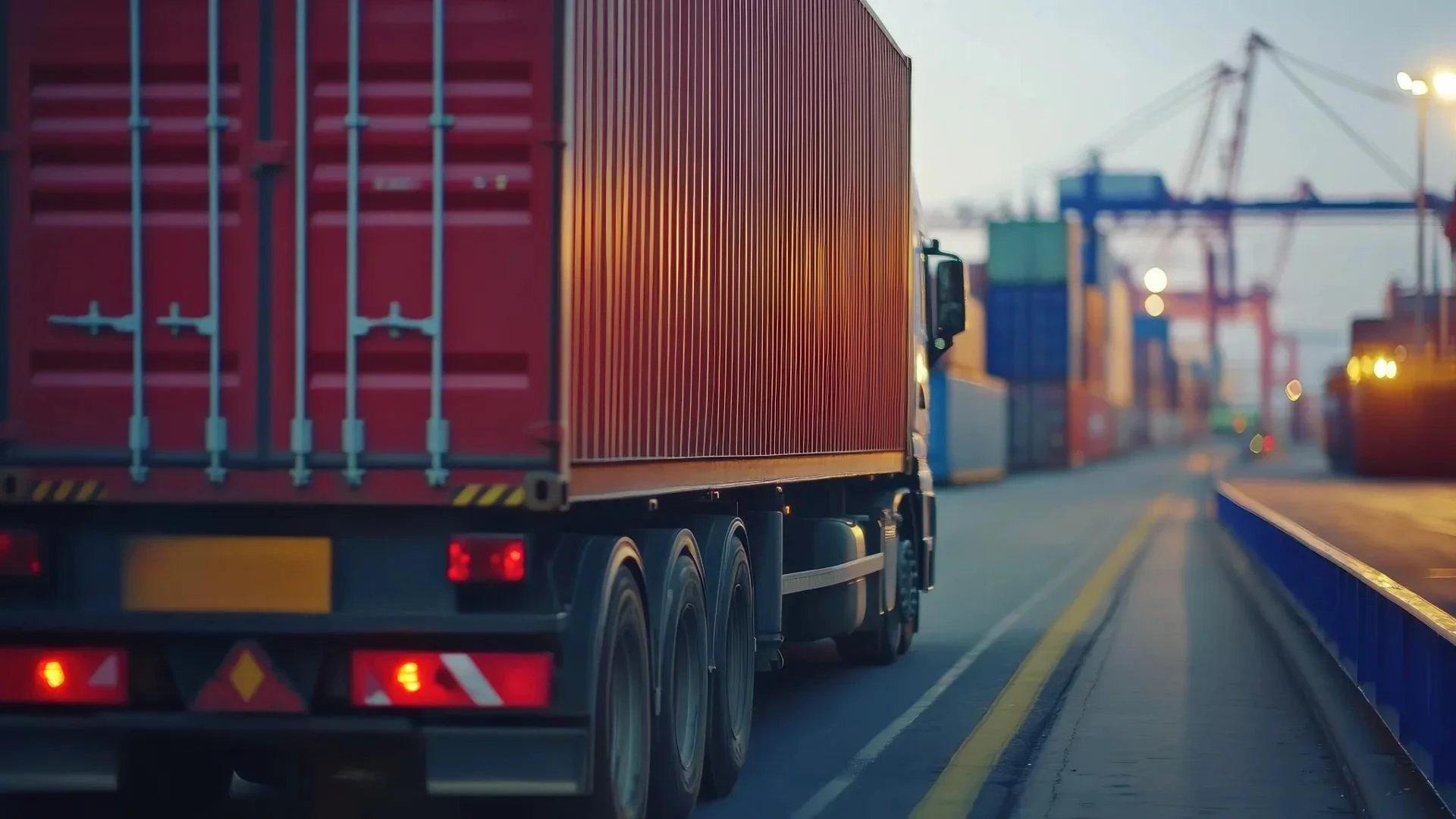
For flexible and cost effective transportation, our road freight services provide dependable overland shipping solutions between Vatican City and the UK.
As an independent city-state within Rome, Vatican City is ideally connected by road through Italy and Europe. We arrange dedicated and groupage road freight via major European motorway networks, with cross Channel transfers to the UK.

Our road freight services include:

  • Full Load (FTL)
  • Express road freight
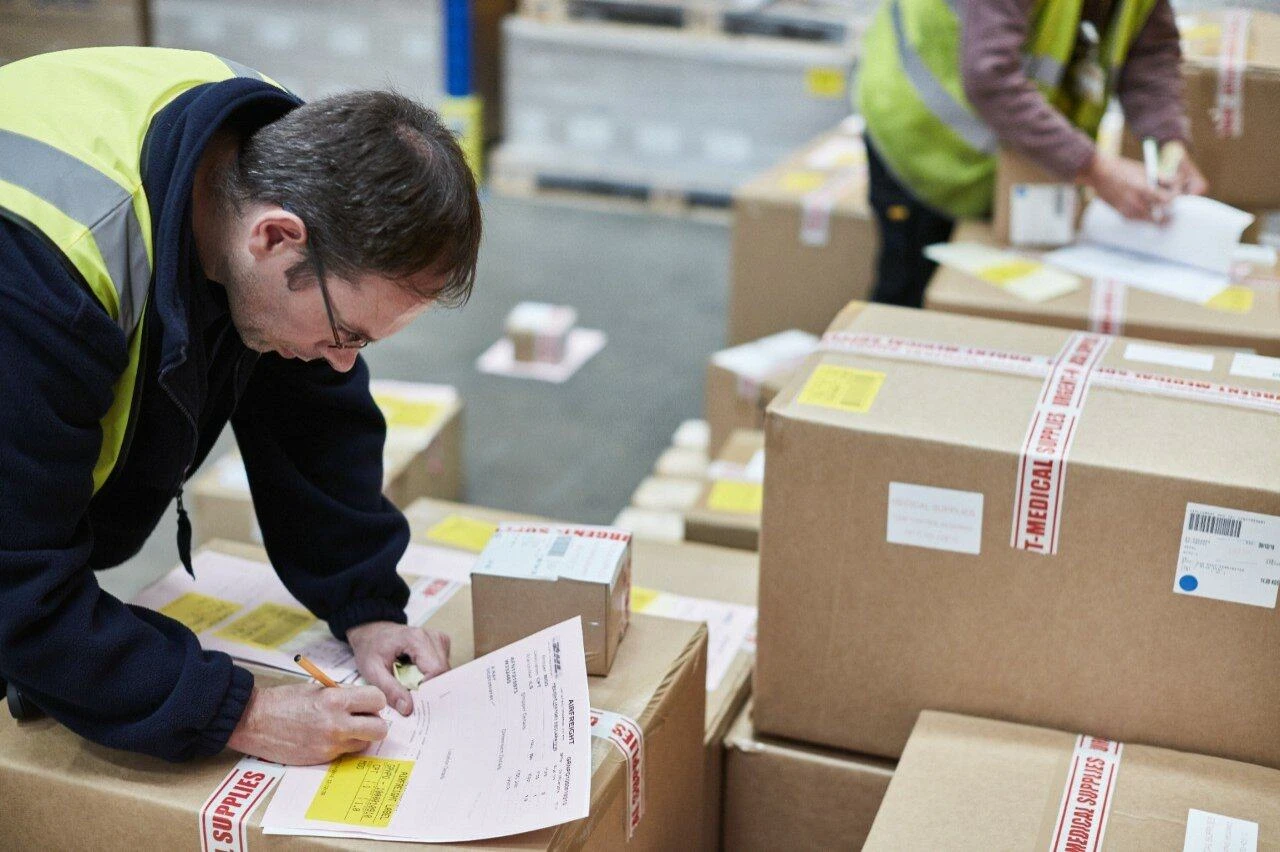
  • Customs documentation
  • Temperature controlled transport
  • Part Load (LTL / groupage)
  • Door to door logistics
  • Cargo insurance
  • Oversized and heavy load shipments

Whether shipping luxury goods, retail products, art, consumer electronics or commercial stock, we can tailor a road freight solution to suit your budget and transit requirements.
Logistics solutions
Import from Vatican City to the UK
Intercargo helps UK businesses import products and cargo from Vatican City through a fully managed freight forwarding service.
Our import services include:

  • Supplier coordination
  • Air and road freight transportation
  • Duty and VAT guidance
  • Final delivery throughout the UK
  • Collection from Vatican City premises
  • UK customs clearance
  • Warehousing and distribution

We regularly support imports including:

  • Luxury goods and cosmetics
  • Tobacco products
  • Art and collectibles
  • Food and beverage products
  • Pharmaceutical products
  • Electronics and retail stock
Our experienced team ensures your cargo moves efficiently from Vatican City to the UK while remaining compliant with all customs and import requirements.
Logistics solutions
Export from the UK to Vatican City
We also help UK businesses export goods to customers, distributors and partners throughout Vatican City.
Whether shipping to Vatican City, our export specialists can arrange a seamless freight solution by air or road.
Our export services include:

  • Air freight exports
  • Export documentation
  • Cargo insurance
  • Commercial and industrial shipments
  • Road freight exports
  • Customs compliance
  • Door to door delivery

From single shipments to regular freight movements, we provide scalable logistics solutions designed around your business requirements.
Logistics solutions
Why Choose Intercargo for Vatican City Freight?
We support importers, exporters, retailers, distributors and e commerce businesses moving cargo between Vatican City and the UK.
Air Freight And Road Freight Specialists
Uk And Vatican City Trade Lane Expertise
Import And Export Solutions
Customs Clearance Support
Door To Door Logistics
Dedicated Account Management
Global Carrier Network
Competitive Freight Rates
Get a Vatican City Freight Quote

Looking for air freight from Vatican City to the UK, road freight from Vatican City to the UK, or export services from the UK to Vatican City?
Contact Intercargo today for a tailored freight forwarding quotation and expert advice on the most efficient shipping solution for your cargo.
Logistics solutions
Latest News & Updates

Top 20 cargo airports: Fragile but resilient

The 2026 ACI World Airport Traffic Dataset was released in July, revealing which were the top 20 cargo airports in 2025 and considering the dynamics behind the results. Data for 2025 indicates that total global air cargo volumes increased by 3.3% over 2024 volumes, and by 7.4% compared 2019, to 131m tonnes. Earlier in the year, when it published preliminary data for 2025, ACI World described the context for the results as a "resilient but fragile global economy". Global GDP grew by around 3-3.2% in 2025, above expectations but below historical norms, with ongoing risks from trade tensions, protectionism and policy uncertainty affecting aviation demand while geopolitics reshaped traffic flows. Capacity and slot constraints further complicated the picture. However: "Air cargo volumes stabilised near record levels, supported by e-commerce and faster, restructured global supply chains," the association said, noting lower fuel prices, easing inflation, international-led recovery and China's reopening as more positive influences on aviation as a whole, including freight." ACI World observes: "Several of the broader economic and operating conditions that influenced airport [passenger] traffic in 2025 also affected air cargo, though to different degrees. "Global cargo reached a record 131.2m tonnes in 2025, up 3.3%, supported by cross-border e-commerce, high-value and time-sensitive shipments, and changing supply chains. International freight was particularly strong, increasing 4.2%, while domestic freight declined 1.8%. "Geopolitical tensions and disruptions to maritime and air routes have had a more complex effect. They can increase costs and disrupt capacity, but they can also strengthen demand for air cargo when shippers need faster or more reliable alternatives. E-commerce and supply-chain diversification therefore remained important supports to the market." As has been the case in previous years, airfreight traffic was more concentrated amongst the main airports; at 53.1m tonnes, combined air cargo volumes at the top 20 airports represented close to 41% of global air cargo traffic in 2025. Hong Kong tops the charts Hong Kong International Airport (HKIA; 5.1m tonnes, up 2.7% year on year) and Shanghai Pudong (4.1m tonnes, up 8.3%) retained first and second positions respectively. A sad incident occurred in October last year when a cargo aircraft flying into Hong Kong from Dubai veered off the runway on landing, with fatal consequences for two airport staff members whose vehicle was knocked into the sea by the Boeing 747 freighter conversion. The four crew on board the flight, though, were successfully rescued. More positively, Hong Kong's Air-Land Fresh Lane was launched in September 2025, creating a dedicated channel for importing chilled aquatic products, live seafood and fruits from overseas to the Greater Bay Area through HKIA and over the Hong Kong-Zhuhai-Macao Bridge. Live and chilled goods can be delivered to Zhuhai for Mainland's customs clearance and enter the GBA in as quickly as three hours after they arrive at Hong Kong by air, a statement said. New flights last year included Hong Kong Air Cargo services to Glasgow Prestwick and One Air flights from East Midlands to the Asia-Pacific gateway via Liège, as well as an expanded schedule from Dubai-based Etihad Cargo. This year, Air China Cargo and Ethiopian Airlines, too, added freighter flights to Glasgow Prestwick, while Cathay Pacific-owned Air Hong Kong has leased an Airbus A330P2F converted freighter to expand its regional operations. (Cathay Pacific itself placed a firm order for two A350Fs in May.) At Shanghai Pudong, last year brought the relaunch of China Cargo Airlines' Paris-Shanghai freighter service as well as China Eastern's Buenos Aires flights. MyFreighter also initiated flights from the Chinese city to destinations including Amsterdam and Tashkent. This year, Pudong Air Cargo Terminal Co Ltd (PACTL) recently relocated and upgraded its Cross-Border E-Commerce Handling Center at the PACTL West Terminal. The handling area there has been expanded to approximately 4,170 sq m, an increase of 40%; daily handling capacity has doubled. "With expanded space, upgraded equipment and enhanced digital capabilities, the centre is now better equipped to support efficient and reliable cross-border e-commerce operations," PACTL says. Alaska expansion Across the Pacific, Ted Stevens Anchorage International rose from fourth to third place in the ACI World rankings on the back of a 4.2% rise in volumes to 3.9m tonnes. ACI World notes that while the standard ACI definition of air cargo generally excludes transit freight in order to provide a consistent basis for comparison across airports, Anchorage is a specific exception and has reported its total cargo, including transit freight, since the association's database was established back in the early 1990s. "Approximately 70-80% of [Anchorage's] volume is transit freight, reflecting the airport's unique role as a technical and logistics stop between Asia and North America," ACI World acknowledges. Alaska International Airport System (AIAS) director Angie Spear says transit freight represents an important distinction when comparing Anchorage with other airports in the ACI World ranking. She explains: "Unlike airports where most cargo originates or terminates in the local market, a significant portion of the cargo moving through Anchorage continues onward to destinations around the world. "Freight may remain aboard the aircraft during a technical stop or transfer between aircraft before continuing to its final destination. "Anchorage is not simply serving a local cargo market; it functions as an international crossroads where global supply chains connect mid-journey," she emphasises. In fourth and fifth place, Louisville (up from fifth position with 3.4m tonnes handled) and Miami (up from seventh place with 3.1m tonnes) both reported year-on-year growth of over 13% in their volumes, the strongest among the top five. Louisville, where UPS has its global hub, set another record for its busiest year for cargo operations and beat its 2019 total by 21.7%. Miami's throughput, meanwhile, was an impressive 49.5% higher than in 2019; following six years of record-breaking growth, the airport now claims the title of busiest US airport for international freight. On the other hand, Memphis International Airport (the global hub for FedEx) posted a sharp drop in volumes, with cargo down by 20.9% compared to the 2024 figure at just under 3m tonnes. That volume is also 31.3% below the Tennessee airport's 2019 total. UPS's facility at Louisville has overtaken FedEx in Memphis to become the world's busiest express air cargo hub - although FedEx still serves more airports nonstop than any other hub in the world, according to the Global Cargo Hub Review by the Chaddick Institute for Metropolitan Development at DePaul University in Chicago. Noting the "increasing operational complexity" amid which airports must perform, ACI World director general Justin Erbacci says: "These hubs keep people and goods moving, supporting global trade, tourism and economic growth in their communities and regions. "To help keep pace with rising demand, governments must prioritise sustained investment in airports and the broader aviation ecosystem." Investment plans For airports, investment on the freight side of the business can include cargo terminals and warehouses, freighter stands, automated handling and sorting, digital cargo processing systems, customs and screening facilities, improved landside access, and specialised cold chain facilities. According to ACI World: "Governments can support this through enabling policy, efficient customs and border processes, sound planning frameworks, and a predictable regulatory environment that gives investors confidence." Needs vary significantly by airport and market, so investment should address identifiable capacity and efficiency constraints rather than follow a single model. Funding can likewise involve public [or] private-sector investment, including partnerships where appropriate." So, what's the outlook for 2026? Will this year's air cargo results differ markedly from the 2025 figures, for good or ill? And what are the most significant factors behind developments now and in the future? ACI World considers: "The outlook is relatively resilient but more uncertain and geographically uneven. Global air cargo still grew around 3% year over year in the first half of 2026, despite a substantial decline in the Middle East associated with the US-Iran conflict. "E-commerce, high-value shipments and supply-chain restructuring should remain important underlying drivers. However, geopolitical tensions, airspace restrictions, higher fuel and routing costs, trade-policy uncertainty and weaker economic conditions create significant downside risks. "The key point is that these disruptions may affect where cargo moves and through which hubs, rather than necessarily producing an equivalent decline in global demand. For airports, flexibility and the ability to adapt to changing trade corridors are therefore becoming increasingly important."

Source: aircargonews.net

Read more

Ocean disruption offers no easy windfall for airfreight, warns DSV

Disruption to ocean shipping is not triggering a large-scale switch to airfreight - the cost of emergency lift is keeping most shippers at sea, according to DSV. Speaking at TIACA's Air Cargo Forum in Miami last week, head of global airfreight Achim Martinka said such decisions depended on whether the business impact of a delay justified paying the airfreight premium. "Most of the customers still stay on the seafreight side because they are not used to having shipments on time anyway," he said. "If you have two or three weeks' delay, this is a normal thing. And if you would switch to airfreight, it could be up to 20 times more expensive. So this is really a very tough financial decision to take." Conversion volumes remained limited, he said and added: "The conversion to air is still not in huge numbers. It's still on a lower level, from what we see." But shippers that wait too long before seeking an alternative risk are finding any available airfreight capacity has become prohibitively expensive. "Usually, our contracts are already signed for six or 12 months with the airlines. So everything which comes on a spontaneous, ad hoc basis will be even more expensive than the base load already on the aircraft," Mr Martinka explained. Where the duration of a disruption was uncertain, he said, shippers needed to begin arranging an airfreight solution. "Otherwise, you're going to be the last one, and then capacity is not affordable anymore." The competition to secure lift is also evident at Atlas Air, where Martin Drew, chief strategy and transformation officer, told The Loadstar forwarders and shippers increasingly wanted the certainty of dedicated capacity. "The contract durations we have are very lengthy, because forwarders, in particular, and shippers want that capacity locked-in," he said. "It helps from a planning perspective, knowing they've got that capacity, especially in an environment where supply is constrained." Atlas itself has demand for dedicated aircraft it cannot currently accommodate. Mr Drew said: "We've got a pipeline today of business that is tens of aircraft, and we can't service that demand." However, finding space is only one obstacle to switching modes. Mr Martinka warned that ocean shipments required new documentation and operational preparation, including checks on dangerous goods, aircraft dimensions, and how cargo would need to be rebuilt for flight. The practical difficulties were illustrated by Emir Pineda, director of air service development at Miami-Dade Aviation Department, who described an attempt to establish a sea-air movement of Honduran okra to the UK via Miami and Amsterdam. "We were able to get a permit from USDA to transport perishable product from Central America via ship to Miami, then take it from Miami, without opening it, to the airport and then put it on an airplane and fly it to Europe. Sounds pretty simplistic, but it was actually quite complicated. "It got to Miami: two containers - that's a lot of cargo for one airplane. "We had to find the capacity on a freighter, because it had to go all in one shipment [and the] capacity had to be available on the day the ship was arriving, because you only had two days to move it. Those were the conditions USDA set. "We also had to maintain the cool chain throughout the logistics supply chain, because it had to keep a certain temperature. "Once it got to Amsterdam, refrigerated trucks trucked it over to the UK. In the end, it worked. One time. "Why only one time? Because of the complexity behind that. You had to get a shipper to agree to get it on the ship to Miami, and then you had to find the capacity on a consistent basis to move 60 tonnes for several weeks. "What do you tell that customer when the season's over? 'Could you bring back the freight?'," asked Mr Pineda."That doesn't work for forwarders; they want consistency. They want capacity availability when they need it." Mr Martinka said most shippers had developed some form of emergency plan since Covid, but he was not seeing a regular shift of ocean volumes into airfreight simply to maintain a contingency route. "It is certainly a part of a resilience plan, which perhaps needs to be tested from time to time," he said. Forwarders and airlines had, nevertheless, become faster at adapting their networks to disruption, he added. DSV's ACMI capacity allowed it to change destinations when customers needed alternatives. "We have our own network, so we can decide every day with our ACMI flights where to fly. We can switch immediately if that's needed for the customer. "The good thing in air cargo is that airfreight is like water: it's going to find its way."

Source: theloadstar.com

Read more

Lady Luck and the lifer: Dan Wall's Expeditors is on a tear

Stock value at record $206.23 intraday post-interims. Quarterly revenue up 42%, operating profit up 55%. A freight market delivering disruption, scarcity, and an AI infrastructure boom. Expeditors' new chief executive has produced extraordinary results - however, the real test may be what happens when the market stops helping. There's no polite way to say this, so let's just say it: Dan Wall (pictured below) picked a hell of a time to become chief executive of Expeditors International.

Source: theloadstar.com

Read more

Privacy Preference Center

This website uses cookies and similar technologies, (hereafter “technologies”), which enable us, for example, to determine how frequently our internet pages are visited, the number of visitors, to configure our offers for maximum convenience and efficiency and to support our marketing efforts. These technologies incorporate data transfers to third-party providers based in countries without an adequate level of data protection (e. g. United States). For further information, including the processing of data by third-party providers and the possibility of revoking your consent at any time, please see your settings under “Consent Preferences” and our Privacy Notice.


Manage Consent Preferences
Strictly Necessary Cookies
Always Active

Performance Cookies

Functional Cookies

Targeting Cookies