We understand the ever changing needs of our customers

we provide a high level of service dedicated to fulfilling all your shipping requirements

Watch Video
Road Freight

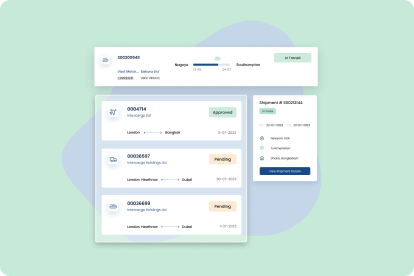
Keep all your data in one place which can be accessed from anywhere and anyplace

Let us help you 24/7 manage your supply chain needs

Back to Global Coverage

Turkey Freight Forwarding Services
Air & Sea Freight Between Turkey and the UK

Intercargo provides reliable freight forwarding services between Turkey and the United Kingdom, helping businesses import and export cargo efficiently by air and sea.

Whether you are importing goods from Turkey into the UK, exporting products from the UK to Turkey, or managing regular international shipments, our experienced freight forwarding team provides complete end-to-end logistics solutions. From collection and customs clearance to final delivery, we manage every stage of the shipment process.
Logistics solutions
Air Freight Turkey to UK
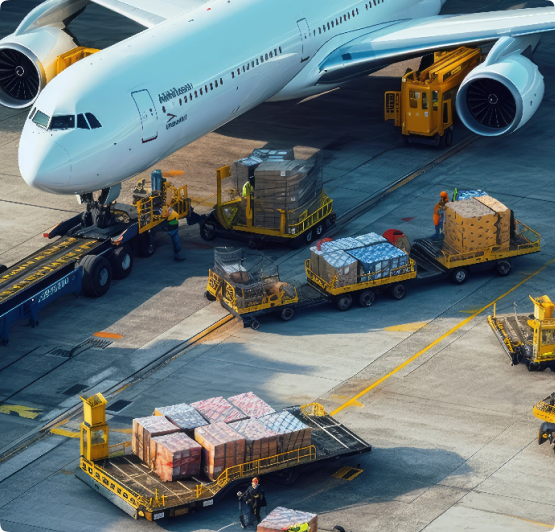
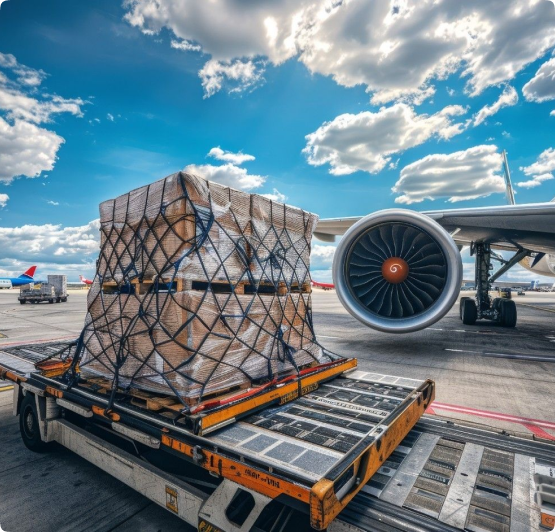
When speed matters, our Turkey air freight services provide fast, secure and reliable transportation between Turkey and the United Kingdom.
We arrange air freight through Istanbul Airport, Sabiha Gökçen International Airport, Ankara Esenboğa Airport and İzmir Adnan Menderes Airport, with UK arrivals through London Heathrow, London Stansted, Manchester Airport, Birmingham Airport and East Midlands Airport.

Our air freight solutions include:

  • Air freight from Turkey to the UK
  • Express and economy air cargo
  • Door to door delivery
  • Time critical shipments
  • Air freight from the UK to Turkey
  • Airport to airport services
  • Customs clearance support
  • High value and commercial cargo

Whether you need urgent delivery of textiles, automotive components, machinery, electronics, pharmaceuticals or commercial goods, our air freight specialists can provide the most efficient solution.
Logistics solutions
Sea Freight Turkey to UK
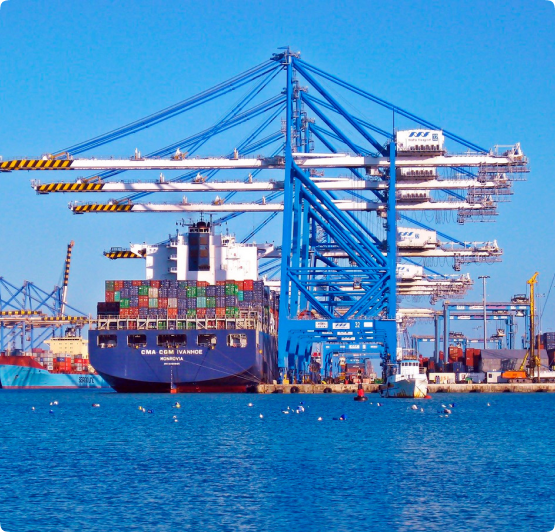
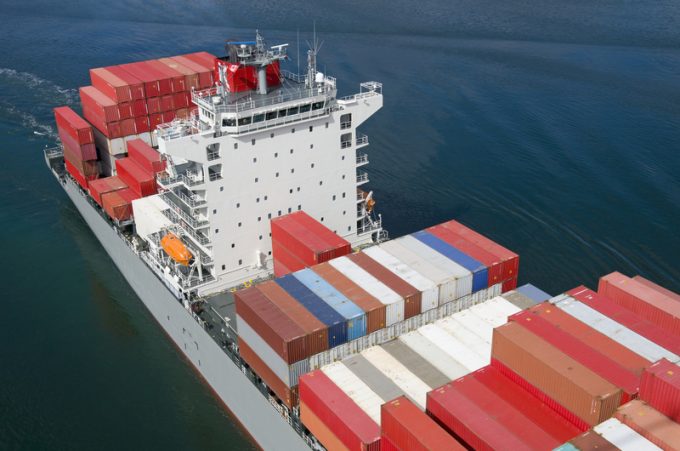
For larger shipments and cost-effective transportation, our sea freight services provide dependable shipping solutions between Turkey and the UK.
We regularly arrange cargo movements through Port of Ambarlı, Port of Mersin, Port of İzmir (Alsancak) and Port of Gemlik, with UK arrivals through Port of Felixstowe, Southampton, London Gateway, Liverpool, Tilbury and Immingham.

Our sea freight services include:

  • Full Container Load (FCL)
  • Port to port shipping
  • Customs documentation
  • Project cargo
  • Less than Container Load (LCL)
  • Door to door logistics
  • Cargo insurance
  • Oversized and heavy lift shipments

Whether shipping machinery, construction materials, industrial equipment, manufacturing products or commercial cargo, we can tailor a sea freight solution to suit your budget and transit requirements.
Logistics solutions
Import from Turkey to the UK
Intercargo helps UK businesses import products and cargo from Turkey through a fully managed freight forwarding service.

Our import services include:

  • Supplier coordination
  • Air and sea freight transportation
  • Duty and VAT guidance
  • Final delivery throughout the UK
  • Collection from Turkish factories, warehouses and commercial premises
  • UK customs clearance
  • Warehousing and distribution

We regularly support imports including:

  • Textiles and garments
  • Machinery
  • Manufacturing components
  • Automotive components
  • Furniture
  • White goods and electrical appliances
  • Food products
Our experienced team ensures your cargo moves efficiently from Turkey to the UK while remaining compliant with all customs and import requirements.
Logistics solutions
Export from the UK to Turkey
We also help UK businesses export goods to customers, distributors and partners throughout Turkey.
Whether shipping to Istanbul, Ankara, İzmir, Bursa, Gaziantep, Antalya or other commercial and industrial locations across Turkey, our export specialists can arrange a seamless freight solution by air or sea.
Our export services include:

  • Air freight exports
  • Export documentation
  • Cargo insurance
  • Commercial and industrial shipments
  • Sea freight exports
  • Customs compliance
  • Door-to-door delivery

From single shipments to regular freight movements, we provide scalable logistics solutions designed around your business requirements.
Logistics solutions
Customs Clearance & Freight Forwarding
Successful international shipping depends on accurate customs documentation and compliance.
Intercargo provides:

  • Import customs clearance
  • Commodity code guidance
  • Duty and tax assistance
  • End to end shipment visibility
  • Export customs clearance
  • Shipping documentation
  • Freight forwarding management

Our experienced freight forwarding team helps minimise delays and keeps your cargo moving smoothly between Turkey and the United Kingdom.
Logistics solutions
Why Choose Intercargo for Turkey Freight?
We support importers, exporters, manufacturers, distributors, retailers, construction companies and e-commerce businesses moving cargo between Turkey and the UK.
Air Freight And Sea Freight Specialists
Uk And Turkey Trade Lane Expertise
Import And Export Solutions
Customs Clearance Support
Door To Door Logistics
Dedicated Account Management
Global Carrier Network
Competitive Freight Rates
Get a Turkey Freight Quote

Looking for air freight from Turkey to the UK, sea freight from Turkey to the UK, or export services from the UK to Turkey?
Contact Intercargo today for a tailored freight forwarding quotation and expert advice on the most efficient shipping solution for your cargo.
Logistics solutions
Latest News & Updates

Zim the outlier as top carriers slash reliance on chartered tonnage

The world's largest container shipping lines are becoming less-reliant on chartered vessels - most of the top 10 carriers reducing their exposure significantly since the Covid-era freight boom. New analysis by Alphaliner shows the proportion of chartered capacity in the fleets of most major carriers has fallen since 2021-22, as record profits enabled the lines to invest heavily in newbuildings and second-hand tonnage. While a decade ago the operated fleets of the top 10 typically comprised 40%-70% chartered capacity, Alphaliner noted that the figure was now 18%-50%. Among the top five, chartered tonnage accounts for just 30% to 40% of deployed capacity. South Korea's HMM has made the biggest reduction. Its chartered fleet accounted for 56% of capacity in 2016, but is now less than 20%. Following the collapse of Hanjin, the South Korean government supported HMM's expansion as the flagship carrier, which included the acquisition of 59 newbuildings to date. CMA CGM recorded the second-largest decline, its chartered capacity falling from 67% of its fleet in 2016 to about 34% today. Much of the reduction came after the pandemic, when strong profits enabled the French carrier to invest heavily in owned tonnage, acquiring 160 second-hand containerships and delivery of 100 newbuildings. The carrier nevertheless remains a major user of non-operating owner (NOO) tonnage and continues to play an active role in the charter market. MSC has reduced its chartered share from 61% in 2016 to 36% today. Compared with the roughly 75% of its fleet on charter during Covid, the Geneva-based carrier has effectively halved its charter exposure over the past five years. It shifted decisively towards vessel ownership from late 2020, ordering 252 newbuildings and purchasing around 500 second-hand vessels. Its chartering activity subsequently collapsed, with only about 40 fixtures concluded this year, three to four times fewer than previously. Evergreen has cut its chartered share from 42% in 2016 to 28% today, following an investment programme that included 125 newbuildings ordered since 2021. Yang Ming's chartered exposure has fallen from 63% in 2016 to 50%. But Alphaliner flagged that the reductions had been less pronounced at Maersk, ONE, Cosco, and Hapag-Lloyd. About 38% of Maersk's operated fleet is now chartered, just seven percentage points below 2016 levels. The Danish carrier remains a major NOO customer and has concluded at least 130 fixtures this year. ONE and Cosco have both reduced their chartered share by 12%-13%, to approximately 53% and 40%, respectively. Hapag-Lloyd's ratio has fallen 15% over the past decade, to about 39%. Zim, however, remains the clear outlier, retaining an asset-light, charter-heavy model. Chartered vessels have represented between 85% and 98% of its deployed capacity over the past decade, while its 23-vessel orderbook is entirely chartered tonnage. That could change if Hapag-Lloyd's proposed acquisition goes ahead. Alphaliner also cautioned that the distinction between owned and chartered tonnage was becoming less clear. Long-term bareboat charters can include purchase options or obligations, meaning some vessels classified as chartered may effectively represent "delayed ownership". As a result, the actual proportion of capacity controlled through ownership may be higher than the headline figures suggest.

Source: theloadstar.com

Read more

Uber Freight bets on European 4PL services, as distinction with 3PL blurs

Uber Freight is stepping up investment in its European 4PL business, despite acknowledging that shippers increasingly care less about whether their logistics provider is labelled a 3PL or 4PL. The company yesterday announced plans to expand its European fourth-party logistics operation, investing in technology, operations, and staff, and adding a second location, with a new control tower and operations hub in Krakow to open next year. It has also appointed Mike Doucleff as head of Europe, affective 28 September. Uber Freight said the number of new 4PL deals it won in Europe doubled last year, and it sees further opportunities among North American customers looking to reduce the number of logistics partners they use globally. The investment comes as Uber Freight's wider business has returned to top-line growth, although it remains loss-making. Freight revenue jumped 25% year on year, to $1.58bn, in the second quarter, while the division reported a $24m operating loss. But it remains committed to the European expansion. Uber Freight is investing further resources to managed transportation and 4PL, while its overall freight division is still working towards sustainable profitability. Its first 4PL engagement, designed to span North America and Europe, is with chemicals manufacturer OXEA, covering transportation in the US, Canada, Mexico, and Europe. Uber Freight's European 4PL operation was inherited through its acquisition of Transplace, and is separate from the European freight brokerage business it sold in 2020. However, the expansion comes amid an increasingly blurred distinction between the traditional roles of 3PLs and 4PLs - something the company itself acknowledges. "We're seeing the lines blur," a spokesperson told The Loadstar. "Customers don't necessarily think about their problems as '3PL' or '4PL' - they're looking for partners that can solve more of their transportation needs and help them manage increasingly complex networks." Indeed, 30% of Uber Freight customers now use two or more of its services, up from 24% last year, while more than 80% of its large managed transportation customers have also used its capacity solutions. "The label matters less to the customer than the outcome," the spokesperson added. It marks an interesting tension in Uber Freight's strategy: its European expansion is being explicitly marketed as growth of its 4PL business, while its wider proposition increasingly combines elements traditionally associated with both 3PL and 4PL services. Just a week before announcing the European expansion, Uber Freight began promoting Gartner research entitled 3PL & 4PL: How to Combine for the Best Logistics Outsourcing Model, which, rather than presenting 3PL and 4PL as an either/or decision, examines how shippers can combine the two outsourcing models as their supply chains become more complex. That commercial blurring can, however, create legal and contractual questions. Matthew Gore, partner at law firm HFW, said there was already considerable confusion over the nature and scope of 3PL and 4PL roles. "Broadly, 3PL means acting as carrier/principal, and 4PL is acting as control tower/agent," he explained. "What also gets confusing is when the same LSP provides both services, particularly if this is done under the same contract, and with the same legal entity - flagging the neutrality/ethical walls issues we see." Mr Gore said 4PL remained predominantly the preserve of larger shippers with high volumes and complex supply chains, and these companies often retained responsibility for deciding which 3PLs received particular volumes, leaving the 4PL to manage those allocations. He also noted a wider trend towards shippers seeking to bundle logistics services, and LSPs offering them, under the same contracts. Uber Freight stressed that it did not currently operate a freight brokerage business in Europe, and that carrier and capacity decisions made through its European 4PL operation were based on customer requirements, including service, cost, performance, and network needs. But the picture is more complicated for global customers. Some European 4PL customers may also use Uber Freight brokerage or other transport services in North America. The company said customers were not required to use its own capacity as part of a 4PL relationship, and that it had "operational firewalls" to govern how sensitive customer information was accessed and used. That question could become increasingly pertinent as Uber Freight seeks to sell more services to the same customers - particularly given that more than 80% of its large managed transportation customers already also use its capacity solutions. The company's European investment is, in part, predicated on that: extending relationships with North American customers into Europe, while offering them the prospect of managing more of their global transportation through fewer logistics partners.

Source: theloadstar.com

Read more

Box shipping reliability the worst since 2022 - 'a new normal', says DP World

Global container shipping reliability is at its lowest level for four years, as the congestion in Asia continues to disrupt liner operations. According to Sea-Intelligence, schedule reliability fell by 5.9 percentage points month on month in August, to 49.9%, marking the second consecutive monthly decline. The analyst said: "In the backdrop of severe port congestion in Asia, global schedule has declined sharply month on month for the second consecutive month... This is the lowest point since September 2022." The deterioration was reflected in vessel delays: the average for late-arriving ships increased 0.6 days, month on month, to 6.81 days - the highest since March 2022, and 1.92 days higher than at this time last year. Among the 13 largest carriers tracked by Sea-Intelligence, Maersk recorded the best schedule reliability last month, with 67.3% on-time arrivals, followed by Hapag-Lloyd's 61.5%. MSC and CMA CGM recorded reliability of 55.2% and 50.6%, respectively, while Wan Hai was the least-reliable of the group, at just 23.2%. No top-13 carrier improved its reliability over the month. ONE recorded the smallest decline, 3.5 percentage points, while PIL suffered the largest decline, of 10.1 points. Year on year, all 13 carriers recorded proved less reliable. Maersk's decline of 8.9 percentage points was the smallest, while PIL's 31.1 point fall was the largest - one of 12 carriers to record a double-digit year-on-year decline. The deterioration was particularly pronounced across the major east-west trades. Based on rolling July/August data, reliability on the Asia-North America west coast route fell 8.8 percentage points, to 60.6%, while Asia-North America east coast fell 9.6 points, to 61.7%. Asia-North Europe schedule reliability declined 2.4 points, to 62.3%, while Asia-Mediterranean fell 3.7 points, to 61.8%. Only three of 34 tradelanes saw any month-on-month improvement in reliability - Oceania-North America posted the largest gain, up 8.4 points to 97.6%, while Asia-East Coast South America suffered the largest decline, down 16.6 points to 56.4%. Across the east-west shipping alliances, average reliability fell 7.4 points to 57.2%. Gemini remained the most reliable, at 77.8%, followed the Ocean Alliance, at 48.3%, and the Premier Alliance. at 43.2%. Standalone carrier MSC was at 70.1%. Sea-Intelligence's figures come as DP World warned that disruption was becoming a structural feature of global trade rather than a series of isolated events. Its latest white paper notes: "Geopolitical tensions, evolving trade policies, climate-related disruption, and shifting manufacturing footprints are reshaping how cargo moves around the world. These are not isolated challenges. Together, they represent a structural shift in the way global trade is organised." The operator highlighted the Red Sea crisis as an example of how quickly shipping networks could be reshaped, noting that traffic through the Suez Canal last year fell to around half its 2024 level, while vessel capacity re-routing around the Cape of Good Hope increased 89%. "Longer journeys increased transit times, costs and emissions, while reducing schedule reliability," DP World said.

Source: theloadstar.com

Read more

Privacy Preference Center

This website uses cookies and similar technologies, (hereafter “technologies”), which enable us, for example, to determine how frequently our internet pages are visited, the number of visitors, to configure our offers for maximum convenience and efficiency and to support our marketing efforts. These technologies incorporate data transfers to third-party providers based in countries without an adequate level of data protection (e. g. United States). For further information, including the processing of data by third-party providers and the possibility of revoking your consent at any time, please see your settings under “Consent Preferences” and our


Privacy Notice


Privacy Preference Center

Strickly Necessary Cookies
Always Active

Performance Cookies

Functional Cookies

Targeting Cookies