We understand the ever changing needs of our customers

we provide a high level of service dedicated to fulfilling all your shipping requirements

Watch Video
Road Freight

Keep all your data in one place which can be accessed from anywhere and anyplace

Let us help you 24/7 manage your supply chain needs

Back to Global Coverage

Thailand Freight Forwarding Services
Air & Sea Freight Between Thailand and the UK

Intercargo provides reliable freight forwarding services between Thailand and the United Kingdom, helping businesses import and export cargo efficiently by air and sea.

Whether you are importing goods from Thailand into the UK, exporting products from the UK to Thailand, or managing regular international shipments, our experienced freight forwarding team provides complete end-to-end logistics solutions. From collection and customs clearance to final delivery, we manage every stage of the shipment process.
Logistics solutions
Air Freight Thailand to UK
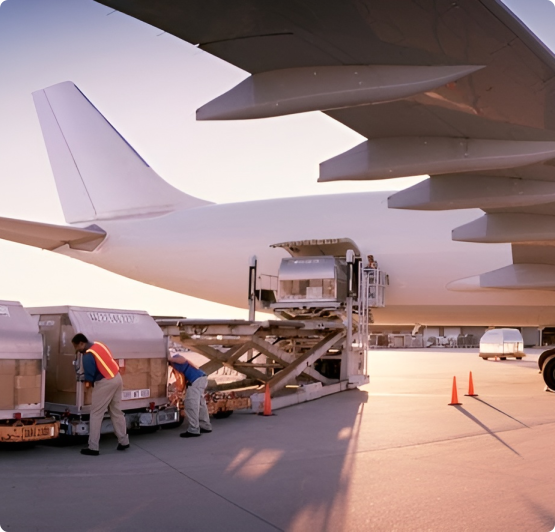
When speed matters, our Thailand air freight services provide fast, secure and reliable transportation between Thailand and the United Kingdom.
We arrange air freight through Suvarnabhumi Airport, Don Mueang International Airport, Chiang Mai International Airport and Phuket International Airport, with UK arrivals through London Heathrow, London Stansted, Manchester Airport, Birmingham Airport and East Midlands Airport.
Our air freight solutions include:

  • Air freight from Thailand to the UK
  • Express and economy air cargo
  • Door to door delivery
  • Time critical shipments
  • Air freight from the UK to Thailand
  • Airport to airport services
  • Customs clearance support
  • High value and commercial cargo

Whether you need urgent delivery of electronics, automotive components, garments, medical equipment, machinery or commercial goods, our air freight specialists can provide the most efficient solution.
Logistics solutions
Sea Freight Thailand to UK
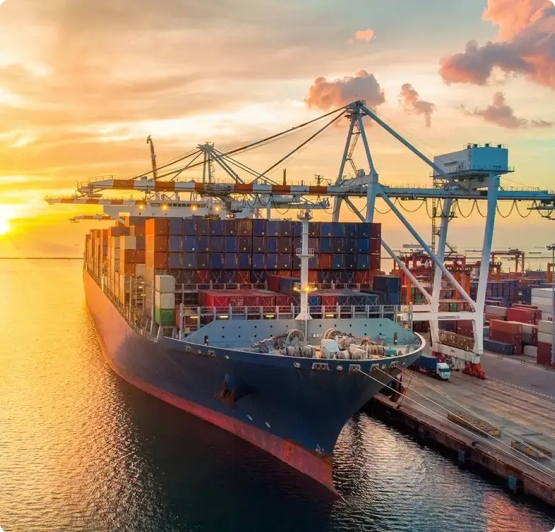
For larger shipments and cost-effective transportation, our sea freight services provide dependable shipping solutions between Thailand and the UK.
We regularly arrange cargo movements through Laem Chabang Port, Bangkok Port, Map Ta Phut Port and Songkhla Port, with UK arrivals through Port of Felixstowe, Southampton, London Gateway, Liverpool, Tilbury and Immingham.
Our sea freight services include:

  • Full Container Load (FCL)
  • Port to port shipping
  • Customs documentation
  • Project cargo
  • Less than Container Load (LCL)
  • Door to door logistics
  • Cargo insurance
  • Oversized and heavy lift shipments

Whether shipping machinery, automotive parts, furniture, industrial equipment, manufacturing products or commercial goods, we can tailor a sea freight solution to suit your budget and transit requirements.
Logistics solutions
Import from Thailand to the UK
Intercargo helps UK businesses import products and cargo from Thailand through a fully managed freight forwarding service.
Our import services include:

  • Supplier coordination
  • Air and sea freight transportation
  • Duty and VAT guidance
  • Final delivery throughout the UK
  • Collection from Thai factories, warehouses and commercial premises
  • UK customs clearance
  • Warehousing and distribution

We regularly support imports including:

  • Electronics and electrical equipment
  • Furniture and homeware
  • Manufacturing components
  • Automotive components
  • Food and agricultural products
  • Garments and textiles
  • Rubber and plastic products
Our experienced team ensures your cargo moves efficiently from Thailand to the UK while remaining compliant with all customs and import requirements.
Logistics solutions
Export from the UK to Thailand
We also help UK businesses export goods to customers, distributors and partners throughout Thailand.
Whether shipping to Bangkok, Chonburi, Chiang Mai, Phuket, Rayong, Ayutthaya or other commercial and industrial locations across Thailand, our export specialists can arrange a seamless freight solution by air or sea.
Our export services include:

  • Air freight exports
  • Export documentation
  • Cargo insurance
  • Commercial and industrial shipments
  • Sea freight exports
  • Customs compliance
  • Door-to-door delivery

From single shipments to regular freight movements, we provide scalable logistics solutions designed around your business requirements.
Logistics solutions
Customs Clearance & Freight Forwarding
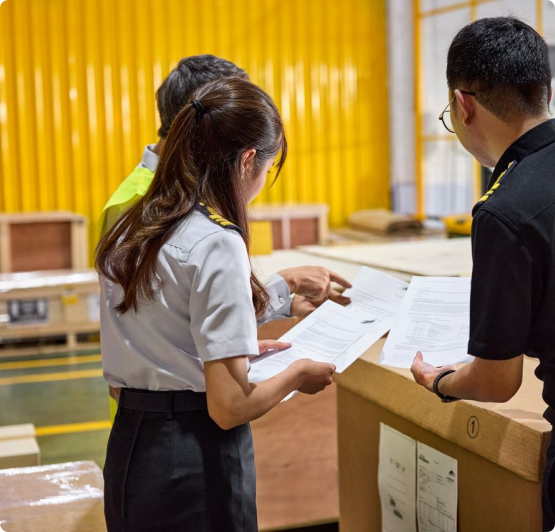
Successful international shipping depends on accurate customs documentation and compliance.
Intercargo provides:

  • Import customs clearance
  • Commodity code guidance
  • Duty and tax assistance
  • End to end shipment visibility
  • Export customs clearance
  • Shipping documentation
  • Freight forwarding management

Our experienced freight forwarding team helps minimise delays and keeps your cargo moving smoothly between Thailand and the United Kingdom.
Logistics solutions
Why Choose Intercargo for Thailand Freight?
We support importers, exporters, manufacturers, distributors, retailers, construction companies and e-commerce businesses moving cargo between Thailand and the UK.
Air Freight And Sea Freight Specialists
Uk And Thailand Trade Lane Expertise
Import And Export Solutions
Customs Clearance Support
Door To Door Logistics
Dedicated Account Management
Global Carrier Network
Competitive Freight Rates
Get a Thailand Freight Quote

Looking for air freight from Thailand to the UK, sea freight from Thailand to the UK, or export services from the UK to Thailand?
Contact Intercargo today for a tailored freight forwarding quotation and expert advice on the most efficient shipping solution for your cargo.
Logistics solutions
Latest News & Updates

NYK - the argument now is over what a normal year looks like

NYK has raised its dividend to ¥330 a share on a year swollen by the closure of the Strait of Hormuz and strong container rates, but its own guidance has second-half profit falling by more than 40%. Morgan Stanley values the company on a normal year worth less than half of this one and sees a risk the dividend is cut in the year to March 2028; JP Morgan's valuation sits close to the share price, and NYK's own ...

Source: theloadstar.com

Read more

Record rates mask 'dire situation' for hauliers as costs outstrip earnings

Record European road freight rates are masking a "dire situation" for hauliers, with soaring fuel costs eroding margins and operators struggling to pass increases on to shippers, according to industry bodies. The Q3 European Road Freight Rate Benchmark, published yesterday by IRU, Upply and Transport Intelligence (Ti), showed contract rates reaching a record 148.9 index points in Q3 2026, up 14.6 points year on year, while spot rates hit 147.6 points, up 12.9 points. However, IRU told The Loadstar that rising freight rates were not translating into improved profitability, with operating costs increasing substantially faster than the prices carriers could charge. In France, operating costs rose approximately 14% between January and September with contract rates increasing just 7%. By March, costs had already climbed 8%, while freight rates were still falling. "Higher freight rates are masking a dire situation for operators, as shippers try to mitigate a raise they haven't yet seen in full," IRU said. Ti said the increases were "overwhelmingly a supply-side story", driven principally by diesel rather than stronger demand. EU diesel averaged €2.05 per litre in Q3, up 32% year on year, peaking at €2.27 on 27 September. "The cost evidence is unambiguous," Ti told The Loadstar. "The CNR long-haul cost index rose 13.2% year on year in September, but strip diesel out and the increase is 1.3%. "Almost the whole cost rise is fuel, so the rate rise is largely carriers recovering a bill they have already paid." Ti added that tolls had risen 7% year on year, while semi-trailer equipment and maintenance costs increased 3.5% and 2.4%, respectively. It said contract rates had outpaced spot rates throughout Q3, suggesting some cost recovery through contract renewals, although anecdotal evidence indicated carriers were shouldering more increases in Q4. The Road Haulage Association (RHA) said UK operators were experiencing similar pressures, with more than eight in ten businesses reporting declining margins. "Fuel is about a third of the cost of running a truck, and firms are paying an extra £385 a week per vehicle. On margins of around two per cent, there is very little left to absorb that," an RHA spokesperson told The Loadstar. Its fuel survey found just one in ten operators could pass on fuel cost increases, with the remainder absorbing some or all of the additional expenditure. "On a fixed-rate contract there is no way to recover costs until the terms are renegotiated. And the fuel bill has to be paid long before the customer's invoice is," the RHA added. Meanwhile, concerns are growing that weakening haulage capacity could trigger further rate increases when demand recovers. Ti said European operator numbers were stagnating or declining in several markets, largely because fewer businesses were entering the industry rather than widespread failures. "Capacity is leaving through lack of replacement rather than mass failure, which is slower and harder to reverse," it warned. Heavy truck registrations reached approximately 60,100 in Q3, but annual growth slowed to 7% from 8.4% in June, suggesting operators were deferring fleet renewals. Driver shortages are compounding the problem, with around 502,000 European truck driver positions unfilled, according to IRU figures cited by Ti. "If demand does rebound in 2027, every route to adding capacity is slow, and with costs expected to remain high, a sharp price response is the likely result," Ti warned. IRU similarly expects rates to continue rising as carriers attempt to recover operating costs. The RHA, meanwhile, called for a 15p-per-litre fuel rebate for essential users, arguing it would provide vital relief to struggling UK hauliers.

Source: theloadstar.com

Read more

Hapag's ASX will reverse December Asia-ECSA capacity squeeze

On the question of whether the ASX replaces the AS3, the rotations point the other way. Together they give Hapag-Lloyd two weekly sailings into the same four Brazilian gateways, each fed from a different Chinese catchment - imitating how CMA CGM and its Ocean Alliance partners pair SEAS 2 and SEAS A. Add the slots Hapag-Lloyd buys on Maersk's ASAS, which still calls Buenos Aires and Montevideo direct, and the Hamburg-based line covers the trade three ways. However, we cannot exclude that ASX could serve as a policy insurance, should Hapag and Zim part ways on their joint AS3/ZFS. Read the rotation, not the press release ASX runs a port rotation of Qingdao-Ningbo-Shekou-Tanjung Pelepas-Santos-Itajaí-Rio Grande-Paranaguá-Santos-Singapore. Five choices stand out. It gathers westbound cargo at Tanjung Pelepas, while every rival on the trade uses Singapore. The two are 30 miles apart and interchangeable for a customer's box, so this is not about the shipper; it is about which network ASX plugs into - which matters for a different reason, outlined below. It skips Shanghai. ASX is the only Asia-ECSA service that does not call at the largest container port on the planet. This leads towards an engineered network to work with Gemini's shuttles. It calls at Itajaí before Paranaguá. Most services run Santos, then Paranaguá. Hapag-Lloyd puts Santa Catarina second on discharge and pushes Paranaguá to fourth, so Paranaguá imports arrive later while its exports, loaded late in the sweep, keep a fast run to Asia. It places Rio Grande in the middle, not at an end. Rio Grande is usually first or last, marking it as an import or an export port. Here it is the turn of the loop and the single feeder pivot for Montevideo and Buenos Aires, so it has to sit mid-string to connect the River Plate both ways. And it reaches north to Qingdao, while not having Hong Kong on the backhaul, and imports will be left to a Singapore relay. What its presence really tells us, is that ASX & AS3 are meant to stay side by side, offering a complete portfolio of corridors to Hapag customers. The tight market has an expiry date For shippers, the timing matters more than the branding. December removes the Maersk-CMA CGM ASAS2 loop and, by my count, nominal weekly capacity from Asia falls by about 6%. In April, MSC replaces Hapag-Lloyd's five ships on Ipanema with its own, and Hapag-Lloyd adds a whole new loop. At ship sizes like AS3's, that is in the order of 10,000 teu a week of extra capacity, and enough to reverse December's cut. Therefore, shippers signing annual contracts this winter should not price December's tighter market as permanent. By the second quarter next year, the Asia-east coast South America trade will be split between at least four groups that each control their own ships: the Ocean Alliance members; MSC with ONE; Maersk; and Hapag-Lloyd with or without Zim. That is a more competitive trade than the one these partnerships created, and it arrives just as contracts signed during the squeeze start to kick in.

Source: theloadstar.com

Read more

Privacy Preference Center

This website uses cookies and similar technologies, (hereafter “technologies”), which enable us, for example, to determine how frequently our internet pages are visited, the number of visitors, to configure our offers for maximum convenience and efficiency and to support our marketing efforts. These technologies incorporate data transfers to third-party providers based in countries without an adequate level of data protection (e. g. United States). For further information, including the processing of data by third-party providers and the possibility of revoking your consent at any time, please see your settings under “Consent Preferences” and our Privacy Notice.


Manage Consent Preferences
Strictly Necessary Cookies
Always Active

Performance Cookies

Functional Cookies

Targeting Cookies