We understand the ever changing needs of our customers

we provide a high level of service dedicated to fulfilling all your shipping requirements

Watch Video
Road Freight

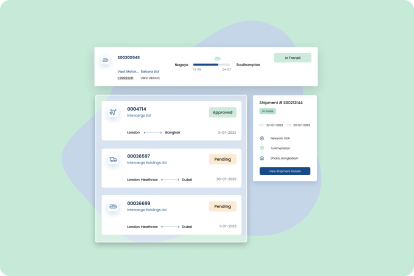
Keep all your data in one place which can be accessed from anywhere and anyplace

Let us help you 24/7 manage your supply chain needs

Back to Global Coverage

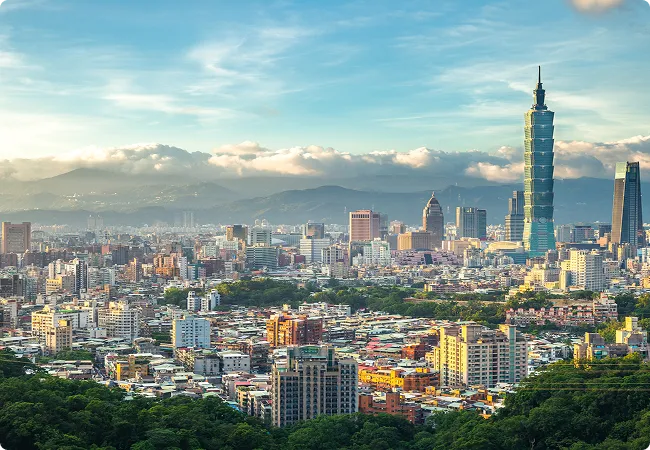
Taiwan Freight Forwarding Services
Air & Sea Freight Between Taiwan and the UK

Intercargo provides reliable freight forwarding services between Taiwan and the United Kingdom, helping businesses import and export cargo efficiently by air and sea.

Whether you are importing goods from Taiwan into the UK, exporting products from the UK to Taiwan, or managing regular international shipments, our experienced freight forwarding team provides complete end-to-end logistics solutions. From collection and customs clearance to final delivery, we manage every stage of the shipment process.
Logistics solutions
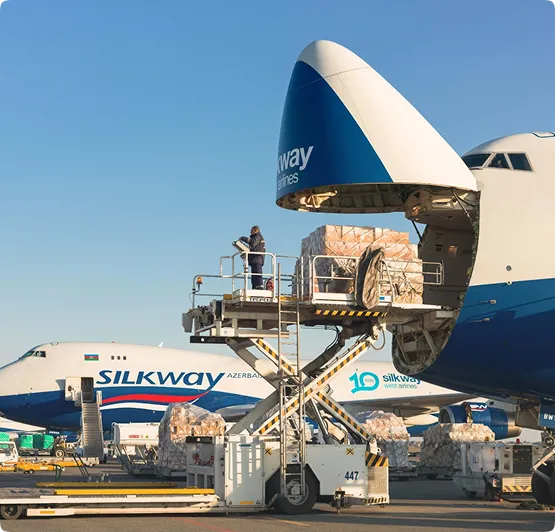
Air Freight Taiwan to UK
When speed matters, our Taiwan air freight services provide fast, secure and reliable transportation between Taiwan and the United Kingdom.
We arrange air freight through Taiwan Taoyuan International Airport (Taipei), Kaohsiung International Airport, Taichung International Airport and Taipei Songshan Airport, with UK arrivals through London Heathrow, London Stansted, Manchester Airport, Birmingham Airport and East Midlands Airport.
Our air freight solutions include:

  • Air freight from Taiwan to the UK
  • Express and economy air cargo
  • Door to door delivery
  • Time critical shipments
  • Air freight from the UK to Taiwan
  • Airport to airport services
  • Customs clearance support
  • High value and commercial cargo

Whether you need urgent delivery of semiconductors, electronics, telecommunications equipment, pharmaceuticals, machinery, automotive components or commercial goods, our air freight specialists can provide the most efficient solution.
Logistics solutions
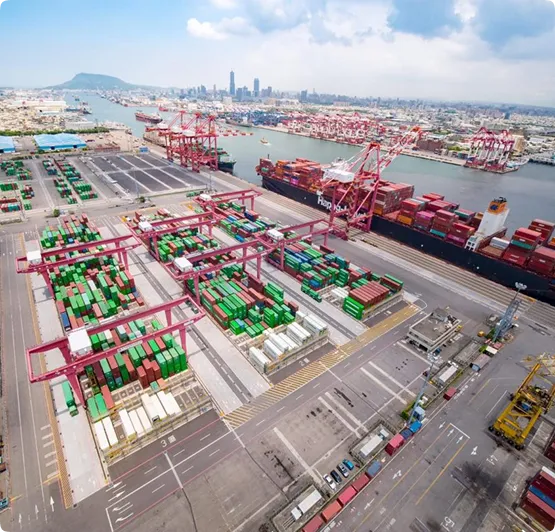
Sea Freight Taiwan to UK
For larger shipments and cost effective transportation, our sea freight services provide dependable shipping solutions between Taiwan and the UK.
We regularly arrange cargo movements through the Port of Kaohsiung, Port of Taipei, Port of Taichung and Port of Keelung, with UK arrivals through Port of Felixstowe, Southampton, London Gateway, Liverpool, Tilbury and Immingham.
Our sea freight services include:

  • Full Container Load (FCL)
  • Port to port shipping
  • Customs documentation
  • Project cargo
  • Less than Container Load (LCL)
  • Door to door logistics
  • Cargo insurance
  • Oversized and heavy lift shipments

Whether shipping electronics, machinery, industrial equipment, plastics, bicycles, manufacturing products or commercial cargo, we can tailor a sea freight solution to suit your budget and transit requirements.
Logistics solutions
Import from Taiwan to the UK
Intercargo helps UK businesses import products and cargo from Taiwan through a fully managed freight forwarding service.
Our import services include:

  • Supplier coordination
  • Air and sea freight transportation
  • Duty and VAT guidance
  • Final delivery throughout the UK
  • Collection from Taiwanese factories, warehouses and commercial premises
  • UK customs clearance
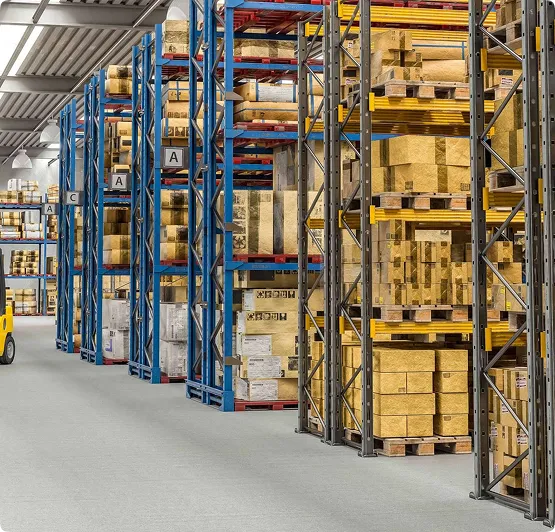
  • Warehousing and distribution

We regularly support imports including:

  • Semiconductores and electronic components
  • Bicycles and bicycle components
  • Automotive components
  • Consumer electronics
  • Machinery and industrial equipment
  • Computer hardwarte and networking equipment
  • Plastics and manufacturing products

Our experienced team ensures your cargo moves efficiently from Taiwan to the UK while remaining compliant with all customs and import requirements.
Logistics solutions
Export from the UK to Taiwan
We also help UK businesses export goods to customers, distributors and partners throughout Taiwan.

Whether shipping to Taipei, Kaohsiung, Taichung, Tainan, Hsinchu or Keelung, our export specialists can arrange a seamless freight solution by air or sea.

Our export services include:

  • Air freight exports
  • Export documentation
  • Cargo insurance
  • Commercial and industrial shipments
  • Sea freight exports
  • Customs compliance
  • Door to door delivery

From single shipments to regular freight movements, we provide scalable logistics solutions designed around your business requirements.
Logistics solutions
Customs Clearance & Freight Forwarding
Successful international shipping depends on accurate customs documentation and compliance.

Intercargo provides:

  • Import customs clearance
  • Commodity code guidance
  • Duty and tax assistance
  • End to end shipment visibility
  • Export customs clearance
  • Shipping documentation
  • Freight forwarding management

Our experienced freight forwarding team helps minimise delays and keeps your cargo moving smoothly between Taiwan and the United Kingdom.
Logistics solutions
Why Choose Intercargo for Taiwan Freight?
We support importers, exporters, manufacturers, distributors, technology companies, retailers and industrial businesses moving cargo between Taiwan and the UK.
Air Freight And Sea Freight Specialists
Uk And Taiwan Trade Lane Expertise
Import And Export Solutions
Customs Clearance Support
Door To Door Logistics
Dedicated Account Management
Global Carrier Network
Competitive Freight Rates
Get a Taiwan Freight Quote

Looking for air freight from Taiwan to the UK, sea freight from Taiwan to the UK, or export services from the UK to Taiwan?

Contact Intercargo today for a tailored freight forwarding quotation and expert advice on the most efficient shipping solution for your cargo.
Logistics solutions
Latest News & Updates

Fast delivery: Amazon's smart glasses - a data moat in disguise

The e-commerce giant plans to deploy more than 20,000 camera-equipped glasses to delivery drivers by the end of 2027. The efficiency gains are real. But the competitive weapon is the dataset being built behind them - and rivals should be paying far closer attention. When Amazon detailed its expansion plans for AI-powered smart delivery glasses in September, the coverage predictably centered on the wearable itself: a heads-up display that shows drivers which package to grab, overlays walking directions to ...

Source: theloadstar.com

Read more

Ports could future-proof to beat box terminal congestion

In recent months, a daily review of container terminal utilisation levels has become something of a 'must-read' for supply chain planners seeking to understand where boxes may be delayed, and for how long. That remains an art rather than science, but indicates how the container shipping industry has experienced something of a paradigm shift into an era in which waves of mega-congestion ripple across the port and shipping system. Terminal occupancy levels - ie, how many containers are sitting in a yard awaiting either a truck or loading on a vessel - continue to sit way above what these facilities were designed to handle. A small selection from just today, as reported by Kuehne+Nagel: Tokyo AOM yard density is at 113%, up from 96%; Yokohama is above 100%; Busan's BNCT is around 95% overall, "with laden density near 100% and heavy-discharge ships at risk of lower priority"; and Rotterdam's ECT is at 94% yard occupancy. Some of this is beyond terminal operators' control - they have no say over when vessels arrive, or how delayed they might have been at the previous port; while wars, weather, and other disruptive events are in the hands of the gods - or people who think of themselves as such... However, in the spirit of supply chain resilience, they could be far better prepared to tackle congestion when it arises. Drewry's recent analysis of container port congestion is actually relatively straightforward: the difference in clearing a terminal that is 85%+ utilised and one that is 70% utilised, is massive - a one-day closure at the latter can be cleared in two days; at the former it will take a week; and if multiple disruptions occur, there is very little chance of the former ever clearing completely. This has been demonstrated clearly over the past couple of months with the arrival of successive typhoons in key Asia loading ports. The effect this had on vessel departures was, ultimately, congestion elsewhere in the world, because those ports too had been operating at 85%+ utliisation. Why? Because, as Drewry's Eleanor Hadland succinctly put it: "No terminal manager gets rewarded for having empty space." In fact, the opposite is true. Terminal operators - especially those which have carriers as sister companies - have enjoyed a bumper 2026, as recent third-quarter results demonstrated. At the same time, their ultimate customers - cargo owners, their freight forwarders, and finally everyday consumers - face increased costs as they witness supply chains fracturing in front of their eyes. It doesn't have to be like this, The Loadstar believes. Port authorities could future-proof their container terminals - which mostly they ultimately own on a landlord basis - by stipulating in concession contracts that a certain amount of nominal terminal capacity must remain unused, except when disruptions demand it. Your port needs a further 2m teu of container capacity? Stipulate that the operator builds a terminal with a nominal 2.5m teu capacity, thus giving the container supply chain into the port's hinterland the buffer this year has so clearly shown is needed.

Source: theloadstar.com

Read more

Shenzhen air cargo restrictions ahead of APEC threaten peak shipments

Air cargo moving in and out of Shenzhen faces restrictions ahead of next week's APEC summit, with operators announcing cargo embargoes, longer handling times, and changes to collection and delivery services. The measures threaten to complicate peak season shipments through mainland China's third-largest cargo airport, while forwarders warn that diversions will tighten space at neighbouring Guangzhou. And elsewhere in the region, Taiwan's cargo congestion is expected to delay freighter operations throughout Q4. The APEC Economic Leaders' Meeting takes place in Shenzhen on 18-19 November, with the main cargo restrictions covering 16-20 November. ANA Cargo's notice, issued yesterday, restricts dangerous goods through 20 November, including excepted quantities and goods normally treated as unrestricted under special provisions. Previously booked dangerous goods shipments travelling 9-15 November can still be accepted, but new bookings are barred. From 16-20 November, ANA will also refuse perishables, PRIO products, time-sensitive shipments, cargo exceeding its AKE container-door dimensions, and shipper-built units, other than those using AKE containers. The restrictions cover arrivals, departures, and air-to-air connections through Shenzhen. Air-to-road connections are exempt from the transit provision. For accepted shipments, ANA requires exports to be tendered at least 12 hours before scheduled departure, while imports will become available for collection at least eight hours after arrival. The carrier attributes the measures to instructions from local authorities ahead of APEC. Teleport has published a broader notice, saying international passenger flights arriving at or departing from Shenzhen will be prohibited from carrying cargo between midnight on 16 November and 6pm on 20 November, local time. Its advisory instructs cargo agents and terminal operators not to accept or handle cargo for affected services. The published notices differ in scope, and an airport-wide embargo covering all operators has not been independently established. UPS, meanwhile, has announced temporary adjustments to import, export, collection, and delivery services in selected areas from 12-21 November, citing traffic controls and enhanced security screening. Road restrictions will add another constraint. Shenzhen police have banned dangerous-goods vehicles from all city roads, including expressways, on 16-20 November. Other freight vehicles face restrictions on specified roads and in selected districts at different times. The city's Ports Office has also urged cross-border freight companies to bring stock movements forward, postpone non-urgent orders, and stagger necessary journeys during the summit week. Dimerco warned in its 3 November freight report that APEC "may halt Shenzhen terminal acceptance on 16-20 November", advising customers to plan South China exports around restrictions. The forwarder also identified APEC and winter schedule changes as constraints on freighter and belly capacity during the year-end peak. Hong Kong and Guangzhou offer alternative gateways, but securing uplift could prove difficult. Geodis has recommended considering both airports, while Zencargo warned that Shenzhen flight cancellations would divert cargo into Guangzhou, leaving "very tight space" on services to Europe and the US. The disruption comes as peak season demand pushes up China's airfreight rates. Freightos reported today that China-US prices increased 3% last week to more than $8/kg, already reaching the previous year's high, recorded only in mid-December. China-Europe rates rose 11%, to $4.87,/kg, up 23% year on year. Shenzhen handled approximately 2.05m tonnes of cargo and mail in 2025, including 1.06m tonnes of international and regional traffic. The airport has developed specialist handling arrangements for lithium batteries, battery-containing electronics and vaping products, potentially exposing established export flows to dangerous goods restrictions. Its first-half report this year records the launch of bonded e-cigarette export operations. Perishable imports are also exposed: Shenzhen handled 25,000 tonnes of fresh and cold-chain imports in the first half of 2026, up 37.1% year on year. The total tonnage covered by the announced restrictions has not been established. Meanwhile, congestion at Taiwan Taoyuan Airport is expected to delay freighter operations throughout Q4, extending the disruption previously reported by The Loadstar. In an update yesterday, Expeditors said ground handlers were serving 80-90 additional freighters a month above regular commercial flights. Exports of AI servers and semiconductor equipment, alongside imports of equipment, raw materials, and server parts, were stretching resources. Imports awaiting breakdown had occupied cargo dollies needed to move exports to the ramp. Dolly availability has improved, but staffing constraints and the residual backlog mean recovery remains gradual. China Airlines' freighter services have experienced the most disruption. Expeditors said "freighter delays are expected throughout Q4", although it did not expect large-scale cancellations to continue. Further cancellations remain possible as handlers clear the backlog, with longer handling times, delayed import availability, and onward connections remaining concerns.

Source: theloadstar.com

Read more

Privacy Preference Center

This website uses cookies and similar technologies, (hereafter “technologies”), which enable us, for example, to determine how frequently our internet pages are visited, the number of visitors, to configure our offers for maximum convenience and efficiency and to support our marketing efforts. These technologies incorporate data transfers to third-party providers based in countries without an adequate level of data protection (e. g. United States). For further information, including the processing of data by third-party providers and the possibility of revoking your consent at any time, please see your settings under “Consent Preferences” and our Privacy Notice.


Manage Consent Preferences
Strictly Necessary Cookies
Always Active

Performance Cookies

Functional Cookies

Targeting Cookies