Menzies takes on a changing cargo landscape
Cargo volumes across Menzies Aviation's global network have continued to grow during 2026, although the performance of individual regions, facilities and trade lanes has varied amid geopolitical disruption, changing trade policies and rising costs.
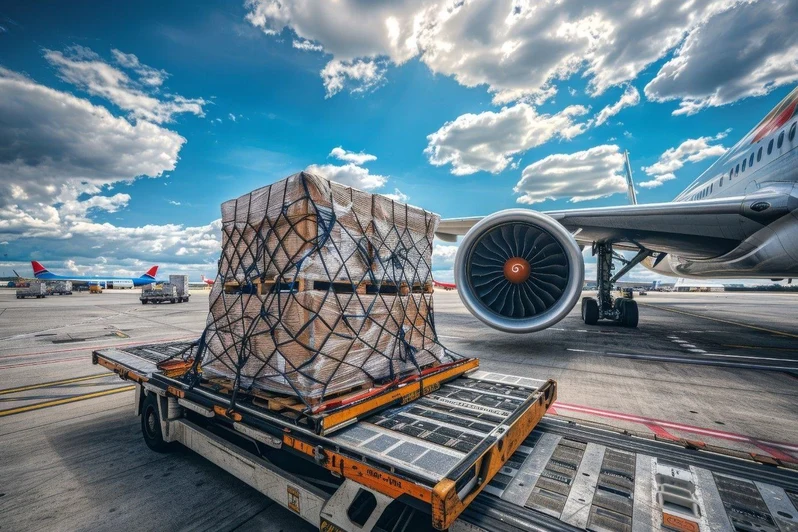
The firm's executive vice president of cargo, Beau Paine, says that during its most recent quarter, aircraft turns were up 8% year on year to 1.2m cargo volumes increased 7% to 620,000 tonnes.
"Cargo volumes across our network have been positive overall during 2026, although performance has varied by region, facility and trade lane," says Paine.
Demand has been particularly strong in markets benefiting from growing e-commerce, express, pharmaceutical and other time-critical traffic.
However, Paine says the growth has not been uniform.
"Trade-policy changes, geopolitical disruption and constrained airspace have altered established cargo flows, while higher fuel costs and tariff uncertainty continue to affect capacity and customer decision-making," he says.
The company's scale and diversified cargo portfolio have helped it respond to changes in demand, Paine points out.
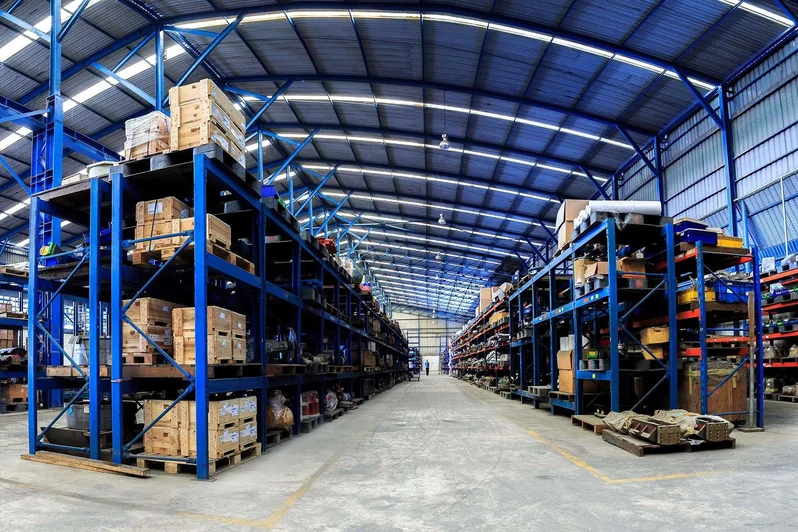
Menzies handles more than 2.4m tonnes annually across a network that includes 73 warehouses and 79 freighter-handling locations, covering general cargo as well as pharmaceuticals, perishables, e-commerce and specialist shipments, he says.
Menzies has also seen some moderation in China-to-Europe e-commerce traffic following the European Union's introduction of a €3 charge for low-value imports.
Paine says this should not be interpreted as a decline in underlying e-commerce demand.
"The operational impact is more significant: the change increases the importance of accurate product-level information, tariff classification, duty processing, pre-arrival data validation and customs readiness," he says.
Internal analysis prepared by Menzies found that China and Hong Kong to Europe tonnage fell by around 9% month on month in July, with Hong Kong down around 19%.
For cargo handlers, the shift towards e-commerce is also changing the nature of the operation, with companies increasingly processing large numbers of individual parcels rather than smaller numbers of consolidated shipments.
"E-commerce means cargo handlers are increasingly processing millions of individual parcels rather than a smaller number of consolidated shipments," says Paine.
"That requires parcel-level data, rapid customs processing, digital scanning, automated sorting and effective exception management, without compromising safety or security."
Investment opportunities
Oceania has emerged as a particular area of opportunity for Menzies, with the company investing in additional capacity at key gateways.
At Western Sydney International Airport, Menzies has begun operations from a new 12,500 sq m facility capable of handling up to 200,000 tonnes annually.
The ability to operate around the clock, combined with the facility's proximity to Western Sydney's expanding manufacturing, distribution and logistics base, positions it to handle e-commerce, express, pharmaceutical, temperature-controlled and oversized cargo, Paine says.
Menzies has also opened Auckland Airport's first dedicated airside cargo terminal. The 32,000 sq m development doubles the company's operational footprint in New Zealand and serves 18 airline cargo partners.
"Demand at these locations is being supported by a combination of regional trade growth, expanding e-commerce and express flows, increased requirements for specialist handling and customers' need for facilities that provide capacity, visibility and resilience," says Paine.
Sydney is another example of investment being driven by demand. The company opened its M1 facility in 2025 to support growing volumes of temperature-sensitive and e-commerce cargo, taking its Sydney operation to three facilities with a combined footprint of more than 20,000 sq m and capacity of up to 250,000 tonnes annually.
The company has been making other investments too, with a focus on increasing capacity, improving cargo visibility and using technology to simplify customers' operations.
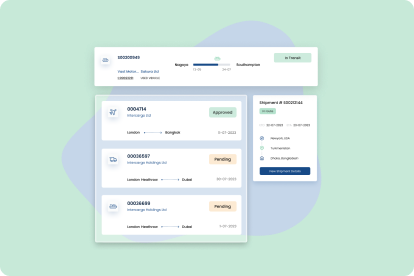
Alongside the new facilities in Western Sydney and Auckland, the company is continuing to expand its MACH global cargo management platform.
MACH is now deployed across 50 airports, has processed more than 1.6m air waybills and manages approximately 55% of Menzies' network cargo tonnage.
The platform provides standardised workflows, shipment visibility and greater consistency in operational control across the cargo journey.
In August, Menzies added Quick Pay to the MACH customer portal in partnership with PayCargo. The service allows customers to view charges associated with an air waybill and complete payment digitally, reducing manual processes and helping to accelerate cargo release.
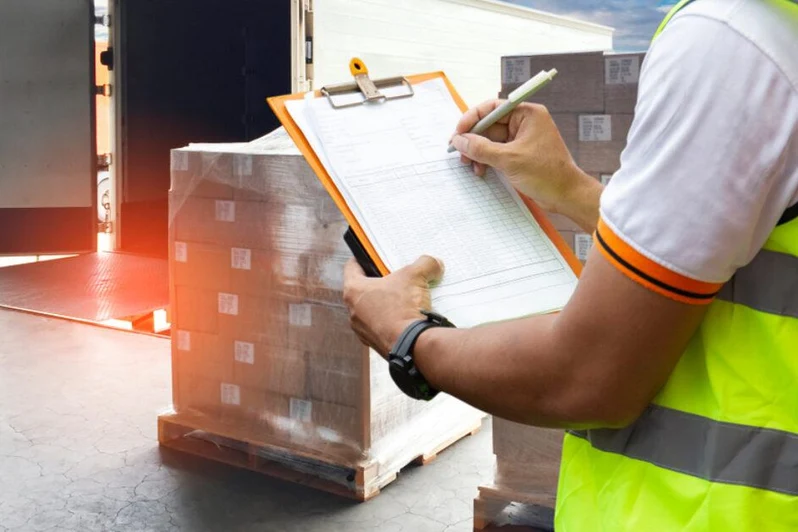
The company is also piloting AI-powered measurement and build-up technology at London Heathrow Airport. The system automatically captures information such as pallet dimensions, weight, stackability and shipment references as cargo moves through the warehouse.
Paine says the aim is to improve data quality, efficiency and decision-making from cargo acceptance through to aircraft loading.
Volatility remains the key challenge
Paine identifies volatility as the biggest challenge facing cargo handlers in 2026.
"Geopolitical tensions, airspace restrictions, changing customs regimes, tariffs and higher fuel prices can quickly alter capacity, routing and demand," he says.
In July, jet fuel prices were 56.9% higher than a year earlier, while some Middle East-linked trade lanes contracted sharply despite overall growth in global cargo demand.
At the same time, handlers face sustained pressure to invest in technology while maintaining resilient frontline operations. Customers increasingly expect real-time visibility, faster truck turnaround, accurate data and predictable cargo release.
Menzies sees MACH, MILE, truck-management technology, AI-powered measurement and digital payments as key components of its response.
Paine also sees significant opportunities for cargo handlers as global trade continues to expand.
"Global demand continues to grow, with e-commerce, pharmaceuticals, specialist cargo and time-critical supply chains creating demand for handlers that can combine global scale with local execution," he says.
Secondary airports and new 24-hour cargo gateways could provide additional opportunities to add capacity, improve resilience and connect cargo more efficiently with manufacturing and fulfilment centres.
For Paine, the role of the cargo handler is therefore evolving beyond the traditional warehouse operation.
"The companies best placed to succeed will be those that move beyond conventional warehouse handling and provide an integrated cargo ecosystem, combining physical infrastructure, forwarding, customs, digital visibility and data-driven operations," he says.
"That is where Menzies' global network, MACH platform, MILE proposition and investment in new facilities give us a strong basis for future growth."