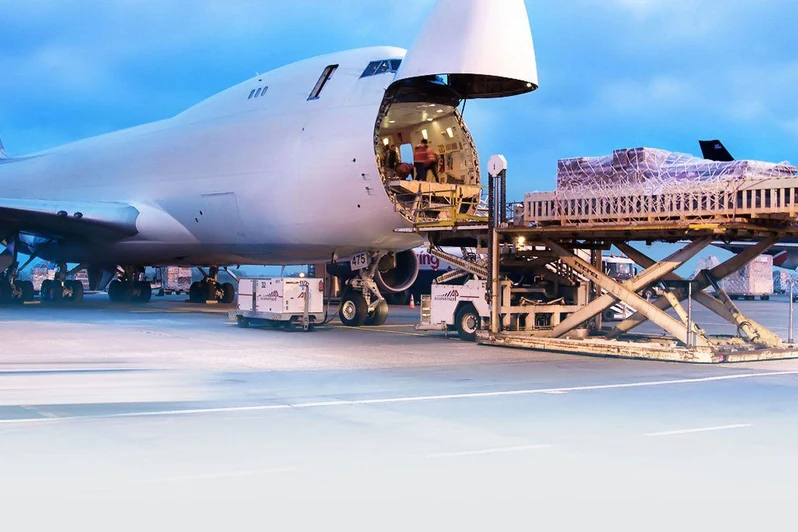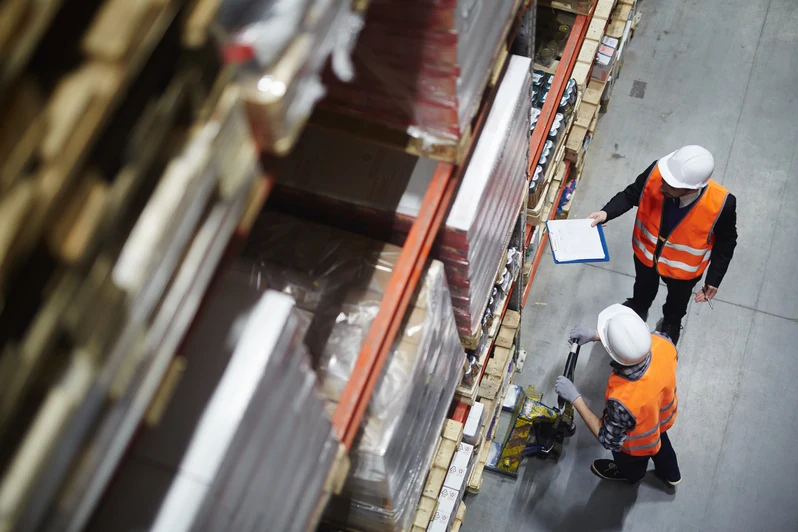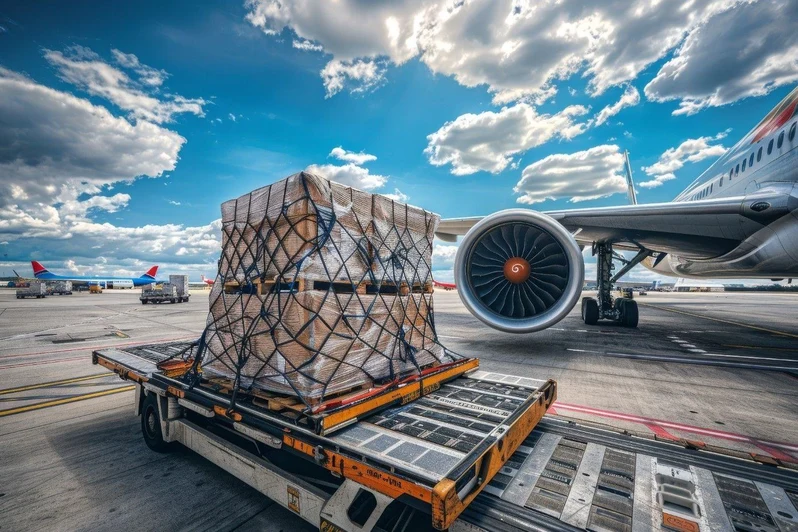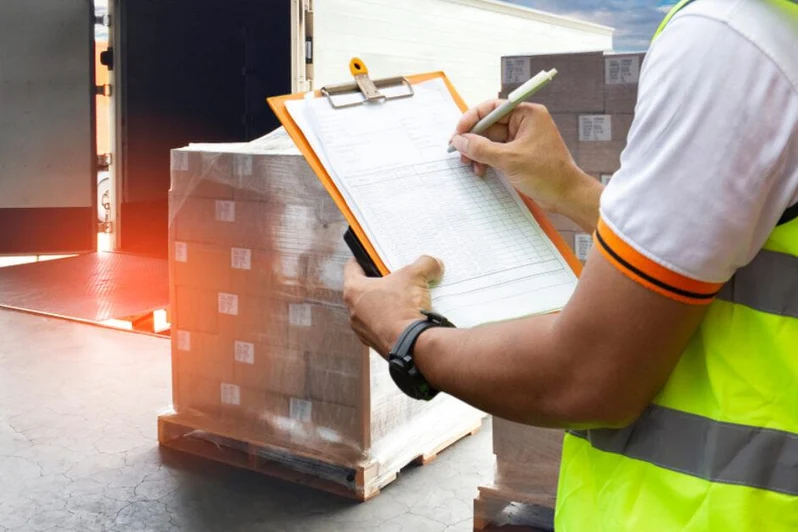
We understand the ever changing needs of our customers

we provide a high level of service dedicated to fulfilling all your shipping requirements

Watch Video
Road Freight

Keep all your data in one place which can be accessed from anywhere and anyplace

Let us help you 24/7 manage your supply chain needs

Back to Global Coverage

South Sudan Freight Forwarding Services
Air Freight Between South Sudan and the UK

Intercargo provides freight forwarding services between South Sudan and the United Kingdom, helping businesses import and export cargo. As a landlocked country in East Africa, South Sudan relies on air freight for fast, reliable international transport.

Whether you are importing goods from South Sudan into the UK, exporting products from the UK to South Sudan, or managing commercial and humanitarian shipments, our experienced freight forwarding team coordinates air freight, route planning and customs compliance.
Air Freight South Sudan to UK
Our South Sudan air freight services provide transportation between South Sudan and the United Kingdom, subject to carrier scheduling and security compliance.
We arrange air freight movements considering South Sudan's landlocked position in East Africa. Shipments route via Juba International Airport (JUB), with UK arrivals through London Heathrow, London Stansted, Manchester Airport and other UK air freight hubs.
Our air freight solutions include:

  • Air freight from South Sudan to the UK
  • Consolidated air freight
  • Customs clearance support
  • Air freight from the UK to South Sudan
  • Direct air freight
  • Project and oversized cargo

Whether you need delivery of humanitarian aid, oil and gas equipment, electronics, pharmaceuticals or commercial goods, our air freight specialists can advise on the most viable routing and handling requirements.
Logistics solutions
Export from the UK to South Sudan
We also help UK businesses export goods to customers, distributors, NGOs and partners throughout South Sudan.
Whether shipping to Juba, Wau, Malakal or other South Sudan destinations, our export specialists can arrange air freight with careful route planning and carrier screening.
Our export services include:

  • Air freight exports
  • Customs compliance
  • Cargo insurance
  • Export documentation
  • Door to airport and door to door delivery
  • Commercial and humanitarian shipments

From single shipments to regular freight movements, we provide scalable logistics solutions designed around your business requirements, taking into account South Sudan's landlocked position. Where sea freight is required, cargo routes via regional ports like Mombasa with overland transit.
Logistics solutions
Import from South Sudan to the UK
Intercargo helps UK businesses import products and cargo from South Sudan through a fully managed freight forwarding service.
Our import services include:

  • Supplier coordination
  • Collection from premises across South Sudan
  • Air freight transportation
  • UK customs clearance
  • Duty and VAT guidance
  • Final delivery throughout the UK

We regularly support imports including:

  • Petroleum, oil and gas equipment
  • Gum arabic and agricultural produce
  • Sugar and timber
  • Humanitarian and relief supplies
  • Commercial samples and goods

Our experienced team ensures your cargo moves efficiently from South Sudan to the UK while remaining compliant with all customs, import and security requirements.
Logistics solutions
Customs Clearance & Air Freight Forwarding for South Sudan
Successful international shipping into South Sudan depends on accurate customs documentation and compliance.
Intercargo provides:

  • Import customs clearance
  • Commodity code classification
  • Duty and tax advice
  • Export customs clearance
  • Documentation assistance
  • End to end tracking

Our experienced freight forwarding team helps minimise delays and keeps your cargo moving smoothly between South Sudan and the United Kingdom.
Logistics solutions
Why Choose Intercargo for South Sudan Freight?
We support importers, exporters, manufacturers, distributors, retailers and e-commerce businesses moving cargo between South Sudan and the UK.
Restricted-market Air Freight Specialists
Uk And South Sudan Trade Lane Expertise
South Sudan Import And Export Solutions
Customs Clearance Support
Door To Door Logistics
Dedicated Account Management
Global Carrier Network
Competitive Freight Rates
Get a South Sudan Freight Quote

Looking for air freight from South Sudan to the UK, or export services from the UK to South Sudan?
Contact Intercargo today for a tailored freight forwarding quotation and expert advice on the most efficient shipping solution for your cargo.
Logistics solutions
Latest News & Updates

Nvidia halts server shipments to Asian markets as new US export rules bite

Is it the beginning of the end for airfreight's new best friend? Following new US export controls, Nvidia has reportedly told its manufacturing partners to stop shipping servers containing its chips to Malaysia, Singapore, Thailand, and Indonesia. According to the UK Financial Times today, citing three sources, manufacturers including Dell and Supermicro have told buyers in the four countries that Nvidia will not allow their orders to ship. It was unclear how long the halt would last - none of the companies has issued a comment. Nikkei Asia had already reported that at least two Nvidia server partners had suspended shipments to South-east Asian customers, with one also pausing orders from new customers in the region. The reports did not quantify the cargo affected or identify which shipments had been booked to fly. The uncertainty is also affecting financing. Bloomberg reported that banks had paused a $480m loan to fund purchases of Nvidia GPUs for a data centre in Malaysia. Since 19 November, the US has required licences for shipments of certain advanced chips subject to its export controls to those four South-east Asian countries and Brazil. The rules can cover some foreign-made chips and include an exclusion for qualifying US-headquartered end users or consignees, or those with a US-headquartered ultimate parent. Separate provisions target overseas data centres supplying significant computing power to certain restricted users. Washington also moved this week to add seven companies to its Entity List, including those linked to Nvidia partner Megaspeed, citing the risk of diversion. Malaysia said it would advise its data centre operators against hosting or providing services to the listed companies. The US move came on the day Nvidia announced Jensen Huang's return as chief executive. He is due to testify before the US Senate Banking Committee on export controls on 3 December. The reported shipment halt comes amid strong demand for air cargo within Asia. Fred Ruggiero, Cathay Cargo's Americas cargo chief, told The Loadstar at TIACA's Air Cargo Forum in Miami that the carrier was looking for more capacity within the region. Another airline executive at the forum pointed to technology shipments from Taiwan and Vietnam as a major source of pressure on space. Cathay, for example, carried 162,747 tonnes in October, up 7.5% year on year, while its network-wide cargo capacity rose just 0.5%. It cited strong export demand from North-east and South-east Asia, including shipments of network equipment from the south-east, and said semiconductor traffic helped drive growth in its specialist cargo business. An additional A330 freighter operated by Air Hong Kong, under a lease announced in June, is due to serve selected regional routes. Across the industry, IATA recorded a 10.2% year-on-year rise in air cargo traffic within Asia in September. Meanwhile, South Korea's semiconductor exports nearly quadrupled in value, year on year, in the first 20 days of November, rising 294.4%, to $38.5bn. Chips accounted for 49.7% of the country's export value over the period. However, the traffic is not just one-way; Cathay is carrying server racks in both directions across the Pacific. "We ship a good number of server racks from Asia into the US, as well as from the US to Asia," said US-based Mr Ruggiero, although he admitted that "we ship more on the inbound than outbound". The rush to build data centres is also putting some of the equipment that powers them on aircraft. A GE Vernova logistics representative told the Miami forum conventional utility projects typically ran on a multi-year timetable. Hyperscalers gave the company less time to manufacture and deliver equipment to site, she said, so it used "a lot more air freight". The air cargo industry will be hoping that these suspensions are just that - suspensions - and that all the AI hardware will soon take to the skies again. Preferably, in time to boost what would otherwise undoubtedly be a lacklustre January.

Source: theloadstar.com

Read more

EU cap on Chinese hybrid imports will be a blow to FVL players

An EU cap on imports of Chinese hybrid cars could deal a serious blow to the business of European finished vehicle logistics (FVL) players, given this is one the most dynamic segments of the market at present. However, while not playing down the impact of a move designed to protect the bloc's incumbent OEMs, the Brussels-based Association of European Vehicle Logistics (ECG remains upbeat on the sector's flexibility and ability to adapt. The EU plans a cap on imports of Chinese hybrid vehicles of 350,000 units, from 1 December, after Beijing agreed to curb exports in a 16-point trade consensus. There is provision to increase the cap by 6% annually thereafter. According to Eurostat, the EU's official data source, in the first eight months of 2026. imports of hybrid cars had surpassed the full-year 2025 volume by 64%, and reached 474,475 units - a 175% year-on-year jump. "It's not our role to say how many vehicles should be imported. Our interest is in understanding how measures like this could change vehicle flows and what that would mean for logistics capacity," ECG executive director Frank Schnelle told The Loadstar. "Limiting imports to 350,000 units annually would clearly affect FVL operators that handle a lot of hybrid vehicles from China. But a reduction in such imports would not automatically mean fewer cars being sold in Europe. If overall demand holds up, some of that volume could be replaced by other types of automobiles, including battery electric vehicles from China. or vehicles sourced from other markets. "For our members, this could mean a shift in transport routes and where vehicles are handled. Capacity is currently well-used overall. Ocean shipping lines are ordering vessels and vehicle storage areas are being expanded at ports." The surge in Chinese hybrid cars into the EU over the past couple of years was largely the result of hefty anti-subsidy tariffs on BEVs from China in October 2024, explained Rico Luman, senior sector economist, transport & logistics, at Dutch bank ING. "Basically, Chinese brands shifted their sales efforts to hybrids to sidestep these tariffs," he said. However, the tariffs have done little to stop Chinese EV growth in Europe, and sales have remained resilient despite the duties. Mr Luman quoted data showing China's share of European new car sales has continued to grow, reaching 10% for the first nine months of the year, compared with 6% in the corresponding period last year. "I would expect (in light of the cap on hybrids) a renewed push for Chinese BEV vehicles. Also, a brand like BYD which plans to start its own production in Szeged, in Hungary, will likely start turning out hybrids for the European market, alongside full-electric vehicles. Others, such as Leapmotor, could do this too. "All-in-all, this supports European production and will temper Chinese imports somewhat, but without stalling import growth completely. European FVL players will see a reshaping of trade routes. New production locations and 'co-operative' locations (between OEMs) will emerge and be scaled up, requiring parts that will need to be sourced from Europe. In a changing market landscape agility will be paramount." The latest figures from Europe's biggest port for finished vehicle traffic, Antwerp-Zeebrugge, showed the Far East, which includes China, accounted for more than 55% of imports - 706,228 units - in the first nine months up 28% year on year.

Source: theloadstar.com

Read more

Norse Cargo faces an uncertain future

Norse Cargo operations face an uncertain future after Norse Atlantic was issued with lease termination notices for its entire fleet of aircraft. The airline suspended operations on 26 November because of financial difficulties but received another blow when it received notices from aircraft lessors for the termination of agreements for all 12 aircraft in the Norse fleet. In response, the airline said that it was contesting the validity of the termination notices for its 12 Boeing 787-9s. "The Company continues discussions to secure short-term financing," Norse Atlantic added. "There can be no assurance that a viable solution will be found. Further information will be provided as and when appropriate." The airline's cargo division, Norse Cargo, offers capacity on flights from Athens, Rome Fiumicino, Gatwick, Bangkok, Cape Town, Orlando and New York JFK, according to its summer schedule. It also offers road feeder services in Europe, Scandinavia, the UK and US. Cargo sales operations include services from GSAs including Kales, SkyXS, Air Logistics, Aviation Plus, HAE and AirCross, according to its website. The long-haul low-cost carrier filed for bankruptcy on Thursday after warning it was facing a critical financial situation. The company said it is in discussions with investors regarding a possible takeover that would include a financing solution. Under the circumstances, the company suspended all flights. According to sister publication FlightGlobal, the airline emerged in early 2021 shortly after budget carrier Norwegian abandoned its own Boeing 787 long-haul operation as part of an extensive restructuring. While long-haul travel had been severely affected by the Covid-19 pandemic, Norse embarked on establishing a scheduled low-cost transatlantic operation with a leased 787 fleet, commencing services on the Oslo-New York route in June 2022. But while it has achieved strong revenue growth and broadened its network beyond transatlantic services, the airline has struggled to overcome losses. While it turned in positive earnings over a few short periods, it never achieved full-year profitability. Norse ultimately revamped its business strategy, allocating half its 787 fleet to providing leased capacity for other carriers. But its initial agreement with Indian airline IndiGo for six aircraft only lasted about 18 months because geopolitical issues undermined IndiGo's original business case. Although Pakistan International Airlines stepped in to lease two aircraft shortly afterwards, this operation only lasted a couple of weeks before being interrupted by the Norse suspension. The revamped strategy also had an impact on cargo performance, with cargo volumes falling 53.7% year on year in the second quarter to 3,776 tonnes. Vincent De Vroey, civil aviation director at aerospace association ASD, said that the financial difficulties faced by Norse Atlantic are "another illustration of the structural weaknesses of the standalone low-cost long-haul business model". He pointed out that several other airlines had tried to make the business model work but added that the fundamental economics of long-haul aviation are very different from those of short-haul operations. "Fuel, aircraft ownership, maintenance, crew costs and airport charges leave considerably less scope for the cost advantages that have made short-haul low-cost carriers so successful," he said, adding that premium traffic - business class seating etc - is "essential to sustainable long-haul economics". He added that high fuel had accelerated the demise of the airline but was not its fundamental cause.

Source: aircargonews.net

Read more

Privacy Preference Center

This website uses cookies and similar technologies, (hereafter “technologies”), which enable us, for example, to determine how frequently our internet pages are visited, the number of visitors, to configure our offers for maximum convenience and efficiency and to support our marketing efforts. These technologies incorporate data transfers to third-party providers based in countries without an adequate level of data protection (e. g. United States). For further information, including the processing of data by third-party providers and the possibility of revoking your consent at any time, please see your settings under “Consent Preferences” and our Privacy Notice.


Manage Consent Preferences
Strictly Necessary Cookies
Always Active

Performance Cookies

Functional Cookies

Targeting Cookies