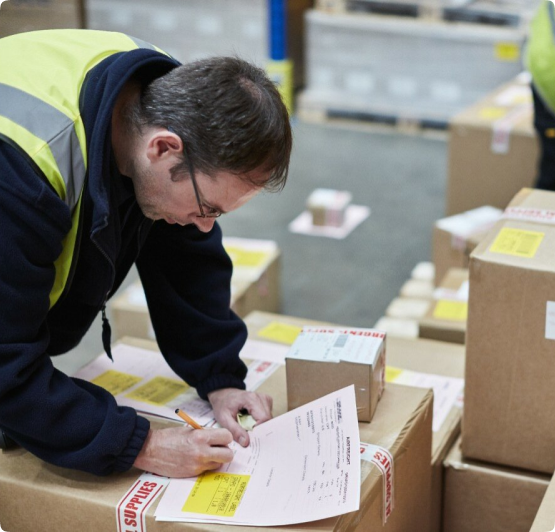
We understand the ever changing needs of our customers

we provide a high level of service dedicated to fulfilling all your shipping requirements

Watch Video
Road Freight

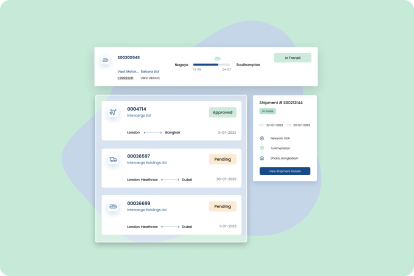
Keep all your data in one place which can be accessed from anywhere and anyplace

Let us help you 24/7 manage your supply chain needs

Back to Global Coverage

South Korea Freight Forwarding Services
Air & Sea Freight Between South Korea and the UK

Intercargo provides reliable freight forwarding services between South Korea and the United Kingdom, helping businesses import and export cargo efficiently by air and sea.

Whether you are importing goods from South Korea into the UK, exporting products from the UK to South Korea, or managing regular international shipments, our experienced freight forwarding team provides complete end-to-end logistics solutions. From collection and customs clearance to final delivery, we manage every stage of the shipment process.
Logistics solutions
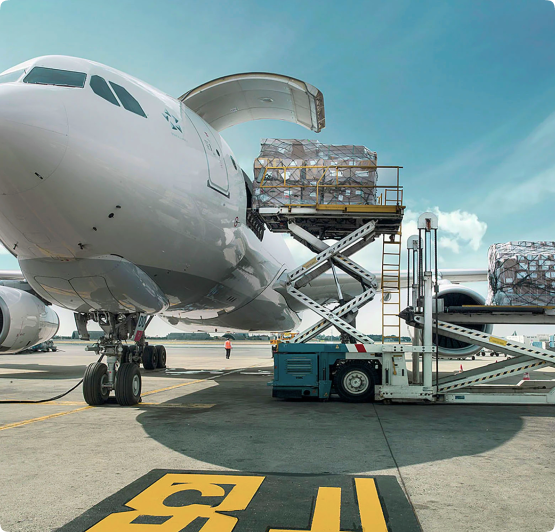
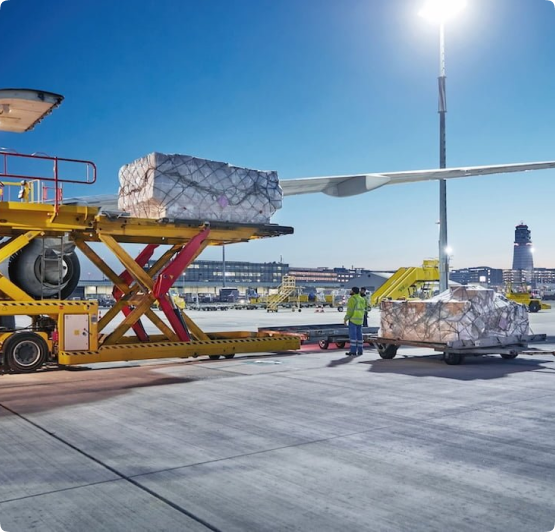
Air Freight South Korea to UK
When speed matters, our South Korea air freight services provide fast, secure and reliable transportation between South Korea and the United Kingdom.
We arrange air freight through Incheon International Airport, Gimpo International Airport, Gimhae International Airport in Busan and Daegu International Airport, with UK arrivals through London Heathrow, London Stansted, Manchester Airport, Birmingham Airport and East Midlands Airport.
Our air freight solutions include:

  • Air freight from South Korea to the UK
  • Express and economy air cargo
  • Door to door delivery
  • Time critical shipments
  • Air freight from the UK to South Korea
  • Airport to airport services
  • Customs clearance support
  • High value and commercial cargo

Whether you need urgent delivery of electronics, semiconductors, automotive components, machinery, pharmaceuticals or commercial goods, our air freight specialists can provide the most efficient solution.
Logistics solutions
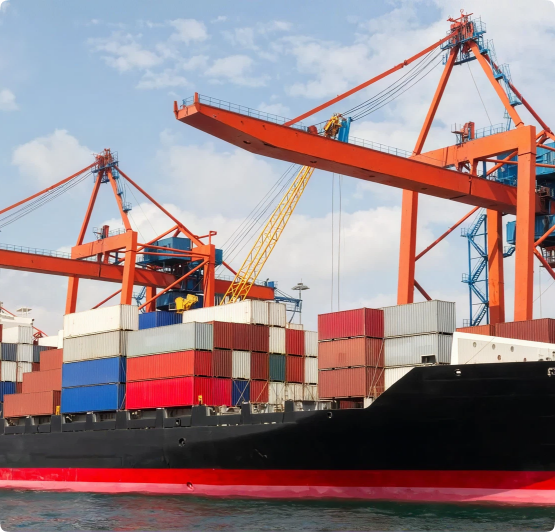
Sea Freight South Korea to UK
For larger shipments and cost-effective transportation, our sea freight services provide dependable shipping solutions between South Korea and the UK.
We regularly arrange cargo movements through Port of Busan, Port of Incheon, Port of Gwangyang and Port of Ulsan, with UK arrivals through Port of Felixstowe, Southampton, London Gateway, Liverpool, Tilbury and Immingham.
Our sea freight services include:

  • Full Container Load (FCL)
  • Port to port shipping
  • Customs documentation
  • Project cargo
  • Less than Container Load (LCL)
  • Door to door logistics
  • Cargo insurance
  • Oversized and heavy lift shipments

Whether shipping machinery, automotive parts, industrial equipment, chemicals, manufacturing products or commercial cargo, we can tailor a sea freight solution to suit your budget and transit requirements.
Logistics solutions
Import from South Korea to the UK
Intercargo helps UK businesses import products and cargo from South Korea through a fully managed freight forwarding service.
Our import services include:

  • Supplier coordination
  • Air and sea freight transportation
  • Duty and VAT guidance
  • Final delivery throughout the UK
  • Collection from South Korean factories, warehouses and commercial premises
  • UK customs clearance
  • Warehousing and distribution

We regularly support imports including:

  • Electronics and semiconductors
  • Manufacturing components
  • Batteries and electrical equipment
  • Chemicals and pharmaceuticals
  • Automotive vehicles and components
  • Machinery and industrial equipment
  • Plastics and manufactured products
Our experienced team ensures your cargo moves efficiently from South Korea to the UK while remaining compliant with all customs and import requirements.
Logistics solutions
Export from the UK to South Korea
We also help UK businesses export goods to customers, distributors and partners throughout South Korea.
Whether shipping to Seoul, Busan, Incheon, Daegu, Daejeon, Ulsan or other commercial and industrial locations across South Korea, our export specialists can arrange a seamless freight solution by air or sea.
Our export services include:

  • Air freight exports
  • Export documentation
  • Cargo insurance
  • Commercial and industrial shipments
  • Sea freight exports
  • Customs compliance
  • Door-to-door delivery

From single shipments to regular freight movements, we provide scalable logistics solutions designed around your business requirements.
Logistics solutions
Customs Clearance & Freight Forwarding
Successful international shipping depends on accurate customs documentation and compliance.
Intercargo provides:

  • Import customs clearance
  • Commodity code guidance
  • Duty and tax assistance
  • End to end shipment visibility
  • Export customs clearance
  • Shipping documentation
  • Freight forwarding management

Our experienced freight forwarding team helps minimise delays and keeps your cargo moving smoothly between South Korea and the United Kingdom.
Logistics solutions
Why Choose Intercargo for South Korea Freight?
We support importers, exporters, manufacturers, distributors, retailers, construction companies and e-commerce businesses moving cargo between South Korea and the UK.
Air Freight And Sea Freight Specialists
Uk And South Korea Trade Lane Expertise
Import And Export Solutions
Customs Clearance Support
Door To Door Logistics
Dedicated Account Management
Global Carrier Network
Competitive Freight Rates
Get a South Korea Freight Quote

Looking for air freight from South Korea to the UK, sea freight from South Korea to the UK, or export services from the UK to South Korea?
Contact Intercargo today for a tailored freight forwarding quotation and expert advice on the most efficient shipping solution for your cargo.
Logistics solutions
Latest News & Updates

Cargo boycott threat by Indian brokers over empty-box fee hikes

A new storm of stakeholder disputes, and potential operational disruption, is brewing across Indian ports over policy changes by container lines on empty-container handling and associated depot charges. The loading and unloading of empty boxes at yards is the flashpoint for discontent and disagreement between supply chain intermediaries and carriers. Maersk, for example, has substantially raised its lift-on/lift-off (lo-lo) charges for empties moving via Mundra, India's busiest container port and the primary gateway for the hinterlands around Delhi. The revision, implemented from 1 November, effectively more than doubled the rates shippers had been charged, from $23 to $51 per 20ft empty box, and from $31 to $67 per 40ft, plus local taxes. "Customers are requested to take notice of this change and make the necessary arrangements to ensure smooth container pick-up and drop-off operations," Maersk told customers. Additionally, the carrier advised them to settle the charges directly with nominated depot service providers, an issue that had already become contentious at Chennai port. Now the controversy is becoming industry-wide, as sources expect other carriers to issue similar trade notices for their 'empty' operations at Mundra. Ondeed, one liner source told The Loadstar: "We are discussing the matter." At Chennai, MSC seems to be facing the brunt of a trade pushback against the practice of routing empty tariff collections through third-party depot vendors, which cargo agents claim opens the market to an unregulated environment. "MSC has taken the lead in implementing this collection practice in Chennai, following which other shipping lines have initiated similar measures," the Chennai Customs Brokers Association (CCBA) noted. The CCBA claimed the policy shift was fraught with "serious economic and operational implications for cargo agents", as it had seen third-party vendors keep inflating tariffs once taken over. "Allowing third-party vendors to collect additional charges without adequate transparency or accountability would create an open-ended financial burden on the export/import trade, particularly customs brokers," it said. The association also claimed its member agents - an integral part of India's supply chains - were being increasingly 'caught in the middle', with exporters and importers refusing to reimburse the add-ons that had found their way onto final customer bills. Indeed, the CCBA has threatened to boycott MSC shipments if the new practice is not reversed by 15 November, and told The Loadstar: "Our association will follow the same stance in the case of other shipping lines seeking similar depot arrangements." According to sources, some carriers serving JNPA (Nhava Sheva) have also switched to the practice of permitting nominated yards to collect lo-lo charges directly from shippers, despite strong resistance from the cargo-handling community. "Any logistics cost increase ultimately goes straight down to the shipper, making it difficult to explain, or sort out," one forwarder said. "Intermediaries add price mark-ups, an area Indian logistics policymakers have been trying to streamline through reforms," added one industry observer.

Source: theloadstar.com

Read more

Atlas Air adds Incheon cargo terminal

Atlas Air Worldwide has opened a new cargo terminal at Incheon International (ICN) in partnership with Sharp Aviation K to cater for growth in its Asia business. The new Cargo Terminal 3 measures 19,320 sq m and adds 180,000 tons of annual handling capacity. The terminal will expand Atlas' pharma capabilities by adding a 2,900 sq m cool chain complex. The facility will be operated by Atlas Air Cargo Terminals (AACT), a joint venture between Atlas Air Worldwide and Sharp Aviation K. AACT, established by Atlas and Sharp in 2007, now operates three cargo terminals at Incheon, providing nearly 49,000 sq m of cargo infrastructure and annual handling capacity exceeding 460,000 tons. Atlas and Sharp are also advancing the development of Atlas Air Technical Services (AATS), a dedicated four-bay widebody maintenance facility at Incheon that is expected to become operational in 2027. The company said that the two projects would support its long-term growth and the evolving demands of the Asia Pacific air cargo market. Atlas Air Worldwide chief executive Michael Steen said: "Asia remains one of the most important regions for global trade, and our longstanding partnership with Sharp has enabled us to deliver high-quality ground handling services to our customers in Korea. "Through AACT, we've built a world-class cargo handling platform that continues to grow with the needs of our customers." The development of AATS will allow Atlas to insource approximately one-third of its heavy maintenance volume, to provide greater control over maintenance quality and turnaround times. "Together, these investments reflect our long-term commitment to the region and our focus on building the infrastructure and capabilities needed to support our customers' growth," added Steen.

Source: aircargonews.net

Read more

Hapag's ASX will reverse December Asia-ECSA capacity squeeze

On the question of whether the ASX replaces the AS3, the rotations point the other way. Together they give Hapag-Lloyd two weekly sailings into the same four Brazilian gateways, each fed from a different Chinese catchment - imitating how CMA CGM and its Ocean Alliance partners pair SEAS 2 and SEAS A. Add the slots Hapag-Lloyd buys on Maersk's ASAS, which still calls Buenos Aires and Montevideo direct, and the Hamburg-based line covers the trade three ways. However, we cannot exclude that ASX could serve as a policy insurance, should Hapag and Zim part ways on their joint AS3/ZFS. Read the rotation, not the press release ASX runs a port rotation of Qingdao-Ningbo-Shekou-Tanjung Pelepas-Santos-Itajaí-Rio Grande-Paranaguá-Santos-Singapore. Five choices stand out. It gathers westbound cargo at Tanjung Pelepas, while every rival on the trade uses Singapore. The two are 30 miles apart and interchangeable for a customer's box, so this is not about the shipper; it is about which network ASX plugs into - which matters for a different reason, outlined below. It skips Shanghai. ASX is the only Asia-ECSA service that does not call at the largest container port on the planet. This leads towards an engineered network to work with Gemini's shuttles. It calls at Itajaí before Paranaguá. Most services run Santos, then Paranaguá. Hapag-Lloyd puts Santa Catarina second on discharge and pushes Paranaguá to fourth, so Paranaguá imports arrive later while its exports, loaded late in the sweep, keep a fast run to Asia. It places Rio Grande in the middle, not at an end. Rio Grande is usually first or last, marking it as an import or an export port. Here it is the turn of the loop and the single feeder pivot for Montevideo and Buenos Aires, so it has to sit mid-string to connect the River Plate both ways. And it reaches north to Qingdao, while not having Hong Kong on the backhaul, and imports will be left to a Singapore relay. What its presence really tells us, is that ASX & AS3 are meant to stay side by side, offering a complete portfolio of corridors to Hapag customers. The tight market has an expiry date For shippers, the timing matters more than the branding. December removes the Maersk-CMA CGM ASAS2 loop and, by my count, nominal weekly capacity from Asia falls by about 6%. In April, MSC replaces Hapag-Lloyd's five ships on Ipanema with its own, and Hapag-Lloyd adds a whole new loop. At ship sizes like AS3's, that is in the order of 10,000 teu a week of extra capacity, and enough to reverse December's cut. Therefore, shippers signing annual contracts this winter should not price December's tighter market as permanent. By the second quarter next year, the Asia-east coast South America trade will be split between at least four groups that each control their own ships: the Ocean Alliance members; MSC with ONE; Maersk; and Hapag-Lloyd with or without Zim. That is a more competitive trade than the one these partnerships created, and it arrives just as contracts signed during the squeeze start to kick in.

Source: theloadstar.com

Read more

Privacy Preference Center

This website uses cookies and similar technologies, (hereafter “technologies”), which enable us, for example, to determine how frequently our internet pages are visited, the number of visitors, to configure our offers for maximum convenience and efficiency and to support our marketing efforts. These technologies incorporate data transfers to third-party providers based in countries without an adequate level of data protection (e. g. United States). For further information, including the processing of data by third-party providers and the possibility of revoking your consent at any time, please see your settings under “Consent Preferences” and our Privacy Notice.


Manage Consent Preferences
Strictly Necessary Cookies
Always Active

Performance Cookies

Functional Cookies

Targeting Cookies