We understand the ever changing needs of our customers

we provide a high level of service dedicated to fulfilling all your shipping requirements

Watch Video
Road Freight

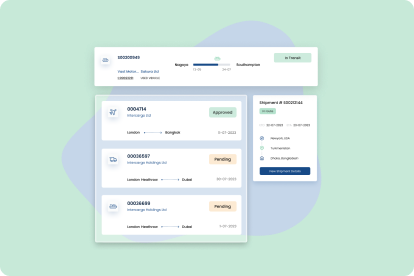
Keep all your data in one place which can be accessed from anywhere and anyplace

Let us help you 24/7 manage your supply chain needs

Back to Global Coverage

Saudi Arabia Freight Forwarding Services
Air & Sea Freight Between Saudi Arabia and the UK

Intercargo provides reliable freight forwarding services between Saudi Arabia and the United Kingdom, helping businesses import and export cargo efficiently by air and sea.

Whether you are importing goods from Saudi Arabia into the UK, exporting products from the UK to Saudi Arabia, or managing regular international shipments, our experienced freight forwarding team provides complete end to end logistics solutions. From collection and customs clearance to final delivery, we manage every stage of the shipment process. Please note that carrier and security restrictions may apply to certain shipments involving Saudi Arabia.
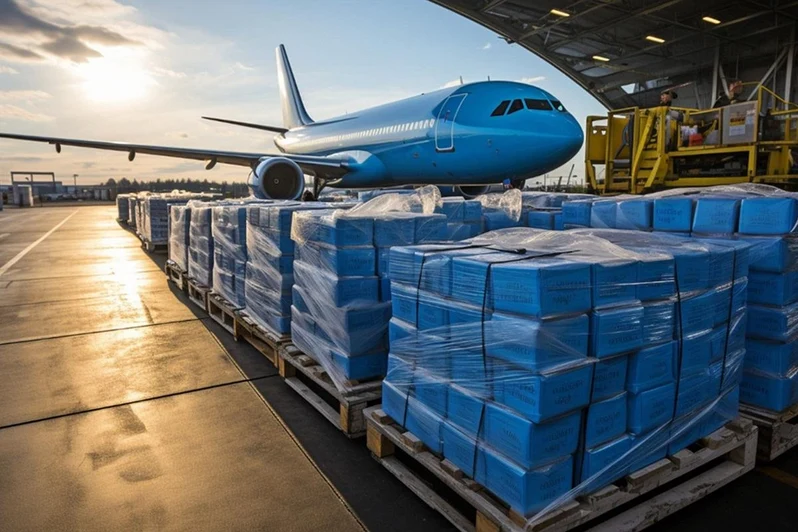
Air Freight Saudi Arabia to UK
When speed matters, our Saudi Arabia air freight services provide fast, secure and reliable transportation between Saudi Arabia and the United Kingdom.
We arrange air freight through King Khalid International Airport (RUH), King Fahd International Airport (DMM), King Abdulaziz International Airport (JED) and other Saudi gateways, with UK arrivals through London Heathrow, London Stansted, London Luton, Manchester Airport and Birmingham Airport. Carrier and security restrictions may apply on certain routes.

Our air freight solutions include:

  • Air freight from Saudi Arabia to the UK
  • Express and economy air cargo
  • Door to door delivery
  • Time critical shipments
  • Air freight from the UK to Saudi Arabia
  • Airport to airport services
  • Customs clearance support
  • High value and commercial cargo

Whether you need urgent delivery of pharmaceuticals, electronics, textiles, automotive parts, tobacco products, food products or commercial goods, our air freight specialists can provide the most efficient solution for your shipment.
Logistics solutions
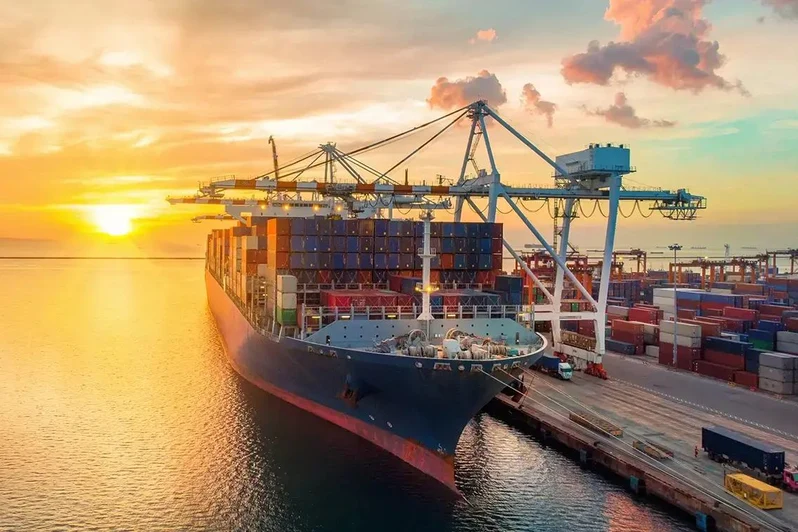
Sea Freight Saudi Arabia to UK
For regular and cost effective transportation, our sea freight services provide reliable ocean shipping solutions between Saudi Arabia and the UK.
Sea freight from Saudi Arabia travels via the Red Sea and North Sea, with UK arrivals through major ports such as Felixstowe, Southampton, Tilbury and Liverpool. Carrier and security restrictions may apply on certain routes.

Our sea freight services include:

  • Full Container Load (FCL)
  • Scheduled and express sea freight
  • Customs documentation
  • Temperature controlled transport
  • Less than Container Load (LCL)
  • Door to door logistics
  • Cargo insurance
  • Oversized and heavy load shipments

Whether shipping textiles, automotive components, machinery, electronics, tobacco, agricultural produce, food products or commercial stock, we can tailor a sea freight solution to suit your budget and transit requirements.
Logistics solutions
Import from Saudi Arabia to the UK
Intercargo helps UK businesses import products and cargo from Saudi Arabia through a fully managed freight forwarding service.

Our import services include:

  • Supplier coordination
  • Air and sea freight transportation
  • Duty and VAT guidance
  • Final delivery throughout the UK
  • Collection from Saudi Arabia businesses, warehouses and commercial premises
  • UK customs clearance
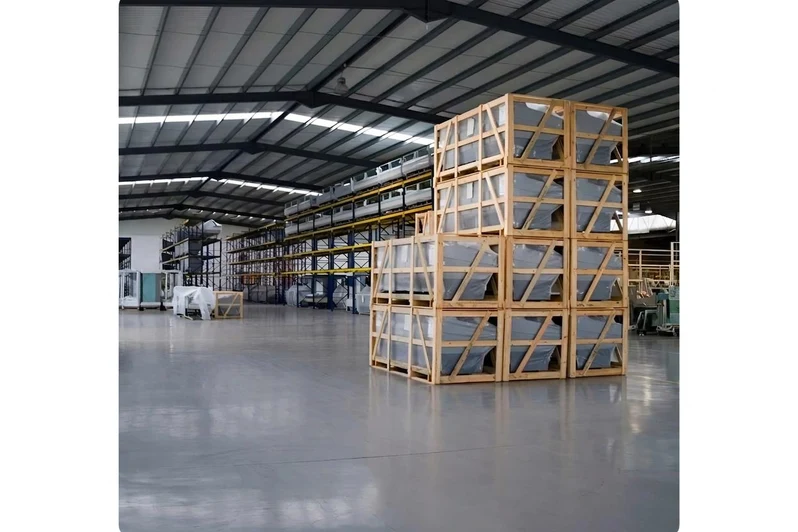
  • Warehousing and distribution

We regularly support imports including Saudi Arabia goods:

  • Textiles and clothing
  • Tobacco and tobacco products
  • Agricultural and food products
  • Wine and beverages
  • Machinery and mechanical equipment
  • Iron, steel and metal products
  • Automotive parts and components
Our experienced team ensures your cargo moves efficiently from Saudi Arabia to the UK while remaining compliant with all customs and import requirements.
Logistics solutions
Export from the UK to Saudi Arabia
We also help UK businesses export goods to customers, distributors and partners throughout Saudi Arabia.
Whether shipping to Riyadh, Jeddah, Dammam, Jubail or other major Saudi destinations, our export specialists can arrange a seamless freight solution by air or sea.

Our export services include:

  • Air freight exports
  • Export documentation
  • Cargo insurance
  • Commercial and industrial shipments
  • Sea freight exports
  • Customs compliance
  • Door to door delivery

From single shipments to regular freight movements, we provide scalable logistics solutions designed around your business requirements.
Logistics solutions
Customs Clearance & Freight Forwarding
Successful international shipping depends on accurate customs documentation and compliance.

Intercargo provides:

  • Import customs clearance
  • Commodity code guidance
  • Duty and tax assistance
  • End to end shipment visibility
  • Export customs clearance
  • Shipping documentation
  • Freight forwarding management

Our experienced freight forwarding team helps minimise delays and keeps your cargo moving smoothly between Saudi Arabia and the United Kingdom.
Logistics solutions
Why Choose Intercargo for Saudi Arabia Freight?
We support importers, exporters, manufacturers, distributors, retailers and e commerce businesses moving cargo between Saudi Arabia and the UK.
Air And Sea Freight Specialists
Uk And Saudi Arabia Trade Lane Expertise
Import And Export Solutions
Customs Clearance Support
Door To Door Logistics
Dedicated Account Management
Global Carrier Network
Competitive Freight Rates
Get a Saudi Arabia Freight Quote

Looking for air freight from Saudi Arabia to the UK, sea freight from Saudi Arabia to the UK, or export services from the UK to Saudi Arabia?
Contact Intercargo today for a tailored freight forwarding quotation and expert advice on the most efficient shipping solution for your cargo.
Logistics solutions
Latest News & Updates

The end of double keying: why we built OceanRate for the whole industry

Somewhere in every logistics business, someone is re-keying a rate sheet right now. A pricing analyst at a carrier. A two-person NVOCC. The rates desk at a top-20 forwarder. A shipper's logistics manager with a stack of quotes and a tender due on Friday. The layouts are different, the surcharges are different, the validity dates are buried on page nine, and the job is the same: read it, understand it, type it into something you can actually use. It has been like this for as long as I have worked in freight, and that is more than twenty years. Every carrier, forwarder and NVOCC has its own rate format. There are more surcharges than ever and rates change faster than ever. The tooling has moved on everywhere else, but rate sheets still arrive the way they always did: an Excel file in one layout, a PDF contract in another, an amendment in Word, a tariff feed in EDI, a screenshot of somebody's screen, an email with the numbers in the body. And somebody types it all in. What we learned inside the enterprise Two years ago we launched the first AI for ocean rates. We had become Anthropic's very first global supply chain partner and our early products included multiple world first's that were built for our enterprise customers, global shippers managing thousands of lanes and dozens of carrier contracts, and it reads any rate sheet from any carrier or forwarder, every minute of every day. Those customers have cut about 85% of the time they used to spend managing rates. But it only ever reached the companies that bought the whole Ship Angel platform, and that is a small fraction of the people who have to deal with a rate sheet. Any rate sheet, one clean format OceanRate changes that. It is the first product from Ship Angel Labs, and the first thing we have built for the whole industry rather than for our enterprise customers alone. Upload any ocean rate sheet in any layout, Excel, PDF, Word, EDI, CSV, an email, even a photo of the page, and get it back in minutes as one clean, structured format: origin, destination, container type, rate, currency, surcharges and validity dates, ready to use in Excel or as JSON for whatever system sits downstream. It runs on the same engine that runs rate management for some of the world's biggest shippers. Your rates stay confidential. Who is it for? Anyone who touches a rate sheet. A two-person NVOCC can use it. So can a carrier pricing desk, a forwarder's tender team, or a shipper's analyst with a pile of quotes. That is the point of Labs: take capabilities we have proved inside the enterprise platform and put them in the hands of the whole industry, built so that a small business can use them without buying an enterprise system first. Why it matters beyond the hours saved Re-keying is where errors are born. A surcharge missed on the way in becomes an invoice dispute on the way out. A validity date mistyped becomes a booking at the wrong rate. The industry has spent a decade talking about data quality while quietly accepting that its most important commercial data, the price of moving a container, enters most systems through a keyboard. Structured rates are also the foundation for everything that comes next: rate comparison, contract compliance, invoice audit, and the agent-driven procurement that is already live at our enterprise customers. You cannot automate what you have not structured. Get the rates clean and the rest of the stack starts to work the way it was always supposed to. Early access is open OceanRate is in early access now, and places are limited while we scale it. You can join the waitlist at oceanrate.ai. If you run a rates desk and want to be among the first to put it to work, I would like to hear from you. The days of double keying are over Graham Parker is CEO and Founder of Ship Angel. OceanRate by Ship Angel Labs is at oceanrate.ai, and the launch announcement is on LinkedIn. Graham can be reached at [email protected]. This article is sponsored by Ship Angel

Source: theloadstar.com

Read more

Mister Air launches its own-operated cargo flights with Boeing 757 lease

AerSale Corporation, a US-based supplier of aftermarket commercial aircraft, engines, and proprietary engineered solutions, has leased a Boeing 757-200PCF aircraft to Mister Air Transport, a Romanian-based cargo carrier. The converted freighter is expected to enter revenue service this month (October). Delivery of the 757-200PCF freighter marks the launch of Mister Air's own flight operations, flying under its own certificate and crews rather than chartering capacity from other carriers. The aircraft is to be the first of more, as Mister Air seeks to build a dedicated medium-haul freighter fleet. The Boeing 757-200PCF freighter's combination of long range, high payload capacity and operational reliability is well suited to Mister Air's strategy of targeting the 'middle-mile' markets, AerSale said. That strategy is expected to connect major production and e-commerce gateways across Central and Eastern Europe, offering services where the use of larger widebodies would be uneconomic. Craig Wright, AerSale's senior vice president & head of asset management, observed: "The 757 remains one of the most capable and sought-after platforms in its segment, and this transaction reflects both the strength of that asset class and AerSale's ability to deliver flight-ready aircraft to operators pursuing ambitious growth." Ireneusz Dylczyk, chief executive of Mister Air, remarked: "This Boeing 757-200PCF marks an important milestone in Mister Air's growth and the launch of our own flight operations. "The 757's range and payload make it the ideal aircraft for our customers. AerSale proved to be a professional and responsive partner throughout the process. This aircraft lays the foundation for the additional freighters we intend to introduce as we scale our network." Operating under a Romanian air operator certificate (AOC) but based at Lódź Władysław Reymont Airport (LCJ) in Poland, Mister Air is a cargo charter airline providing scheduled and ad-hoc freighter services focused on express e-commerce and parcel cargo between Asia, the Middle East and Central and Eastern Europe. Its operations are managed by Lódź-headquartered AerCommerce, which provides cargo charter and brokerage services, and Mister Air is to deploy the aircraft on behalf of AerCommerce's established cargo customer base.

Source: aircargonews.net

Read more

Is FOMO driving sentiment in the containership charter market?

The containership timecharter (T/C) market has taken another lurch upwards in recent months, with numerous participants describing a renewed scramble by liner operators - especially the largest European players - to secure any available tonnage. Most market benchmarks have participated in the recent strengthening, with the assessed one-year T/C rate for MSI's 1,700 teu Grd (geared) Non-Eco benchmark rising from $28,800 a day in June to $34,100/day in September, and our 6,500 teu Gls [gearless] Non-Eco benchmark increasing from $68,400/day to $78,300/day over the same period. As noted in MSI's Containerships Q3 26 report, the market cooled a little in the second half of September, compared with the height of the northern hemisphere's summer, but this remains a market in which non-operating owners (NOOs) are firmly in the driving seat, and charterers are still willing to fix vessels in the liquid market segments for two-to-three years at healthy rates, and often for forward delivery dates. Larger benchmarks have generally seen the greatest uplift to broker assessments, despite the paucity of actual fixtures. Broker assessments for 'classic' 4,300 teu panamaxes have whip-sawed a little, but this mostly reflects a situation where market liquidity is thin and concrete fixtures can lead to a quick reassessment of market levels. The lack of charter market-sized vessels available to hire, in both the near- and medium-term, means an upward movement in rates is the unsurprising outcome of a renewed fixing drive by the major liners. However, a number of market players have found this renewed rush to hire anything that floats - or is soon to float, in the case of newbuilds from obscure Chinese yards - surprising, and it is prompting people to ask what the liner operators know that the rest of the market doesn't. The scramble to secure ships is despite an acceleration in plans to route vessels back through the Red Sea, and the knowledge that vessel newbuild deliveries are about to increase substantially, and without respite, until some way into 2029. For now, the operation of containerships, even expensive chartered ships, remains profitable. The mindset is that, without ships, liner companies may miss out on opportunities to carry lucrative cargo. From an overall cost-per-slot perspective, as well, the economies of scale associated with the larger assets being delivered into liner fleets may also have reduced the marginal impact on overall costs of hiring an additional charter-market ship at an eye-watering rate (which is not to say that chartering teams are happy about this). In theory, if the larger operators are targeting a stable $/teu vessel cost for all the ships that they operate, deliveries of larger vessels with scale economies in construction and operating costs will allow more 'room' to spend on smaller ships. This may have especially been the case in recent years, given that a good number of the ultra-large ships now on the water were contracted in a much lower newbuild price and interest rate environment. This won't be true of the ships due to hit the water in the next two-to-three years, and liner operator costs will face upward pressure in the years ahead. We expect this will be one factor that will change the cost-benefit calculation of outbidding each other for expensive charter market vessels. Liners may also have taken the positive turn in freight markets in recent months as evidence that, ultimately, events will conspire to deliver fleeting periods of elevated profitability, sufficient to offset a leaner overall market environment. A list of factors that have sapped effective capacity from the fleet in the past several years can also be tied to changes in the global environment beyond shipping, and that seems unlikely to revert to 'normal': recent port congestion in the Far East has been driven by typhoons and extreme weather, and the loss of chokepoint access and, in limited numbers, vessels attacked or seized, has been clearly tied to a more volatile geopolitical environment. It is plausible that discrimination against vessels based on country of build or owner nationality, or cargo origin, could increase further in the years ahead. As shown below, 'events' and inefficiencies have driven major swings in estimated vessel demand in recent years. And, in terms of market developments in 2026, we estimate that effective vessel demand (+8.8%) will outpace effective fleet growth (+5.7%) this year. The question, however, is whether 'disruption' will deliver the same results during a two-to-three-year sustained period when liner operators will add colossal volumes of tonnage to their fleets. Fleet growth has been partly on pause this year, and no plausible supply-side response in the form of scrapping will be sufficient to prevent fleet growth from climbing towards 10% or higher over 2028-29. This is especially the case given that our Q3 Base Case numbers were finalised before liner operators, led by Maersk, boosted the orderbook:fleet ratio by an additional five percentage points. Our finalised Q3 numbers also underestimated the speed with which liner operators would return to Red Sea sailings - although we did think a normalisation would take place over the course of 2027 (of course, there is no guarantee that the return will be permanent). This will be one factor that, under MSI's modelling framework, will subtract from effective vessel demand at the same time that effective fleet growth accelerates next year. We have increased our timecharter rate forecasts over 2026-27, but our projections beyond 2027 are broadly stable. We expect better insulation for charter market assets than seen during the market slump in the 2010s, but still expect a significant correction from current market levels. Continued newbuild ordering is increasing the risk of a prolonged market slump into the 2030s. This is a guest post by Daniel Richards, director of Maritime Strategies International For more information on MSI's Containerships Q3 Market Report, please contact [email protected]

Source: theloadstar.com

Read more

Privacy Preference Center

This website uses cookies and similar technologies, (hereafter “technologies”), which enable us, for example, to determine how frequently our internet pages are visited, the number of visitors, to configure our offers for maximum convenience and efficiency and to support our marketing efforts. These technologies incorporate data transfers to third-party providers based in countries without an adequate level of data protection (e. g. United States). For further information, including the processing of data by third-party providers and the possibility of revoking your consent at any time, please see your settings under “Consent Preferences” and our


Privacy Notice


Privacy Preference Center

Strickly Necessary Cookies
Always Active

Performance Cookies

Functional Cookies

Targeting Cookies