We understand the ever changing needs of our customers

we provide a high level of service dedicated to fulfilling all your shipping requirements

Watch Video
Road Freight

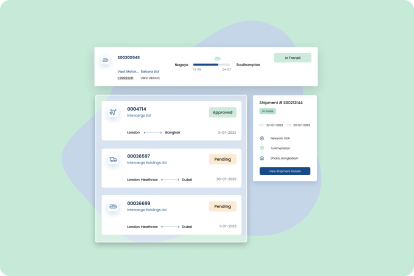
Keep all your data in one place which can be accessed from anywhere and anyplace

Let us help you 24/7 manage your supply chain needs

Back to Global Coverage

San Marino Freight Forwarding Services
Air & Road Freight Between San Marino and the UK

Intercargo provides reliable freight forwarding services between San Marino and the United Kingdom, helping businesses import and export cargo efficiently by air and road.

Whether you are importing goods from San Marino into the UK, exporting products from the UK to San Marino, or managing regular international shipments, our experienced freight forwarding team provides complete end-to-end logistics solutions. From collection and customs clearance to final delivery, we manage every stage of the shipment process. Please note that carrier and security restrictions may apply to certain shipments involving San Marino.
Air Freight San Marino to UK
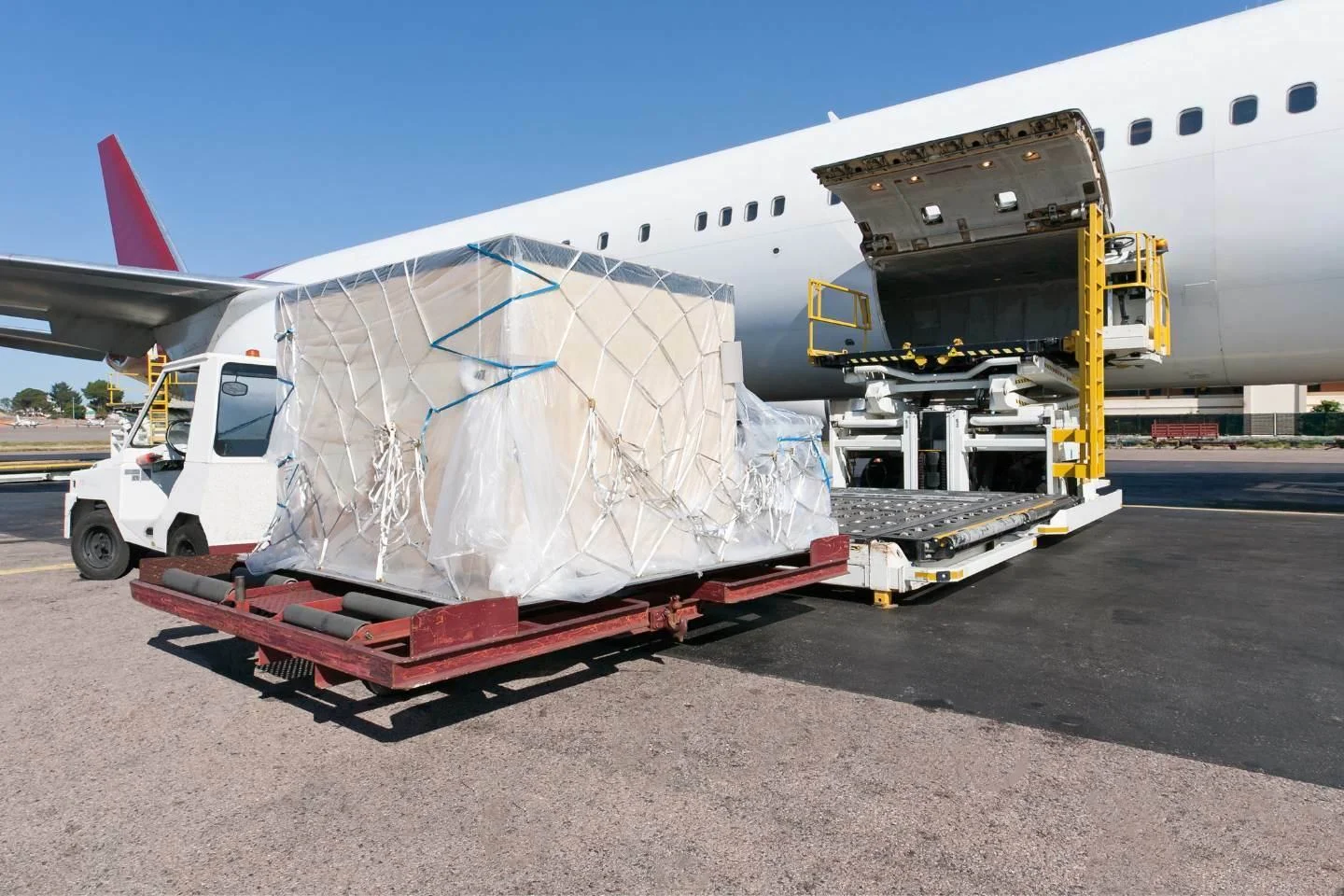
When speed matters, our San Marino air freight services provide fast, secure and reliable transportation between San Marino and the United Kingdom.
We arrange air freight via Italian airports, with onward connections to the UK through London Heathrow, London Stansted, London Luton, Manchester Airport and Birmingham Airport. Carrier and security restrictions may apply on certain routes.
Our air freight solutions include:

  • Air freight from San Marino to the UK
  • Express and economy air cargo
  • Door to door delivery
  • Time critical shipments
  • Air freight from the UK to San Marino
  • Airport to airport services
  • Customs clearance support
  • High value and commercial cargo

Whether you need urgent delivery of textiles, automotive parts, ceramics, wine, food products, electronics or commercial goods, our air freight specialists can provide the most efficient solution for your shipment.
Logistics solutions
Road Freight San Marino to UK
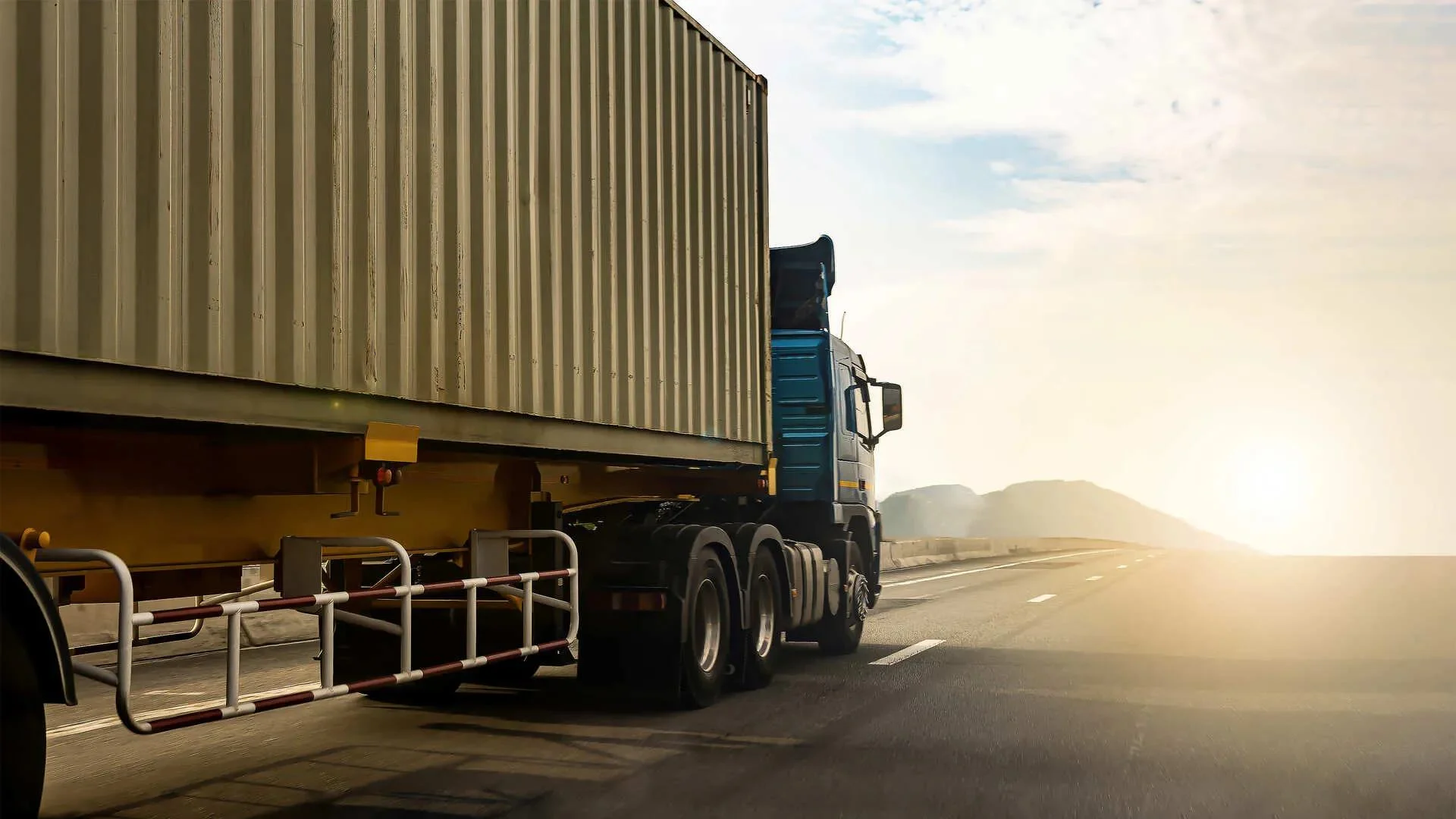
For regular and cost-effective transportation, our road freight services provide European shipping solutions between San Marino and the UK.
Road freight travels overland via Italy and Western Europe, continuing through the Channel Tunnel or cross-Channel ferry services to reach the UK. Carrier and security restrictions may apply on certain routes.

Our road freight services include:

  • Full Load (FTL)
  • Scheduled and express road freight
  • Customs documentation
  • Temperature controlled transport
  • Part Load (LTL / groupage)
  • Door to door logistics
  • Cargo insurance
  • Oversized and heavy load shipments

Whether shipping textiles, automotive components, iron and steel products, ceramics, agricultural produce, wine or commercial stock, we can tailor a road freight solution to suit your budget and transit requirements.
Logistics solutions
Import from San Marino to the UK
Intercargo helps UK businesses import products and cargo from San Marino through a fully managed freight forwarding service.
Our import services include:

  • Supplier coordination
  • Air and road freight transportation
  • Duty and VAT guidance
  • Final delivery throughout the UK
  • Collection from San Marino factories, warehouses and commercial premises
  • UK customs clearance
  • Warehousing and distribution

We regularly support imports including:

  • Textiles and clothing
  • Iron, steel and metal products
  • Ceramics and building materials
  • Automotive parts and components
  • Agricultural and food products
  • Wine and beverages
  • Machinery and mechanical equipment
Our experienced team ensures your cargo moves efficiently from San Marino to the UK while remaining compliant with all customs and import requirements.
Logistics solutions
Export from the UK to San Marino
We also help UK businesses export goods to customers, distributors and partners throughout San Marino.
Whether shipping to San Marino City, Serravalle, Borgo Maggiore or other destinations, our export specialists can arrange a seamless freight solution by air or road.
Our export services include:

  • Air freight exports
  • Export documentation
  • Cargo insurance
  • Commercial and industrial shipments
  • Road freight exports
  • Customs compliance
  • Door to door delivery

From single shipments to regular freight movements, we provide scalable logistics solutions designed around your business requirements.
Logistics solutions
Customs Clearance & Freight Forwarding
Successful international shipping depends on accurate customs documentation and compliance.
Intercargo provides:

  • Import customs clearance
  • Commodity code guidance
  • Duty and tax assistance
  • End to end shipment visibility
  • Export customs clearance
  • Shipping documentation
  • Freight forwarding management

Our experienced freight forwarding team helps minimise delays and keeps your cargo moving smoothly between San Marino and the United Kingdom.
Logistics solutions
Why Choose Intercargo for San Marino Freight?
We support importers, exporters, manufacturers, distributors, retailers and e-commerce businesses moving cargo between San Marino and the UK.
Air Freight And Road Freight Specialists
Uk And San Marino Trade Lane Expertise
Import And Export Solutions
Customs Clearance Support
Door To Door Logistics
Dedicated Account Management
Global Carrier Network
Competitive Freight Rates
Get a San Marino Freight Quote

Looking for air freight from San Marino to the UK, road freight from San Marino to the UK, or export services from the UK to San Marino?
Contact Intercargo today for a tailored freight forwarding quotation and expert advice on the most efficient shipping solution for your cargo.
Logistics solutions
Latest News & Updates

Upswing in domestic demand gives railfreight operators a revenue boost

Union Pacific led the way on the North American containerised rail freight front over the three months to October, amid all the noise surrounding its pending acquisition of Norfolk Southern - but it was not alone in enjoying a bountiful summer. In general, North American intermodal operators benefited from an upswing in domestic freight demand and a continuing tightening in the trucking market, with revenues up for all four of the major carriers. Boasting a 27% year-on-year revenue increase, Union Pacific took home some $1.52bn over the quarter, with volumes up 11%, to 956,000 carloads, and pointing specifically to reduced trucking capacity as behind the gains. EVP marketing and sales Kenny Rocker said: "Domestic delivered its fifth consecutive record quarter in volume and revenue. Our foundation of service, combined with strong business development and deployment of buffer resources enabled volume growth. "International intermodal volumes improved 8%, driven by west coast import volumes and business wins. In automotive, business wins offset continued market softness. We saw strength in auto parts driven by growth with our current OEMs." EVP operations Eric Gehringer added that its intermodal service performance index finished the quarter at 92%, despite volumes increasing 11%, noting it responded to the improving freight market by "unstacking containers and utilising our buffer of resources". Sharing the positivity, CSX also boasted a strong third quarter, with intermodal revenue increasing 20%, to $634m, while volumes climbed 7%, to 820,000 units, attributing gains to landing key customers, new service offerings, and the tighter trucking environment. Chief commercial officer Maryclare Kenney said: "Conversions from the highway remain strong, and the new service offerings through Birmingham, Myrtlewood, Baltimore, and other areas are performing well and attracting new business." She noted that international volumes had been relatively flat, particularly during the latest quarter, but pointed to the completion of full double-stack clearances through the Howard Street Tunnel in Baltimore as another opportunity to attract traffic. "We're very optimistic about the opportunities as we close this year and go into next on the domestic intermodal side," she told investors, adding that the tightening in trucking could prove a boost when yields come up for renewal. Not one to miss out, Canadian Pacific Kansas City (CPKC) also reported double-digit revenue growth in intermodal, up 22% year on year to $583m, as volumes rose 9%, to 489,800 carloads. Together with the increased traffic, stronger pricing likely played its part in driving the improvement for the Canadian operator that saw its revenue per carload increase 12% year on year, to $1,190. There was another CPKC performance in the build-up to those results being released, namely its latest effort to derail Union Pacific's proposed purchase of Norfolk Southern, an intervention described by Premium as "extraordinary". In a 30 October submission to the US Surface Transportation Board, the carrier urged the regulator to terminate its review of the deal, alleging UP's campaign for approval "had intimidated shippers and compromised the integrity of the proceeding". The argument is not whether a coast-to-coast network would raise rates or eliminate competitive routes, but "whether the STB can reach a trustworthy decision if the people who depend on the applicants for rail service are reluctant to testify against them". Meanwhile, Canadian National was the only one of the big four railroads to record a decline in box volumes, as they fell 6% on the same period last year, to 542,000 teu, despite recording a 9% year on year revenue bounce, to $765m. Explaining the drop-off, CN pointing to the decline in international shipments through the ports of Halifax and Prince Rupert, with the upturn in Vancouver traffic insufficient to offset those losses. As to why this did not eat into revenues, it seems the higher income per RTM - 12% up on 2025 to a little over $6 - likely offset the reduction in volumes - although not doing enough to see a clean sweep of revenue and volume growth across all big four operators.

Source: theloadstar.com

Read more

US importers should reconsider farming out customs paperwork, warns CargoTrans

US importers using 'delivered duty-paid' (DDP) shipping arrangements face increasing compliance and financial risks, as Customs and Border Protection (CBP) intensifies its scrutiny of foreign importers of record, according to CargoTrans. Nunzio De Filippis, co-CEO, and Rennie Alston, director of trade compliance, warned that US buyers could face penalties, shipment seizures, and refused entries, even when the firm is not named as the importer of record. During CargoTrans's latest monthly Tariff Tea webinar, the executives said the post-Liberation Day rush towards DDP arrangements was beginning to reverse, as importers reconsidered the risks of handing control of customs formalities to overseas suppliers. Under DDP, sellers assume responsibility for import clearance and associated duties. However, Mr Alston warned: "If you are the US consignee, if you are the US order party, if you are the instigator to the transaction, then you have culpability." CargoTrans said CBP was increasingly investigating whether DDP arrangements were being used to avoid tariffs, particularly where foreign sellers or intermediary platforms acted as non-resident importers of record. Mr De Filippis said some US buyers had reported shipments being refused entry, seized, or ordered for re-export, including cases involving incorrect importer information or the use of a third-party logistics provider as the ultimate consignee. Mr Alston warned that the consequences could extend beyond the overseas seller, with US buyers potentially facing penalties linked to their import bonds. He suggested companies should reconsider whether DDP remained appropriate, potentially switching to 'delivered at place' (DAP) arrangements, to retain control of the import formalities. For businesses continuing to use DDP, CargoTrans recommended demanding greater transparency from suppliers, including access to customs declarations, transaction documents, and supporting import data. Mr Alston also highlighted US record-keeping requirements, warning that buyers could not simply claim ignorance of what had been declared on their behalf. He also raised concerns about the growing volume of CBP requests for information, known as CF28s, and urged importers to investigate their records thoroughly before responding. Mr Alston said companies should avoid rushing to meet the standard 20-day response deadline, without first checking the information internally across their procurement, finance, legal, compliance, and logistics teams. A discrepancy between supplier documentation and the original customs declaration could create additional exposure if an importer inadvertently disclosed a previously unreported compliance problem. "Your response has to be measured," he said. The webinar also highlighted a shift towards CBP issuing notices of action without first requesting additional information through a CF28. Mr Alston attributed this to greater use of customs data analytics, allowing the agency officials to make decisions using information already available through the Automated Commercial Environment (ACE) system. Where importers disagree with a resulting assessment, they may need to pay the additional duties and subsequently challenge the decision through the 'protest process'. Alongside the enforcement concerns, CargoTrans highlighted several immediate tariff developments. Revisions to the US Section 338 tariff coverage for Canadian goods took effect on 30 October, removing 22 tariff classifications from the additional 50% duty, while adding 100 others. And 178 China-related Section 301 product exclusions are scheduled to expire on 9 November, potentially thereafter exposing affected imports to additional duties, unless further action is taken. The company also noted that a proposed extension of the suspension of China-linked vessel fees, until 9 January, had not yet been finalised. On freight markets, CargoTrans expected selective ocean rate softening through November, particularly from North Asia and India to the US east coast. However, South-east Asian capacity remained constrained, it noted. Finally, the company warned that rail congestion, labour uncertainty, and the planned 16-month closure of Los Angeles' Vincent Thomas Bridge could undermine inland delivery reliability. Its central message to importers was that cheaper ocean freight offered little benefit if customs exposure and inland disruption increased the overall cost of moving goods.

Source: theloadstar.com

Read more

'Carrier selection matters' when it comes to getting your goods on time

The Asia-North America tradelane is facing the highest ocean freight disruption risk over the coming weeks. Reduced carrier capacity and growing difficulty securing bookings threaten shipment reliability, according to WiseTech Global. The company's November Ocean Freight Risk Outlook, released today covering weeks 45-48, rates the Asia-North America and Asia-Europe trades as high-risk overall, with Europe-North America assessed as medium risk. It explains that on the transpacific, planned carrier capacity is expected to tighten in the second half of November, driven by reduced supply rather than stronger demand. The demand-to-supply ratio is forecast to reach 128% in week 47, indicating significant capacity constraint. Booking security risk is also expected to climb to 71% by week 48, well above its historical average of 41%, suggesting growing difficulty securing space on preferred sailings. At the same time, service reliability remains weak, with monthly on-time performance slipping, from 26.9% in September to 25.6% in October. Although the latest weekly figure had improved to 27.3%, delays of eight days or more remained the largest arrival outcome. WiseTech also highlighted continuing berthing delays and renewed weather disruption across East Asia, alongside potential for industrial action, as further threats to vessel schedules. "In the lead-up to the end of the year, Asia-North America is where we're seeing the most risk," said Jon Charles, senior product manager at WiseTech Global. "Multiple factors are contributing, including reduced planned carrier capacity, rather than stronger demand, pushing the demand-to-supply ratio to 128% in week 47. What is significant is the combination of tighter capacity and elevated booking acceptance risk. "That's the strongest risk signal we look for, because it suggests tighter capacity is already changing booking request outcomes," he explained. According to WiseTech, the outlook for Asia-Europe is different. The demand-to-supply ratio is forecast to fall from 100% in week 45 to 84% by week 47, and to 73% in week 48, indicating easing capacity pressure as the month progresses. Booking security risk is expected to remain below its historical average of 35%, declining from 23% in week 45, to 20% in weeks 46-47, before rising slightly to 23% in week 48. However, this improving capacity picture contrasts with persistently weak service performance, with on-time arrivals continuing to deteriorate. Last month, just 9.3% of shipments on the Asia-Europe trade arrived at the destination port on or before the carrier's promised arrival date, down from 9.9% in September. The latest weekly performance was just 6.5% on time, while 39.1% of arrivals saw delays of eight days or more. Shipment transit time reliability also fell across both Asian tradelanes in October, reaching 21% on Asia-North America, down six percentage points month on month, and 35% on Asia-Europe, a five-point decline. Europe-North America presents a comparatively more stable capacity picture, with planned carrier space remaining above forecast demand, and booking acceptance risk below its historical average. However, on-time performance fell from 39.2% in September to 34.8% in October, while the latest weekly result dropped to 24.6%. Transit-time reliability also weakened, falling three percentage points to 46%. Industrial action at European ports presents an additional potential risk to schedules across both Europe-related tradelanes. However, Mr Charles underscored: "Across all three tradelanes, carrier reliability varies substantially, so carrier selection matters in managing lead-time and on-time arrival risk."

Source: theloadstar.com

Read more

Privacy Preference Center

This website uses cookies and similar technologies, (hereafter “technologies”), which enable us, for example, to determine how frequently our internet pages are visited, the number of visitors, to configure our offers for maximum convenience and efficiency and to support our marketing efforts. These technologies incorporate data transfers to third-party providers based in countries without an adequate level of data protection (e. g. United States). For further information, including the processing of data by third-party providers and the possibility of revoking your consent at any time, please see your settings under “Consent Preferences” and our Privacy Notice.


Manage Consent Preferences
Strictly Necessary Cookies
Always Active

Performance Cookies

Functional Cookies

Targeting Cookies