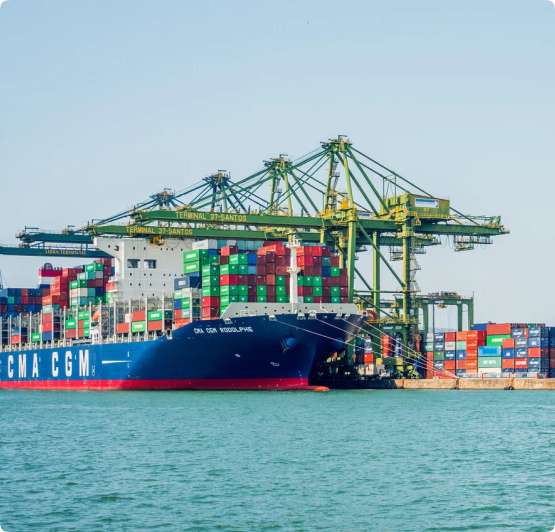
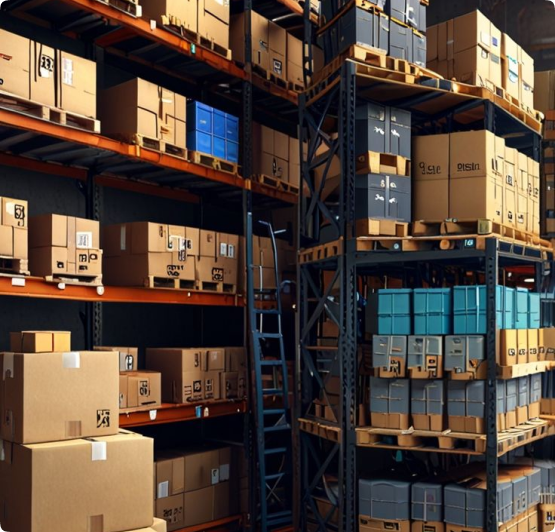
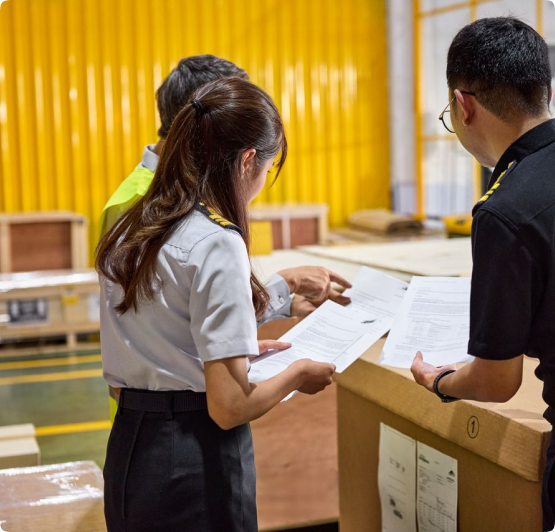
We understand the ever changing needs of our customers

we provide a high level of service dedicated to fulfilling all your shipping requirements

Watch Video
Road Freight

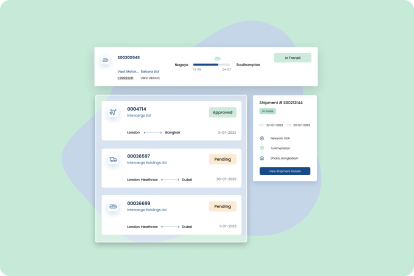
Keep all your data in one place which can be accessed from anywhere and anyplace

Let us help you 24/7 manage your supply chain needs

Back to Global Coverage

Philippines Freight Forwarding Services
Air & Sea Freight Between the Philippines and the UK

Intercargo provides reliable freight forwarding services between the Philippines and the United Kingdom, helping businesses import and export cargo efficiently by air and sea.

Whether you are importing goods from the Philippines into the UK, exporting products from the UK to the Philippines, or managing regular international shipments, our experienced freight forwarding team provides complete end-to-end logistics solutions. From collection and customs clearance to final delivery, we manage every stage of the shipment process.
Logistics solutions
Air Freight Philippines to UK
When speed matters, our Philippines air freight services provide fast, secure and reliable transportation between the Philippines and the United Kingdom.
We arrange air freight through Ninoy Aquino International Airport in Manila, Clark International Airport, Mactan-Cebu International Airport and Davao International Airport, with UK arrivals through London Heathrow, London Stansted, Manchester Airport, Birmingham Airport and East Midlands Airport.
Our air freight solutions include:

  • Air freight from the Philippines to the UK
  • Express and economy air cargo
  • Door-to-door delivery
  • Time-critical shipments
  • Air freight from the UK to the Philippines
  • Airport-to-airport services
  • Customs clearance support
  • High-value and commercial cargo

Whether you need urgent delivery of electronics, semiconductors, garments, medical equipment, automotive components or commercial goods, our air freight specialists can provide the most efficient solution.
Logistics solutions
Sea Freight Philippines to UK
For larger shipments and cost-effective transportation, our sea freight services provide dependable shipping solutions between the Philippines and the UK.
We regularly arrange cargo movements through Port of Manila, Manila International Container Terminal, Port of Cebu and Port of Davao, with UK arrivals through Port of Felixstowe, Southampton, London Gateway, Liverpool, Tilbury and Immingham.
Our sea freight services include:

  • Full Container Load (FCL)
  • Port to port shipping
  • Customs documentation
  • Project cargo
  • Less than Container Load (LCL)
  • Door to door logistics
  • Cargo insurance
  • Oversized and heavy-lift shipments

Whether shipping machinery, electronics, furniture, industrial equipment, manufacturing products or commercial cargo, we can tailor a sea freight solution to suit your budget and transit requirements.
Logistics solutions
Import from the Philippines to the UK
Intercargo helps UK businesses import products and cargo from the Philippines through a fully managed freight forwarding service.
Our import services include:

  • Supplier coordination
  • Air and sea freight transportation
  • Duty and VAT guidance
  • Final delivery throughout the UK
  • Collection from Philippine factories, warehouses and commercial premises
  • UK customs clearance
  • Warehousing and distribution

We regularly support imports including:

  • Electronics and semiconductors
  • Furniture and homeware
  • Manufacturing components
  • Electrical equipment
  • Food and agricultural products
  • Garments and textiles
  • Coconut and rubber products
Our experienced team ensures your cargo moves efficiently from the Philippines to the UK while remaining compliant with all customs and import requirements.
Logistics solutions
Export from the UK to the Philippines
We also help UK businesses export goods to customers, distributors and partners throughout the Philippines.
Whether shipping to Manila, Quezon City, Cebu City, Davao City, Makati, Calamba or other commercial and industrial locations across the Philippines, our export specialists can arrange a seamless freight solution by air or sea.
Our export services include:

  • Air freight exports
  • Export documentation
  • Cargo insurance
  • Commercial and industrial shipments
  • Sea freight exports
  • Customs compliance
  • Door-to-door delivery

From single shipments to regular freight movements, we provide scalable logistics solutions designed around your business requirements.
Logistics solutions
Customs Clearance & Freight Forwarding
Successful international shipping depends on accurate customs documentation and compliance.
Intercargo provides:

  • Import customs clearance
  • Commodity code guidance
  • Duty and tax assistance
  • End to end shipment visibility
  • Export customs clearance
  • Shipping documentation
  • Freight forwarding management

Our experienced freight forwarding team helps minimise delays and keeps your cargo moving smoothly between the Philippines and the United Kingdom.
Logistics solutions
Why Choose Intercargo for Philippines Freight?
We support importers, exporters, manufacturers, distributors, retailers, construction companies and e-commerce businesses moving cargo between the Philippines and the UK.
Air Freight And Sea Freight Specialists
Uk And Philippines Trade Lane Expertise
Import And Export Solutions
Customs Clearance Support
Door To Door Logistics
Dedicated Account Management
Global Carrier Network
Competitive Freight Rates
Get a Philippines Freight Quote

Looking for air freight from the Philippines to the UK, sea freight from the Philippines to the UK, or export services from the UK to the Philippines?
Contact Intercargo today for a tailored freight forwarding quotation and expert advice on the most efficient shipping solution for your cargo.
Logistics solutions
Latest News & Updates

Record rates mask 'dire situation' for hauliers as costs outstrip earnings

Record European road freight rates are masking a "dire situation" for hauliers, with soaring fuel costs eroding margins and operators struggling to pass increases on to shippers, according to industry bodies. The Q3 European Road Freight Rate Benchmark, published yesterday by IRU, Upply and Transport Intelligence (Ti), showed contract rates reaching a record 148.9 index points in Q3 2026, up 14.6 points year on year, while spot rates hit 147.6 points, up 12.9 points. However, IRU told The Loadstar that rising freight rates were not translating into improved profitability, with operating costs increasing substantially faster than the prices carriers could charge. In France, operating costs rose approximately 14% between January and September with contract rates increasing just 7%. By March, costs had already climbed 8%, while freight rates were still falling. "Higher freight rates are masking a dire situation for operators, as shippers try to mitigate a raise they haven't yet seen in full," IRU said. Ti said the increases were "overwhelmingly a supply-side story", driven principally by diesel rather than stronger demand. EU diesel averaged €2.05 per litre in Q3, up 32% year on year, peaking at €2.27 on 27 September. "The cost evidence is unambiguous," Ti told The Loadstar. "The CNR long-haul cost index rose 13.2% year on year in September, but strip diesel out and the increase is 1.3%. "Almost the whole cost rise is fuel, so the rate rise is largely carriers recovering a bill they have already paid." Ti added that tolls had risen 7% year on year, while semi-trailer equipment and maintenance costs increased 3.5% and 2.4%, respectively. It said contract rates had outpaced spot rates throughout Q3, suggesting some cost recovery through contract renewals, although anecdotal evidence indicated carriers were shouldering more increases in Q4. The Road Haulage Association (RHA) said UK operators were experiencing similar pressures, with more than eight in ten businesses reporting declining margins. "Fuel is about a third of the cost of running a truck, and firms are paying an extra £385 a week per vehicle. On margins of around two per cent, there is very little left to absorb that," an RHA spokesperson told The Loadstar. Its fuel survey found just one in ten operators could pass on fuel cost increases, with the remainder absorbing some or all of the additional expenditure. "On a fixed-rate contract there is no way to recover costs until the terms are renegotiated. And the fuel bill has to be paid long before the customer's invoice is," the RHA added. Meanwhile, concerns are growing that weakening haulage capacity could trigger further rate increases when demand recovers. Ti said European operator numbers were stagnating or declining in several markets, largely because fewer businesses were entering the industry rather than widespread failures. "Capacity is leaving through lack of replacement rather than mass failure, which is slower and harder to reverse," it warned. Heavy truck registrations reached approximately 60,100 in Q3, but annual growth slowed to 7% from 8.4% in June, suggesting operators were deferring fleet renewals. Driver shortages are compounding the problem, with around 502,000 European truck driver positions unfilled, according to IRU figures cited by Ti. "If demand does rebound in 2027, every route to adding capacity is slow, and with costs expected to remain high, a sharp price response is the likely result," Ti warned. IRU similarly expects rates to continue rising as carriers attempt to recover operating costs. The RHA, meanwhile, called for a 15p-per-litre fuel rebate for essential users, arguing it would provide vital relief to struggling UK hauliers.

Source: theloadstar.com

Read more

Freightos CEO rejects founder's growth criticism as new AI platform launches

Freightos has launched a new AI-native platform for freight forwarders, as an increasingly bitter dispute between its management and founder Zvi Schreiber over the company's growth strategy heads towards a shareholder showdown next month. Dr Schreiber, who founded Freightos in 2012 and resigned from its board in February, has accused the company of abandoning its growth ambitions in favour of profitability, and is campaigning to remove chairman Udo Lange and change the company's strategic direction. "The board calls my plan a 'sudden strategic pivot'. The opposite is true," he told The Loadstar. "For 14 years, Freightos' strategy was to maximise growth, with the transactional platform as the primary long-term opportunity. That's what shareholders invested in." But chief executive Pablo Pinillos rejected the suggestion that Freightos had to choose between expanding its transaction platform and developing its software business. "There is not a real platform-first versus solutions-first idea, because in the end the platform and the solutions reinforce each other," he told The Loadstar. He argued that improved software, AI-driven decision-making, and automation would generate more bookings, producing additional data that would further improve the platform. "Bookings follow," he said, describing a strategy built around three interconnected layers: intelligence; orchestration; and network connectivity. The new Freightos for Forwarders platform brings together carrier rates, quoting, procurement, booking management, and market intelligence, alongside AI agents designed to convert unstructured customer enquiries into quotations, using forwarders' own commercial rules and margins. Freightos said more than 300 forwarders were already operating on the new platform, although the AI modules and more advanced workflows were still being introduced progressively as customers migrated to the new system. The refreshed interface and live booking functions are operational for migrated customers, with further AI capabilities, integrations, and tailored workflows to follow. The company said it was aiming to reduce quotation turnaround times from hours or days to minutes, and improve quote-to-book conversion rates, but declined to provide projections for additional transactions generated by the launch. The platform connects with more than 75 carriers and the 7LFreight trucking network, while APIs allow forwarders to integrate Freightos's capabilities with existing transport management systems and proprietary AI tools. Mr Pinillos said the upgraded technology should help drive growth in both software revenue and transaction volumes. "The expectation is that we are able to get more volumes from a transactions perspective," he said, while making Freightos's software more embedded in customers' operations. But Dr Schreiber argues that the company has lost momentum by shifting its focus away from the neutral booking network that he believes represents its principal long-term opportunity. In the second quarter, Freightos reported revenue of $7.7m, up just 3% year on year. Platform revenue increased 19%, to $2.9m, while Solutions revenue fell 4%, to $4.8m. Dr Schreiber believes AI will increasingly commoditise software products, making the company's carrier connectivity, transaction infrastructure, and marketplace network more valuable. He wants Freightos to accelerate investment in its platform and relaunch its marketplace for small and medium-sized shippers. Mr Pinillos said Freightos would continue developing its shipper products, including its enterprise-focused Procure offering and marketplace for smaller customers, although he gave no timetable for a comparable AI-native launch. He also insisted that the company's push towards profitability was not incompatible with renewed growth. "Breakeven is not a strategy, and it's not the finish line," he said. He described the breakeven target as a commitment made by previous management, in 2023, arguing that the company had needed greater discipline over investment returns and a cost base that had become too large for its near-term economics. Achieving breakeven would allow Freightos to fund future growth from its own resources, he said. But Dr Schreiber disputes the suggestion that more aggressive investment would require additional fundraising. He argued: "Freightos doesn't need to raise money to grow. It already raised the capital for growth: that's exactly why we went public, and what shareholders invested in." He said Freightos had approximately $21m in net cash and no debt, and needed to redirect its spending towards growing the transaction platform. "Without aggressive platform growth, where is the upside for shareholders?" he asked. Mr Pinillos said he expected double-digit revenue growth in the future, although the company would provide specific guidance separately. The dispute is now heading towards a confrontation at Freightos's annual general meeting on 16 December, where Dr Schreiber is seeking the removal of chairman Udo Lange, annual director elections, and an advisory resolution advocating changes to the company's strategy. "The Freightos board is now so anti-growth that it is engaging in what I can only call blatant vote rigging," Dr Schreiber alleged. He claims the company has effectively prevented shareholders from supporting his advisory resolution through its normal proxy voting arrangements, leaving attendance at the AGM as the only route to voting in favour. "A shareholder who votes through their broker to remove the chairman, or simply to reappoint EY as auditors, will be recorded as voting against growth," he said. The company's proxy statement confirms that Proposal 4, Dr Schreiber's advisory resolution on strategy, has been omitted from its proxy card. It states that even shareholders who submit voting instructions on other resolutions will have their shares voted against Proposal 4. Freightos said the decision followed legal advice, with the board arguing that the resolution was inconsistent with shareholders' rights under applicable law and the company's articles. It objected particularly to the proposal's abstract wording and its combination of questions about chairman qualifications and corporate strategy. Asked whether shareholders could support the resolution without travelling to Israel, Mr Pinillos told The Loadstar that they would need to attend the AGM, although he suggested online attendance might be possible. "It could be online or could be physically," he said, adding that the company had not yet decided how attendance would be defined for the meeting. Mr Pinillos also defended the board's opposition to annual director elections, arguing that the existing staggered structure provided continuity, and that annual elections risked introducing instability into the company's long-term strategy. Asked about departures from Freightos' management team, he acknowledged that parts of the organisation, including management, needed rebuilding. However, he declined to engage directly with Dr Schreiber's criticism of the board. "I don't have anything more than respect for what he has built in this company," he said. "I'm not focused on who is right or who is wrong." At the conclusion of the interview, he added: "What I'm not willing to spend a single second of my time on is debating someone else's opinions." With Freightos now rolling out its next generation of AI-enabled technology, the question is whether its integrated approach can deliver the renewed growth both sides say they want, without the change of strategy and leadership demanded by its founder.

Source: theloadstar.com

Read more

LATAM Cargo to expand flower handling capacity in Bogota

LATAM Cargo is adding a new cargo facility in Bogota as it targets growth in its flower volumes. The new 46,414 sq ft facility at El Dorado International Airport will triple the carrier's footprint in Bogota and "provide greater agility and fluidity" for domestic and international shipments. The site provides direct connectivity between trucks and aircraft. The facility will also expand LATAM's cold storage capacity by approximately 20% to support the growth of the flower export market, where the carrier already holds a 35% market share. "This investment is essential to leverage the airline's future growth plans in the Colombian market and represents a renewed vote of confidence by LATAM Group in the country, maintaining a long-term perspective that goes well beyond an economic cycle or a single season," said Santiago Álvarez, chief commercial officer of LATAM Cargo Group. The airline also plans to expand its domestic cargo facilities in Bogotá and establish a new space dedicated to handling the growing inflow of import cargo. Air Cargo News has requested information on when the facility will open. Elsewhere in Colombia, the carrier said that it is upgrading X-ray screening equipment and implementing new counter technologies to expedite cargo acceptance and drop-off in San Andrés, Leticia, and Pereira. Earlier this week, LATAM Cargo announced that it would benefit from up to 91 tonnes of belly capacity on LATAM Airlines Brasil's new direct passenger service between São Paulo and Geneva, launching in March next year. Operating three times a week on Boeing 787-9 aircraft, LATAM Airlines Brasil's service will offer 55 tonnes of weekly capacity on the outbound route from São Paulo to Geneva, enabling cargo originating in Chile, Peru, and Colombia to reach Switzerland through passenger flight connections via the Guarulhos hub, said LATAM Cargo.

Source: aircargonews.net

Read more

Privacy Preference Center

This website uses cookies and similar technologies, (hereafter “technologies”), which enable us, for example, to determine how frequently our internet pages are visited, the number of visitors, to configure our offers for maximum convenience and efficiency and to support our marketing efforts. These technologies incorporate data transfers to third-party providers based in countries without an adequate level of data protection (e. g. United States). For further information, including the processing of data by third-party providers and the possibility of revoking your consent at any time, please see your settings under “Consent Preferences” and our Privacy Notice.


Manage Consent Preferences
Strictly Necessary Cookies
Always Active

Performance Cookies

Functional Cookies

Targeting Cookies