We understand the ever changing needs of our customers

we provide a high level of service dedicated to fulfilling all your shipping requirements

Watch Video
Road Freight

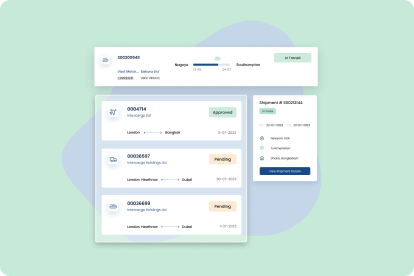
Keep all your data in one place which can be accessed from anywhere and anyplace

Let us help you 24/7 manage your supply chain needs

Back to Global Coverage

Nigeria Freight Forwarding Services
Air & Sea Freight Between Nigeria and the UK

Intercargo provides reliable freight forwarding services between Nigeria and the United Kingdom, helping businesses import and export cargo efficiently by air and sea.

Whether you are importing goods from Nigeria into the UK, exporting products from the UK to Nigeria, or managing regular international shipments, our experienced freight forwarding team provides complete end-to-end logistics solutions. From collection and customs clearance to final delivery, we manage every stage of the shipment process.
Logistics solutions
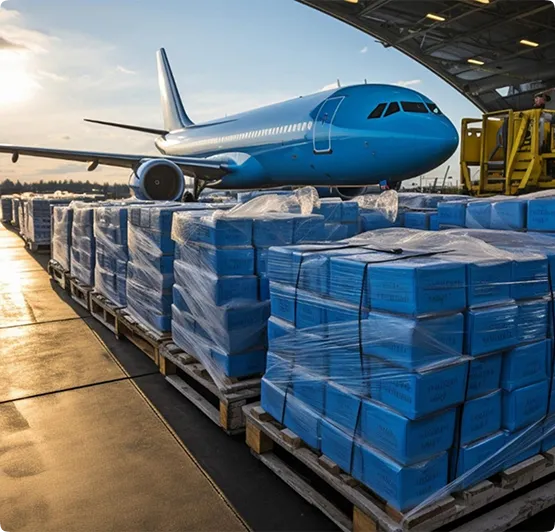
Air Freight Nigeria to UK
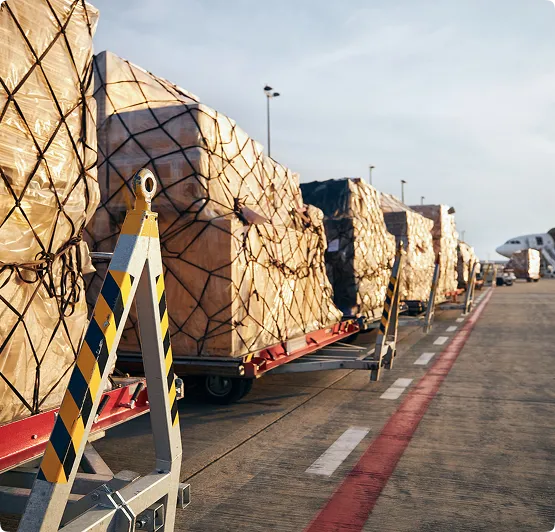
When speed matters, our Nigeria air freight services provide fast, secure and reliable transportation between Nigeria and the United Kingdom.
We arrange air freight through Murtala Muhammed International Airport (Lagos), Nnamdi Azikiwe International Airport (Abuja), Port Harcourt International Airport and Mallam Aminu Kano International Airport, with UK arrivals through London Heathrow, London Stansted, Manchester Airport, Birmingham Airport and East Midlands Airport.

Our air freight solutions include:

  • Air freight from Nigeria to the UK
  • Express and economy air cargo
  • Door to door delivery
  • Time critical shipments
  • Air freight from the UK to Nigeria
  • Airport-to-airport services
  • Customs clearance support
  • High value and commercial cargo

Whether you need urgent delivery of agricultural products, pharmaceuticals, oil and gas equipment, machinery, electronics or commercial goods, our air freight specialists can provide the most efficient solution.
Logistics solutions
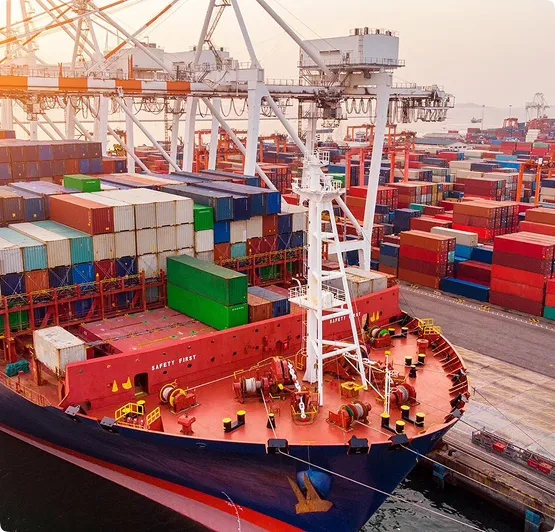
Sea Freight Nigeria to UK
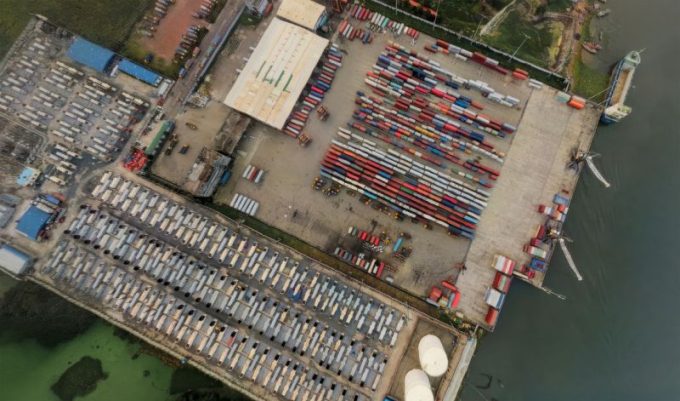
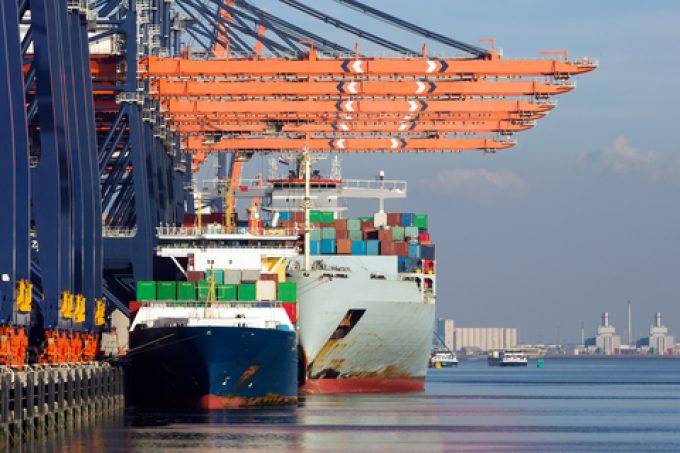
For larger shipments and cost-effective transportation, our sea freight services provide dependable shipping solutions between Nigeria and the UK.
We regularly arrange cargo movements through Lagos Port Complex (Apapa), Tin Can Island Port, Port Harcourt Port and Onne Port, with UK arrivals through Port of Felixstowe, Southampton, London Gateway, Liverpool, Tilbury and Immingham.

Our sea freight services include:

  • Full Container Load (FCL)
  • Port to port shipping
  • Customs documentation
  • Project cargo
  • Less than Container Load (LCL)
  • Door to door logistics
  • Cargo insurance
  • Oversized and heavy-lift shipments

Whether shipping machinery, industrial equipment, agricultural products, manufacturing goods or commercial cargo, we can tailor a sea freight solution to suit your budget and transit requirements.
Logistics solutions
Import from Nigeria to the UK
Intercargo helps UK businesses import products and cargo from Nigeria through a fully managed freight forwarding service.

Our import services include:

  • Supplier coordination
  • Air and sea freight transportation
  • Duty and VAT guidance
  • Final delivery throughout the UK
  • Collection from Nigerian factories, warehouses and commercial premises
  • UK customs clearance
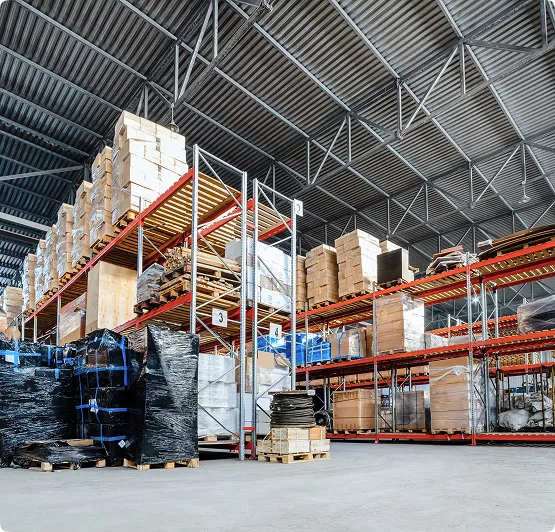
  • Warehousing and distribution

We regularly support imports including:

  • Cocoa and agricultural products
  • Leather goods
  • Sesame seeds and food products
  • Chemicals
  • Textiles and garments
  • Industrial materials
  • Manufacturing components
Our experienced team ensures your cargo moves efficiently from Nigeria to the UK while remaining compliant with all customs and import requirements.
Logistics solutions
Export from the UK to Nigeria
We also help UK businesses export goods to customers, distributors and partners throughout Nigeria.
Whether shipping to Lagos, Abuja, Port Harcourt, Kano, Ibadan, Onitsha or other commercial and industrial locations across Nigeria, our export specialists can arrange a seamless freight solution by air or sea.
Our export services include:

  • Air freight exports
  • Export documentation
  • Cargo insurance
  • Commercial and industrial shipments
  • Sea freight exports
  • Customs compliance
  • Door-to-door delivery

From single shipments to regular freight movements, we provide scalable logistics solutions designed around your business requirements.
Logistics solutions
Customs Clearance & Freight Forwarding
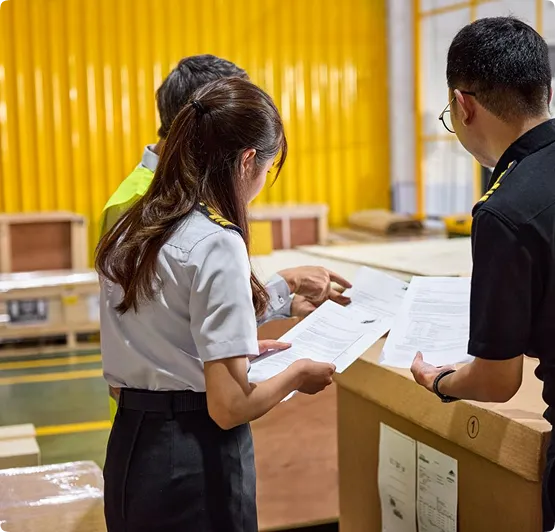
Successful international shipping depends on accurate customs documentation and compliance.
Intercargo provides:

  • Import customs clearance
  • Commodity code guidance
  • Duty and tax assistance
  • End to end shipment visibility
  • Export customs clearance
  • Shipping documentation
  • Freight forwarding management

Our experienced freight forwarding team helps minimise delays and keeps your cargo moving smoothly between Nigeria and the United Kingdom.
Logistics solutions
Why Choose Intercargo for Nigeria Freight?
We support importers, exporters, manufacturers, distributors, retailers, construction companies and e-commerce businesses moving cargo between Nigeria and the UK.
Air Freight And Sea Freight Specialists
Uk And Nigeria Trade Lane Expertise
Import And Export Solutions
Customs Clearance Support
Door To Door Logistics
Dedicated Account Management
Global Carrier Network
Competitive Freight Rates
Get a Nigeria Freight Quote

Looking for air freight from Nigeria to the UK, sea freight from Nigeria to the UK, or export services from the UK to Nigeria?
Contact Intercargo today for a tailored freight forwarding quotation and expert advice on the most efficient shipping solution for your cargo.
Logistics solutions
Latest News & Updates

Qatar Cargo targets semiconductor market with container deal

Qatar Airways Cargo is continuing to target the semiconductor market with an investment in specialist containers to transport shipments related to the industry. The Doha-headquartered carrier today announced that it had struck a deal with container firm VRR to utilise its specialist RGX and RZY containers. VRR's RZY (16ft) and RGX (20ft) containers are purpose-built to support the secure transport of semiconductor fabrication machinery and related equipment. Both container types are equipped with climate-control systems and shock-absorption technology, ensuring protection throughout the journey. In addition, the containers are fully certified for carriage on the maindecks of Qatar Airways Cargo's Boeing 777 freighters. The airline said that the deal would strengthen its TechLift service that ensures "that critical semiconductor technologies are transported securely and delivered on time". Qatar Cargo launched its TechLift service in early 2025 to target the fast-growing semiconductor market. The service utilises shock absorption technology on all ground and aircraft equipment for moving delicate semiconductor products, such as integrated circuits, chipsets, microchips, urgent semiconductor manufacturing machinery and pieces such as capital and testing equipment, doped chemicals, cutting, stripping and etching wafers. The product also offers loading priority, the use of approved data loggers, specialised handling techniques as per commodity-specific operational guidelines and protection from adverse weather conditions. The move comes as the air cargo market has benefitted from a boom in semiconductor, data centre and AI-related volumes over the past few years. According to the Semiconductor Industry Association (SIA), global semiconductor sales in June were up 124% year on year to $134.5bn. Meanwhile, global semiconductor sales reached $403bn during the second quarter of 2026, an increase of 35.1% compared to the first quarter of the year.

Source: aircargonews.net

Read more

Chicago Rockford outlines its cargo ambitions

Chicago Rockford (RFD) is an airport on the rise, with a recent spate of freighter wins helping to propel cargo volumes to near record levels. Speaking to Air Cargo News, executive director Zack Oakley says the airport came agonisingly close to registering record volumes in 2025. "Last year we were less than one freighter away from breaking our all-time record, which was set during Covid," explains Oakley. In total, the airport handled 1.5m tonnes of cargo in 2025 - a 9.5% year-on-year increase and just 50 tonnes behind the 2022 record. This year, the airport has added two new flights from DSV - one from Luxembourg and the other from Incheon - and another from Chinese e-commerce logistics firm Rich Sale International that connects the Illinois airport with Jinan Yaoqiang International Airport in China using Atlas Air metal twice a week. Oakley says DSV sees RFD as a strategic opportunity, capitalising on a secondary market in the same way it has at its main US air hub of Huntsville. Oakley adds that the higher fuel prices as a result of the US-Iran war have resulted in some opportunities being pushed back but he is hopeful they will eventually come through. "Hopefully that [higher fuel prices] starts to calm down a little bit and open back up for us. But overall it has been a solid year," says Oakley, explaining that cargo volumes are tracking a couple of percent below last year's levels. Asked what has attracted freighter operators to RFD, Oakley says it is the speed at which cargo can exit the airport compared with the more congested Chicago O'Hare. "We are uncongested and have access to the Midwest market, but are not the primary passenger hub," he says. "A lot of it is relationships as well. For example, with DSV we have worked well with them over the years trying to figure out when we can bring some opportunities back." RFD is one of a number of airports that have capitalised on a lack of capacity at nearby passenger hubs to capture the freighter flights, and Oakley expects that trend to continue. "The challenge for us, and I'm sure other airports as well, is not so much capability; it is changing the mindset and getting people to understand it is not different. "A consistent conversation we have with the airlines is, the airline has no problem operating at Rockford but what do the forwarders and shippers want to do? We are working not just with the airline or the forwarder but also with the shipper. "We have seen good success when we get the opportunity to show the shippers the advantage of being in Rockford, at an airport that is uncongested and freighter-focused. "It is pretty simple to understand why would you want to deal with congestion, being behind all the passenger aircraft, roadway congestion. "They are also starting to see how the operational caps they have at O'Hare affect arrival times, affect slot availability. We don't have any of those challenges." Bellyhold challenge Another challenge often faced by freighter hubs is the fact that at some stage in the journey, cargo will be transported in the bellyhold of passenger aircraft. With minimal passenger services, this can be problematic for the cargo-focused airports. To help solve this problem, RFD is launching an express shuttle service connecting with O'Hare to supplement services already on offer. Meanwhile, Oakley adds that Amazon Air Cargo and its partner Avianca offer intra-Americas flights from RFD, helping ease some of those connectivity issues. "Amazon Air Cargo has been selling Rockford quite heavily, and it gives us that domestic connectivity," he says. "They are also offering South American connections with Avianca through Rockford and we are seeing the benefit of acting as a transit hub with that." Another major development close to the Midwest Airport this year has been the start of work on a new logistics facility located close to the airport. The 334,800 sq ft facility is the first phase of the Rockford Logistics Park 20 and will accommodate air cargo, logistics, distribution, light manufacturing and assembly operations, with the flexibility to serve either a single occupant or multiple tenants. The facility, which is expected to open in April next year, is located one mile away from the airport and is being developed by Hillwood. Oakley describes Hillwood as a major logistics real estate developer and says that the start of construction is another indication of the continued investment being made around the airport and the growing demand for logistics facilities in the area. The airport itself has plans to develop a warehouse with cool chain facilities to cater for pharma shipments. "We have been waiting for a handling company to make a big investment, or an airline to make a big investment [in cool chain] but the reality is it is one of those chicken-and-egg scenarios - it's never going to come if you don't have the facilities. "So we have set aside money in the airport's capital budget to invest and get those facilities started because we know that once they are open and operating, they are going to be utilised." Looking ahead, Oakley is expecting that e-commerce volumes to South America to rise as the online platforms switch volumes away from the European Union as a result of the bloc's addition of a €3 duty on low-value parcels. This would mirror the trend of last year when the US removed its own de minimis exemption. "We are working with South American carriers to potentially set up connectivity into Rockford. I do think that is going to open up another unique opportunity for us," he says. Also, the airport hopes to benefit from the rise of data centre and AI-related volumes. "In May, we had two Anotov operations related to transformers for a data centre in Iowa," Oakley says. "Each transformer that came through was 98 tonnes." "There are multiple data centre developments in Illinois, Iowa, Indiana, so for those large movements, Rockford is the perfect place to host those kinds of things."

Source: aircargonews.net

Read more

AI has reached forwarders' P&L - now the arguments begin

AI appears poised to transform freight forwarding. And the industry's biggest players are finally starting to put numbers on it. Kuehne+Nagel told investors at its Q2 earnings call that AI initiatives were expected to deliver savings of up to Sfr150m ($184m) in 2027, while improving productivity by around 5%. It is not alone. CH Robinson also told investors AI was already translating into financial performance, claiming productivity improvements of more than 60% since the end of2022 had helped drive a 20% increase in adjusted operating income in the second quarter. For an industry that has spent the past two years experimenting with new technologies, it is a clear sign that AI has moved beyond pilot projects, and onto the P&L. But while there is growing agreement that AI will reshape freight forwarding, there is little consensus on what that will ultimately look like. The debate has intensified following Gartner's prediction that, by 2030, 60% of supply chain management software will incorporate agentic AI, with enterprises increasingly deploying clusters of specialist AI agents that work together to complete complex tasks. But, of course, not everyone agrees. FreightSuite says the industry's fascination with multiple specialist agents risks solving the wrong problem. "We're able to do a lot more with agents that are operating inside the TMS than... daisy-chaining a lot of agents outside of the TMS together," co-founder Sam Moore told The Loadstar. "The internal agents have all of the context to the TMS... external ones can't actually get the quantum of data they need to achieve the levels of automation people are setting out to get." Rather than building thousands of specialist AI workers, FreightSuite argues that the future lies with a handful of far more capable "super agents", each able to understand an entire shipment, access every piece of operational data, and reason across multiple workflows. "We see super agents being where the industry is going to go," said co-founder William Jacobs. "Our more controversial part of that is the thousands of small agents versus... a handful of larger agents." Mr Jacobs argued that dividing intelligence across numerous specialist agents inevitably fragmented decision-making. "These larger super agents... can have holistic reasoning," he said. "Whereas if you're bolting lots of agents onto fragmented data... that orchestration layer just becomes a patch on top, rather than actually solving the problem." The company believes context is the defining advantage. "AI is no different. It needs as much context as it can have to be able to make the right decision," Mr Jacobs said. Not everyone shares that vision. Former Magaya executive Kristjan Lillemets believes the industry should move in almost the opposite direction, telling The Loadstar: "I'm currently in the clusters of specialist AI agents camp, mainly due to trust. "Building harnesses around many agents, each with a smaller set of responsibilities, allows more control and evaluations around which agent produced a faulty result. This will allow for faster troubleshooting, human intervention and fixing compared to a 'super agent', which might appear too much of a black box. "For AI to succeed in vertical industries with deep operator expertise, trust is the key issue. The more transparent the system, the easier it is to trust it." Mr Lillemets says the real challenge is not the sophistication of AI models but the quality of logistics data. "The models are probably smart enough already for what we need," he said. "Data is the biggest limitation." Robert Petti, founder of Prompt Global, believes the entire debate risks missing the point. "I believe focusing on multi-agent versus super-agent architecture is the wrong approach," he said. "The real question is about capabilities, not structure. "If a single agent can handle everything effectively, that is a positive outcome. The primary goal is that the agent enhances the user's or company's performance and improves the customer experience." Instead, he argues that clean, structured data, governance and business context will prove far more important than the underlying AI architecture. Project44 chief executive Jett McCandless also cautions against organisations accumulating ever more standalone AI tools. "If I was advising [a freight forwarder], I'd say 'don't buy another point agent'," he told The Loadstar. Instead, he argues AI should combine APIs, specialist agents, and a central AI "brain" operating across a unified logistics data graph. Despite their differing technical philosophies, there is one point of agreement. None believes the future lies in AI chatbots that simply answer questions or draft emails. Instead, they expect AI to execute operational work - processing bookings, handling documentation, responding to customers, and managing exceptions - while humans increasingly focus on commercial relationships and genuinely complex problems. FreightSuite says it has already demonstrated what that future could look like, recently completing an end-to-end shipment that was more than 90% agentic, with human involvement largely limited to customs compliance. Whether the industry ultimately converges around specialist agents, super agents, or hybrid architectures remains an open question. What is less disputed is that, as CH Robinson's strategy demonstrates, AI is no longer an experiment - it is a competitive advantage measured in margins, not promise.

Source: theloadstar.com

Read more

Privacy Preference Center

This website uses cookies and similar technologies, (hereafter “technologies”), which enable us, for example, to determine how frequently our internet pages are visited, the number of visitors, to configure our offers for maximum convenience and efficiency and to support our marketing efforts. These technologies incorporate data transfers to third-party providers based in countries without an adequate level of data protection (e. g. United States). For further information, including the processing of data by third-party providers and the possibility of revoking your consent at any time, please see your settings under “Consent Preferences” and our


Privacy Notice


Privacy Preference Center

Strickly Necessary Cookies
Always Active

Performance Cookies

Functional Cookies

Targeting Cookies