We understand the ever changing needs of our customers

we provide a high level of service dedicated to fulfilling all your shipping requirements

Watch Video
Road Freight

Keep all your data in one place which can be accessed from anywhere and anyplace

Let us help you 24/7 manage your supply chain needs

Back to Global Coverage

Namibia Freight Forwarding Services
Air and Sea Freight Between Namibia and the UK

Intercargo provides reliable freight forwarding services between Namibia and the United Kingdom, helping businesses import and export cargo efficiently by air and sea.

Whether you are importing goods from Namibia into the UK, exporting products from the UK to Namibia, or managing regular international shipments, our experienced freight forwarding team provides complete end to end logistics solutions. From collection and customs clearance to final delivery, we manage every stage of the shipment process.
Air Freight Namibia to UK
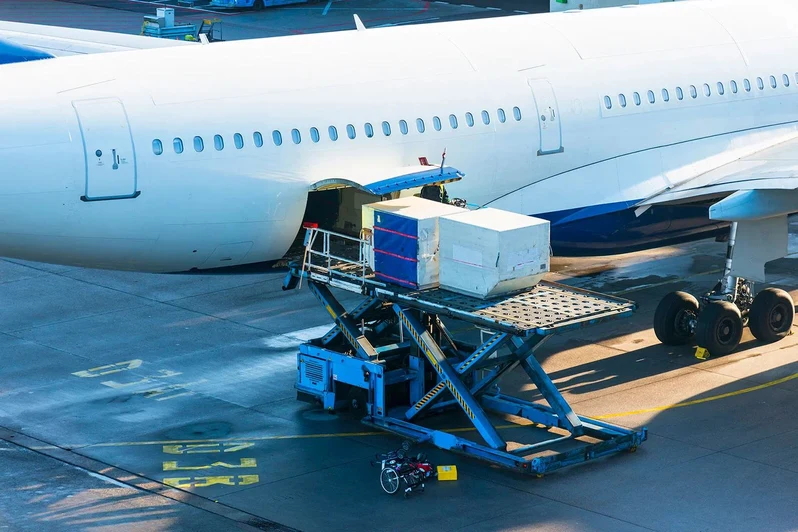
When speed matters, our Namibia air freight services provide fast, secure and reliable transportation between Namibia and the United Kingdom.
We arrange air freight through Hosea Kutako International Airport (WDH), with UK arrivals through London Heathrow, London Gatwick, Manchester Airport and other major UK airports.
Our air freight solutions include:

  • Air freight from Namibia to the UK
  • Express and economy air cargo
  • Door to door delivery
  • Time critical shipments
  • Air freight from the UK to Namibia
  • Airport to airport services
  • Customs clearance support
  • High value and commercial cargo

Whether you need urgent delivery of minerals, meat products, fish, agricultural goods, machinery, automotive parts, pharmaceuticals or commercial cargo, our air freight specialists can provide the most efficient solution for Namibia air cargo.
Logistics solutions
Sea Freight Namibia to UK
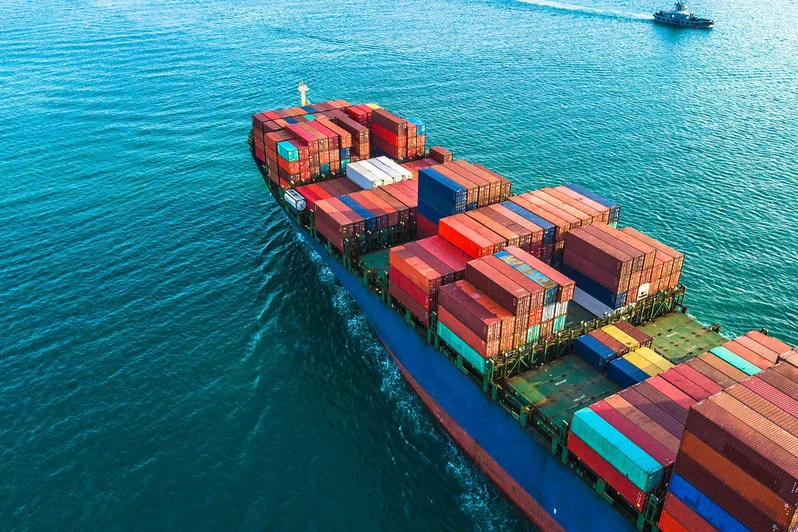
For larger shipments and cost effective transportation, our sea freight services provide dependable shipping solutions between Namibia and the UK.
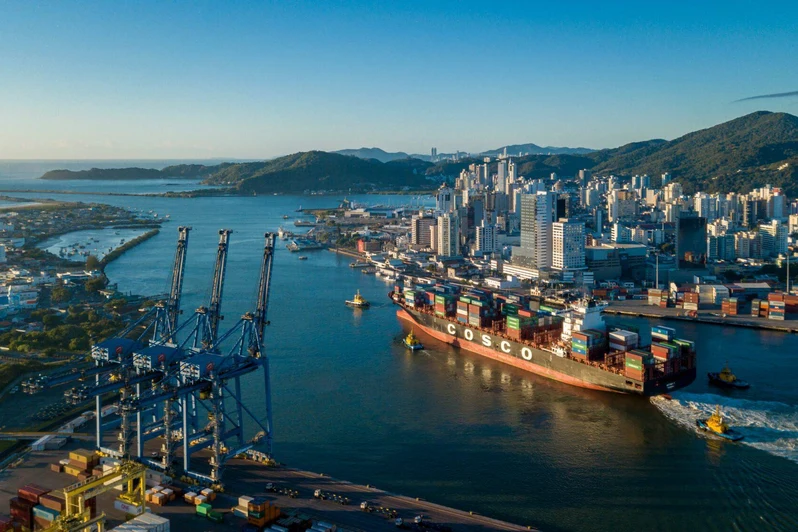
We arrange cargo movements through the Port of Walvis Bay and Port of Lüderitz, connecting with major UK and European container ports via South Atlantic shipping corridors.
Our sea freight services include:

  • Full Container Load (FCL)
  • Port to port shipping
  • Customs documentation
  • Project cargo
  • Less than Container Load (LCL)
  • Door to door logistics
  • Cargo insurance
  • Oversized and heavy lift shipments

Whether shipping mineral commodities, machinery, automotive parts, consumer goods, project cargo or oversized equipment, we can tailor a sea freight solution to suit your budget and transit requirements for Namibia sea cargo.
Logistics solutions
Import from Namibia to the UK
Intercargo helps UK businesses import products and cargo from Namibia through a fully managed freight forwarding service.
Our import services include:

  • Supplier coordination
  • Air freight and sea freight transportation
  • Duty and VAT guidance
  • Final delivery throughout the UK
  • Collection from premises across Namibia
  • UK customs clearance
  • Warehousing and distribution

We regularly support imports including:

  • Diamonds, uranium and mineral ores
  • Beef, meat and agricultural products
  • Fish and seafood products
  • Beverages and artisan goods
  • Consumer and commercial goods

Our experienced team ensures your cargo moves efficiently from Namibia to the UK while remaining fully compliant with all customs and import requirements.
Logistics solutions
Export from the UK to Namibia
We also help UK businesses export goods to customers, distributors and partners throughout Namibia.
Whether shipping to Windhoek, Walvis Bay, Swakopmund, Oshakati or other major commercial centers, our export specialists can arrange a seamless freight solution by air and sea.
Our export services include:

  • Air freight exports
  • Export documentation
  • Cargo insurance
  • Commercial and industrial shipments
  • Sea freight exports
  • Customs compliance
  • Door to door delivery

From single shipments to regular freight movements, we provide scalable logistics solutions designed around your business requirements for Namibia exports.
Logistics solutions
Customs Clearance & Freight Forwarding for Namibia
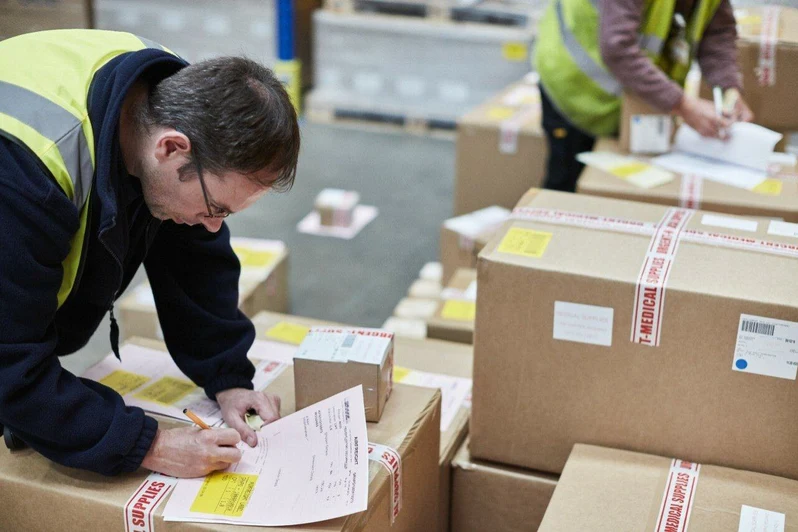
Successful international shipping between Namibia and the UK depends on accurate customs documentation and compliance.
Intercargo provides:

  • Import customs clearance
  • Commodity code guidance
  • Duty and tax assistance
  • End to end shipment visibility
  • Export customs clearance
  • Shipping documentation
  • Freight forwarding management

Our experienced freight forwarding team helps minimise delays and keeps your cargo moving smoothly between Namibia and the United Kingdom.
Logistics solutions
Why Choose Intercargo for Namibia Freight?
We support importers, exporters, manufacturers, distributors, retailers and e-commerce businesses moving cargo between Namibia and the UK.
Namibia Air And Sea Freight Specialists
Uk And Namibia Trade Lane Expertise
Namibia Import And Export Solutions
Namibia Customs Clearance Support
Door To Door Logistics
Dedicated Account Management
Global Carrier Network
Competitive Freight Rates
Get a Namibia Freight Quote

Looking for air freight from Namibia to the UK, sea freight from Namibia to the UK, or export services from the UK to Namibia?
Contact Intercargo today for a tailored freight forwarding quotation and expert advice on the most efficient air and sea shipping solution for your cargo.
Logistics solutions
Latest News & Updates

'Black Friday or Red Friday?' Ecommerce air hubs take a capacity hit

Air cargo rates continue to face upward pressure as capacity constraints, rather than a surge in peak season demand, increasingly dictate pricing - with freighter capacity into Europe taking a significant hit ahead of Black Friday. Data published today by aviation consultant Aevean shows freighter capacity from Asia and the Middle East into Europe fell 15% year on year in the two weeks to 24 November, equivalent to some 27,500 tonnes. "Black Friday... or Red Friday?" asked Maarten Wormer, head of consulting at Aevean, noting that "integrator and general cargo hubs are largely holding up, as ecommerce gateways take the hit". Budapest recorded the steepest percentage decline among the eight major gateways tracked, at 36%, followed by Paris CDG, down 27%, and Liège, down 24% - the latter losing some 5,800 tonnes of capacity. Meanwhile, Frankfurt saw an 11% reduction, while Cologne bucked the trend with a 16% increase. Capacity into Amsterdam remained flat. The figures come amid a resurgence in global airfreight rates, following a period of easing in the third quarter. According to Transport Intelligence's (Ti) latest Air Freight Rate Tracker, global headhaul rates reached $3.92 per kg in early November, up 7.6% on October, 8.7% against the Q3 average, and 45.2% year on year. Backhaul rates climbed 6.2% month on month, to $3 per kg, up 22.3% year on year. However, it is the withdrawal of bellyhold capacity during winter passenger schedules, coupled with persistently high fuel costs, rather than exceptional demand growth, that Ti identified as driving the increases. Westbound transatlantic rates recorded the largest quarterly increase, at 21.7%, largely reflecting seasonal capacity reductions. But technology shipments continue to underpin demand elsewhere, with South Asia-North America remaining the most expensive tradelane tracked by Ti, at $7.08 per kg, up 70.5% year on year. And the strength of demand for AI infrastructure, servers and semiconductors could see freighters redeployed to the Transpacific, further tightening capacity elsewhere. Meanwhile, there is little consensus over whether shippers can expect much respite in the new year. Despite 72% of respondents to Ti's industry survey anticipating rate increases over the next three months, the consultant expects prices to ease in Q1 27, recalling that rates fell between Q4 and Q1 in each of the past four years. Some 81% of respondents expected increases on the Asia-US West Coast trade. While softer e-commerce, consumer, and industrial demand following the peak season should weigh on pricing, sustained technology shipments and limited capacity are expected to cushion any decline. Ti also suggested shippers should avoid locking-in November rates on 12-month contracts - shorter-term agreements or index-linked pricing potentially offering greater flexibility. And Transatlantic shippers could benefit from delaying tenders until the return of summer passenger schedules in late March, when the additional bellyhold capacity could bring some relief.

Source: theloadstar.com

Read more

Global average airfreight rate increases for seventh week

The worldwide average airfreight rate for 9-15 November increased again to make seven consecutive weeks of rises, aided by a dip in capacity, according to the latest data from WorldACD Market Data. The worldwide average rate for the week rose by 2% week on week (WoW) to $3.49 per kg. This was up from an average of $3.04 per kg in mid-September. WorldACD said: "The upward rate momentum was aided by a 2% WoW decline in global capacity, while volume slipped 4% WoW, in part owing to the Diwali festival slowing exports from South Asia and the disruption of US flows from the outage of US aviation on 13 November." Year-on-year comparison shows global pricing is 32% higher, with the most pronounced increase from Middle East & South Asia (MESA), up 62%, and Central & South America (CSA) showing the smallest rise at 13%. Looking at WoW changes, WorldACD said rates dropped by 1% WoW out of MESA and by 2% from North America but climbed elsewhere. Rates from CSA rose by 6%, the highest increase by origin region, followed by Africa, which had a rise of 4%, while pricing from Asia Pacific and Europe climbed 2%. Capacity drops Helping boost rates was a global capacity shrinkage of 2% WoW. Freighter capacity reduced slightly, but bellyhold capacity fell for a third consecutive week. North America declined 8%, while MESA, Europe and Africa registered reductions of 1%, 2% and 3% respectively, but capacity out of Asia Pacific was unchanged. Only CSA showed capacity expansion. The region had a 3% rise as a result of shifting belly capacity from transatlantic to North America-CSA markets. WorldACD said: "With peak season traffic expected to build up, upward pricing momentum should continue." However, the company noted that changing consumer spending patterns have served to spread out volumes throughout the peak season, while airlines have moved capacity in line with changing demand, in particular benefiting transpacific routes. "These factors suggest relatively restrained rate increases," it added.

Source: aircargonews.net

Read more

Smaller forwarders struggle to secure alternative terms under IATA air waybill rules

Some airlines are agreeing alternative liability terms with larger freight forwarders under IATA's revised direct air waybill (DAWB) framework, but smaller firms have little leverage to secure similar arrangements, the Airforwarders Association (AfA) has warned. "If an airline says no, the forwarder either accepts the default terms or moves the cargo to another carrier," AfA chief executive Steve Smith told The Loadstar. "A global standard shouldn't only work for companies big enough to negotiate their way out of it." Under the framework, effective since 1 July, a forwarder tendering cargo as agent for a shipper named on the airline's air waybill assumes the shipper obligations that would apply if it were shipping in its own name, unless it agrees alternative bilateral terms with the carrier. Mr Smith said some airlines were agreeing terms with larger forwarding customers. But negotiating separately with a dozen carriers, often through general sales agents, was not a realistic solution for a small or midsized forwarder with limited bargaining power. "Since July, members have told us they can't be sure which terms apply from one airline to the next," he said. "Some have been asked to accept the new default without a separate agreement in place." He added: "Airlines don't benefit from a patchwork either, because it adds paperwork on their side too." IATA declined to answer The Loadstar's questions about the associations' legal objections, whether it would consider revising the framework, or the status of the review requested by FIATA. It also declined to say whether it knew of claims under the revised provisions or alternative bilateral agreements. Its refusal leaves those questions unanswered as forwarder associations seek changes to rules already in force across its member airlines. In September, however, IATA told The Loadstar the provisions applied across member airlines and that carriers and forwarders could agree different terms. It said the changes addressed a safety-related liability gap that left airlines exposed to improperly prepared cargo where they had little or no relationship with the underlying shipper. Mr Smith said there was no reliable industry figure for DAWB usage. They accounted for a minority of volume for most forwarders, but were used where the underlying shipper needed to appear on the airline's own document. Examples included letters of credit and other trade-finance paperwork, certain export-control and customs requirements, and shipments booked through a forwarder using the shipper's own airline rates. "Even a small share matters, because the exposure applies to every shipment, and smaller forwarders are least able to absorb a single large claim," he said. AfA was unaware of any claims, insurance exclusions or premium increases linked to the revised provisions. But Mr Smith said the association wanted to address the exposure before a serious incident. "We would rather fix the framework now than wait for a serious incident, such as a concealed dangerous goods case, to test it in court. By then a forwarder could be facing a claim its insurance doesn't cover." In September, World Insurance told The Loadstar most forwarder liability policies already covered companies acting as both agents and principals, although forwarders should check that their cover adequately addressed the expanded liability. AfA and the National Customs Brokers & Forwarders Association of America have published a joint white paper opposing the framework, with contributions from their Australian counterpart and support from the Canadian association. FIATA reiterated its call for a comprehensive industry review on Monday. Mr Smith said the amendments should have awaited the review requested through FIATA. "We expect to be part of these discussions before changes are made," he said. "We gave IATA notice before we published, and we've shared the paper with the International Federation of Freight Forwarders Associations (FIATA) and with airlines directly. We'd welcome a seat at the review FIATA has asked IATA to convene." AfA wants the named shipper's obligations to remain with that shipper by default, with forwarders responsible for their screening and security duties, the information they enter, their handling and customer checks. "Airlines should keep full recourse against a forwarder that falls short on any of those. And it should be one default across carriers, not different terms on every airline," Mr Smith said. The white paper argues that the revised framework conflicts with the Montreal Convention. In September, HFW partner Matthew Gore told The Loadstar the provisions did not directly contradict the convention, although they could significantly expand a forwarder's contractual exposure to the airline. More recently, he said a UK industry association he had spoken to saw little change for most UK cargo, which generally moves under house air waybills, with forwarders already contracting directly with airlines under master air waybills. Mr Gore had personally seen neither a claim tested under the revised provisions nor bilateral alternatives suggesting a settled market practice had emerged. Mr Smith said AfA was not planning a legal challenge. "Whatever the interpretation, we believe it is poor policy to put the risk on the party with the least control over the cargo, and we urge IATA to take that practical reality into account." AfA would continue pursuing changes with IATA and individual airlines, he added. "If the framework doesn't change, we'll keep working with airlines one by one and keep our members informed on contracts and insurance."

Source: theloadstar.com

Read more

Privacy Preference Center

This website uses cookies and similar technologies, (hereafter “technologies”), which enable us, for example, to determine how frequently our internet pages are visited, the number of visitors, to configure our offers for maximum convenience and efficiency and to support our marketing efforts. These technologies incorporate data transfers to third-party providers based in countries without an adequate level of data protection (e. g. United States). For further information, including the processing of data by third-party providers and the possibility of revoking your consent at any time, please see your settings under “Consent Preferences” and our Privacy Notice.


Manage Consent Preferences
Strictly Necessary Cookies
Always Active

Performance Cookies

Functional Cookies

Targeting Cookies