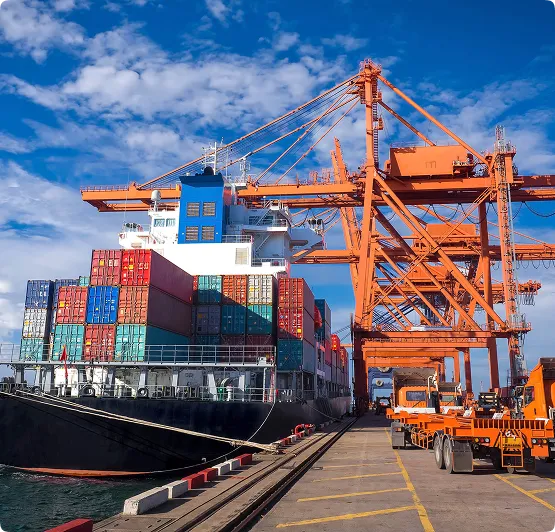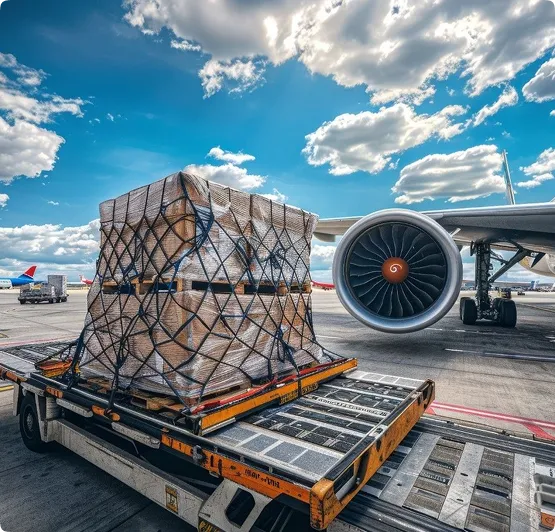
We understand the ever changing needs of our customers

we provide a high level of service dedicated to fulfilling all your shipping requirements

Watch Video
Road Freight

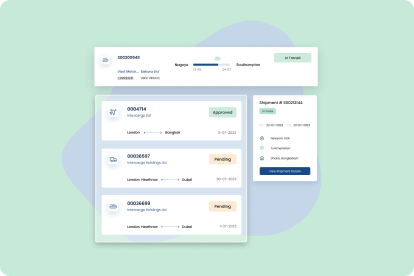
Keep all your data in one place which can be accessed from anywhere and anyplace

Let us help you 24/7 manage your supply chain needs

Back to Global Coverage

Morocco Freight Forwarding Services
Air & Sea Freight Between Morocco and the UK

Intercargo provides reliable freight forwarding services between Morocco and the United Kingdom, helping businesses import and export cargo efficiently by air and sea.

Whether you are importing goods from Morocco into the UK, exporting products from the UK to Morocco, or managing regular international shipments, our experienced freight forwarding team provides complete end-to-end logistics solutions. From collection and customs clearance to final delivery, we manage every stage of the shipment process.
Logistics solutions
Air Freight Morocco to UK
When speed matters, our Morocco air freight services provide fast, secure and reliable transportation between Morocco and the United Kingdom.
We arrange air freight through Mohammed V International Airport (Casablanca), Marrakesh Menara Airport, Tangier Ibn Battouta Airport and Agadir Al Massira Airport, with UK arrivals through London Heathrow, London Stansted, Manchester Airport, Birmingham Airport and East Midlands Airport.

Our air freight solutions include:

  • Air freight from Morocco to the UK
  • Express and economy air cargo
  • Door to door delivery
  • Time critical shipments
  • Air freight from the UK to Morocco
  • Airport to airport services
  • Customs clearance support
  • High value and commercial cargo

Whether you need urgent delivery of fresh produce, automotive components, textiles, pharmaceuticals, electronics, machinery or commercial goods, our air freight specialists can provide the most efficient solution.
Logistics solutions
Sea Freight Morocco to UK
For larger shipments and cost effective transportation, our sea freight services provide dependable shipping solutions between Morocco and the UK.
We regularly arrange cargo movements through Port of Tanger Med, Port of Casablanca, Port of Agadir and Port of Nador, with UK arrivals through Port of Felixstowe, Southampton, London Gateway, Liverpool, Tilbury and Immingham.

Our sea freight services include:

  • Full Container Load (FCL)
  • Port to port shipping
  • Customs documentation
  • Project cargo
  • Less than Container Load (LCL)
  • Door to door logistics
  • Cargo insurance
  • Oversized and heavy lift shipments

Whether shipping machinery, automotive parts, agricultural products, industrial equipment, manufacturing products or commercial cargo, we can tailor a sea freight solution to suit your budget and transit requirements.
Logistics solutions
Import from Morocco to the UK
Intercargo helps UK businesses import products and cargo from Morocco through a fully managed freight forwarding service.

Our import services include:

  • Supplier coordination
  • Air and sea freight transportation
  • Duty and VAT guidance
  • Final delivery throughout the UK
  • Collection from Moroccan factories, farms, warehouses and commercial premises
  • UK customs clearance
  • Warehousing and distribution

We regularly support imports including:

  • Fresh fruit and vegetables
  • Automotive components
  • Manufacturing components
  • Citrus fruits
  • Seafood products
  • Textiles and garments
  • Leather goods

Our experienced team ensures your cargo moves efficiently from Morocco to the UK while remaining compliant with all customs and import requirements.
Logistics solutions
Export from the UK to Morocco
We also help UK businesses export goods to customers, distributors and partners throughout Morocco.

Whether shipping to Casablanca, Rabat, Tangier, Marrakech, Agadir, Fes or other commercial and industrial locations across Morocco, our export specialists can arrange a seamless freight solution by air or sea.

Our export services include:

  • Air freight exports
  • Export documentation
  • Cargo insurance
  • Commercial and industrial shipments
  • Sea freight exports
  • Customs compliance
  • Door to door delivery

From single shipments to regular freight movements, we provide scalable logistics solutions designed around your business requirements.
Logistics solutions
Customs Clearance & Freight Forwarding
Successful international shipping depends on accurate customs documentation and compliance.

Intercargo provides:

  • Import customs clearance
  • Commodity code guidance
  • Duty and tax assistance
  • End to end shipment visibility
  • Export customs clearance
  • Shipping documentation
  • Freight forwarding management

Our experienced freight forwarding team helps minimise delays and keeps your cargo moving smoothly between Morocco and the United Kingdom.
Logistics solutions
Why Choose Intercargo for Morocco Freight?
We support importers, exporters, manufacturers, distributors, retailers, agricultural businesses and industrial companies moving cargo between Morocco and the UK.
Air Freight And Sea Freight Specialists
Uk And Morocco Trade Lane Expertise
Import And Export Solutions
Customs Clearance Support
Door To Door Logistics
Dedicated Account Management
Global Carrier Network
Competitive Freight Rates
Get a Morocco Freight Quote

Looking for air freight from Morocco to the UK, sea freight from Morocco to the UK, or export services from the UK to Morocco?

Contact Intercargo today for a tailored freight forwarding quotation and expert advice on the most efficient shipping solution for your cargo.
Logistics solutions
Latest News & Updates

Yangtze ports test the water with longer container shipping routes

China's Jiangyin and Nanjing have become the latest Yangtze River ports to demonstrate ocean-going ambitions. Yesterday, Cosco Shipping Specialised Carriers, the Cosco group's multi-purpose shipping arm, launched a container shipping service from Jiangyin to Mexico's Manzanillo. More than 500 containers, loaded with machinery and finished goods, were placed on the general cargo ship, CSPC Jade. And last Friday, Cosco started a container service from Nanjing to North Africa, following 2024 and 2025 test voyages through the Northern Sea Route. Yangtze River ports have been pushing for deepsea container shipping routes to cut logistics costs and boost supply chain efficiency for local and hinterland enterprises, gaining a competitive edge in the regional economy. Traditionally, cargo from the Yangtze hinterland had to be barged to major ports like Shanghai or Ningbo, incurring additional port handling and short-haul transport fees, and consuming significant time. Areas in the lower reaches of the Yangtze host vital manufacturing hubs, with industries ranging from home appliances and electronics to automotive parts and photovoltaics - enterprises highly sensitive to logistics efficiency and costs. Direct routes eliminate the need for transhipment. The new Mexico route from Jiangyin, for example, takes 22 days, cutting around 15 days from traditional transhipment routes. Apparently aimed at providing a solution to Panama Canal bottlenecks, some of the cargo will be railed or trucked from Manzanillo into the US. In March, Cosco Shipping Specialised Carriers executed a one-off container shipping voyage from Jiangyin to Belgium's Antwerp port, using the 1,070 teu Tian Lu.

Source: theloadstar.com

Read more

Cathay Cargo the latest to add Navi Mumbai freighter flights

Cathay Cargo has become the latest airline to shift its Mumbai freighter flights to the recently opened Navi Mumbai International Airport (NMIA). The Hong Kong carrier said that it would operate three flights to the Indian airport per week using its Boeing 747-400ERF and 747-8F aircraft. The carrier had previously been operating its dedicated cargo flights to Mumbai's Chhatrapati Shivaji Maharaj International Airport, but freighter operations are being temporarily suspended at the airport while upgrades are carried out. The carrier's bellyhold cargo operations will remain at Chhatrapati Shivaji Maharaj. Cathay Pacific regional head of cargo for South Asia, the Middle East, and Africa, Rajesh Menon, said: "The move of our Mumbai freighter operations to Navi Mumbai International Airport reinforces our steadfast commitment to the Indian market and its growth trajectory. "By combining Navi Mumbai International Airport's modern infrastructure with our dedicated freighter presence and our 'We Know How' expertise, we are providing reliable connectivity and specialist handling for local enterprises, exporters and SMEs. "This will also further strengthen connectivity between Western India's exporters and key global markets through our Hong Kong hub." In addition to its Navi Mumbai International Airport freighter service, Cathay Cargo continues to operate its dedicated freighter network across India, operating five weekly freighter flights from Delhi and Chennai, respectively. Cathay Cargo utilises additional bellyhold capacity on Cathay Pacific's passenger aircraft across all five of its Indian gateways: Mumbai, Delhi, Chennai, Bengaluru and Hyderabad with 45 passenger flights per week across these five cities. Earlier this month, Silk Way West announced the start of its cargo operations at the new India airport. Hong Kong Air Cargo is also moving its freighter flights to the airport. NMIA opened its doors back in December, but freighter operations did not get underway until 1 August, when an IndiGo freighter took off from the airport.

Source: aircargonews.net

Read more

Produce shippers prepare best practice charter for transport

The Global Coalition of Fresh Produce (GCFP), an alliance of produce shippers, wants to raise resilience and transparency in logistics through a charter of best practices, to be tabled next month. Its members are worried about reliability issues that pose an existential threat to their business. According to the GCFP, the Charter of Good Shipping Practices is meant to be a shared foundational framework for industry stakeholders that "aims to foster mutual understanding and collaboration, strengthening partnerships, and enhancing efficiency across the supply chain". The biggest impetus for this has been concern over schedule reliability in ocean transport, noted Greg Palmer, chair of the coalition and VP of trade and market development at the Canadian Produce Marketing Association, one of the GCFP's founding members. He stressed that the initiative was not about pointing fingers; the aim would be to foster more collaboration in order to strengthen logistics through transparency and fairness. The charter is built around five core pillars: * collaboration and communication, which aims to improve transparency and timely data sharing; * fair and transparent business terms with greater transparency, while avoiding opaque pricing and vague contract terms; * competition and efficiency to support a reliable and cost-effective shipping environment; * cargo integrity and product quality, supported by optimal handling to preserve freshness and value; * resilience and risk preparedness to enhance supply chain stability through proactive planning and co-ordinated response. While visibility - a key criterion - has improved exponentially in recent years, said Mr Palmer, there was still "a large runway for it to grow", especially when it comes to real-time tracking to the final customer. The coalition would like to see ports prioritise fresh products, due to their perishable nature, which is getting impetus from a growing desire in Asia for more frequent shipments, noted Mr Palmer. Some gateways have made significant improvements in operations, he said, citing efforts by Amsterdam and Antwerp to automate loading and unloading processes. Peru's Chancay has also made a big difference by cutting transit times to China by a number of days, he added. Owing to the fact that the majority of GCFP members' cargo moves by ocean transport, the focus of the work on the charter has been primarily on this sector, but it is not limited to the maritime side, he noted. "There are pain points in any form of transport, particularly in air cargo," he said. But rail and truck modes have been less of a focus, as major issues there are usually addressed at the regional level. The charter has been in the works for more than two years. It began as regional initiatives by members of the coalition to address reliability issues in maritime transport, which led to the conclusion that it would be best to develop a set of best practices and standards that apply around the globe. The recent surge in transport costs has added a sense of urgency to the initiative. A recent survey of coalition members identified shipping, fuel, and fertiliser as the largest drivers of business expenditure over the past year. About two-thirds of respondents indicated that their business was "at risk", a threat that is increasing, as shipping costs could rise further as a result of the conflict in the Middle East.

Source: theloadstar.com

Read more

Privacy Preference Center

This website uses cookies and similar technologies, (hereafter “technologies”), which enable us, for example, to determine how frequently our internet pages are visited, the number of visitors, to configure our offers for maximum convenience and efficiency and to support our marketing efforts. These technologies incorporate data transfers to third-party providers based in countries without an adequate level of data protection (e. g. United States). For further information, including the processing of data by third-party providers and the possibility of revoking your consent at any time, please see your settings under “Consent Preferences” and our


Privacy Notice


Privacy Preference Center

Strickly Necessary Cookies
Always Active

Performance Cookies

Functional Cookies

Targeting Cookies