We understand the ever changing needs of our customers

we provide a high level of service dedicated to fulfilling all your shipping requirements

Watch Video
Road Freight

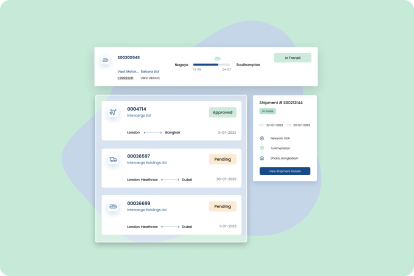
Keep all your data in one place which can be accessed from anywhere and anyplace

Let us help you 24/7 manage your supply chain needs

Back to Global Coverage

Mauritius Freight Forwarding Services
Air and Sea Freight Between Mauritius and the UK

Intercargo provides reliable freight forwarding services between Mauritius and the United Kingdom, helping businesses import and export cargo efficiently by air and sea.

Whether you are importing goods from Mauritius into the UK, exporting products from the UK to Mauritius, or managing regular international shipments, our experienced freight forwarding team provides complete end to end logistics solutions. From collection and customs clearance to final delivery, we manage every stage of the shipment process.
Logistics solutions
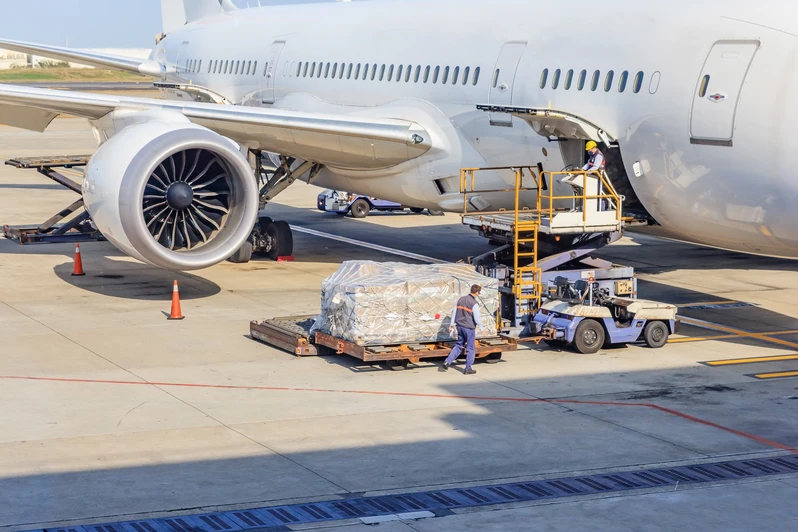
Air Freight Mauritius to UK
When speed matters, our Mauritius air freight services provide fast, secure and reliable transportation between Mauritius and the United Kingdom.
We arrange air freight through Sir Seewoosagur Ramgoolam International Airport (MRU), with UK arrivals through London Heathrow, London Gatwick, Manchester Airport and other major UK airports.
Our air freight solutions include:

  • Air freight from Mauritius to the UK
  • Air freight from the UK to Mauritius
  • Express and economy air cargo
  • Airport to airport services
  • Door to door delivery
  • Customs clearance support
  • Time critical shipments
  • High value and commercial cargo

Whether you need urgent delivery of textiles, cut diamonds, electronics, fish products, pharmaceutical goods or commercial cargo, our air freight specialists can provide the most efficient solution.
Logistics solutions
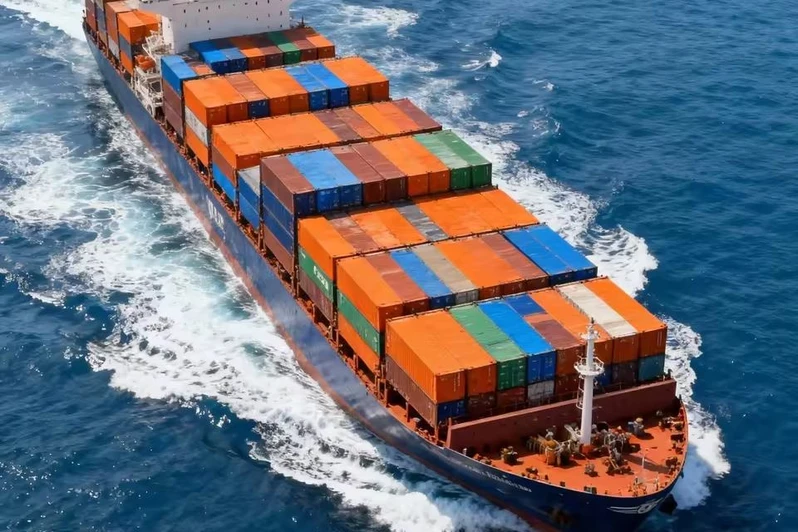
Sea Freight Mauritius to UK
For larger shipments and cost effective transportation, our sea freight services provide dependable shipping solutions between Mauritius and the UK.
We arrange cargo movements through Port Louis Harbour, the island's principal commercial port, connecting with major UK and European ports via Indian Ocean shipping lanes.
Our sea freight services include:

  • Full Container Load (FCL)
  • Less than Container Load (LCL)
  • Port to port shipping
  • Door to door logistics
  • Customs documentation
  • Cargo insurance
  • Project cargo
  • Oversized and heavy lift shipments

Whether shipping sugar, textiles, fish and seafood, chemicals, machinery or consumer goods, we can tailor a sea freight solution to suit your budget and transit requirements.
Logistics solutions
Import from Mauritius to the UK
Intercargo helps UK businesses import products and cargo from Mauritius through a fully managed freight forwarding service.
Our import services include:

  • Supplier coordination
  • Collection from Mauritian businesses, warehouses and commercial premises
  • Air freight transportation
  • UK customs clearance
  • Duty and VAT guidance
  • Warehousing and distribution
  • Final delivery throughout the UK

We regularly support imports including:

  • Sugar and sugar products
  • Textiles and garments
  • Cut diamonds and jewellery
  • Fish and seafood
  • Chemicals and pharmaceuticals
  • Electronics and optical equipment
  • Machinery and equipment

Our experienced team ensures your cargo moves efficiently from Mauritius to the UK while remaining compliant with all customs and import requirements.
Logistics solutions
Export from the UK to Mauritius
We also help UK businesses export goods to customers, distributors and partners throughout Mauritius.
Whether shipping to Port Louis, Curepipe, Vacoas or other Mauritian destinations, our export specialists can arrange a seamless freight solution by air and sea.
Our export services include:

  • Air freight exports
  • Sea freight exports
  • Export documentation
  • Customs compliance
  • Cargo insurance
  • Door to door delivery
  • Commercial and industrial shipments

From single shipments to regular freight movements, we provide scalable logistics solutions designed around your business requirements.
Logistics solutions
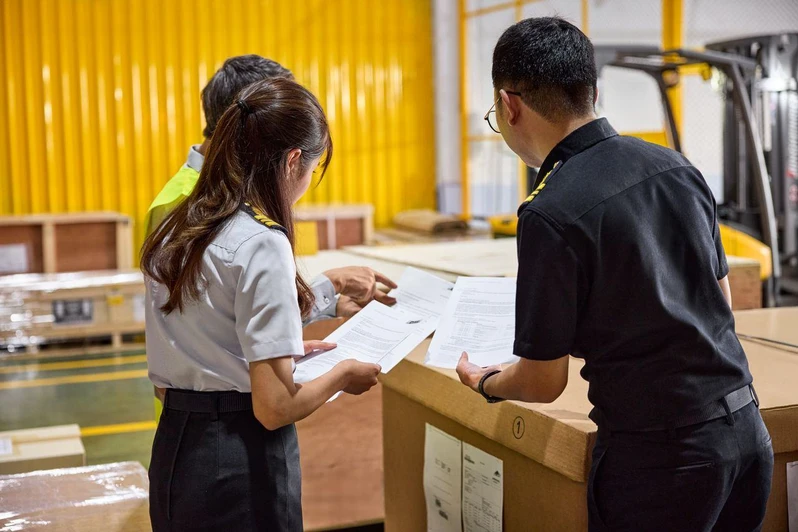
Customs Clearance & Freight Forwarding
Successful international shipping depends on accurate customs documentation and compliance.
Intercargo provides:

  • Import customs clearance
  • Export customs clearance
  • Commodity code guidance
  • Shipping documentation
  • Duty and tax assistance
  • Freight forwarding management
  • End to end shipment visibility

Our experienced freight forwarding team helps minimise delays and keeps your cargo moving smoothly between Mauritius and the United Kingdom.
Logistics solutions
Why Choose Intercargo for Mauritius Freight?
We support importers, exporters, manufacturers, distributors, retailers and e commerce businesses moving cargo between Mauritius and the UK.
Air And Sea Freight Specialists
Uk And Mauritius Trade Lane Expertise
Import And Export Solutions
Customs Clearance Support
Door To Door Logistics
Dedicated Account Management
Global Carrier Network
Competitive Freight Rates
Get a Mauritius Freight Quote

Looking for air freight from Mauritius to the UK, sea freight from Mauritius to the UK, or export services from the UK to Mauritius?
Contact Intercargo today for a tailored freight forwarding quotation and expert advice on the most efficient air and sea shipping solution for your cargo.
Logistics solutions
Latest News & Updates

New and expanding trade flows give African airfreight sector a boost

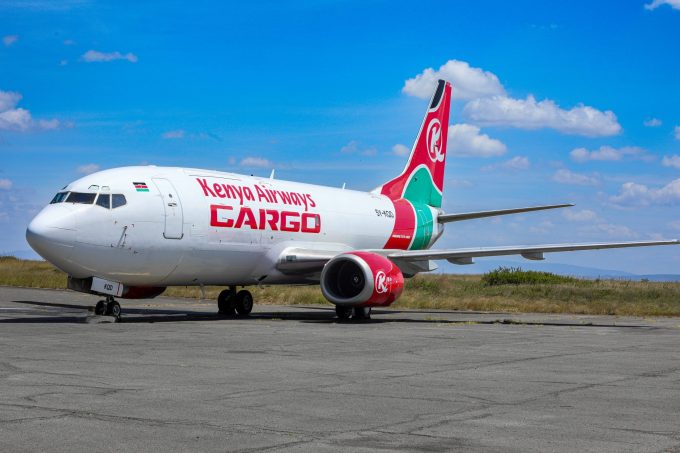
Underlying growth in African airfreight demand is proving more significant than temporary benefits provided by shippers switching from ocean services, as expanding trade and new cargo flows create longer-term opportunities for the sector, according to Kenya Airways. The carrier acknowledged to The Loadstar that congestion, geopolitical uncertainty, and unreliable shipping schedules had encouraged some business to move cargo to airfreight, but said this was only one element of a broader increase in demand. "Some of the recent growth has been linked to temporary market conditions, including supply chain disruptions, seasonal cargo peaks, geopolitical developments, and capacity constraints in competing transport modes," said a spokesperson. "However, we do not expect a complete reversal of the growth currently being observed. The more significant development is the emergence of long-term structural growth drivers," countering claims made by some Loadstar sources. Kenya Airways identified expanding consumer markets, population growth, urbanisation, industrialisation, and increased regional integration through the African Continental Free Trade Area (AfCFTA) as factors supporting sustained demand for air cargo. The strongest demand continued to be for East African perishables, particularly flowers, fresh fruit, and vegetables destined for European markets like Amsterdam, London, Paris, Brussels, and Frankfurt. "We are also seeing continued growth in pharmaceuticals, courier and express products, e-commerce shipments, high-value cargo, and specialised logistics solutions," the airline's spokesperson continued. Citing increasing demand on Africa-Europe, Africa-Middle East, Africa-Asia, and intra-African trade corridors, the spokesperson noted that Nairobi was positioned as a gateway connecting East, Central, Southern and West Africa with international markets. E-commerce expansion was also contributing to demand, as shorter delivery expectations encouraged retailers and logistics providers to use air cargo for fulfilment and inventory replenishment. "Collectively, these trends position African air cargo for continued growth in the years ahead," the spokesperson noted, highlighting emerging cargo categories, pointing to increased movement of solar panels and related equipment destined for the US. Historically, much of this traffic moved directly from Asia to the US, but changing trade policies, tariff considerations, and manufacturers' efforts to diversify sourcing arrangements had created alternative logistics corridors involving East Africa. Since the middle of the year, these movements have generated significant charter and ad hoc freighter activity through Nairobi and the wider region, according to the carrier, reflecting what has been seen elsewhere in the global supply chain. The spokesperson said that although some disruption-driven demand could moderate as conditions across competing transport modes normalised, the carrier remained positive about the medium and long-term outlook for African airfreight. "We see clear evidence of structural growth driven by e-commerce expansion, pharma distribution, perishables exports, regional trade integration, supply chain diversification, and emerging industries," they added.

Source: theloadstar.com

Read more

Final-mile costs rising faster than revenue, say hard-pressed carriers

The cost of final-mile delivery in the US has risen more than 10% over the past year, according to the Final Mile Delivery Index, published by logistics provider Geodis. It shows cost in Q3 up 10.5% on the same period in 2025, following a 10.6% year-on-year increase in the second quarter -more than three times the inflation rate of consumer prices, 3.2% in Q3, the index's authors pointed out. Since 2019 final-mile delivery prices have increased 49.8%, while consumer prices rose 30.8%. Inflation is hitting both shippers and carriers: the index shows 46% of delivery operators reported costs rising faster than revenue, while 42% reported cost and revenue rising at the same pace. Not surprisingly, the index identifies fuel as the biggest cost pressure, followed by driver cost and availability, vehicle operating costs, administration, plus compliance, inefficient routing, and drop density. While driver costs have been impacted by the decimation of the driver pool, due to Washington's crusade to eliminate non-domiciled drivers and those with insufficient command of English, compliance costs are largely tied to the rise in cargo crime. Although the number of reported incidents actually contracted from a year earlier, losses more than doubled, from about $135.7m in Q2 25 to $304.6m in the same period this year. This development has been attributed to the increased activity of organised crime in the transport sector. Whereas food, beverages, and groceries emerged as the most-affected sector, in terms of the number of incidents, the hi-tech industry (ranked third by number of incidents) led the rankings in severity of losses from crime. Theft of consumer electronics declined, but hi-tech hardware and crypto mining equipment emerged as top-tier targets for criminals. While organised crime has brought a higher level of sophistication to the heists on the final mile, the transport industry needs to do better in crime prevention; it has to take accountability and ownership, said Rob Greene, Geodis's EVP transportation, pointing to instruments that are available to prevent cargo theft. The higher impact of cargo crime is hitting carriers and brokers in their compliance costs, notably increased insurance premiums, which tend to be higher for high-value types of cargo. Carriers with general liability cover of $100,000-$150,000, let alone the minimum $75,000 cover required by the Federal Motor Carrier Safety Association, are not used by shippers of server racks for AI centres, Mr Greene noted. Such contracts typically carry rafts of exclusions, such as the use of secure locks, GPS on tractors and trailers, and clauses forbidding stops along the way. Carriers may also be required to run in convoys. These elements, plus the value of servers shipped and the size of the shipment, account for a large range of potential cost outcomes, both in terms of transport charges and insurance premiums, he said. Insurance costs have been pushed up further by the US Supreme Court's ruling that brokers can be held liable for negligence in cases where truckers assigned by them cause accidents. This has caused brokers to tighten their requirements for insurance coverage and financial security of the truckers they use. The travails of the large integrated carriers and their shift away from e-commerce, other than high-margin traffic, reflect the cost pressure on the final mile from crowd-sourced operations using gig drivers. Mr Greene said this did not make the latter model an automatic choice. While there is evidence suggesting that using gig drivers is more cost-effective per route, when cost of ownership and volume are taken into account, this works out better if they are used as a supplementary option; employed in a dedicated role is an option not as profitable as it was during Covid, he added. The index cites a survey by FarEye, which suggests 76% of delivery operators prioritise predictable delivery, whereas only 6% view the fastest possible delivery as the top priority. Besides offering a lid on cost, this could also have a positive impact on crime prevention. Mr Greene mentioned that Geodis employees were encouraged to slow down and check if they felt rushed by a potential client or business partner. Cost will continue to pressure supply chains next year 2027, according to the latest edition of the Supply Chain Navigator, produced by the Kearney Supply Chain Institute. This projects global costs to rise 2.7% or more by Q3 27, and its authors predict a broad range of variation by markets, with inflation in the US potentially as high as 5%, 3.1% in Germany, and 8.3% in India.

Source: theloadstar.com

Read more

FedEx freighter overruns at Miami Airport

Operations at Miami International Airport were disrupted last night when a FedEx freighter overran one of the airport's runways. The Federal Aviation Administration (FAA) issued the ground stop and all but one of the airport's runways was closed when a FedEx Boeing MD-11 freighter overran Miami's runway 26R at around 20:40. The ground stop was lifted around 10.30pm. The FAA has confirmed that it would open an investigation into the incident. There were no reports of injuries to the two flight crew onboard. Video images from the scene indicate that the aircraft came to rest near a perimeter fence. A highway lies beyond the fence, some 350m from the opposite-direction runway threshold. The aircraft has been provisionally identified as N605FE and had been operating flight FX910 from the FedEx hub at Memphis on 25 November. According to Air Cargo News sister title FlightGlobal, meteorological data from Miami airport around the time of the occurrence shows thunderstorm activity and rain in the vicinity, with crosswinds from the south for runway 26R. The incident comes just under three months after an Amazon Air Boeing 767 freighter overran one of the airport's runways, tragically resulting in the deaths of several people. The Amazon aircraft went through a perimeter fence after leaving the runway and hit a Toyota as it travelled across a road before hitting another fence and coming to a stop. Meanwhile, FedEx had only restarted MD-11F operations in May after the FAA issued an Emergency Airworthiness Directive (AD) that ordered owners and operators of the model to inspect their aircraft for faults following the fatal UPS accident that resulted in the deaths of three pilots onboard and 12 people on the ground.

Source: aircargonews.net

Read more

Privacy Preference Center

This website uses cookies and similar technologies, (hereafter “technologies”), which enable us, for example, to determine how frequently our internet pages are visited, the number of visitors, to configure our offers for maximum convenience and efficiency and to support our marketing efforts. These technologies incorporate data transfers to third-party providers based in countries without an adequate level of data protection (e. g. United States). For further information, including the processing of data by third-party providers and the possibility of revoking your consent at any time, please see your settings under “Consent Preferences” and our Privacy Notice.


Manage Consent Preferences
Strictly Necessary Cookies
Always Active

Performance Cookies

Functional Cookies

Targeting Cookies