We understand the ever changing needs of our customers

we provide a high level of service dedicated to fulfilling all your shipping requirements

Watch Video
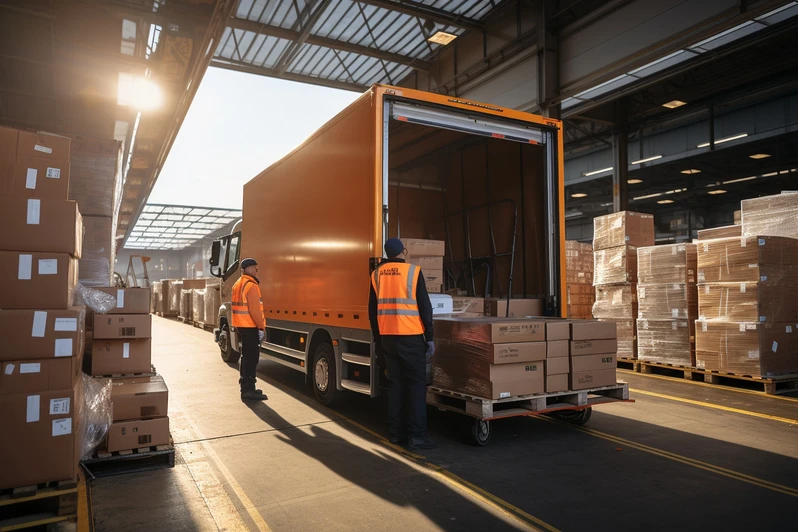
Road Freight

Keep all your data in one place which can be accessed from anywhere and anyplace

Let us help you 24/7 manage your supply chain needs

Back to Global Coverage

Malawi Freight Forwarding Services
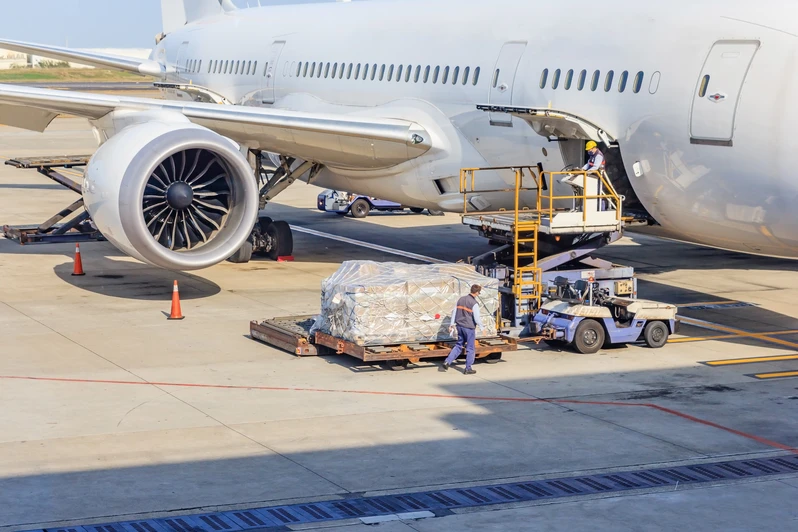
Air Freight Between Malawi and the UK

Intercargo provides freight forwarding services between Malawi and the United Kingdom, helping businesses move cargo by air while navigating the country's landlocked geography. As a landlocked country in southeastern Africa, Malawi relies on regional ports in Mozambique (Beira, Nacala) and Tanzania (Dar es Salaam) connected by road and rail for sea freight, making air freight the most direct shipping option.

Whether you are importing goods from Malawi into the UK, exporting products from the UK to Malawi, or managing regular international shipments, our freight forwarding team provides end to end logistics support. Air shipments may route via regional hubs such as Kamuzu International Airport (Lilongwe) or Chileka International Airport (Blantyre), with onward connections to the UK.
Logistics solutions
Air Freight Malawi to UK
When speed matters, our Malawi air freight services provide fast and dependable transportation between Malawi and the United Kingdom.
We arrange air freight movements considering Malawi's landlocked position in southeastern Africa. Shipments route via Kamuzu International Airport (Lilongwe) or Chileka International Airport (Blantyre), with regional connections coordinated as part of the service.
Our air freight solutions include:

  • Air freight from Malawi to the UK
  • Air freight from the UK to Malawi
  • Consolidated air freight
  • Direct air freight
  • Regional gateway connections
  • Door to door delivery
  • Customs clearance support
  • Project and oversized cargo

Whether you need secure delivery of tobacco, tea, sugar, coffee, macadamia nuts, electronics or commercial goods, our air freight specialists can provide the most efficient solution for your shipment.
Logistics solutions
Export from the UK to Malawi
We also help UK businesses export goods to customers, distributors and partners throughout Malawi.
Whether shipping to Lilongwe, Blantyre or other major Malawian destinations, our export specialists can arrange air freight solutions routed via regional air connections with coordinated logistics into Malawi.
Our export services include:

  • Air freight exports
  • Export documentation
  • Customs compliance
  • Cargo insurance
  • Door to door delivery
  • Commercial and industrial shipments
  • Project and oversized cargo

From single shipments to regular freight movements, we provide scalable logistics solutions designed around your business requirements.
Logistics solutions
Import from Malawi to the UK
Intercargo helps UK businesses import products and cargo from Malawi through a fully managed freight forwarding service.
Our import services include:

  • Supplier coordination
  • Collection from Malawian businesses, warehouses and commercial premises
  • Air freight transportation
  • UK customs clearance
  • Duty and VAT guidance
  • Warehousing and distribution
  • Final delivery throughout the UK

We regularly support imports including:

  • Tobacco and tobacco products
  • Tea and coffee
  • Sugar and molasses
  • Macadamia nuts and legumes
  • Textiles and garments
  • Agricultural products
  • Uranium and minerals

Our experienced team ensures your cargo moves efficiently from Malawi to the UK while remaining compliant with all customs and import requirements.
Logistics solutions
Customs Clearance & Freight Forwarding
Successful international shipping depends on accurate customs documentation and compliance.
Intercargo provides:

  • Import customs clearance
  • Export customs clearance
  • Commodity code guidance
  • Shipping documentation
  • Duty and tax assistance
  • Freight forwarding management
  • End to end shipment visibility

Our experienced freight forwarding team helps minimise delays and keeps your cargo moving smoothly between Malawi and the United Kingdom.
Logistics solutions
Why Choose Intercargo for Malawi Freight?
We support importers, exporters, manufacturers, distributors, retailers and e commerce businesses moving cargo between Malawi and the UK.
Air Freight And Landlocked Logistics Specialists
Uk And Malawi Trade Lane Expertise
Import And Export Solutions
Customs Clearance Support
Door To Door Logistics
Dedicated Account Management
Global Carrier Network
Competitive Freight Rates
Get a Malawi Freight Quote

Looking for air freight from Malawi to the UK, or export services from the UK to Malawi?
Contact Intercargo today for a tailored freight forwarding quotation. As a landlocked country, we can advise on the most efficient air routing for your cargo, with sea freight available via regional ports in Mozambique and Tanzania.
Logistics solutions
Latest News & Updates

New and expanding trade flows give African airfreight sector a boost

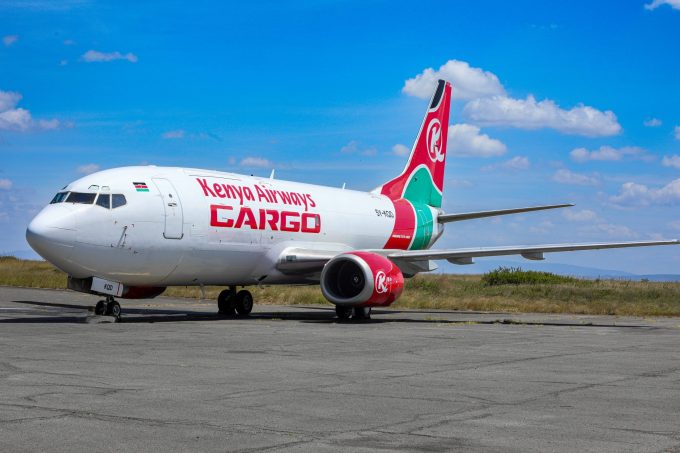
Underlying growth in African airfreight demand is proving more significant than temporary benefits provided by shippers switching from ocean services, as expanding trade and new cargo flows create longer-term opportunities for the sector, according to Kenya Airways. The carrier acknowledged to The Loadstar that congestion, geopolitical uncertainty, and unreliable shipping schedules had encouraged some business to move cargo to airfreight, but said this was only one element of a broader increase in demand. "Some of the recent growth has been linked to temporary market conditions, including supply chain disruptions, seasonal cargo peaks, geopolitical developments, and capacity constraints in competing transport modes," said a spokesperson. "However, we do not expect a complete reversal of the growth currently being observed. The more significant development is the emergence of long-term structural growth drivers," countering claims made by some Loadstar sources. Kenya Airways identified expanding consumer markets, population growth, urbanisation, industrialisation, and increased regional integration through the African Continental Free Trade Area (AfCFTA) as factors supporting sustained demand for air cargo. The strongest demand continued to be for East African perishables, particularly flowers, fresh fruit, and vegetables destined for European markets like Amsterdam, London, Paris, Brussels, and Frankfurt. "We are also seeing continued growth in pharmaceuticals, courier and express products, e-commerce shipments, high-value cargo, and specialised logistics solutions," the airline's spokesperson continued. Citing increasing demand on Africa-Europe, Africa-Middle East, Africa-Asia, and intra-African trade corridors, the spokesperson noted that Nairobi was positioned as a gateway connecting East, Central, Southern and West Africa with international markets. E-commerce expansion was also contributing to demand, as shorter delivery expectations encouraged retailers and logistics providers to use air cargo for fulfilment and inventory replenishment. "Collectively, these trends position African air cargo for continued growth in the years ahead," the spokesperson noted, highlighting emerging cargo categories, pointing to increased movement of solar panels and related equipment destined for the US. Historically, much of this traffic moved directly from Asia to the US, but changing trade policies, tariff considerations, and manufacturers' efforts to diversify sourcing arrangements had created alternative logistics corridors involving East Africa. Since the middle of the year, these movements have generated significant charter and ad hoc freighter activity through Nairobi and the wider region, according to the carrier, reflecting what has been seen elsewhere in the global supply chain. The spokesperson said that although some disruption-driven demand could moderate as conditions across competing transport modes normalised, the carrier remained positive about the medium and long-term outlook for African airfreight. "We see clear evidence of structural growth driven by e-commerce expansion, pharma distribution, perishables exports, regional trade integration, supply chain diversification, and emerging industries," they added.


Source: theloadstar.com

Read more

EU cargo hubs see freighter capacity decline

Liege, Budapest and Paris CDG were the airports that suffered the largest fall in freighter capacity as a result of the European Union's (EU) e-commerce charge. Figures from consultant Aevean for the top eight EU cargo hubs show that over the 14 days to 26 November, Liege is the EU airport that has seen the biggest drop-off in freighter capacity from Asia and the Middle East to Europe. The Belgian Airport has seen cargo capacity fall by 5,800 tonnes or 24% compared with the same period a year ago. Meanwhile, Budapest saw its freighter tonnage decline by 4,200 tonnes or 36% compared with last year and Paris CDG registered a 3,900-tonne or 27% fall. Others to register declines were Frankfurt (-11%), Leipzig (-3%) and Luxembourg (-3%). Schiphol freighter capacity was flat and there was a 16% improvement at Cologne. Aevean head of consulting Maarten Wormer said: "Integrator and general cargo hubs are largely holding up, as e-commerce gateways take the hit." Overall European airport freighter capacity was down 18% year on year In its latest traffic update, Liege confirmed that its rapid cargo volume growth of recent years had flatlined as a result of the EU's €2 charge for parcels worth under €150. The Belgian airport today released its traffic figures for the third quarter of the year in October, which showed that cargo volumes were 0.1% down year on year at 334,950 tonnes, while aircraft movements dropped by 6% compared with last year to 6,826. To put the fall in context, the airport registered an 11% year-on-year increase in cargo volumes in the first half of the year.

Source: aircargonews.net

Read more

Green shipping needs global, rather than costlier regional, rules

Surrendering the governance of maritime decarbonisation to fragmented and regional regulations could ultimately prove more expensive for the industry than a globally agreed framework, according to US Federal Maritime Commission chair Laura Di Bella. Speaking to The Loadstar on the sidelines of the IMO's Marine Environment Protection Committee (MEPC) in London this week, Ms Di Bella said the US was seeking a global agreement on the IMO's proposed Net-Zero Framework. She added: "The regional schemes will ultimately be more costly than something done on a global level. It is harmful, and I believe it when industry says it's going to be more costly." That belief stems from feedback the FMC has been gathering from industry participants, with the message very much stating that regulatory fragmentation would increase costs for shipping businesses. Noting that the US was "approaching the negotiations in good faith" and wants to reach a global agreement, Ms Di Bella, nonetheless, warned disagreements over the proposed framework's economic element remained a significant obstacle to reaching a consensus. Under the proposal, ships that exceed fuel-intensity limits would be charged, with the money going into an emissions pricing and revenue-recycling mechanism that would reward zero-emission fuels. However, the FMC chair said the mechanism was overshadowing discussions about greenhouse gas reductions, adding that "the economic element needs its own separate discussion, and then [so are] the GHG measures". For the US to accede the agreement, Ms Di Bella said, it would need to fit four principal requirements: no economic element; a fuel-agnostic approach; technology neutrality; and clarification over the treatment of emissions trading schemes (ETS). On the latter, she said the US did not consider the prospect of receiving credits under a future scheme sufficient, calling for the removal of the existing ETS to avoid what she considers "double taxation". "We are continuing to engage with the other participants in an effort to bridge these differences, but we believe the economic element has come to dominate at the expense of the environment," noted Ms Di Bella. "We need negotiations to be focused on the environmental element. For this reason, if we are to see any progress, the ETS needs to go. It presents an opportunity to not only tax much, which is an issue we have, but then a second time. You cannot have both."

Source: theloadstar.com

Read more

Privacy Preference Center

This website uses cookies and similar technologies, (hereafter “technologies”), which enable us, for example, to determine how frequently our internet pages are visited, the number of visitors, to configure our offers for maximum convenience and efficiency and to support our marketing efforts. These technologies incorporate data transfers to third-party providers based in countries without an adequate level of data protection (e. g. United States). For further information, including the processing of data by third-party providers and the possibility of revoking your consent at any time, please see your settings under “Consent Preferences” and our Privacy Notice.


Manage Consent Preferences
Strictly Necessary Cookies
Always Active

Performance Cookies

Functional Cookies

Targeting Cookies