CH Robinson warns of Asia cargo capacity shortages
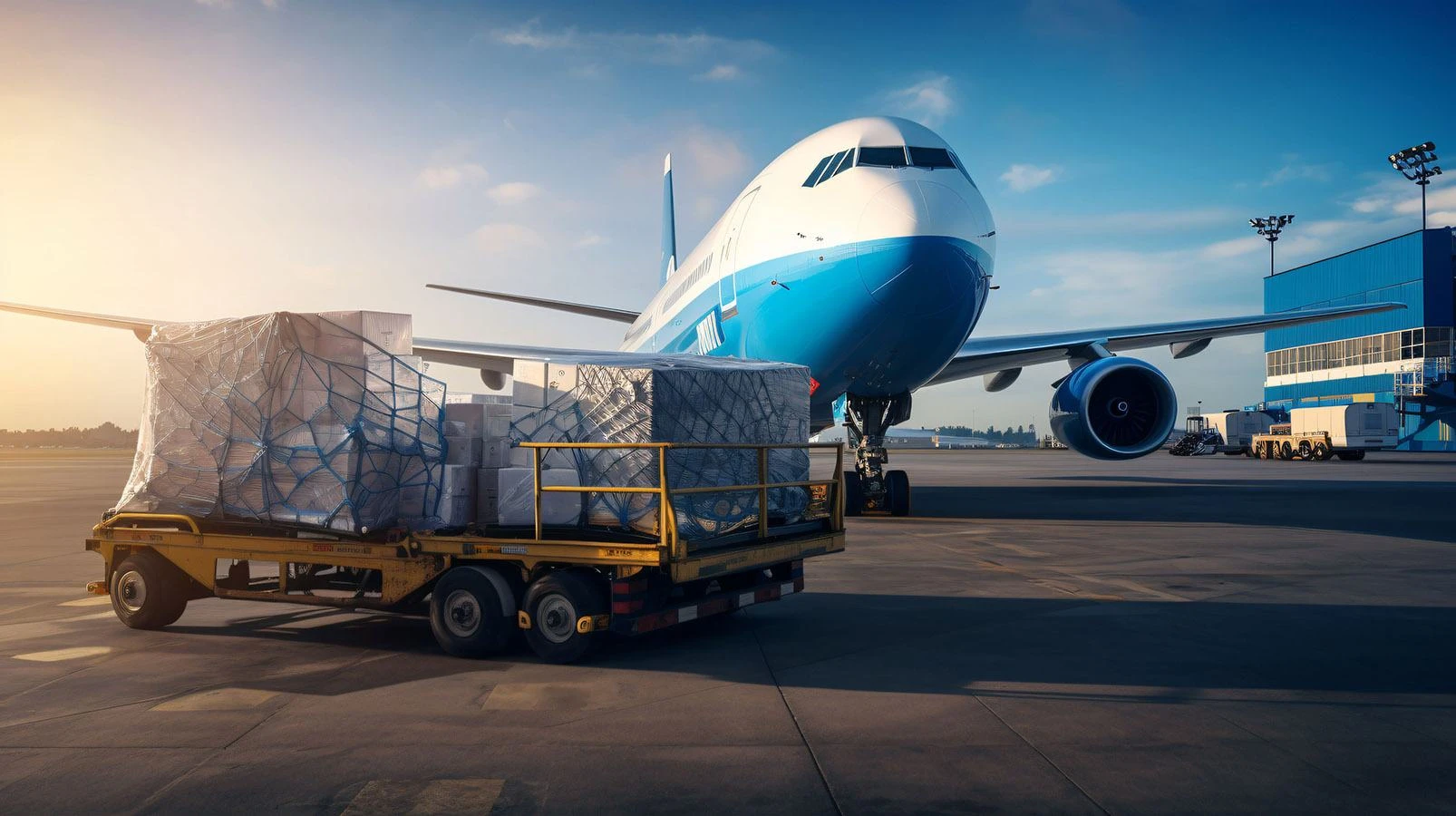
CH Robinson has warned its customers to expect capacity shortages on certain lanes out of Asia in the second half of September. The forwarder said that quarter-end shipments, technology-related cargo, and a pre-holiday export push could "narrow departure options during the second half of the month", particularly on the transpacific and Asia-Europe trade lanes. There will also be an export push ahead of the Mid-Autumn Festival at the end of the month and China's National Day holiday from 1-7 October. The company added that the ongoing conflict in the Middle East continues to affect airspace availability and routing decisions. "Expect booking pressure to build during the middle of September and intensify ahead of the holiday period," CH Robinson said. "On affected Asia origins, the first indication of tightening may be earlier cutoffs and fewer workable flight options rather than an immediate market-wide rate increase." However, the company added that the tightening of capacity in September does not reflect a broad-based increase in general cargo demand, other than AI infrastructure. The biggest impact will be on services out of China, CH Robinson said, with market conditions outside of China depending on how airlines adjust freighter rotations or commercial allocations toward major China gateways. "Taiwan, South Korea, Japan, Vietnam, and Thailand should therefore be treated as origin-specific watchpoints," the forwarder said. "Each may see quarter-end or technology-related demand, but the timing and degree will vary. Belly capacity, airline allocations, local cargo mix, and gateway performance will determine which origins tighten first." General cargo will be the first affected by a tightening of capacity, with later flights or less direct services a likely outcome. Rates are also likely to rise: "On affected Asia export lanes, spot rates could begin to firm from mid-September as preferred flights fill," the forwarder added. "The change is unlikely to be uniform. Rates may rise first on the most sought-after flights rather than across every departure on the route."
Source: aircargonews.net
Read more
Cockpit recording from Miami 767 overrun indicates highly-unstable approach
US investigators have revealed that a pilot of the Boeing 767-300 freighter that overran at Miami warned about excessive speed on final approach, while the aircraft subsequently generated multiple sink-rate and ground-proximity alerts as it descended. After the aircraft touched down, one of the crew called for a go-around just 5 seconds before the jet left the runway surface. National Transportation Safety Board investigators provided the update after further analysis of the cockpit-voice and flight-data recorders from the 21 Air aircraft, which overran Miami's runway 30 on 6 September. About 1 minute 11 seconds before touchdown, as one of the pilots called for 20° flap, the other "cautioned they were too fast", said the inquiry. This pilot also made additional comments regarding the aircraft's excessive speed throughout the remainder of the cockpit-voice recording. "There was not a consistent verbal response to the comments about speed," the inquiry adds. Over the 40 seconds between the 1,000ft call-out and touchdown, the jet issued several aural warnings of excessive sink rate, including below 500ft. It also generated four 'too low, terrain' warnings after the 100ft call-out, after which - just 10 seconds before touchdown - one of the pilots called for 30° flap. Another 'too low, terrain' alert was issued at about 40ft. Some 15 seconds after the touchdown - and about 5 seconds before the aircraft left the paved runway surface - one of the pilots "called for a go-around", said the inquiry. While the cockpit-voice and flight-data recordings have yet to be fully synchronised, investigators had previously indicated that, about this time, the aircraft's throttles were increased to go-around thrust for a few seconds before being reduced to idle power. As the aircraft - branded for Amazon Air - went off the end of the runway, it struck a van and a car, killing five people before coming to a stop.
Source: aircargonews.net
Read more
Belgium welcomes new ecommerce fee and steps up war on non-compliance
The EU's €3 fee on low-value ecommerce parcels has already triggered a major shift in how goods enter Europe, with simplified customs declarations in Belgium falling around 50% year on year, according to Belgium's customs chief, Kristian Vanderwaeren. At the EU CBEC ecommerce forum yesterday, Mr Vanderwaeren, general administrator of Customs and Excise at Belgium's Federal Public Service Finance, spoke on the impact of the new fee that applies to all B2C shipments entering the EU from outside the bloc where their value is below €150. The €3 charge is levied per customs item, rather than simply per parcel. For example, two pairs of jeans falling under the same customs classification would attract one €3 charge, while jeans, sneakers, and earrings classified as three items could attract three charges. That distinction is creating additional work for customs authorities, Mr Vanderwaeren said, as shipments needed to be checked for attempts to manipulate declarations to avoid the fee. Despite only being in effect since 1 July, initial data revealed the measure was having the intended effect of moving more ecommerce traffic into the standard customs process. Comparing July with the same month last year, Belgian Customs recorded a fall of around 50% in low-value H7 declarations, the simplified declaration for low-value consignments valued up to €150, with reduced data requirements and IOSS integration. At the same time, H1 declarations, the number of standard customs declarations for all imports, increased by around 3m. Mr Vanderwaeren cautioned against comparing June with July, however, as ecommerce volumes had surged ahead of the new regulation, as companies had been "stockpiling" goods and pushing shipments into the EU before 1 July. The average value of H7 shipments also increased, from about €5 to €10, in July and August, which Mr Vanderwaeren attributed partly to Chinese companies encouraging consumers to purchase more, and to bundling multiple products into single shipments. Karlheinz Kadner, head of sector at the EC Directorate-General for Taxation and Customs Union, said the shift from H7 to H1 declarations was welcomed by the commission, as the standard process provided customs with significantly more information and greater scope to carry out checks. "Of course we are happy," Mr Kadner said. "We see that the measure has had an effect. We see that imports are shifted more to the traditional way, which is the standard customs declaration, with much more information than this simplified declaration, and that is exactly what we wanted." Belgian customs collected €223m in duty revenue during the period covered by the presentation. Mr Vanderwaeren estimated that, if current trends continued, Belgian collections could reach €800m-€900m by the end of the year. But he stressed that revenue was not the principal objective, with counterfeiting, product safety, and public health among the primary concerns. Belgian customs inspected just 0.007% of shipments during the period, yet identified around 60,000 non-compliant consignments and Mr Vanderwaeren noted the goal was to increase the number of checks. "The commission is saying this is not enough, and we'll hire people do many more inspections. It is the infringements that are the problem - my main problem. "The data is a game-changer," Mr Vanderwaeren added, arguing that customs' risk analysis should increasingly be carried out at EU rather than national level. He also backed the EC's proposed product identification system, which he said would allow customs authorities to trace products and repeat offenders more effectively and help reduce the high level of non-compliance. "If a [non-compliant] company is sending stuff to us again, we know it and we can block it. This is a very good idea which the commission put in. We still need to implement it, but this is, for me, a very important element to make sure the non-compliance rate reduces."
Source: theloadstar.com
Read more
This website uses cookies and similar technologies, (hereafter “technologies”), which enable us, for example, to determine how frequently our internet pages are visited, the number of visitors, to configure our offers for maximum convenience and efficiency and to support our marketing efforts. These technologies incorporate data transfers to third-party providers based in countries without an adequate level of data protection (e. g. United States). For further information, including the processing of data by third-party providers and the possibility of revoking your consent at any time, please see your settings under “Consent Preferences” and our