DHL Express's growth edge
DHL Express is confident in freighter capacity, heavyweight cargo and its ongoing performance in the fourth quarter.
DHL Express is confident that its freighter capacity will be enough to meet demand in the medium term, following industry concerns about potential widebody freighter shortages.
The DHL division has invested significantly in large and medium widebody aircraft and, as a result, has security of supply, John Pearson, DHL Express chief executive, tells Air Cargo News.
"Our owned aircraft and global aviation strategy that we put in six years ago foresaw buying a lot more large and medium widebody aircraft."
Flexible capacity is the lifeblood of DHL Express, which specialises in urgent, time-definite shipments - particularly international business-to-business (B2B) documents and parcels, and has to maintain its pre-planned, integrated global express network, regardless of the highs and lows of demand.
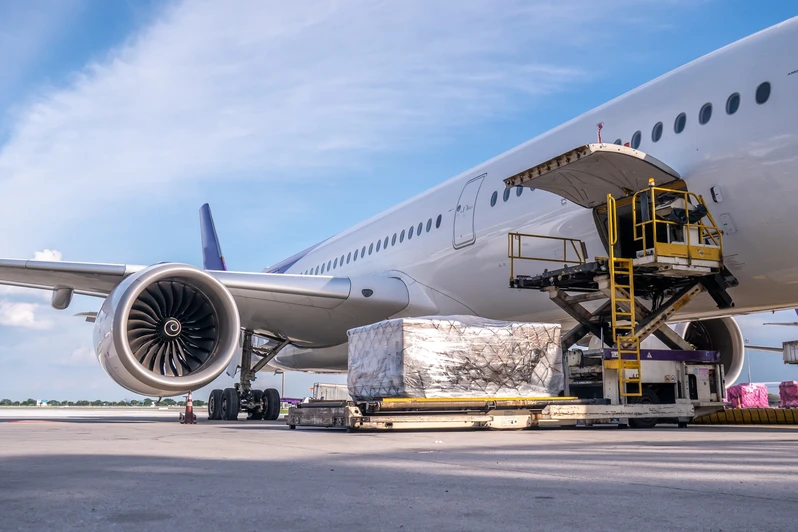
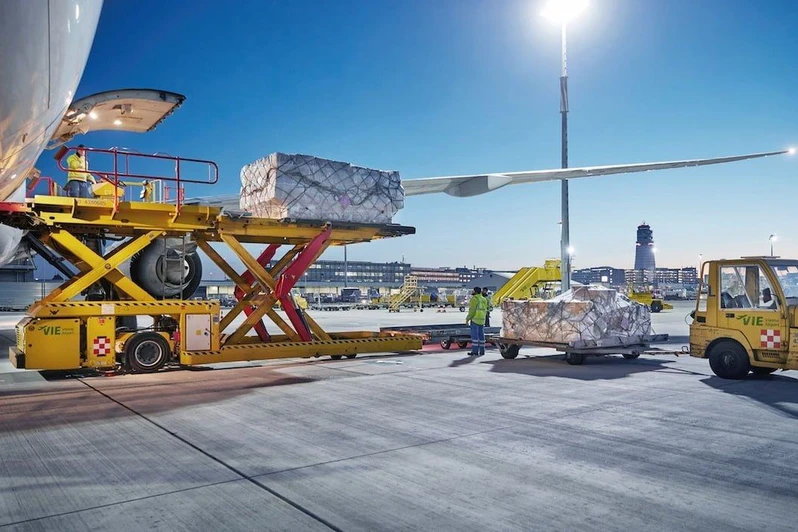
There are currently around 300 dedicated DHL Aviation aircraft in the DHL Express global air network.
The DHL Aviation fleet comprises Airbus A300 and A330 freighters, as well as Boeing 737, 757, 767 and 777 freighters.
"I think we're in the best possible place we've been for a long time in terms of capacity and utilisation of that capacity," Pearson says.
"We've still got more 777Fs coming in over the course of the next 24 months."
Boeing has been granted an emissions exemption for the 777F to ensure 35 more production freighters can be manufactured.
Pearson indicates DHL Express may be more interested in conversions of the model.
"There are some big triple seven entrepreneurs in the US that can lay their hands on used 777s for conversions," he comments.
New generation models may also be of interest. "Then we have to wait for these next-generation aircraft. We consulted on the A350F," Pearson adds.
Fleet additions will mostly serve to replace older aircraft. Some fleet growth is expected, but Pearson does not specify how much.
"Where it needs to be a growth case, meaning additional capacity, that's what it will be," he says. "In other cases, aircraft will replace less sufficient aircraft, which then will have technical (positive) impacts on transit time."
As well as its own capacity, DHL Express also has partnerships, including with Atlas Air, Kalitta Air and ASL, which affords it further capacity flexibility and support during peak season.
Going heavy
DHL Express has been pursuing heavier, time-sensitive business-to-business (B2B) shipments that may previously have been handled by a freight forwarder, but this is not a new trend.
Average shipment weights have, in fact, been increasing over DHL Express's 56-year history, reflecting customers' interest in using express services for heavier shipments when speed and reliability are key considerations.
Covid accelerated the trend significantly, with average shipment weight rising from around 9kg to 12kg in just three years, compared with approximately 50 years to reach 9kg.
DHL Express had anticipated that around 40% of the additional volumes gained during Covid would eventually return to freight forwarders, points out Pearson. In reality, Pearson said only around 5% did so.
Pearson stresses that while these volumes have been retained, this is not an express v forwarding situation and DHL Express does not intend to encroach on the business of DHL Forwarding. The focus is instead on what is the best service to use for a particular shipment.
That said, DHL Express intends to make the most of its advantages for growth.
"Speed and reliability are higher in an express operator with their own assets," said Pearson.
DHL's own aircraft and integrated network also allow it to offer two-to-three-day transit times,
Pearson cited weights of 100kg, 150kg and 200kg, while noting that shipments weighing several hundred kilos - occasionally as much as 900kg - are not unusual at DHL's Leipzig hub.
He described the value proposition as "a very potent cocktail", adding that express can offer "better value for money up to a much higher kilo threshold than most people would have ordinarily realised".
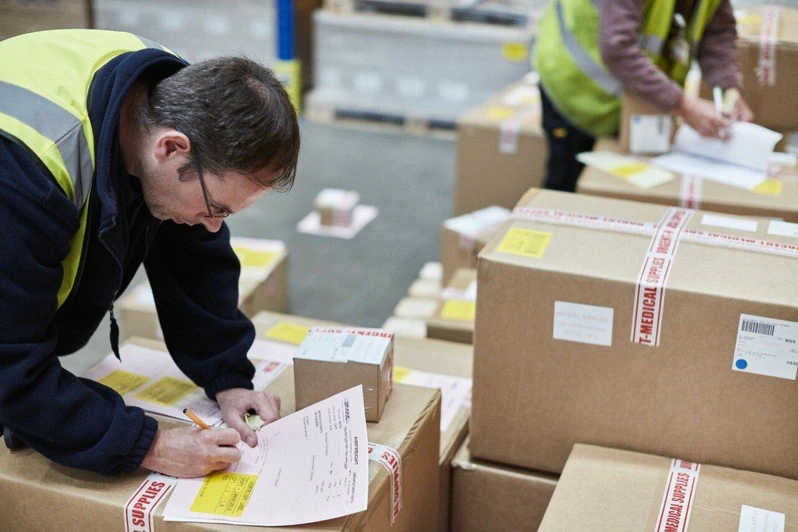
In fact, the weight of shipments has increased so much that at the start of the year, DHL Express launched a Heavy Weight Express (HWX) service that can transport shipments of up to 1,000 kg per piece and 3,000 kg per shipment, and offers a speedier service than forwarding.
DHL Express Europe said it has recorded an 8% increase in HWX shipment weight per day over the past six months, driven by strong demand across key growth industries, including technology, advanced manufacturing, Life Sciences & Healthcare, infrastructure and energy.
"We are not trying to take that business away from our forwarding division", said Mike Parra, the chief executive of DHL Express for Europe, also stated in an August interview with Air Cargo News.
DHL Group had confirmed last year that it intended to focus more on express air shipments using an integrator business model and targeting rival forwarding market share.
Peak optimism
Pearson is optimistic for a strong peak season, with a prediction that quarter four performance will be better than quarter three, as capacity remains tight on key trade lanes, particularly Asia-Pacific to the US.
DHL's express division reported a 19.2% increase in third-quarter revenues to €7bn, while earnings before interest and taxes (ebit) were up 50% to €1bn, with heavier shipments and constraints in airfreight contributing to gains.
Meanwhile, in the fourth quarter of 2025, year-on-year express revenue was down 4% to €6.6bn, and ebit was down 0.5% to €1.1bn
For 2025 as a whole, Express revenue dropped 2.8% year on year to €24.3bn, and Express ebit for the year was up 2.5% to €3.2bn.
"Our outlook is rather good, I think. Trade is moving," Pearson said.
He described DHL Express's expected performance using a hockey stick analogy of typical seasonal patterns, where there are relatively subdued volumes in the first quarter, growth in the second quarter as demand picks up, relatively moderate activity in the third quarter, and a sharp increase in demand as peak season approaches.
"We're expecting a hockey stick. Meaning quarter four is quite a bit bigger than quarter three. Quarter four is bigger than quarter one. Classic hockey stick that we have every single year."
He also says DHL is expecting a more pronounced seasonal uplift this year, rather than the relatively flat peak seasons experienced during and after Covid and in recent years.
Because capacity is tight, DHL has introduced a demand surcharge for the peak.
He said this is highest on the transpacific lane, which is "the real peak", while the surcharges on other lanes are "much more moderate".