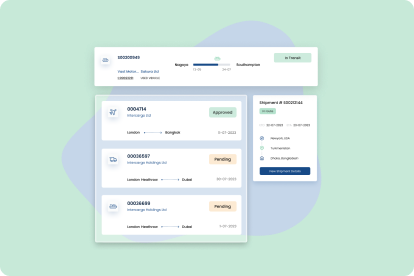
We understand the ever changing needs of our customers

we provide a high level of service dedicated to fulfilling all your shipping requirements

Watch Video
Road Freight

Keep all your data in one place which can be accessed from anywhere and anyplace

Let us help you 24/7 manage your supply chain needs

Back to Global Coverage

Lebanon Freight Forwarding Services
Air and Sea Freight Between Lebanon and the UK

Intercargo provides reliable freight forwarding services between Lebanon and the United Kingdom, helping businesses import and export cargo efficiently by air and sea. Carrier and security restrictions may apply.

Whether you are importing goods from Lebanon into the UK, exporting products from the UK to Lebanon, or managing regular international shipments, our experienced freight forwarding team provides complete end to end logistics solutions. From collection and customs clearance to final delivery, we manage every stage of the shipment process. Please note: carrier and security restrictions may apply on certain trade lanes.
Air Freight Lebanon to UK
When speed matters, our Lebanon air freight services provide fast, secure and reliable transportation between Lebanon and the United Kingdom.
We arrange air freight through Beirut-Rafic Hariri International Airport (BEY), with UK arrivals through London Heathrow, London Stansted, Manchester Airport, Birmingham Airport and East Midlands Airport.

Our air freight solutions include:

  • Air freight from Lebanon to the UK
  • Express and economy air cargo
  • Door to door delivery
  • Time critical shipments
  • Air freight from the UK to Lebanon
  • Airport to airport services
  • Customs clearance support
  • High value and commercial cargo

Whether you need urgent delivery of pharmaceutical products, jewellery, fashion, food and wine, or commercial cargo, our air freight specialists can provide the most efficient solution. Carrier and security restrictions may apply.
Logistics solutions
Sea Freight Lebanon to UK
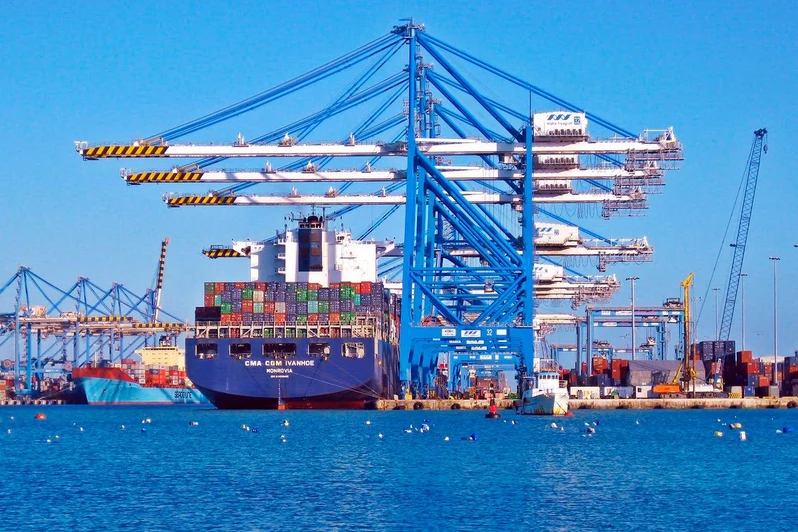
For larger shipments and cost effective transportation, our sea freight services provide dependable shipping solutions between Lebanon and the UK.
We regularly arrange cargo movements through the Port of Beirut and Port of Tripoli, connecting to major UK ports including Felixstowe, Southampton and London Gateway.

Our sea freight services include:

  • Full Container Load (FCL)
  • Port to port shipping
  • Customs documentation
  • Project cargo
  • Less than Container Load (LCL)
  • Door to door logistics
  • Cargo insurance
  • Oversized and heavy lift shipments

Whether shipping food products, construction materials, chemicals, industrial machinery or retail goods, we can tailor a sea freight solution to suit your budget and transit requirements. Carrier and security restrictions may apply.
Logistics solutions
Import from Lebanon to the UK
Intercargo helps UK businesses import products and cargo from Lebanon through a fully managed freight forwarding service.

Our import services include:

  • Supplier coordination
  • Air and sea freight transportation
  • Duty and VAT guidance
  • Final delivery throughout the UK
  • Collection from Lebanese factories, warehouses and premises
  • UK customs clearance
  • Warehousing and distribution

We regularly support imports including:

  • Food and beverage products
  • Wine and spirits
  • Jewellery and precious metals
  • Textiles and apparel
  • Books and printed materials
  • Chemical and pharmaceutical goods
  • Retail stock
Our experienced team ensures your cargo moves efficiently from Lebanon to the UK while remaining compliant with all customs and import requirements. Carrier and security restrictions may apply.
Logistics solutions
Export from the UK to Lebanon
We also help UK businesses export goods to customers, distributors and partners throughout Lebanon.
Whether shipping to Beirut, Tripoli, Sidon or other major Lebanese destinations, our export specialists can arrange a seamless freight solution by air and sea.

Our export services include:

  • Air freight exports
  • Export documentation
  • Cargo insurance
  • Commercial and industrial shipments
  • Sea freight exports
  • Customs compliance
  • Door to door delivery

From single shipments to regular freight movements, we provide scalable logistics solutions designed around your business requirements. Carrier and security restrictions may apply.
Logistics solutions
Customs Clearance & Freight Forwarding
Successful international shipping to and from Lebanon depends on accurate customs documentation and regulatory compliance.

Intercargo provides:

  • Import customs clearance
  • Commodity code guidance
  • Duty and tax assistance
  • End to end shipment visibility
  • Export customs clearance
  • Shipping documentation
  • Freight forwarding management

Our experienced freight forwarding team helps minimise delays and keeps your cargo moving smoothly between Lebanon and the United Kingdom, in full compliance with all applicable regulations.
Logistics solutions
Why Choose Intercargo for Lebanon Freight?
We support importers, exporters, manufacturers, distributors, retailers and commercial businesses moving cargo between Lebanon and the UK.
Air And Sea Freight Specialists
Uk And Lebanon Trade Lane Expertise
Import And Export Solutions
Customs Clearance Support
Door To Door Logistics
Dedicated Account Management
Global Carrier Network
Competitive Freight Rates
Get a Lebanon Freight Quote

Looking for air freight from Lebanon to the UK, sea freight from Lebanon to the UK, or export services from the UK to Lebanon?
Contact Intercargo today for a tailored freight forwarding quotation and expert advice on the most efficient shipping solution for your cargo. Carrier and security restrictions may apply.
Logistics solutions
Latest News & Updates

The off-peak that isn't: why January squeezes Europe's ecommerce logistics

Christmas returns, New Year demand for supplements and fitness products, and up to four weekday holidays leave some EU markets with just 11 delivery days in three weeks. Most of the industry has its eyes on the fourth quarter. As The Loadstar reported last week, US consumers are expected to spend 6.7% more online this holiday season than last year. But for Europe's ecommerce networks, the pressure does not ease on 24 December. It simply shifts into January - a month most logistics calendars still file under off-peak. In the first weeks of the year, three separate loads converge on the same warehouses, carriers and pickup points. And they land in the tightest delivery window of the year. Three loads, one window The first load is December coming back. As soon as offices reopen, shoppers start sending back Christmas gifts and online orders. In the UK, Royal Mail braced for half a million gifts to be returned in the first week of January 2026, with returns expected to climb by about 25%. Those parcels compete with new outbound orders for the same dock doors, staff and sorting capacity. The second load is fresh demand. Many consumers start the year with health goals, and their baskets follow: supplements, sports nutrition, fitness equipment and diet products. Official UK figures show how strong the effect can be. The Office for National Statistics reported that retail sales volumes rose 1.8% in January 2026, the largest monthly gain since May 2024, with online sellers of sports supplements among the drivers. Supplements are the clearest case, but any category tied to New Year resolutions follows the same curve. The third load is missing capacity. Public holidays shut carriers and pickup points. Temporary staff hired for the Christmas peak are gone by the end of December. And warehouses set receiving cut-offs ahead of the holidays, so an inbound delivery that slips by a few days can miss the first sales week of the year. Eleven delivery days in three weeks The holidays eat into that window more than many shippers realise. At WAPI, we counted the delivery days in the 18 EU markets where we fulfill supplements and collect cash on delivery (COD). Only 11 to 13 of the 15 weekdays between 21 December 2026 and 8 January 2027 are delivery days. Holidays that fall on a Saturday are not included. 6 markets sit at the bottom of the range, with 11 delivery days each: Bulgaria, Cyprus, Latvia, Poland, Romania and Slovakia. Each loses four weekdays to public holidays in the period, although in Slovakia the status of 6 January still needs to be confirmed before plans are locked in. Figure 1. Weekday holidays between 21 December and 8 January in the six EU markets with the fewest delivery days. Source: WAPI Nor do the closures line up. Latvia shuts on 31 December, Bulgaria moves its 26 December holiday to Monday 28 December, and Romania closes on both 6 and 7 January. A network serving several countries from one warehouse therefore has to plan a separate cut-off for each market. In Poland, a parcel that misses the last delivery on Wednesday 23 December will not move again until Monday 28 December - the same week the first returns start rolling in. A second wave from China While Europe works through its January peak, the next supply problem is already building in Asia. Chinese New Year falls on 6 February 2027, 11 days earlier than in 2026. China's State Council usually publishes the official holiday window around November, so the exact 2027 dates are not yet known. The public holiday itself is the smallest part of the disruption. Factories typically wind down two to three weeks before the holiday, and many stay closed or run at reduced capacity for a month or more. Full output often does not return until mid-March, because a share of workers never come back to the same factory. For European ecommerce, the timing is what hurts. Working back from those closures, the last reliable departures from China fall in early to mid January 2027 - squarely in the European demand peak. Packaging, labels and raw materials for the February and March replenishment therefore need to be ordered before Christmas, while warehouse teams in Europe are still absorbed by the fourth quarter. Figure 2. The European January peak and the last reliable departures from China fall in the same weeks. Sources: WAPI, industry estimates Where January hurts most The squeeze does not hit all goods equally. Two groups carry the most risk: orders paid by cash on delivery, and products with a short shelf life. In January, many supplement orders fall into both. With COD, the buyer pays only when the parcel arrives. If it turns up late, or sits at a closed pickup point, the buyer can simply refuse it - and the seller pays for transport both ways and loses the sale. COD remains widespread across some regions in Europe, and those regions lose the most delivery days over the holidays. The cost of a refusal also grows with time. The parcel works its way back through the network alongside the Christmas returns and joins the same inspection queue. For a vitamin pack with only a few months of shelf life left, that delay can decide whether it returns to sale or is written off. In my experience, most January failures start small: a parcel that waits too long at a pickup point, or a delivery attempt that fails on the last day before a closure. In our network, flagging parcels that are close to the pickup deadline lets the team reach the buyer in time, and that cuts expired pickups by 40-55%. When a new delivery request goes to the carrier automatically, it arrives 80% faster than a manual one. In January, that speed is often the difference between a sale and a refusal. 5 questions for your 3PL before the December cut-off Most of these failures can be caught before the holidays. 5 questions reveal whether a logistics partner is ready for the peak after the peak. Conclusion The January peak, the year's shortest delivery window and the next round of orders to Asia all land in the same few weeks. A plan drawn up in December is too late for all three. For shippers and their logistics partners, January really starts in October, while stock targets, receiving slots and supplier orders can still be set with the Christmas peak ahead. This post was sponsored by WAPI.

Source: theloadstar.com

Read more

The battle against supply chain chaos keeps SMBs 'in overdrive'

Small and mid-sized shippers (SMBs) are in a state of permanent overdrive, according to a report by Netstock. Inventory moves have accelerated, dead stock is threatening to pile up on them, and traditional, linear supply chain planning is failing. The 2026 Supply Chain Planning Benchmark Report, based on data from over 2,500 Netstock customers and a survey of more than 150 users at businesses with less than $250m in annual revenue, shows shippers under unceasing strain managing their supply chains. Inventory movement has accelerated and stock is now turned over four times a year, as companies deploy a mix of strategies to clear their warehouses from sales and promotions (used by 77%), to liquidation (39%), and moving goods to other locations (34%). Half the firms are using at least two of these tactics, up from 38% in 2024. Notwithstanding these efforts, at 24% of SMBs, more than 10% of inventory is 'dead stock', that cannot be sold. In 2024 this afflicted 12% of SMBs, Netstock reported. The share of businesses with dead stock of less than 5% of inventory fell from 49% to 32% over the same period. And almost a quarter (24%) are struggling both with low fill rates and low stock turn. While they sit on excess inventory, they also miss sales. Part of the problem is that supply chains have become more complex. For one thing, the percentage of SMBs sourcing from two or more regions grew, from 45% in 2024 to 55% in 2026. On a positive note, this implies they have alternatives if one source is disrupted, the report's authors noted. On the other hand, supplier lead time swings were cited most, 29%, among the top factors affecting inventory planning, ahead of raw material and input costs (23%), freight and shipping costs (22%), and demand shifts (21%). The report's authors noted that cost pressure had been relatively stable, while timing and availability metrics rose, indicating that the primary pressure in 2026 is not price but predictability. This points to a fundamental shift in the challenges with which supply chain planners are struggling. The report said that, last year, supply chain planning was largely dictated by trade policies - tariffs - which brought about an emphasis on front-loading and building buffer stock. "2026 stripped away that clarity," it said. "Tariffs remained a major pressure point, but they were far from the only challenge. The landscape shifted from a year of singular shocks to one defined by supply chain chaos, where trade policy changes, shipping route disruptions, raw-material costs, demand shifts, and uneven supplier performance converged at once. "This report uses the term 'supply chain chaos' to describe a different kind of disruption: volatility shifts one variable at a time, while chaos moves several at once; leaving planners without a stable baseline for decision-making. For SMBs, these disruptions are no longer isolated; they compound," it argued. This is in line with the assessment of the World Economic Forum that global supply chains have entered an era of "structural volatility", where uncertainty is no longer temporary but embedded in the operating environment. The implications are far-reaching, challenging traditional concepts of supply chain planning. "The defining insight of 2026 is that supply chain chaos is not a problem to be 'solved' once, but a condition to be managed daily," the Netstock report concluded, adding: "Supply chain chaos can feel like a game of whack-a-mole. New problems can surface anywhere across the board, often with little warning. Focusing heavily on one area may sharpen a business's response in that area while reducing its visibility elsewhere." Static annual supply chain scenario planning needs to be replaced with a more dynamic approach. McKinsey has argued that, in lieu of trying to predict a single outcome (solution) in a potential scenario, planning should shift to a range of possible options. By focusing on critical decision points, rather than events, planners gain the ability to adapt quickly to a range of scenarios, suggests the consultancy. And Netstock stressed that "better inventory visibility and planning intelligence help teams identify where risk is emerging and respond faster and more accurately". "While no single winning playbook emerged from survey responses, the data points to a clear path forward - SMBs that invest in visibility and technology are better equipped to adapt as conditions change," the authors wrote.

Source: theloadstar.com

Read more

Divide between Asia-US and Asia-Europe rates at historic levels

The price gap between container spot rates from Asia to North America and those to Europe has reached historic levels, with Sea-Intelligence warning that the current arbitrage could persist for several months. According to the latest analysis from the consultancy, Asia-US spot rates continue to rise, while Asia-Europe prices decline, creating an unprecedented premium for US importers. Using Drewry WCI weekly spot rate data from May 2012 to October 2026, Sea-Intelligence looked at four rate differentials between the transpacific and Asia-Europe trades. The most striking disparity was Asia to the US east coast (USEC), where the differential versus to North Europe reached $7,026 per 40ft in the latest week, in favour of the US - more than double the previous record of $3,179, recorded in June 2021. The Mediterranean-US east coast differential has also reached a record, of $6,726 per 40ft, the previous high being $2,828, also in June 2021. The pattern is similar to the US west coast (USWC) ports, where the difference between Asia-North Europe stands at $4,436 per 40ft in favour of the USWC. Sea-Intelligence said this premium was also comparable in scale to the extreme arbitrage seen in 2021, although the direction has reversed. In 2021, it favoured North Europe, reaching $4,888 in January and $4,510 in June. That was initially driven by pandemic-related disruption, and subsequently exacerbated by the grounding of the Ever Given in the Suez Canal in March. "Every time we analyse developments in the market, and try to assess metrics over a longer time series, we find that what was normal in the pre-pandemic era, simply looks different now," said Sea-Intelligence. It explained that before 2020, freight rate movements of hundreds of dollars were considered significant, while changes above $1,000 were rare. Today's much sharper and faster rate movements demonstrate that market dynamics have fundamentally changed. Normally, arbitrage should encourage carriers to shift capacity between trades, eventually narrowing the difference. But Sea-Intelligence cautioned that such changes took time, operationally, and because carriers needed confidence that a pricing imbalance would persist before redeploying vessels. It also warned there was a precedent for a prolonged arbitrage. In the first half of 2021, the gap opened rapidly around January and remained elevated until June. Though that history does not mean the current transpacific premium would necessarily last as long, the consultancy added - rates could simply fall. But it does mean the size of the arbitrage should not be interpreted as evidence that transpacific rates are about to fall, while Asia-Europe rates rise. Sea-Intelligence concluded that the post-2020 market required a rethink of how shippers manage freight price risk. "The market has already changed fundamentally. What we need to see now is the contracting process - and the associated risk management and budget processes - change, to reflect this new reality."

Source: theloadstar.com

Read more

Privacy Preference Center

This website uses cookies and similar technologies, (hereafter “technologies”), which enable us, for example, to determine how frequently our internet pages are visited, the number of visitors, to configure our offers for maximum convenience and efficiency and to support our marketing efforts. These technologies incorporate data transfers to third-party providers based in countries without an adequate level of data protection (e. g. United States). For further information, including the processing of data by third-party providers and the possibility of revoking your consent at any time, please see your settings under “Consent Preferences” and our


Privacy Notice


Privacy Preference Center

Strickly Necessary Cookies
Always Active

Performance Cookies

Functional Cookies

Targeting Cookies