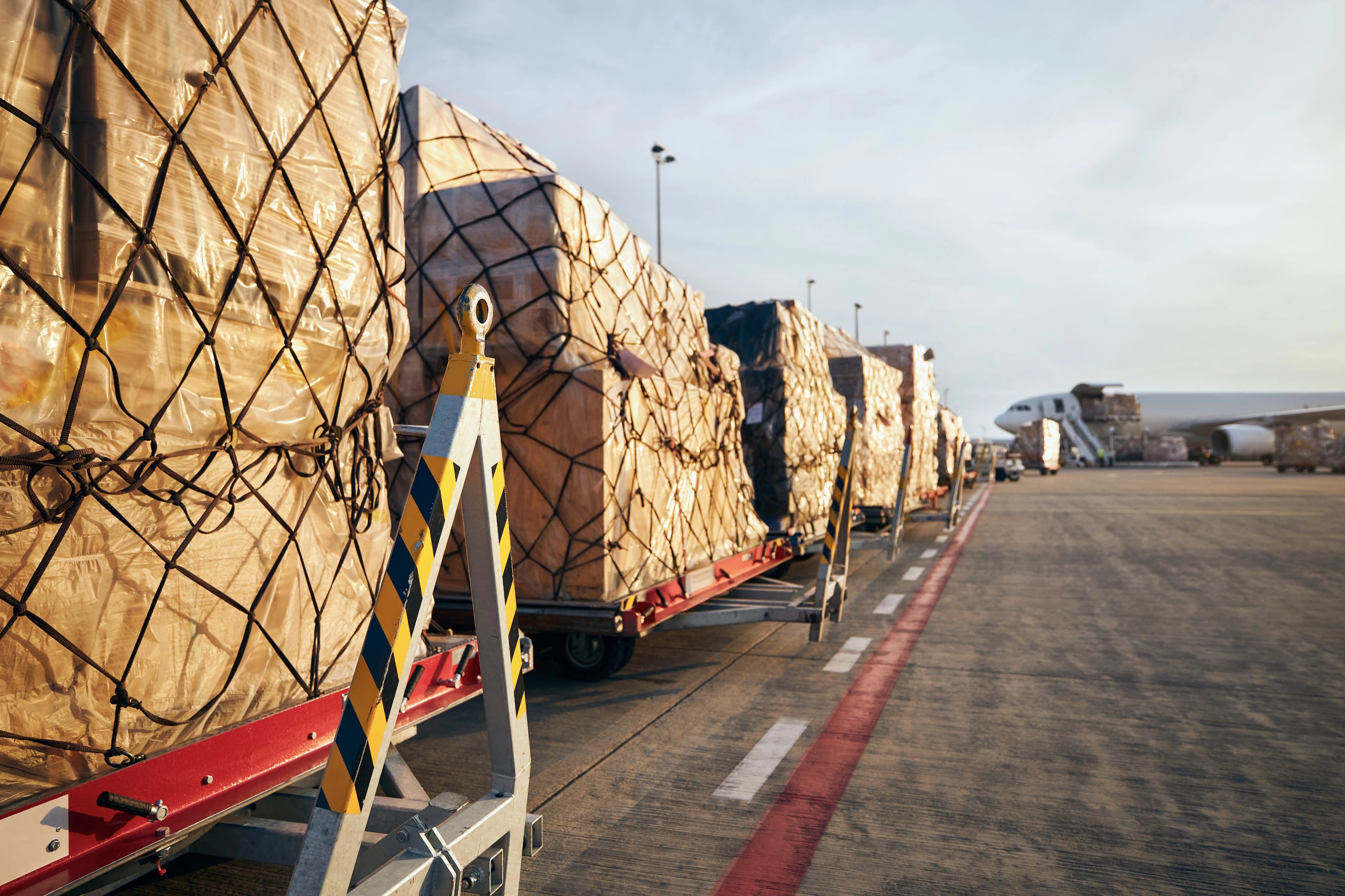
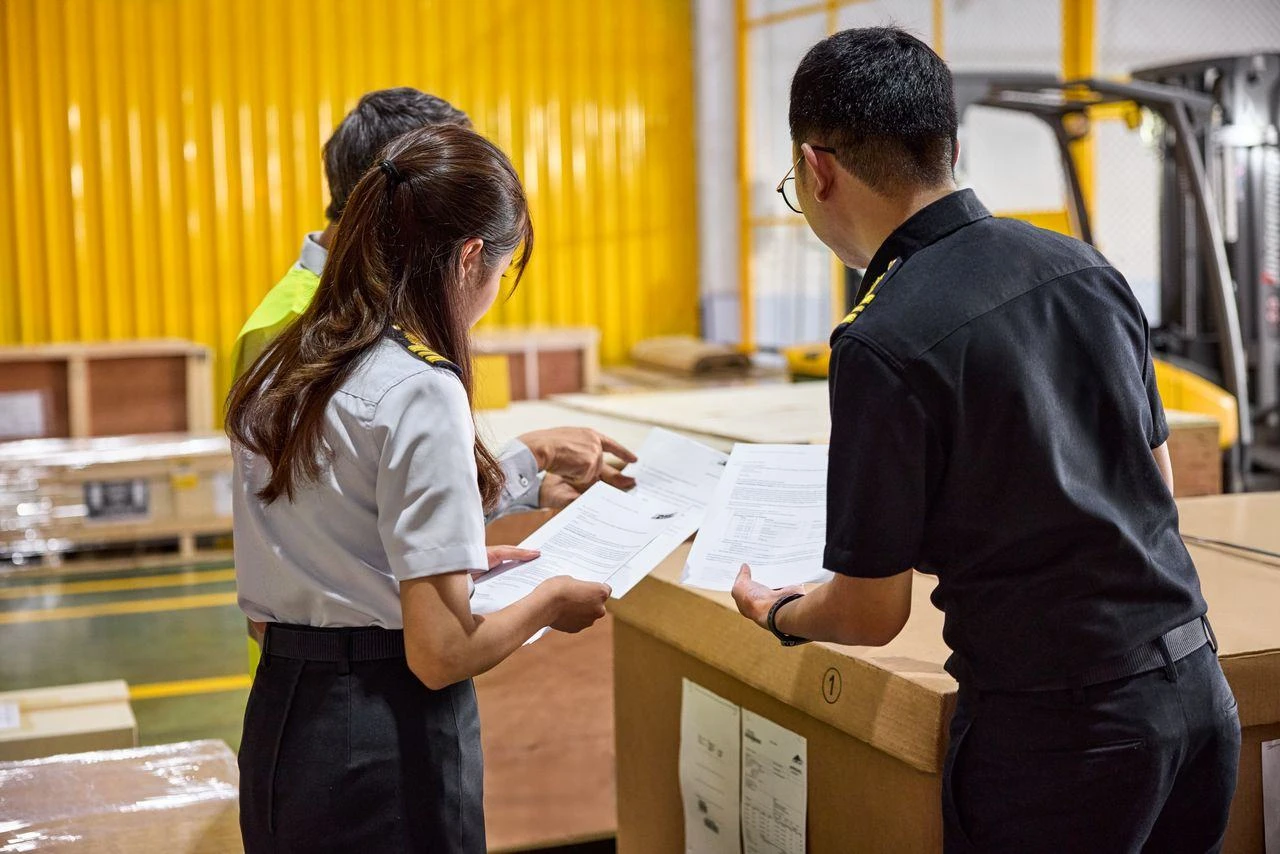
We understand the ever changing needs of our customers

we provide a high level of service dedicated to fulfilling all your shipping requirements

Watch Video
Road Freight

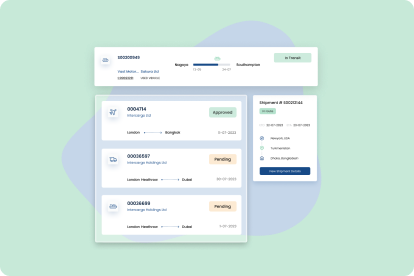
Keep all your data in one place which can be accessed from anywhere and anyplace

Let us help you 24/7 manage your supply chain needs

Back to Global Coverage

Welcome to Ireland Shipping Guide

In Ireland, Intercargo provide a full range of freight forwarding and Courier services
Logistics solutions
Ireland Operational Guide
Ireland (IE:DUB),The most important sectors of Ireland’s economy in 2018 were industry (36.5%), information and communication (12.1%) and wholesale and retail trade, transport, accommodation and food service activities (11.7%) and public administration, defence, education, human health and social work activities (10.5%).

Intra-EU trade accounts for 50% of Ireland’s exports (Belgium 13% and Germany 7%), while outside the EU 28% go to the United States and 5% to Switzerland. In terms of imports, 64% come from EU Member States (France and Germany both 12%), while outside the EU 17% come from the United States and 4% from China.
Logistics solutions
Get a Quote
Ready to experience the Intercargo difference? Get a quick quote for your delivery needs here.
Logistics solutions
Latest News & Updates

Warning to shippers after theft of hi-tech cargo in Q2 passes $300m

The theft of high-value technology being shipped in the US is increasingly being driven by diversified transnational criminal enterprises using the same illicit logistics networks that move narcotics, weapons, and people. According to supply chain intelligence company Overhaul, thefts involving data centre equipment, computing components, and chips have increased by 38% since 2024, while the total value of goods stolen has risen by more than 110%. Individual losses regularly exceed $30m, with one theft surpassing $100m and Overhaul warned that crime on this scale was now occurring weekly. Its data show deception was involved in 92% of affected shipments, criminals using fraudulent carrier identities, double-brokering, spoof communications, and falsified paperwork. Industry-wide cargo theft losses were more than $304m in Q2 this year - more than double last year - despite the number of incidents falling 26%. In the US, theft activity seems concentrated in California, with numerous incidents also reported in Texas, Mississippi, Florida, and Illinois. Internationally, events tend to cluster around established narcotics corridors, particularly in the Netherlands and Guadalajara. Overhaul estimated that 60% to 70% of loads stolen in the US leave the country, components moving to China, Russia, and Iran. Export controls have created scarcity and see computer components trading on the black market at roughly twice their domestic price. Its report also warned that criminals were still increasingly prepared to use violence. Two recent California highway incidents involved thieves deliberately colliding with security vehicles escorting high-value tech shipments. In both cases, the escort was halted while the shipment continued, resulting in the loss of the load. Neither truck has been recovered. Overhaul said each attack required a fraudulent carrier identity, a driver prepared to flee, a chase vehicle positioned along the route, and synchronised timing, suggesting increasingly sophisticated and coordinated operations as average load values rise. The company recommended shippers handling high-demand or high-value products rigorously vet brokers and carriers, and document every driver, tractor, and trailer arriving for collection. These measures should include photographing identifying markings, including the vehicle's VIN, as well as the driver and CDL, and check details against information supplied before arrival.

Source: theloadstar.com

Read more

Tariff spat sees Canadian shippers eye alternatives to US market

Commercial relations between Canada and its southern neighbour have hit a new low, and logistics providers are seeing more clients trying to diversify from the US market. Trade negotiations broke down on Friday when the Canadians walked away, citing new US demands tabled at the last minute, as well as a litany of justifications Washington invoked to force Ottawa to make concessions. These range from fentanyl smuggling and Canadian dairy rules to failure to weed out slave labour upstream. The end of talks opened the door to new US tariffs on Canadian goods that day, and Ottawa has pledged to impose retaliatory tariffs on US goods, starting 8 September. Prime minister Mark Carney said the decision had been taken "reluctantly", but Washington's offer was not good enough and that conciliatory moves, like the suspension of earlier retaliatory tariffs, had been to no avail. Polls indicate his stance is supported by the majority of Canadians and the business community. "We are, in general, opposed to tariffs because businesses and households ultimately pay the price. But if Canada responds, it should do so with a strong hand -- surgically, strategically, and in close consultation with business," said Candace Laing, president and CEO of the Canadian Chamber of Commerce. She described Washington's Section 338 tariffs as "a body blow to North American competitiveness in this self-defeating trade saga". "A whopping, non-absorbable tariff is not sustainable or viable for business," she added. The Canadian government has yet to publish a full list of US goods that will be hit by the new tariffs. Early indications suggest steel, dairy products, appliances, agricultural equipment, and electronics will be on the list According to Mr Carney, Canada will match the new US tariffs dollar for dollar. Washington's 50% tariff targets goods including electronics, industrial equipment, liquor, dairy, building materials, and hockey sticks and other sporting goods - an estimated $20bn worth of Canadian exports, a relatively minor sliver in a trade that amounted to nearly $900bn both ways last year. However, the US measure will have a knock-on effect on employment. According to one estimate, this could eliminate more than 87,000 jobs in Canada, with the biggest impact on the transport and warehousing. Indeed, Canadian logistics firms are bracing for more headwinds. Business suffered from Washington's previous tariffs. Montreal-based AGO Transportation has seen volumes decline since the White House started its tariff offensive, said VP Sandra Faraj. And Mo Datoo, COO of Toronto-based eShipper, reported that many of the firm's customers had been affected, causing some to move to the US while others shut down. Many of eShipper's clients source products from China, so the new US levies will hit them on top of tariffs on China-made products. Ms Faraj heard from clients that their US customers have been reluctant to sign contracts, "because they don't know what will happen tomorrow". She added that Canadian firms had also been hesitant, wondering if they would be able to recoup duties if customers declined to accept the higher charges. On past experience, there are also worries that Washington might suddenly announce new tariffs at any point. "The uncertainty is what's killing everyone," Mr Datoo said. "People want to plan now, they want to order, but they can't do it because they don't know what will happen next month." In a LinkedIn post, Pete Mento, MD of global trade advisory services at Baker Tilly, commented that he still expected Ottawa and Washington to come to an agreement, given the dire repercussions of a prolonged escalation on their highly integrated economies. "But the real question isn't whether these particular tariffs survive. It is whether the eventual settlement restores confidence in the rules governing North American trade," he warned. More and more Canadian managers appear to have concluded that waiting for a settlement probably is not the answer. "A lot of our clients are looking for new markets," reported Ms Faraj, adding that Ottawa had been actively supporting this trend, aiming to double exports to non-US markets by 2035 to halve the share of exports going to the southern neighbour. This wou;d bring an estimated $220bn in new orders for Canadian goods and services. Both Mr Datoo and Ms Faraj see Europe at the top of many clients' diversification agenda. Transportation costs to Europe are lower than to Asia or Latin America, and Europe offers the additional benefit of a free-trade agreement. And for AGO, this would not require a significant tweak of its set-up, Europe has been the traditional focus for the company, and its agency network there is well established. "It's more of a challenge shipping to the Middle East now," Ms Faraj said. eShipper opened a branch in Dubai last year. After a good start business stalled because of the outbreak of war in the region, Mr Datoo reported. At the moment he is more bullish on India, where his company has also established an office. "India is starting to become a big market," he said, adding that Australia was also on the rise, albeit to a smaller extent, given the smaller population.

Source: theloadstar.com

Read more

Capacity squeeze looms as Panama Canal restrictions tighten

CMA CGM has postponed its $150 per teu Low Water Surcharge on cargo moving from South America's west coast through the Panama Canal, where more restrictions on draught and transits are expected. The French carrier had announced the surcharge would take effect on 1 September, but told customers yesterday it was pushing the start date back to 1 October. The charge will apply to all cargo from South America's west coast to North Europe, the Mediterranean, North Africa, Indian Subcontinent, Middle East Gulf, Red Sea, South Africa, West Africa, Central America east coast, Caribbean, Leeward and Windward islands, Mexico's east coast, US east coast, US Gulf, and Canada's east coast. Industry consultant Lars Jensen commented: "Strictly speaking, the 1 September date was announced just three days ago, making this seem more like an initial miscommunication of the implementation date." The move comes as restrictions on Panama Canal transits are expected to tighten, with implications for container vessel capacity. Braemar analyst Jonathan Roach said: "This time the issue is not simply fewer transit slots. It is fewer slots and less cargo per ship." From 2 September, the maximum permitted draught for neopanamax vessels will be 14.63 metres, dropping to 14.48 metres from 1 October. The number of daily transits is also expected to fall, from 36 to 34, on 3 September and then to 32 from 15 September, although this is subject to change. Braemar's July data recorded 189 neopanamax transits, 85 of which - involving 78 individual vessels - were by ships drawing 15 metres or more. That means around 45% of neopanamax transits could be affected by the new draught restrictions, representing about 55% of nominal teu capacity moving through the neopanamax locks. "The immediate response is likely to be less cargo, rather than fewer ships," said Mr Roach. "Vessels can remain on their existing services, but may have to sail below their normal intake to meet the draught restriction." A further reduction in daily transits could bar some ships from the canal altogether, while queues and delays compound the effective capacity loss. If conditions deteriorate, carriers could consider diverting Asia-US east coast services around the Cape of Good Hope, adding roughly 30% to transit times and tying up vessels for longer. "The Panama Canal does not need to close to disrupt container shipping; it only needs to become a little less deep and a little less available," warned Mr Roach. And he noted that the capacity squeeze could extend beyond the canal, as cargo displaced from Panama would have to be absorbed elsewhere in the global fleet.

Source: theloadstar.com

Read more

Privacy Preference Center

This website uses cookies and similar technologies, (hereafter “technologies”), which enable us, for example, to determine how frequently our internet pages are visited, the number of visitors, to configure our offers for maximum convenience and efficiency and to support our marketing efforts. These technologies incorporate data transfers to third-party providers based in countries without an adequate level of data protection (e. g. United States). For further information, including the processing of data by third-party providers and the possibility of revoking your consent at any time, please see your settings under “Consent Preferences” and our


Privacy Notice


Privacy Preference Center

Strickly Necessary Cookies
Always Active

Performance Cookies

Functional Cookies

Targeting Cookies