We understand the ever changing needs of our customers

we provide a high level of service dedicated to fulfilling all your shipping requirements

Watch Video
Road Freight

Keep all your data in one place which can be accessed from anywhere and anyplace

Let us help you 24/7 manage your supply chain needs

Back to Global Coverage

Guinea Freight Forwarding Services
Air and Sea Freight Between Guinea and the UK

Intercargo provides reliable freight forwarding services between Guinea and the United Kingdom, helping businesses import and export cargo efficiently by air and sea.

Whether you are importing goods from Guinea into the UK, exporting products from the UK to Guinea, or managing regular international shipments, our experienced freight forwarding team provides complete end to end logistics solutions. From collection and customs clearance to final delivery, we manage every stage of the shipment process.
Air Freight Guinea to UK
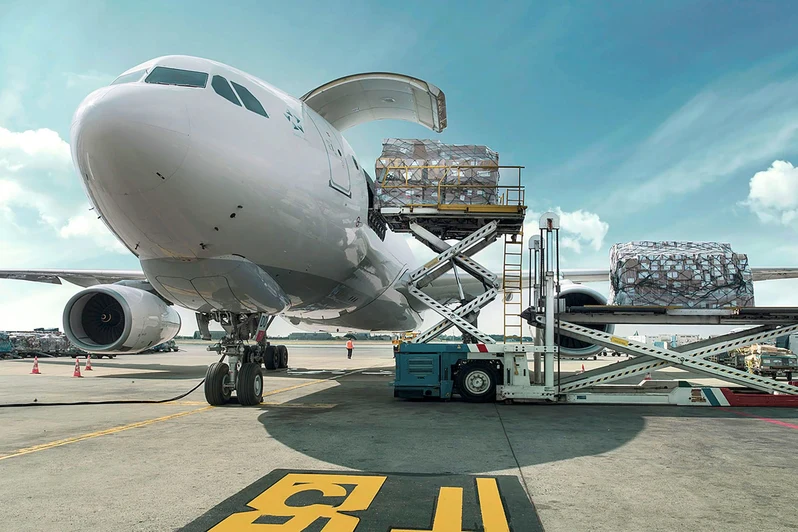
When speed matters, our Guinea air freight services provide fast, secure and reliable transportation between Guinea and the United Kingdom.
We arrange air freight through Conakry International Airport (CKY), with UK arrivals through London Heathrow, London Gatwick, Manchester Airport and other major UK airports.
Our air freight solutions include:

  • Air freight from Guinea to the UK
  • Express and economy air cargo
  • Door to door delivery
  • Time critical shipments
  • Air freight from the UK to Guinea
  • Airport to airport services
  • Customs clearance support
  • High value and commercial cargo

Whether you need urgent delivery of mining equipment, agricultural products, textiles, electronics, automotive parts, pharmaceutical goods or commercial cargo, our air freight specialists can provide the most efficient solution.
Logistics solutions
Sea Freight Guinea to UK
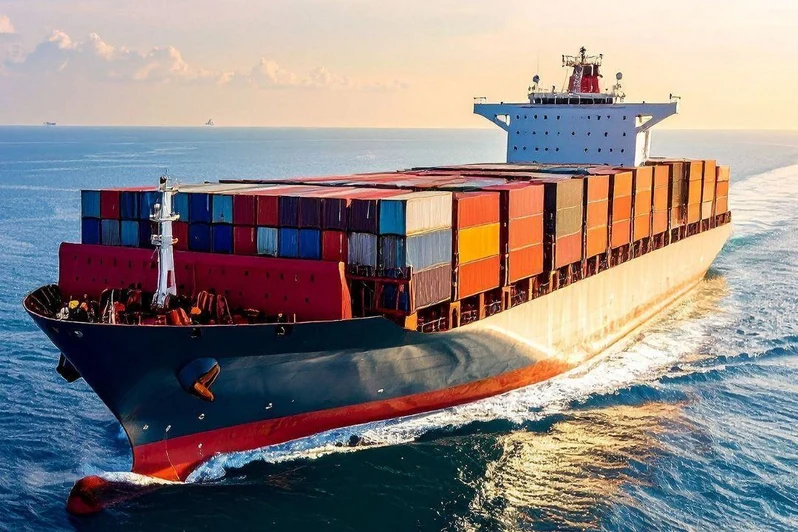
For larger shipments and cost effective transportation, our sea freight services provide dependable shipping solutions between Guinea and the UK.
We arrange cargo movements through the Port of Conakry and Port of Kamsar, connecting with major UK and European container ports via Atlantic maritime trade lanes.
Our sea freight services include:

  • Full Container Load (FCL)
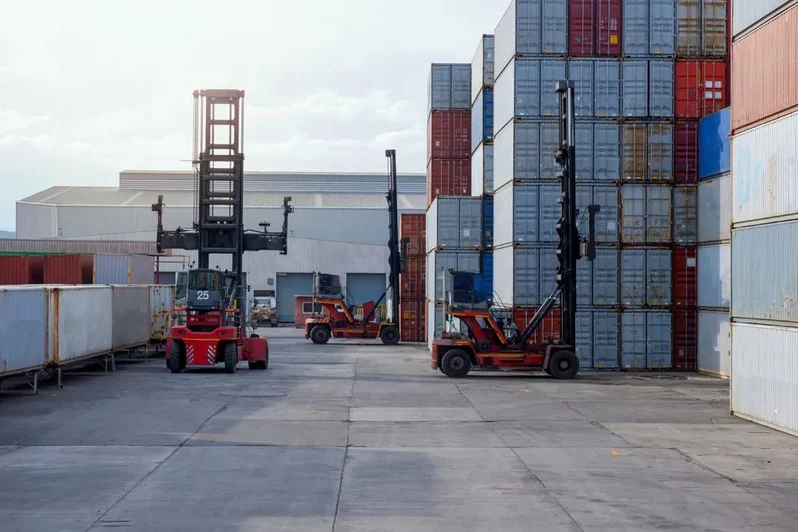
  • Port to port shipping
  • Customs documentation
  • Project cargo
  • Less than Container Load (LCL)
  • Door to door logistics
  • Cargo insurance
  • Oversized and heavy lift shipments

Whether shipping mining commodities, machinery, automotive parts, consumer goods, project cargo or oversized equipment, we can tailor a sea freight solution to suit your budget and transit requirements.
Logistics solutions
Import from Guinea to the UK
Intercargo helps UK businesses import products and cargo from Guinea through a fully managed freight forwarding service.
Our import services include:

  • Supplier coordination
  • Air freight and sea freight transportation
  • Duty and VAT guidance
  • Final delivery throughout the UK
  • Collection from premises across Guinea
  • UK customs clearance
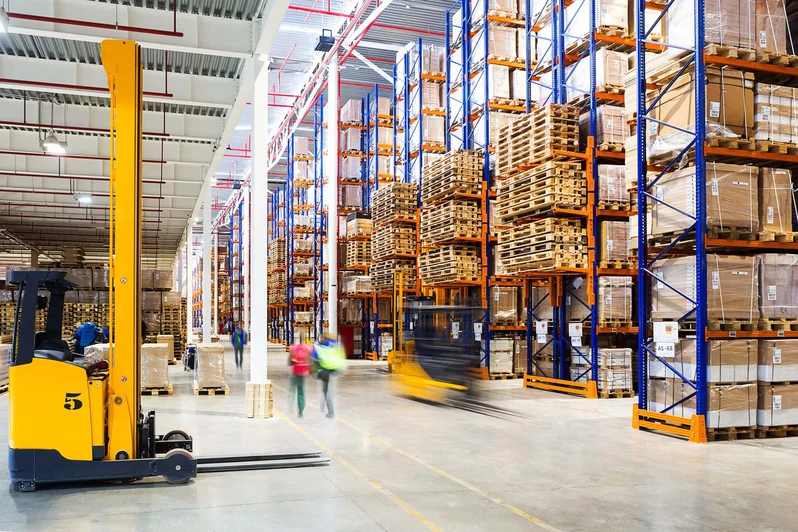
  • Warehousing and distribution

We regularly support imports including:

  • Bauxite and mineral resources
  • Agricultural goods, coffee and cocoa
  • Precious metals and stones
  • Textiles and handicrafts
  • Commercial and industrial cargo

Our experienced team ensures your cargo moves efficiently from Guinea to the UK while remaining fully compliant with all customs and import requirements.
Logistics solutions
Export from the UK to Guinea
We also help UK businesses export goods to customers, distributors and partners throughout Guinea.
Whether shipping to Conakry, Kamsar, Kindia, Nzérékoré or other commercial centers, our export specialists can arrange a seamless freight solution by air and sea.
Our export services include:

  • Air freight exports
  • Export documentation
  • Cargo insurance
  • Commercial and industrial shipments
  • Sea freight exports
  • Customs compliance
  • Door to door delivery

From single shipments to regular freight movements, we provide scalable logistics solutions designed around your business requirements.
Logistics solutions
Customs Clearance & Freight Forwarding for Guinea
Successful international shipping between Guinea and the UK depends on accurate customs documentation and compliance.
Intercargo provides:

  • Import customs clearance
  • Commodity code guidance
  • Duty and tax assistance
  • End to end shipment visibility
  • Export customs clearance
  • Shipping documentation
  • Freight forwarding management

Our experienced freight forwarding team helps minimise delays and keeps your cargo moving smoothly between Guinea and the United Kingdom.
Logistics solutions
Why Choose Intercargo for Guinea Freight?
We support importers, exporters, manufacturers, distributors, retailers and e-commerce businesses moving cargo between Guinea and the UK.
Air And Sea Freight Specialists
Uk And Guinea Trade Lane Expertise
Guinea Import And Export Solutions
Customs Clearance Support
Door To Door Logistics
Dedicated Account Management
Global Carrier Network
Competitive Freight Rates
Get a Guinea Freight Quote

Looking for air freight from Guinea to the UK, sea freight from Guinea to the UK, or export services from the UK to Guinea?
Contact Intercargo today for a tailored freight forwarding quotation and expert advice on the most efficient shipping solution for your cargo.
Logistics solutions
Latest News & Updates

Alaska's freighter expansion puts Hawaii cargo growth in focus

Alaska Air Group is doubling its dedicated freighter fleet as it looks to unlock cargo demand in Hawaii and build a more substantial international freight business. However, the challenge might be turning that additional aircraft capacity into sustainable revenue growth. The airline plans to introduce four Boeing 737-800 converted freighters in the first half of next year, increasing its dedicated narrowbody fleet from five to nine aircraft. Two are earmarked for Alaska Airlines and two for sister carrier Hawaiian Airlines, with the flexibility to allocate capacity across the network according to demand and operational needs. Each aircraft can carry approximately 50,000lb of cargo, giving the carriers greater scope to develop regional freight operations while connecting shipments with its expanding international network. For Hawaii, the investment addresses what Alaska describes as an existing capacity constraint. Hawaiian Airlines has served the market for nearly 85 years, but its reliance on passenger aircraft has limited its ability to meet the full potential of the cargo market, according to Ian Morgan, VP cargo at Alaska Airlines. "By adding dedicated freighter service and leveraging Hawaiian's brand, we can meet that demand while empowering a more interconnected, global network," he told The Loadstar. The new aircraft in Hawaii will support shipments between the islands and provide additional capacity for seafood, agricultural produce, and other locally manufactured goods. Mr Morgan said the combined operations would help support local industries, particularly those requiring reliable, palletised transport, adding: "The freighter network will connect seamlessly with our widebody fleet," he said. The ability to move shipments under a single air waybill could give Hawaiian cargo customers greater access to international markets, although the commercial benefits will depend on the availability of onward capacity, competitive transit times, and the ability to attract sufficient freight volumes. The opportunity is significant, given the geographical challenges of serving Hawaii's dispersed island communities. Dedicated aircraft could provide greater consistency for larger shipments, while passenger aircraft continue to offer additional belly capacity. The expansion also comes as Alaska Air Group seeks to make cargo a more significant contributor to its overall business. Its Alaska Accelerate strategy identifies cargo as an important source of revenue diversification. Alaska's growth opportunities span cargo services in Alaska and Hawaii, the continental US, international operations, ACMI leasing, and other ancillary engagements, according to Mr Morgan. The group has set a target of growing annual cargo revenue to $750m by 2030, having increased cargo revenue by approximately 60% since 2024, according to its September investor day presentation. Opportunities also include mail, international belly capacity, and broader network connectivity. Beyond its own network, the reference to ACMI leasing - providing aircraft, crews, maintenance, and insurance to third-party operators - could allow Alaska to generate additional returns from its freighter assets, although the airline has not detailed how much of its future fleet capacity might be allocated to such arrangements. Mr Morgan said the objective was to reach new markets while maintaining the reliability of existing services. "Doubling our dedicated freighter capacity gives us more room to pursue opportunities in Alaska and Hawaiʻi, while giving us more flexibility to allocate aircraft where they are needed," he added. The challenge is ensuring the additional capacity attracts new cargo business rather than simply shifting existing volumes between more aircraft. Ultimately, Alaska's success may rest on how effectively it connects regional markets to its expanding international network.

Source: theloadstar.com

Read more

DSV and Cathay Cargo partner on SAF in Asia

DSV and Cathay Cargo have entered into a three-year partnership on sustainable aviation fuel (SAF) that covers 13,155 tonnes of SAF produced in Asia. The partnership is expected to support at least 45,000 tonnes of carbon dioxide equivalent emission reductions (CO2e) associated with airfreight shipments, said Cathay Cargo. Cathay Cargo is the first airline from Asia that DSV is partnering with to scale SAF across its network in the region. By sourcing all SAF from Asia, the partnership aims to provide greater demand certainty and help increase the availability of SAF in the region. "This partnership creates long-term demand for SAF produced in Asia. It supports the regional production and supply needed to scale its use," said Stefan Krikken, senior vice president, global air product. Dominic Perret, director cargo at Cathay, said: "Scaling SAF requires collaboration across the aviation and logistics value chain, and this multi-year commitment reflects our shared vision to support its wider adoption. "By working together to create sustained demand for SAF produced in Asia, we hope to contribute to the continued development of the SAF ecosystem in the region." The partnership is part of Cathay's corporate SAF programme, where DSV has been a "Diamond" member. Verified emission reductions will be allocated to DSV independently of where SAF is physically used, supported by Cathay Cargo's documentation of the reductions, covering the SAF journey from sourcing through to uplift.

Source: aircargonews.net

Read more

Final-mile costs rising faster than revenue, say hard-pressed carriers

The cost of final-mile delivery in the US has risen more than 10% over the past year, according to the Final Mile Delivery Index, published by logistics provider Geodis. It shows cost in Q3 up 10.5% on the same period in 2025, following a 10.6% year-on-year increase in the second quarter -more than three times the inflation rate of consumer prices, 3.2% in Q3, the index's authors pointed out. Since 2019 final-mile delivery prices have increased 49.8%, while consumer prices rose 30.8%. Inflation is hitting both shippers and carriers: the index shows 46% of delivery operators reported costs rising faster than revenue, while 42% reported cost and revenue rising at the same pace. Not surprisingly, the index identifies fuel as the biggest cost pressure, followed by driver cost and availability, vehicle operating costs, administration, plus compliance, inefficient routing, and drop density. While driver costs have been impacted by the decimation of the driver pool, due to Washington's crusade to eliminate non-domiciled drivers and those with insufficient command of English, compliance costs are largely tied to the rise in cargo crime. Although the number of reported incidents actually contracted from a year earlier, losses more than doubled, from about $135.7m in Q2 25 to $304.6m in the same period this year. This development has been attributed to the increased activity of organised crime in the transport sector. Whereas food, beverages, and groceries emerged as the most-affected sector, in terms of the number of incidents, the hi-tech industry (ranked third by number of incidents) led the rankings in severity of losses from crime. Theft of consumer electronics declined, but hi-tech hardware and crypto mining equipment emerged as top-tier targets for criminals. While organised crime has brought a higher level of sophistication to the heists on the final mile, the transport industry needs to do better in crime prevention; it has to take accountability and ownership, said Rob Greene, Geodis's EVP transportation, pointing to instruments that are available to prevent cargo theft. The higher impact of cargo crime is hitting carriers and brokers in their compliance costs, notably increased insurance premiums, which tend to be higher for high-value types of cargo. Carriers with general liability cover of $100,000-$150,000, let alone the minimum $75,000 cover required by the Federal Motor Carrier Safety Association, are not used by shippers of server racks for AI centres, Mr Greene noted. Such contracts typically carry rafts of exclusions, such as the use of secure locks, GPS on tractors and trailers, and clauses forbidding stops along the way. Carriers may also be required to run in convoys. These elements, plus the value of servers shipped and the size of the shipment, account for a large range of potential cost outcomes, both in terms of transport charges and insurance premiums, he said. Insurance costs have been pushed up further by the US Supreme Court's ruling that brokers can be held liable for negligence in cases where truckers assigned by them cause accidents. This has caused brokers to tighten their requirements for insurance coverage and financial security of the truckers they use. The travails of the large integrated carriers and their shift away from e-commerce, other than high-margin traffic, reflect the cost pressure on the final mile from crowd-sourced operations using gig drivers. Mr Greene said this did not make the latter model an automatic choice. While there is evidence suggesting that using gig drivers is more cost-effective per route, when cost of ownership and volume are taken into account, this works out better if they are used as a supplementary option; employed in a dedicated role is an option not as profitable as it was during Covid, he added. The index cites a survey by FarEye, which suggests 76% of delivery operators prioritise predictable delivery, whereas only 6% view the fastest possible delivery as the top priority. Besides offering a lid on cost, this could also have a positive impact on crime prevention. Mr Greene mentioned that Geodis employees were encouraged to slow down and check if they felt rushed by a potential client or business partner. Cost will continue to pressure supply chains next year 2027, according to the latest edition of the Supply Chain Navigator, produced by the Kearney Supply Chain Institute. This projects global costs to rise 2.7% or more by Q3 27, and its authors predict a broad range of variation by markets, with inflation in the US potentially as high as 5%, 3.1% in Germany, and 8.3% in India.

Source: theloadstar.com

Read more

Privacy Preference Center

This website uses cookies and similar technologies, (hereafter “technologies”), which enable us, for example, to determine how frequently our internet pages are visited, the number of visitors, to configure our offers for maximum convenience and efficiency and to support our marketing efforts. These technologies incorporate data transfers to third-party providers based in countries without an adequate level of data protection (e. g. United States). For further information, including the processing of data by third-party providers and the possibility of revoking your consent at any time, please see your settings under “Consent Preferences” and our Privacy Notice.


Manage Consent Preferences
Strictly Necessary Cookies
Always Active

Performance Cookies

Functional Cookies

Targeting Cookies