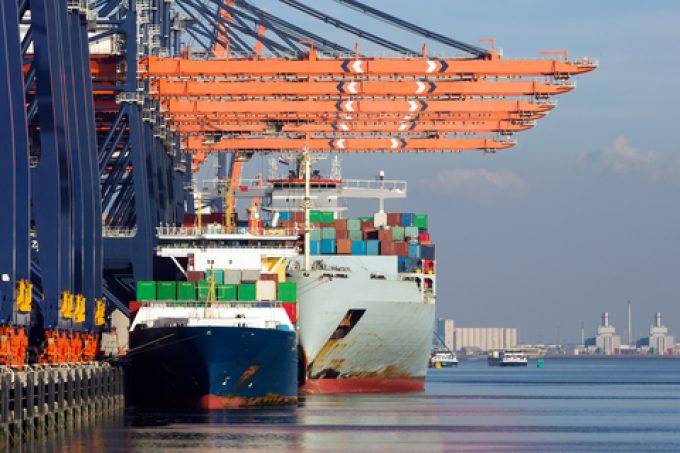
We understand the ever changing needs of our customers

we provide a high level of service dedicated to fulfilling all your shipping requirements

Watch Video
Road Freight

Keep all your data in one place which can be accessed from anywhere and anyplace

Let us help you 24/7 manage your supply chain needs

Back to Global Coverage

Ghana Freight Forwarding Services
Air & Sea Freight Between Ghana and the UK

Intercargo provides reliable freight forwarding services between Ghana and the United Kingdom, helping businesses import and export cargo efficiently by air and sea.

Whether you are importing goods from Ghana into the UK, exporting products from the UK to Ghana, or managing regular international shipments, our experienced freight forwarding team provides complete end-to-end logistics solutions. From collection and customs clearance to final delivery, we manage every stage of the shipment process.
Logistics solutions
Air Freight Ghana to UK
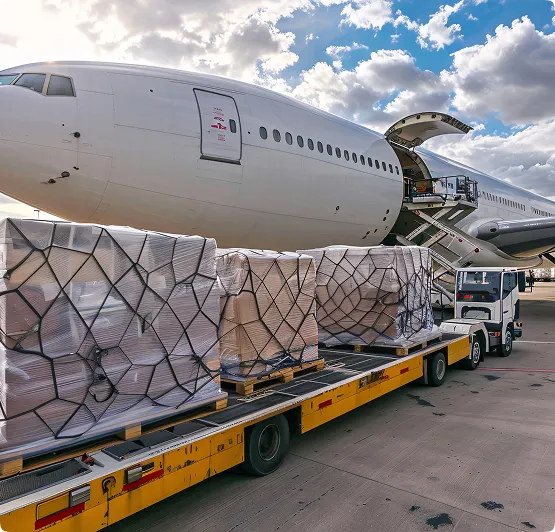
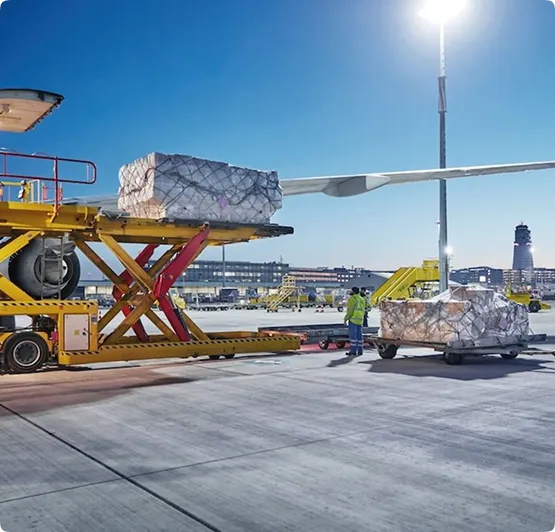
When speed matters, our Ghana air freight services provide fast, secure and reliable transportation between Ghana and the United Kingdom.
We arrange air freight through Kotoka International Airport (Accra), Kumasi International Airport, Tamale International Airport and Takoradi Airport, with UK arrivals through London Heathrow, London Stansted, Manchester Airport, Birmingham Airport and East Midlands Airport.

Our air freight solutions include:

  • Air freight from Ghana to the UK
  • Express and economy air cargo
  • Door to door delivery
  • Time critical shipments
  • Air freight from the UK to Ghana
  • Airport-to-airport services
  • Customs clearance support
  • High value and commercial cargo

Whether you need urgent delivery of cocoa products, fresh fruit, pharmaceuticals, textiles, mining equipment or commercial goods, our air freight specialists can provide the most efficient solution.
Logistics solutions
Sea Freight Ghana to UK
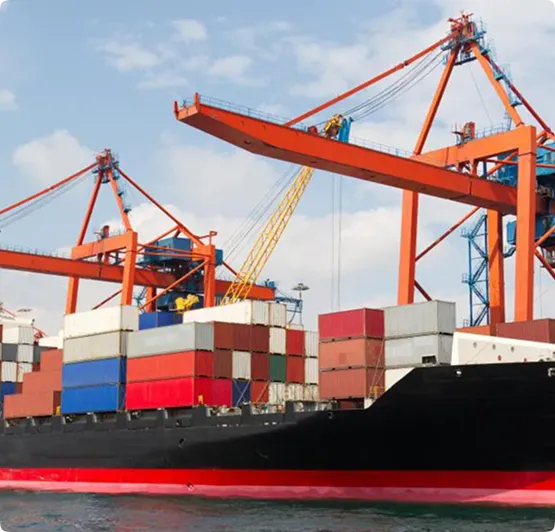
For larger shipments and cost-effective transportation, our sea freight services provide dependable shipping solutions between Ghana and the UK.
We regularly arrange cargo movements through Port of Tema and Port of Takoradi, with UK arrivals through Port of Felixstowe, Southampton, London Gateway, Liverpool, Tilbury and Immingham.

Our sea freight services include:

  • Full Container Load (FCL)
  • Port to port shipping
  • Customs documentation
  • Project cargo
  • Less than Container Load (LCL)
  • Door to door logistics
  • Cargo insurance
  • Oversized and heavy-lift shipments

Whether shipping machinery, cocoa products, timber, industrial equipment, manufacturing products or commercial cargo, we can tailor a sea freight solution to suit your budget and transit requirements.
Logistics solutions
Import from Ghana to the UK
Intercargo helps UK businesses import products and cargo from Ghana through a fully managed freight forwarding service.

Our import services include:

  • Supplier coordination
  • Air and sea freight transportation
  • Duty and VAT guidance
  • Final delivery throughout the UK
  • Collection from Ghanaian factories, warehouses and commercial premises
  • UK customs clearance
  • Warehousing and distribution

We regularly support imports including:

  • Cocoa and chocolate products
  • Textiles and garments
  • Fresh fruit and vegetables
  • Shea butter and cosmetic ingredients
  • Timber and wood products
  • Agricultural products
  • Manufacturing components
Our experienced team ensures your cargo moves efficiently from Ghana to the UK while remaining compliant with all customs and import requirements.
Logistics solutions
Export from the UK to Ghana
We also help UK businesses export goods to customers, distributors and partners throughout Ghana.
Whether shipping to Accra, Tema, Kumasi, Takoradi, Tamale, Cape Coast or other commercial and industrial locations across Ghana, our export specialists can arrange a seamless freight solution by air or sea.
Our export services include:

  • Air freight exports
  • Export documentation
  • Cargo insurance
  • Commercial and industrial shipments
  • Sea freight exports
  • Customs compliance
  • Door-to-door delivery

From single shipments to regular freight movements, we provide scalable logistics solutions designed around your business requirements.
Logistics solutions
Customs Clearance & Freight Forwarding
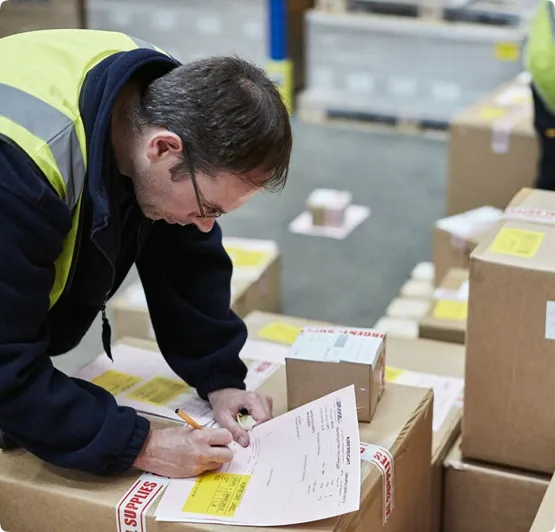
Successful international shipping depends on accurate customs documentation and compliance.
Intercargo provides:

  • Import customs clearance
  • Commodity code guidance
  • Duty and tax assistance
  • End to end shipment visibility
  • Export customs clearance
  • Shipping documentation
  • Freight forwarding management

Our experienced freight forwarding team helps minimise delays and keeps your cargo moving smoothly between Ghana and the United Kingdom.
Logistics solutions
Why Choose Intercargo for Ghana Freight?
We support importers, exporters, manufacturers, distributors, retailers, agricultural businesses and industrial companies moving cargo between Ghana and the UK.
Air Freight And Sea Freight Specialists
Uk And Ghana Trade Lane Expertise
Import And Export Solutions
Customs Clearance Support
Door To Door Logistics
Dedicated Account Management
Global Carrier Network
Competitive Freight Rates
Get a Ghana Freight Quote

Looking for air freight from Ghana to the UK, sea freight from Ghana to the UK, or export services from the UK to Ghana?
Contact Intercargo today for a tailored freight forwarding quotation and expert advice on the most efficient shipping solution for your cargo.
Logistics solutions
Latest News & Updates

Shippers face rate hikes and 'a classic supply-demand mismatch' in Q4

With the last sailings before China's Golden Week begins on 1 October, container spot rates on the transpacific trades finally began to tail off. Spot rates from Asia to the US west and east coasts have been consistently rising since the end of August in a late peak season pricing rally - last week they breached $10,000 per 40ft to the east coast on Drewry's World Container Index (WCI). However, this week some welcome stability returned, with the WCI's Shanghai-New York rate of $10,373 per 40ft a very marginal decline on last week, while the Shanghai-Los Angeles route was up 2%, to $7,838 per 40ft, a slower increase than seen over the past month. More concerning for shippers and their forwarders is declining schedule reliability of transpacific ocean services and the knock-on effect that port congestion has had on freight booking processes. US west coast forwarder Freight Right noted that "carriers are increasingly rolling bookings or outright canceling confirmed slots, citing vessel space and weight limitations", and warned that "bunched" vessel arrivals were disrupting hinterland distribution out of ports. "Vessel schedules have become highly volatile," it said. "Ships are arriving unpredictably, sometimes three to four days early, and other times several days late, disrupting port operations and terminal reception windows," it added. Although Drewry said it expected transpacific rates to decline next week, Freight Right warned that there may be another spot rate rise in the last few days before Golden Week "Rates may increase further for urgently needed cargo as carriers prioritise higher-paying bookings - importers with Amazon, Walmart, or other holiday-season delivery deadlines should treat confirmed space and realistic sailing schedules as more important than finding the lowest possible rate. "Cargo departing after the holiday may have difficulty meeting final holiday inventory cutoffs, particularly for east coast destinations," it added. A further worry for shippers is that 1 October will see the next round of general rate increases - between $2,000 and $3,000 per 40ft, depending on carrier. Meanwhile, the Asia-Europe trades continued the descent seen since early July, with the WCI's Shanghai-Rotterdam leg down 4% week on week, to end at $3,485 per 40ft. The WCI's Shanghai-Genoa route was also down, by 5% on the previous week, to $3,835 per 40ft, and Drewry said it expected prices to continue in this direction with the increasing use of the Suez routing - despite seven blanked sailings scheduled for next week, compared with three this week, the canal use means "recovering effective capacity outweighs blank sailings". It is a different picture on the transatlantic, where Europe shippers exporting to North America are continuing to face historically high spot rates, which have been over the $3,000 per 40ft mark for over a month, and show little sign of dropping. They currently stand at $3,121 on the WCI's Rotterdam-New York leg, some 72% up year on year. Steffen Manz, founder and CEO of Canadian forwarder Speed Global Logistics, told The Loadstar: "We are staring down a classic supply-demand mismatch for Q4," he said. "On one hand, you have rising demand as Canadian importers actively pivot volumes toward Europe. On the other, carriers are already pulling capacity out of the market through blank sailings to protect their rate structures as winter approaches. "We expect transatlantic spot rates to drift upward through the winter. Our advice to shippers right now is simple: secure your carrier allocations early, don't rely strictly on the spot market, and factor an extra seven to 10 days of buffer time into your European supply chains to account for winter weather delays and blanked loops," he added.

Source: theloadstar.com

Read more

Liability the battleground as forwarders and airlines question new DAWB rules

Nearly three months after IATA introduced new rules governing Direct Air Waybills (DAWBs), there remains considerable confusion among airlines and freight forwarders over what has actually changed - and who is now liable when something goes wrong. Some forwarders appear unaware of the potential implications, while others believe individual airlines must choose whether to adopt the amendments. Even Air France-KLM Cargo told The Loadstar this week it was still "reviewing the revised DAWB framework and its implications for our operations". It added: "Given our B2B setup and the way our cargo is handled through forwarding partners, we are assessing how the revised provisions would apply in practice." But IATA has now clarified to The Loadstar that the amendments are already in force across its member airlines and have been since 1 July. "The revised DAWB provisions are part of the Cargo Agency Conference Resolution, so they apply to all member airlines as of the effective date, in the same way any resolution applies across the industry," it said. "This is a standing rule, not a phased rollout that individual airlines sign up to over time." So what exactly has changed - and why has it caused such a bitter dispute between IATA and forwarder association FIATA? At its simplest, the new framework gives airlines a clearer route to pursue a freight forwarder when problems arise with a DAWB shipment, rather than having to seek recourse from the underlying shipper. IATA argues that the previous arrangement contained a genuine liability gap, with forwarders able to tender cargo to airlines while acting merely as agents for an underlying shipper. "Before this change, by classifying cargo as DAWB shipments, forwarders could avoid liability and take no action to verify that the cargo they tendered had been properly prepared for shipment," IATA told The Loadstar. "This left carriers exposed to the risks posed by improperly prepared cargo, and was increasingly regarded as a threat to flight safety." Dangerous goods are at the heart of IATA's argument. If the underlying shipper presented the cargo directly, IATA said, the carrier would have the opportunity to vet that company before agreeing to carry its goods. Where the shipment comes through a forwarder under a DAWB, however, the airline may have little or no relationship with that underlying shipper. IATA, therefore, says its member airlines decided it was necessary "to proactively clarify the allocation of liability". But FIATA sees things very differently. Its director general, Dr Stéphane Graber, told The Loadstar the amendments could make a forwarder responsible to the airline as a principal, even where its actual role was solely as agent for the shipper. That could leave the forwarder exposed to claims arising from incorrect cargo information, undeclared or misdeclared dangerous goods, sanctions, customs requirements, or other regulatory failures - including information and processes controlled by the shipper rather than the forwarder. "FIATA's position is that this responsibility and liability should be with the party in effective control of the risk, processes, and information involved," Dr Graber said. "Simply transferring liability to parties that may have limited ability to control the underlying risks is unlikely to provide an adequate solution." Transport lawyers at HFW say there is substance to both sides' arguments. Partner Matthew Gore told The Loadstar IATA was right that the previous arrangement could create a contractual gap, but said FIATA was also "substantively accurate" about the effect of the amendments. Absent a separate bilateral agreement, he explained, a forwarder could now be deemed to accept the same terms, conditions, and convention-related obligations as if it were the shipper. That represents "a real and, in the applicable scenario, potentially significant expansion of the forwarder's liability to the carrier", he said. However, it does not turn the forwarder into the actual shipper, or override its agency relationship with its customer. Rather, it creates a contractual default governing the relationship between the airline and forwarder. And there is a way out. IATA's resolution allows airlines and forwarders to negotiate different bilateral terms. If they do, those arrangements can displace the default provisions. IATA stressed this point to The Loadstar: "Forwarders and airlines can thus agree different terms between themselves with regard to DAWB treatment." HFW said this meant airlines now had "a stronger basis to pursue the forwarder with whom they have a commercial relationship, rather than an unknown underlying shipper", unless the parties agreed something different. That potentially leaves the forwarder to seek recourse further up the chain if the underlying shipper was actually responsible. And that is where another area of uncertainty arises: insurance. FIATA said it was "presently unclear whether current insurance arrangements reflect such an allocation of risk and liability", warning that a claim could have significant repercussions, particularly for SME forwarders. However, Angus Galbraith, chief underwriter officer for the WCA's insurer, World Insurance, told The Loadstar most freight forwarder liability policies already covered companies acting both as agents and principals. He nevertheless advised forwarders to ensure their policies adequately covered the expanded liability. The insurer also rejected the suggestion that forwarders had no responsibility for checking cargo simply because information originated from the shipper. Forwarders already had obligations to check bookings against cargo descriptions, HS codes, and dangerous goods declarations, he said. Where a shipper deliberately concealed dangerous goods - undeclared lithium batteries, for example - the situation would be different. If an airline pursued the forwarder, its insurer would defend the claim and seek recourse against the actual shipper or beneficial cargo owner, where appropriate. The legal position is similarly nuanced. Article 10 of the Montreal Convention makes the consignor responsible for the correctness of cargo particulars and statements entered in the air waybill by it or on its behalf. Mr Gore said the new DAWB provisions did not directly contradict the convention, but created what he described as a "policy and coherence tension" between a forwarder's real-world role as an agent - potentially without control over the relevant information - and its contractual exposure to the airline as if it were the shipper. Nor, he said, did existing law necessarily support FIATA's proposition that liability must always follow "effective control". The practical protection for forwarders was therefore contractual: negotiate different terms with airlines, and obtain appropriate warranties and indemnities from their shipper customers. All this helps explain why, almost three months after implementation of the new rules, the industry is still trying to work out exactly where it stands. IATA says "all relevant stakeholders were consulted" before the changes, and insists the new arrangement provides "an equitable way to close a safety-related liability gap". FIATA disputes the adequacy of that process. It says the amendments were adopted under an expedited procedure, and that it formally invoked its right to seek a review, and also sought to postpone implementation from 1 July until 1 October to allow that review to take place. The amendments, nevertheless, became effective on 1 July. FIATA says there have so far been no known cases in which an airline has relied on the new provisions to recover damages from a forwarder. But, with the framework less than three months old, it argues that absence of claims provides little reassurance. Meanwhile, anecdotal evidence suggests some forwarders have yet to appreciate the significance of the change. Some forwarders appear unaware of the potential implications, while even published industry guidance has differed over whether application depended on individual airline implementation. One forwarder told The Loadstar that the initial industry "buzz" surrounding the amendments had largely subsided, despite continuing uncertainty over their implications. "Maybe people don't understand the risk," he said, adding that another forwarder he had spoken to had been unaware of the changes and had gone back to its legal department to establish its position. The confusion may eventually be resolved through bilateral agreements, insurance practice, and, ultimately, the first serious claim under the revised rules. But behind the technical arguments lies a much older dispute. For more than a decade, IATA and FIATA have attempted - and repeatedly failed - to redefine the balance of power between airlines and freight forwarders. The DAWB fight is simply the latest round. Timeline 2012-14: CAMP promises a reset IATA and FIATA work on the Cargo Agency Modernisation Programme, intended to replace the traditional airline-agent relationship with a principal-to-principal model and shared governance. One forwarding source describes the previous arrangement to The Loadstar as a "master-slave relationship". 2015: CASS causes a rupture FIATA objects to mandatory participation in IATA's Cargo Accounts Settlement System and argues forwarders are subject to financial rules they have little role in determining. 2017-20: The grand compromise falters Pilot programmes fail to deliver the promised global framework, as disagreements over governance and CASS persist. 2021: IFACP is abandoned IATA confirms formal efforts to establish the joint IATA-FIATA Air Cargo Programme have ceased after the parties failed to resolve a liability issue - subsequently identified as the treatment of liability under DAWBs. A new consultation system gives forwarders a greater voice, but the airline-only Cargo Agency Conference retains decision-making authority. 2024: Another CASS row Forwarders attack IATA's financial security requirements for CASS associates. FIATA president Turgut Erkeskin tells The Loadstar: "One side should not rule the other." 2026: Liability becomes the battleground The revised DAWB provisions take effect on 1 July, despite FIATA seeking a formal review and postponement. IATA says the changes close a safety and liability gap. FIATA says they expose forwarders to shipper-level liabilities for risks they may not control.

Source: theloadstar.com

Read more

News in Brief Podcast | Week 39 2026 | Transpacific rates, US-Canada trade war and dampening ecommerce

What's keeping Transpacific freight rates elevated as the peak season approaches? This week, Gavin van Marle joins us to discuss the latest rate movements, the changing US-Canada trade relationship and a significant leadership shake-up at PIL. Plus, Awery's Tristan Koch joins us to examine the latest airfreight data, the continuing decline in China-Europe ecommerce volumes, shifting rates and capacity, and how new technology could help the industry navigate an increasingly volatile market. All this and more, in under 25 minutes on this week's News in Brief Podcast!

Source: theloadstar.com

Read more

Privacy Preference Center

This website uses cookies and similar technologies, (hereafter “technologies”), which enable us, for example, to determine how frequently our internet pages are visited, the number of visitors, to configure our offers for maximum convenience and efficiency and to support our marketing efforts. These technologies incorporate data transfers to third-party providers based in countries without an adequate level of data protection (e. g. United States). For further information, including the processing of data by third-party providers and the possibility of revoking your consent at any time, please see your settings under “Consent Preferences” and our


Privacy Notice


Privacy Preference Center

Strickly Necessary Cookies
Always Active

Performance Cookies

Functional Cookies

Targeting Cookies