We understand the ever changing needs of our customers

we provide a high level of service dedicated to fulfilling all your shipping requirements

Watch Video
Road Freight

Keep all your data in one place which can be accessed from anywhere and anyplace

Let us help you 24/7 manage your supply chain needs

Back to Global Coverage

Gabon Freight Forwarding Services
Air and Sea Freight Between Gabon and the UK

Intercargo provides reliable freight forwarding services between Gabon and the United Kingdom, helping businesses import and export cargo efficiently by air and sea.

Whether you are importing goods from Gabon into the UK, exporting products from the UK to Gabon, or managing regular international shipments, our experienced freight forwarding team provides complete end to end logistics solutions. From collection and customs clearance to final delivery, we manage every stage of the shipment process.
Logistics solutions
Air Freight Gabon to UK
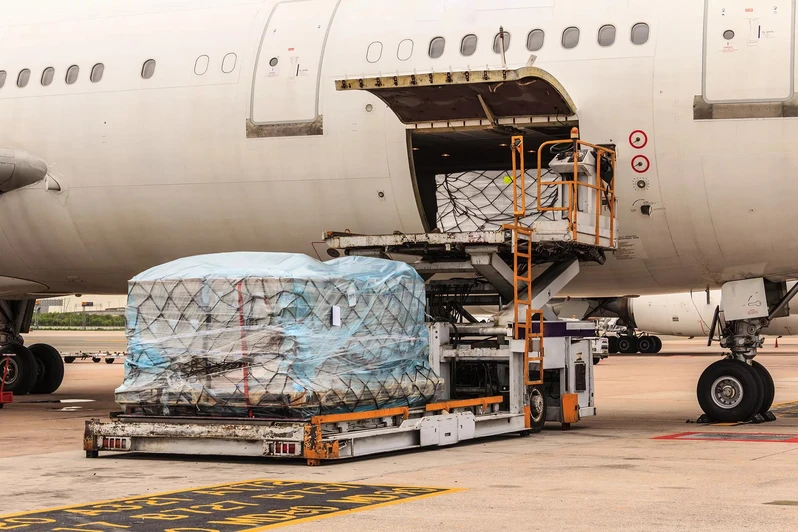
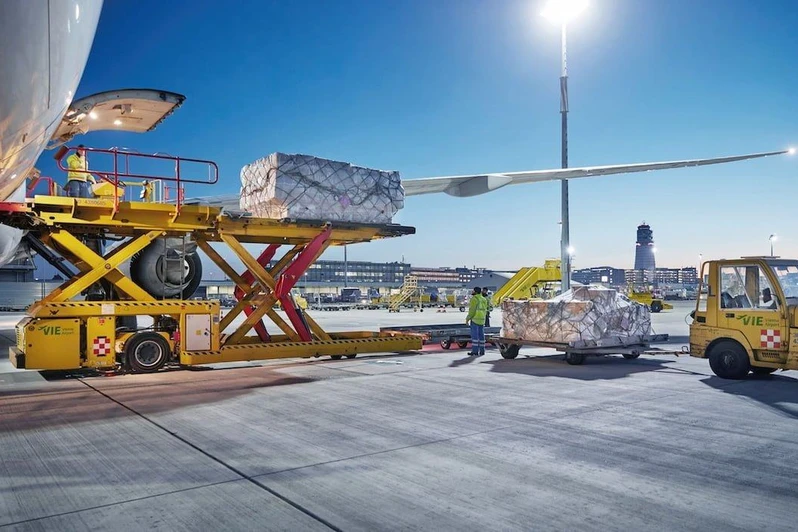
When speed matters, our Gabon air freight services provide fast, secure and reliable transportation between Gabon and the United Kingdom.
We arrange air freight through Libreville International Airport (LBV), with UK arrivals through London Heathrow, London Gatwick, Manchester Airport and other major UK airports.
Our air freight solutions include:

  • Air freight from Gabon to the UK
  • Air freight from the UK to Gabon
  • Express and economy air cargo
  • Airport to airport services
  • Door to door delivery
  • Customs clearance support
  • Time critical shipments
  • High value and commercial cargo

Whether you need urgent delivery of timber, machinery, electronics, automotive parts, pharmaceutical goods or commercial cargo, our air freight specialists can provide the most efficient solution.
Logistics solutions
Sea Freight Gabon to UK
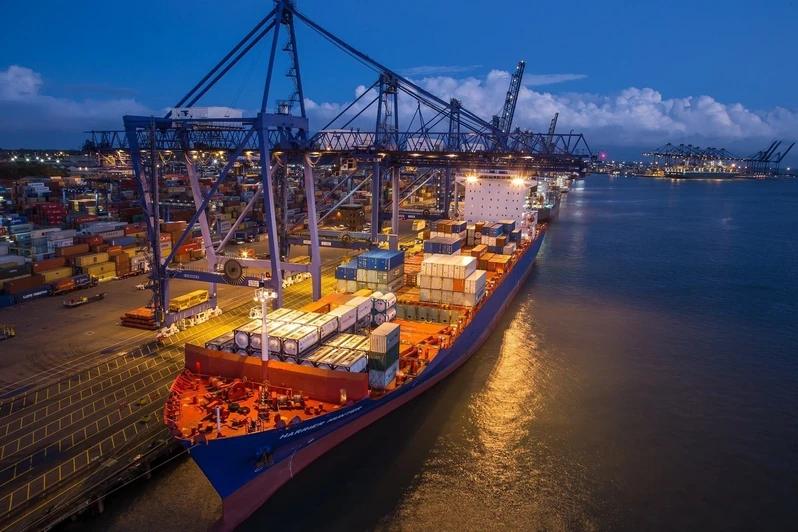
For larger shipments and cost effective transportation, our sea freight services provide dependable shipping solutions between Gabon and the UK.
We arrange cargo movements through the Port of Owendo, Gabon's main commercial port, connecting with major UK and European ports via Atlantic shipping lanes.
Our sea freight services include:

  • Full Container Load (FCL)
  • Less than Container Load (LCL)
  • Port to port shipping
  • Door to door logistics
  • Customs documentation
  • Cargo insurance
  • Project cargo
  • Oversized and heavy lift shipments

Whether shipping timber, machinery, oil and gas equipment, automotive parts, consumer goods or project cargo, we can tailor a sea freight solution to suit your budget and transit requirements.
Logistics solutions
Import from Gabon to the UK
Intercargo helps UK businesses import products and cargo from Gabon through a fully managed freight forwarding service.
Our import services include:

  • Supplier coordination
  • Collection from Gabonese businesses, warehouses and commercial premises
  • Air freight transportation
  • UK customs clearance
  • Duty and VAT guidance
  • Warehousing and distribution
  • Final delivery throughout the UK

We regularly support imports including:

  • Timber and wood products
  • Machinery and equipment
  • Oil and gas equipment
  • Automotive parts
  • Consumer goods
  • Project cargo
  • Industrial equipment
  • Construction materials

Our experienced team ensures your cargo moves efficiently from Gabon to the UK while remaining compliant with all customs and import requirements.
Logistics solutions
Export from the UK to Gabon
We also help UK businesses export goods to customers, distributors and partners throughout Gabon.
Whether shipping to Libreville, Port-Gentil, Franceville or other major Gabonese destinations, our export specialists can arrange a seamless freight solution by air and sea.
Our export services include:

  • Air freight exports
  • Sea freight exports
  • Export documentation
  • Customs compliance
  • Cargo insurance
  • Door to door delivery
  • Commercial and industrial shipments

From single shipments to regular freight movements, we provide scalable logistics solutions designed around your business requirements.
Logistics solutions
Customs Clearance & Freight Forwarding
Successful international shipping depends on accurate customs documentation and compliance.
Intercargo provides:

  • Import customs clearance
  • Export customs clearance
  • Commodity code guidance
  • Shipping documentation
  • Duty and tax assistance
  • Freight forwarding management
  • End to end shipment visibility

Our experienced freight forwarding team helps minimise delays and keeps your cargo moving smoothly between Gabon and the United Kingdom.
Logistics solutions
Why Choose Intercargo for Gabon Freight?
We support importers, exporters, manufacturers, distributors, retailers and e commerce businesses moving cargo between Gabon and the UK.
Air And Sea Freight Specialists
Uk And Gabon Trade Lane Expertise
Import And Export Solutions
Customs Clearance Support
Door To Door Logistics
Dedicated Account Management
Global Carrier Network
Competitive Freight Rates
Get a Gabon Freight Quote

Looking for air freight from Gabon to the UK, sea freight from Gabon to the UK, or export services from the UK to Gabon?
Contact Intercargo today for a tailored freight forwarding quotation and expert advice on the most efficient shipping solution for your cargo.
Logistics solutions
Latest News & Updates

Shipping faces more red tape and higher costs if MEPC 85 fails to deliver

Shipping faces additional regulatory burdens, higher freight costs, and prolonged uncertainty if governments fail to agree meaningful economic measures this month, warned maritime emissions specialists. Ahead of the International Maritime Organization (IMO) Marine Environment Protection Committee meeting (MEPC 85), in London from 30 November to 4 December, OceanScore MD Albrecht Grell warned that negotiations focusing on technical measures could undermine investment in cleaner fuels and vessels. "If only technical measures can be agreed, more measuring, tracking, and reporting work will be forced upon shipping without any real progress towards net-zero shipping," he told The Loadstar. "My concern is that the discussion increasingly centres around technical measures. Standalone, these are not helpful - think of CII," he added, referring to the IMO's Carbon Intensity Indicator. Mr Grell argued that economic measures were essential to stimulating investment in alternative-fuel production, fleet renewal, and fuel-ready vessels. He pointed to the impact of the EU Emissions Trading System (ETS) and FuelEU Maritime, which he estimated affected only around 30% of the global fleet. "A meaningful IMO Net-Zero Framework (NZF) could help to close that gap," he said. However, failure to agree economic measures could delay an effective IMO NFZ for a prolonged period, potentially encouraging more countries to introduce their own emissions regulations, he added. His comments follow a joint appeal from nine shipping associations, including BIMCO, the International Chamber of Shipping (ICS) and World Shipping Council (WSC), urging governments to establish a global greenhouse gas framework providing investment certainty and preventing overlapping regional requirements. Friederike Hesse, co-founder and MD of maritime emissions management specialist zero44, told The Loadstar that although IMO member states had become "more constructive", a final agreement was more likely in 2027 than at December's meeting. She highlighted that governments had previously converged on several principles, including prioritising emissions reductions, allowing ships to trade compliance surpluses and incentivising zero-emission fuels. However, disagreements remained over the ambition and duration of emissions targets and how revenues would be used. Ms Hesse warned that continued uncertainty would carry direct commercial consequences, adding: "Uncertainty itself is a cost. Companies price-in risk premiums, put their eggs in multiple baskets instead of focusing investments, add contractual buffers, and spend more on legal and administrative work - and that ends up in freight rates." She also warned that delaying emissions reductions would require steeper cuts later, potentially leaving fuel production and fleet renewal struggling to keep pace. "Postponing cuts doesn't make them disappear," she urged, warning that the resulting transition could become more expensive and risk disruption to global trade. For shipowners and fuel suppliers making investments over 20 to 30 years, regulatory uncertainty could discourage fuel offtake agreements and slow alternative-fuel production. Mr Grell argued that decarbonisation costs would ultimately fall on cargo owners, although operators' ability to adapt would determine the impact on profitability. "Shipping is highly competitive - any cost will eventually be passed on to the cargo owners," he said. "The profit pool will not change but be redistributed within the industry." Both experts warned against proliferating regional schemes without effective global regulation. Ms Hesse said this could concentrate alternative-fuel infrastructure around regulated markets, rather than global trade routes, while exposing operators to overlapping compliance obligations. Mr Grell agreed: "Nobody benefits from overlapping reporting regimes, admin layers and compliance efforts." According to Ms Hesse, regional measures such as the EU ETS should complement an eventual IMO framework, potentially recognising payments already made under global rules. "Whether regional schemes disappear entirely matters less than making sure no tonne of CO₂ is charged twice," she said.

Source: theloadstar.com

Read more

'Black Friday or Red Friday?' Ecommerce air hubs take a capacity hit

Air cargo rates continue to face upward pressure as capacity constraints, rather than a surge in peak season demand, increasingly dictate pricing - with freighter capacity into Europe taking a significant hit ahead of Black Friday. Data published today by aviation consultant Aevean shows freighter capacity from Asia and the Middle East into Europe fell 15% year on year in the two weeks to 24 November, equivalent to some 27,500 tonnes. "Black Friday... or Red Friday?" asked Maarten Wormer, head of consulting at Aevean, noting that "integrator and general cargo hubs are largely holding up, as ecommerce gateways take the hit". Budapest recorded the steepest percentage decline among the eight major gateways tracked, at 36%, followed by Paris CDG, down 27%, and Liège, down 24% - the latter losing some 5,800 tonnes of capacity. Meanwhile, Frankfurt saw an 11% reduction, while Cologne bucked the trend with a 16% increase. Capacity into Amsterdam remained flat. The figures come amid a resurgence in global airfreight rates, following a period of easing in the third quarter. According to Transport Intelligence's (Ti) latest Air Freight Rate Tracker, global headhaul rates reached $3.92 per kg in early November, up 7.6% on October, 8.7% against the Q3 average, and 45.2% year on year. Backhaul rates climbed 6.2% month on month, to $3 per kg, up 22.3% year on year. However, it is the withdrawal of bellyhold capacity during winter passenger schedules, coupled with persistently high fuel costs, rather than exceptional demand growth, that Ti identified as driving the increases. Westbound transatlantic rates recorded the largest quarterly increase, at 21.7%, largely reflecting seasonal capacity reductions. But technology shipments continue to underpin demand elsewhere, with South Asia-North America remaining the most expensive tradelane tracked by Ti, at $7.08 per kg, up 70.5% year on year. And the strength of demand for AI infrastructure, servers and semiconductors could see freighters redeployed to the Transpacific, further tightening capacity elsewhere. Meanwhile, there is little consensus over whether shippers can expect much respite in the new year. Despite 72% of respondents to Ti's industry survey anticipating rate increases over the next three months, the consultant expects prices to ease in Q1 27, recalling that rates fell between Q4 and Q1 in each of the past four years. Some 81% of respondents expected increases on the Asia-US West Coast trade. While softer e-commerce, consumer, and industrial demand following the peak season should weigh on pricing, sustained technology shipments and limited capacity are expected to cushion any decline. Ti also suggested shippers should avoid locking-in November rates on 12-month contracts - shorter-term agreements or index-linked pricing potentially offering greater flexibility. And Transatlantic shippers could benefit from delaying tenders until the return of summer passenger schedules in late March, when the additional bellyhold capacity could bring some relief.

Source: theloadstar.com

Read more

DSV and Cathay Cargo partner on SAF in Asia

DSV and Cathay Cargo have entered into a three-year partnership on sustainable aviation fuel (SAF) that covers 13,155 tonnes of SAF produced in Asia. The partnership is expected to support at least 45,000 tonnes of carbon dioxide equivalent emission reductions (CO2e) associated with airfreight shipments, said Cathay Cargo. Cathay Cargo is the first airline from Asia that DSV is partnering with to scale SAF across its network in the region. By sourcing all SAF from Asia, the partnership aims to provide greater demand certainty and help increase the availability of SAF in the region. "This partnership creates long-term demand for SAF produced in Asia. It supports the regional production and supply needed to scale its use," said Stefan Krikken, senior vice president, global air product. Dominic Perret, director cargo at Cathay, said: "Scaling SAF requires collaboration across the aviation and logistics value chain, and this multi-year commitment reflects our shared vision to support its wider adoption. "By working together to create sustained demand for SAF produced in Asia, we hope to contribute to the continued development of the SAF ecosystem in the region." The partnership is part of Cathay's corporate SAF programme, where DSV has been a "Diamond" member. Verified emission reductions will be allocated to DSV independently of where SAF is physically used, supported by Cathay Cargo's documentation of the reductions, covering the SAF journey from sourcing through to uplift.

Source: aircargonews.net

Read more

Privacy Preference Center

This website uses cookies and similar technologies, (hereafter “technologies”), which enable us, for example, to determine how frequently our internet pages are visited, the number of visitors, to configure our offers for maximum convenience and efficiency and to support our marketing efforts. These technologies incorporate data transfers to third-party providers based in countries without an adequate level of data protection (e. g. United States). For further information, including the processing of data by third-party providers and the possibility of revoking your consent at any time, please see your settings under “Consent Preferences” and our Privacy Notice.


Manage Consent Preferences
Strictly Necessary Cookies
Always Active

Performance Cookies

Functional Cookies

Targeting Cookies