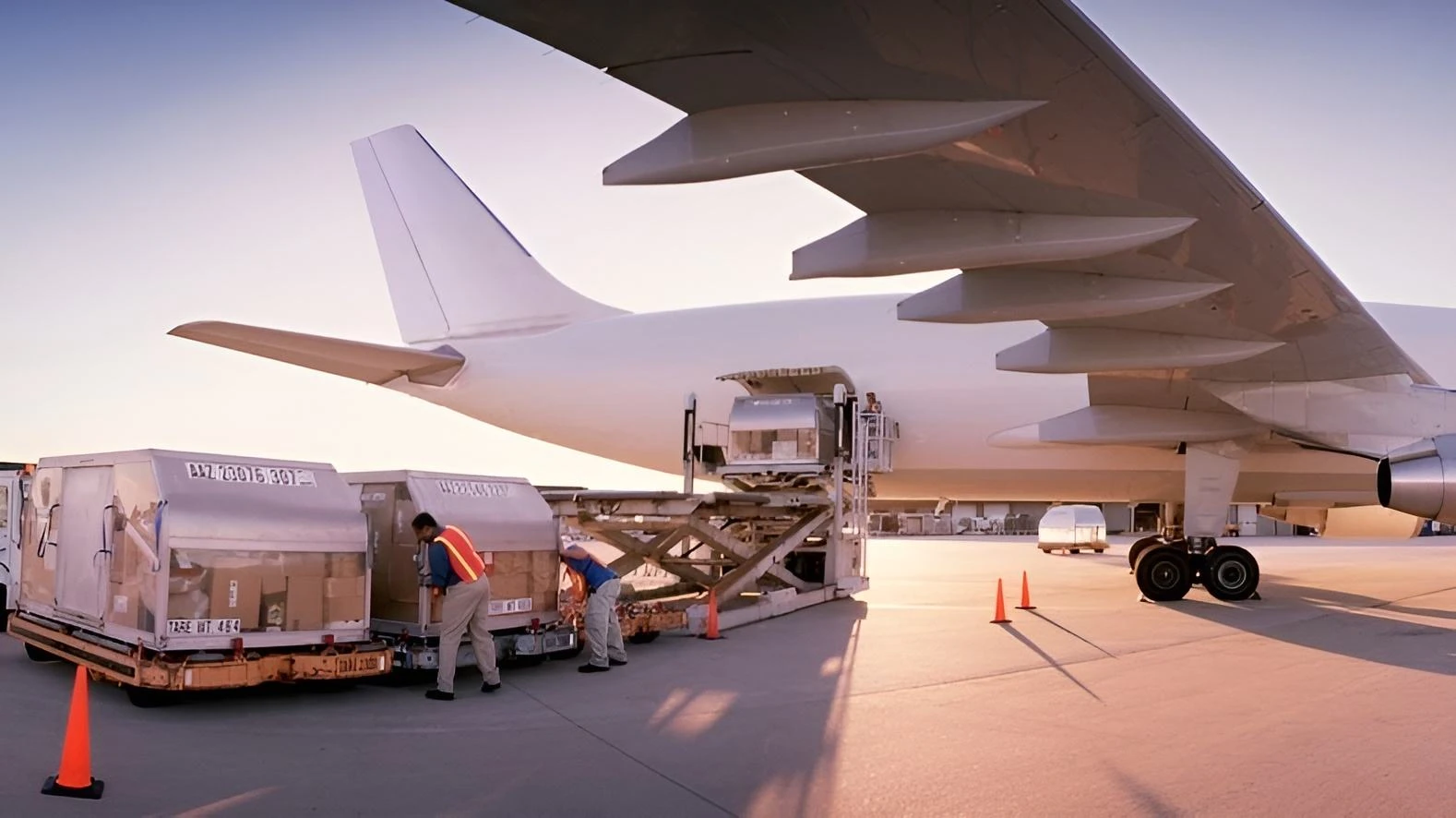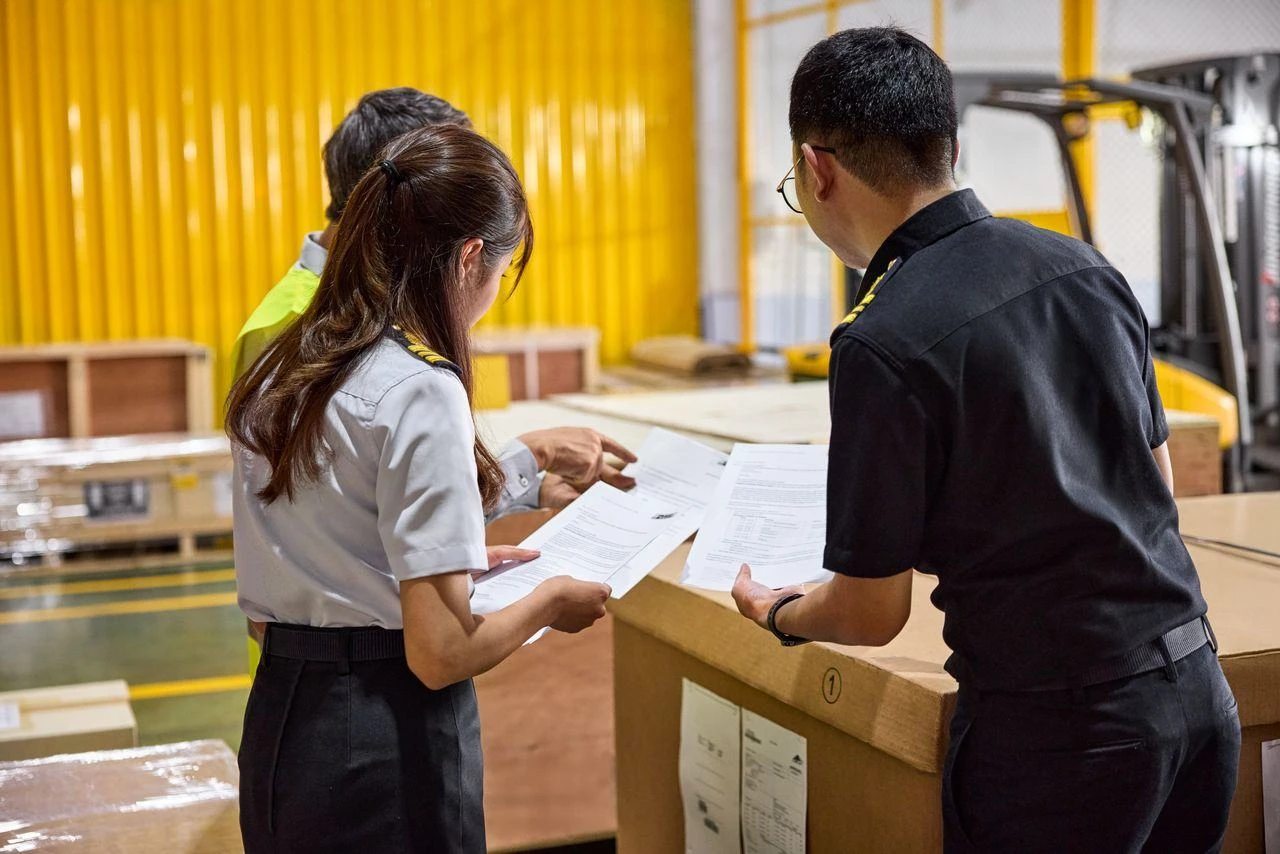
We understand the ever changing needs of our customers

we provide a high level of service dedicated to fulfilling all your shipping requirements

Watch Video
Road Freight

Keep all your data in one place which can be accessed from anywhere and anyplace

Let us help you 24/7 manage your supply chain needs

Latest News & Updates

Typhoon-related port congestion keeps intra-Asia rates high and capacity tight

Intra-Asia freight rates rose for the fifth straight week as typhoon-related congestion in China and bottlenecks in transhipment ports Busan, Hong Kong, and Singapore tied up vessel supply. On 3 September, the Drewry Intra-Asia Container Index (IACI) climbed 9% from 27 August, to $1,312 per 40ft, as typhoon-related port disruption tightened available capacity across key Asian trades. Drewry said: "Spot freight rates from China to South-east Asia and South Asia strengthened further this week as Typhoon Saudel disrupted port operations. Shanghai and Ningbo were closed from 26-28 August, adding to congestion that has built following a series of recent typhoons, including Bavi, Noul, Dolphin, and Narra." The operational impact was reflected in vessel waiting times. In Week 35, average waiting times hit 98 hours in Shanghai and 54 hours in Ningbo. Rates on several major intra-Asia routes rose sharply. Shanghai-Busan increased 30%, to $925 per 40ft, while Shanghai-Laem Chabang climbed 28%, to $1,310 per 40ft. Ongoing geopolitical tension in the Middle East also provided upward support, with Shanghai-Jebel Ali rates increasing 6% to $8,254 per 40ft. These trends were mirrored in the Shanghai Containerised Freight Index on 4 September, with the Shanghai-South-east Asia rate up 12% from 28 August, to $893 per teu, and the Shanghai-Busan rate gaining 7%, to $248 per teu. Disrupted berthing schedules in China cascaded to the major transhipment hubs, including Busan, Hong Kong, and Singapore, causing more delays to shippers. With weather-related interruptions and port congestion persisting, Drewry expects freight rates to rise further in the coming weeks. There were also network changes among regional carriers. Japanese operator Kambara Kisen will revise its NK1 service from 22 September, replacing Otaru with Sapporo, on a revised three-week rotation with three 1,091 teu vessels calling at Dalian, Qingdao, Shanghai, Toyama, Niigata, Sapporo, Kanazawa, and Dalian. Rising bunker prices will also add upward pressure to intra-Asia freight rates. The Baltic Exchange yesterday showed very-low sulphur fuel oil prices went up around $30 from last month, to around $850 per tonne, while prices of high-sulphur fuel oil were up around $50, to roughly $660 per tonne, in Singapore and Zhoushan ports.

Source: theloadstar.com

Read more

Amazon freighter overruns Miami International runway

An Amazon Air Boeing 767 freighter has overrun one of the runways at Miami International Airport (MIA), tragically resulting in the deaths of several people after it struck several vehicles. The aircraft overran runway 30 at around 14:00hrs local time on September 6. Reports suggest the aircraft was being operated by 21 Air. The local mayor Daniella Levine Cava said that at least five people had died and another five had been injured. Following the incident, the airport closed all runways and taxiways and issued a ground stop, although according to its latest update, one runway has since been reopened. Flights are expected to restart at around 17:30 local time. "Earlier today, Prime Air Flight 7598 overran Miami International Airport's diagonal runway. One runway is currently open, but we are still seeing impacts due to this incident," MIA said in a statement. Images on social media showed smoke and flames emanating from the aircraft after the incident. The images also show the aircraft having come to a stop close to a highway. The US Federal Aviation Administration (FAA) said it would launch an investigation. "21 Air Flight 7598 overran the runway after landing at Miami International Airport around 2 p.m. local time on Sunday, Sept. 6. The Boeing 767-300 cargo aircraft departed from Luis Muñoz Marín International Airport in San Juan, Puerto Rico. The FAA will investigate," the organisation said in a social media post. Reports suggest the aircraft hit several vehicles. The Miami-Dade Fire Rescue service said: "Over 60 Miami-Dade Fire Rescue units are on scene of an incident involving a plane that overran a runway and struck multiple vehicles near Miami International Airport. Units arrived to find an airplane that had caught on fire as a result of this crash, with heavy flames and smoke showing." Amazon spokesperson Kelly Nantel said: "We can confirm that an Amazon Air plane operated by 21 Air experienced an incident while attempting to land at Miami International Airport today. This is a fast-moving situation and we're still gathering details. "We're working closely with local authorities and officials to understand exactly what happened. Right now, our absolute priority is the safety, well-being, and care of everyone involved. We're doing everything we can to support those affected."

Source: aircargonews.net

Read more

Leading air cargo verticals see demand levels diverge

E-commerce and AI data centre-related volumes have been fuelling air cargo demand growth over recent years, but the performance of the two verticals has increasingly diverged over recent months. Speaking at this week's EU Cross-Border E-Commerce Forum in Liege, Aevean head of consulting Maarten Wormer highlighted the rapid growth of demand for data centre-related air imports. Over the first seven months of the year, he said, data centre volumes into the US were up by 103% year on year and reached 107,000 tonnes in July - the equivalent to 1,000 freighter flights. Drilling further into the segment, Wormer said that over the seven-month period, US air imports of network equipment were up 130% year on year, there was a 37% increase in power infrastructure, computer components increased 86% and servers were up 181%. In contrast, e-commerce volumes from China to the European Union declined by 29% year on year in July following the introduction of a €3 charge for low-value package imports. The volume decline to France had started in March when volumes dropped by 30% as it introduced its own charge in anticipation of the EU levy, Wormer said. In July, e-commerce volumes into France had declined by 64%. Despite the decline in China-Europe e-commerce demand, Wormer said that the overall air cargo market had been growing this year. Aevean figures show that over the first seven months of 2026, air cargo volumes are up 5.8% year on year, primarily led by Asia Pacific to North America volumes, which have increased by 24% on 2025 levels. Meanwhile, volumes from Asia Pacific to Europe had increased by 4% year on year. Intra-Asia volumes had improved by 8% and there was also an 8% improvement from Asia Pacific to South America. The trade lane to record the largest fall in demand was Asia Pacific to the Middle East as a result of the ongoing US-Iran conflict.

Source: aircargonews.net

Read more

Privacy Preference Center

This website uses cookies and similar technologies, (hereafter “technologies”), which enable us, for example, to determine how frequently our internet pages are visited, the number of visitors, to configure our offers for maximum convenience and efficiency and to support our marketing efforts. These technologies incorporate data transfers to third-party providers based in countries without an adequate level of data protection (e. g. United States). For further information, including the processing of data by third-party providers and the possibility of revoking your consent at any time, please see your settings under “Consent Preferences” and our


Privacy Notice


Privacy Preference Center

Strickly Necessary Cookies
Always Active

Performance Cookies

Functional Cookies

Targeting Cookies