We understand the ever changing needs of our customers

we provide a high level of service dedicated to fulfilling all your shipping requirements

Watch Video
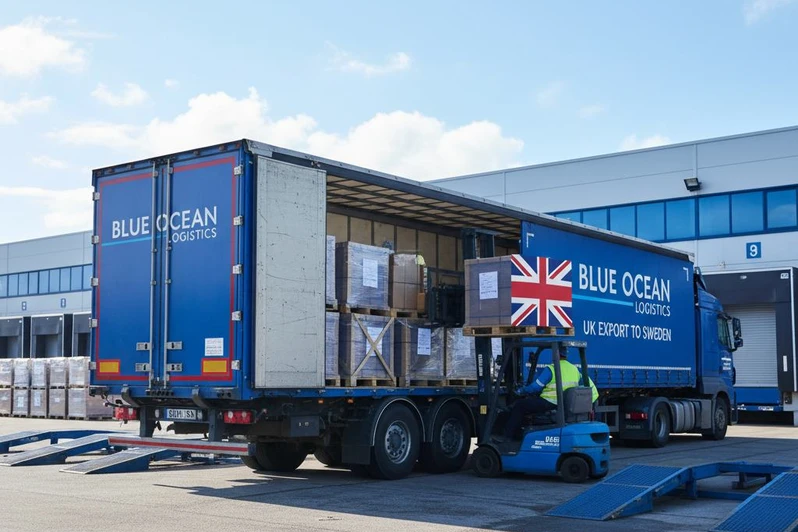
Road Freight

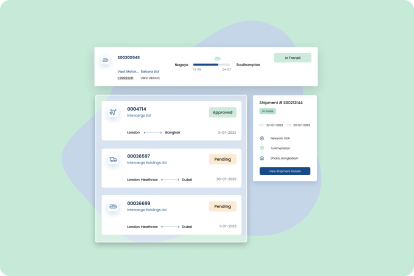
Keep all your data in one place which can be accessed from anywhere and anyplace

Let us help you 24/7 manage your supply chain needs

Back to Global Coverage

Ecuador Freight Forwarding Services
Air and Sea Freight Between Ecuador and the UK

Intercargo provides reliable freight forwarding services between Ecuador and the United Kingdom, helping businesses import and export cargo efficiently by air and sea.

Whether you are importing goods from Ecuador into the UK, exporting products from the UK to Ecuador, or managing regular international shipments, our experienced freight forwarding team provides complete end to end logistics solutions. From collection and customs clearance to final delivery, we manage every stage of the shipment process.
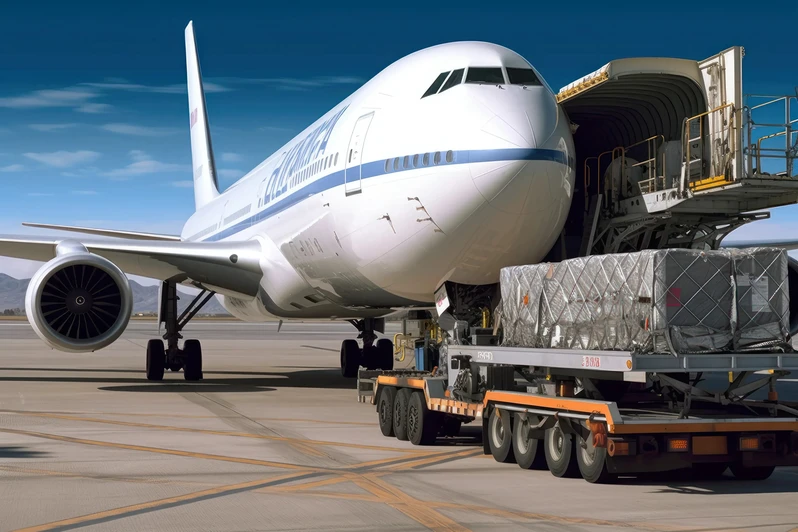
Air Freight Ecuador to UK
When speed matters, our Ecuador air freight services provide fast, secure and reliable transportation between
Ecuador and the United Kingdom.
We arrange air freight through Quito International Airport (UIO) and Guayaquil International Airport (GYE), with UK
arrivals through London Heathrow, London Gatwick, Manchester Airport and other major UK airports.
Our air freight solutions include:

  • Air freight from Ecuador to the UK
  • Express and economy air cargo
  • Door to door delivery
  • Time critical shipments
  • Air freight from the UK to Ecuador
  • Airport to airport services
  • Customs clearance support
  • High value and commercial cargo

Whether you need urgent delivery of fresh produce, consumer goods, machinery, electronics or commercial cargo, our air freight specialists can provide the most efficient solution for Ecuador air cargo.
Logistics solutions
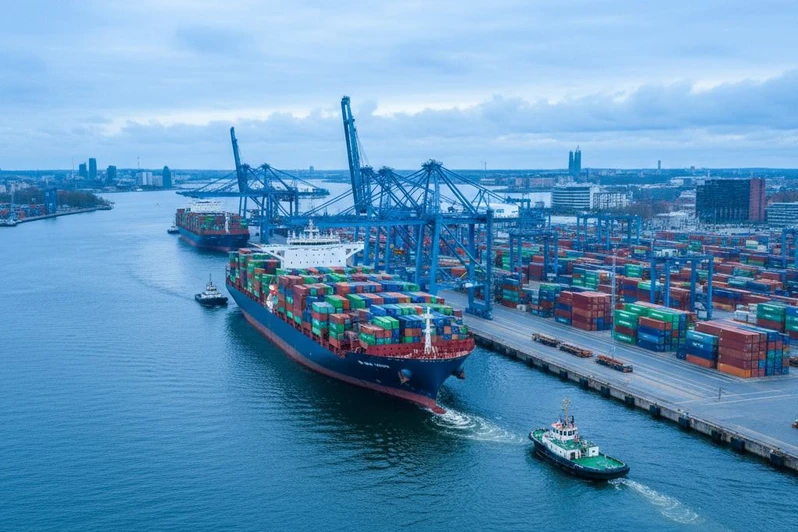
Sea Freight Ecuador to UK
For larger shipments and cost effective transportation, our sea freight services provide dependable shipping
solutions between Ecuador and the UK.
We arrange cargo movements through the ports of Guayaquil and Manta, Ecuador's main commercial ports,
connecting with major UK and European ports via transatlantic shipping lanes.
Our sea freight services include:

  • Full Container Load (FCL)
  • Port to port shipping
  • Customs documentation
  • Project cargo
  • Less than Container Load (LCL)
  • Door to door logistics
  • Cargo insurance
  • Oversized and heavy lift shipments

Whether shipping fresh produce, consumer goods, machinery, electronics, project cargo or oversized equipment, we can tailor a sea freight solution to suit your budget and transit requirements for Ecuador sea cargo.
Logistics solutions
Import from Ecuador to the UK
Intercargo helps UK businesses import products and cargo from Ecuador through a fully managed freight forwarding
service.
Our import services include:

  • Supplier coordination
  • Air freight transportation
  • Duty and VAT guidance
  • Final delivery throughout the UK
  • Collection from Ecuadorian businesses, warehouses and commercial premises
  • UK customs clearance
  • Warehousing and distribution

We regularly support imports including:

  • Seafood and lobster
  • Salt and aragonite
  • Rum and beverages
  • Petroleum products
  • Machinery and equipment
  • Textiles and clothing
  • Project cargo
  • Tropical produce

Our experienced team ensures your cargo moves efficiently from Ecuador to the UK while remaining compliant with all customs and import requirements.
Logistics solutions
Export from the UK to Ecuador
We also help UK businesses export goods to customers, distributors and partners throughout Ecuador.
Whether shipping to Quito, Guayaquil or other major Ecuadorian destinations, our export specialists can arrange a
seamless freight solution by air and sea.
Our export services include:

  • Air freight exports
  • Export documentation
  • Cargo insurance
  • Commercial and industrial shipments
  • Sea freight exports
  • Customs compliance
  • Door to door delivery

From single shipments to regular freight movements, we provide scalable logistics solutions designed around your business requirements for Ecuador exports.
Logistics solutions
Customs Clearance & Freight Forwarding
Successful international shipping depends on accurate customs documentation and compliance.
Intercargo provides:

  • Import customs clearance
  • Commodity code guidance
  • Duty and tax assistance
  • End to end shipment visibility
  • Export customs clearance
  • Shipping documentation
  • Freight forwarding management

Our experienced freight forwarding team helps minimise delays and keeps your cargo moving smoothly between Ecuador and the United Kingdom.
Logistics solutions
Why Choose Intercargo for Ecuador Freight?
We support importers, exporters, manufacturers, distributors, retailers and e-commerce businesses moving cargo between Ecuador and the UK.
Ecuador Air And Sea Freight Specialists
Uk And Ecuador Trade Lane Expertise
Ecuador Import And Export Solutions
Ecuador Customs Clearance Support
Door To Door Logistics
Dedicated Account Management
Global Carrier Network
Competitive Freight Rates
Get a Ecuador Freight Quote

Looking for air freight from Ecuador to the UK, sea freight from Ecuador to the UK, or export services from the UK to Ecuador?
Contact Intercargo today for a tailored freight forwarding quotation and expert advice on the most efficient air and sea shipping solution for your cargo.
Logistics solutions
Latest News & Updates

Cargo owners will foot the bill for IMO net-zero framework, warns FMC chair

Maritime decarbonisation costs will ultimately be passed on to cargo owners under the present structuring of the proposed IMO Net-Zero Framework, according to the Federal Maritime Commission's (FMC) chair Laura Di Bella. With industry leaders backing her assessment, Ms Di Bella said the competitive nature of shipping would see additional compliance expenses eventually fed through to cargo owners, with ongoing regulatory uncertainty already forcing costs up. When asked precisely how much of the IMO Framework's estimated cost - which could be anywhere from $50bn-$260bn - would be passed on to shippers, Ms Di Bella told The Loadstar, "a very large percentage of it". "Shippers are hit with so many pass-through expenses. We're constantly looking at all of the ways to tamp down any sort of inflationary measures, be it fuel surcharges or any surcharges, but what makes us think that this isn't going to be treated the same way?" she explained. Managing director of OceanScore Albrecht Grell agreed that the financial burden would ultimately be shouldered by cargo owners, arguing that shipping companies would seek to recover additional expenses through their commercial arrangements. "Shipping is highly competitive - any cost will eventually be passed on to the cargo owners," Mr Grell told The Loadstar, before warning that the redistribution of costs will not affect all shipping companies equally. He said those able to adapt more effectively to the changing regulatory and operational environment would be able to pass on a higher share of their compliance expenses, adding "the profit pool will not change but be redistributed within the industry". Similarly, zero44 co-founder and managing director Friederike Hesse told The Loadstar uncertainty surrounding the regulatory framework is itself creating additional costs for the industry, as companies factor potential risks into their commercial decisions. "Uncertainty is a cost too, companies price in risk premiums, put their eggs in multiple baskets instead of focusing investments, add contractual buffers and spend more on legal and administrative work, and that ends up in freight rates," Ms Hesse said. She added that this financial burden is then distributed through charter contracts, with responsibility depending on which party controls the operational decisions affecting fuel consumption and emissions. "Whoever controls speed, route and fuel consumption pays for the emissions. Under time charters that is usually the charterer; under voyage charters it is priced into the freight. Cargo owners and consumers pay their share through rates and surcharges." Reiterating that the cost of transitioning could be anywhere between $50bn-$260bn, Ms Di Bella said there were clear questions as to whether the infrastructure required for it had been properly accounted for in discussions surrounding the framework. Pointing to an infrastructure study commissioned by the IMO in April, which Ms Di Bella said has not yet been completed, she called for clearer understanding of the investment required before moving ahead. "There is no infrastructure to support many of these alternative fuels. LNG is probably the closest that we have. So, we need to know what is it going to cost to get there? And then we work backwards." But Ms Hesse warned delaying emissions reductions would not cut decarbonisation's eventual costs and could make the transition more expensive by leaving companies with less time to prepare through investment in vessels, fuels and infrastructure. "Postponing cuts now does not make them disappear, it means much steeper targets later, at a point when companies will not have had time to prepare through early investment in ships, fuels and infrastructure," she added.

Source: theloadstar.com

Read more

Astral partners with Zeal to launch India-Kenya 767 freighter route

Kenyan cargo airline Astral Aviation has partnered with Indian general sales agent (GSA) Zeal Global Corp to launch a Boeing 767 freighter service between Navi Mumbai International in India and Jomo Kenyatta International in Nairobi, Kenya. The partnership will see Astral Aviation operate one of its 767 passenger-to-freighter (P2F) aircraft on the route twice weekly, according to a press release supplied via PNN - Primex News Network and first reported by The Economic Times of India. Zeal, Astral Aviation's appointed GSA in India, will lead cargo sales, commercial representation, customer engagement and market development for the service. The dedicated route between India and Kenya will support demand for cargo including pharma and healthcare, perishables e-commerce, machinery and express. Sanjeev Gadhia, founder and chief executive of Astral Aviation, commented: "India and Africa have enjoyed centuries of trade, cultural and economic relations, yet direct air cargo connectivity between our two regions remains significantly underserved. "We are delighted to announce our twice-weekly Boeing 767 freighter service from Navi Mumbai to Nairobi, which will provide Indian exporters and freight forwarders with a dedicated air cargo gateway to more than 50 destinations across Africa. "Our objective is to bridge the connectivity gap between India and Africa by offering reliable, efficient and competitive airfreight solutions, particularly for pharmaceuticals, e-commerce, engineering goods and other time-sensitive commodities." He added that Astral's partnership with Zeal will be important in developing relationships with freight forwarders and shippers across the Indian market. Nipun Anand, founder and director of Zeal Global, commented: "Africa represents an important and growing market for Indian exporters, particularly in pharmaceuticals, healthcare, e-commerce and industrial products. "This service is more than just a new air cargo connection; it represents an important step towards building a stronger and more efficient India-Africa trade corridor. "By combining Astral Aviation's extensive African network with Zeal Global's commercial expertise and relationships across the Indian air cargo industry, we aim to create new opportunities for businesses on both continents."

Source: aircargonews.net

Read more

Green shipping needs global, rather than costlier regional, rules

Surrendering the governance of maritime decarbonisation to fragmented and regional regulations could ultimately prove more expensive for the industry than a globally agreed framework, according to US Federal Maritime Commission chair Laura Di Bella. Speaking to The Loadstar on the sidelines of the IMO's Marine Environment Protection Committee (MEPC) in London this week, Ms Di Bella said the US was seeking a global agreement on the IMO's proposed Net-Zero Framework. She added: "The regional schemes will ultimately be more costly than something done on a global level. It is harmful, and I believe it when industry says it's going to be more costly." That belief stems from feedback the FMC has been gathering from industry participants, with the message very much stating that regulatory fragmentation would increase costs for shipping businesses. Noting that the US was "approaching the negotiations in good faith" and wants to reach a global agreement, Ms Di Bella, nonetheless, warned disagreements over the proposed framework's economic element remained a significant obstacle to reaching a consensus. Under the proposal, ships that exceed fuel-intensity limits would be charged, with the money going into an emissions pricing and revenue-recycling mechanism that would reward zero-emission fuels. However, the FMC chair said the mechanism was overshadowing discussions about greenhouse gas reductions, adding that "the economic element needs its own separate discussion, and then [so are] the GHG measures". For the US to accede the agreement, Ms Di Bella said, it would need to fit four principal requirements: no economic element; a fuel-agnostic approach; technology neutrality; and clarification over the treatment of emissions trading schemes (ETS). On the latter, she said the US did not consider the prospect of receiving credits under a future scheme sufficient, calling for the removal of the existing ETS to avoid what she considers "double taxation". "We are continuing to engage with the other participants in an effort to bridge these differences, but we believe the economic element has come to dominate at the expense of the environment," noted Ms Di Bella. "We need negotiations to be focused on the environmental element. For this reason, if we are to see any progress, the ETS needs to go. It presents an opportunity to not only tax much, which is an issue we have, but then a second time. You cannot have both."

Source: theloadstar.com

Read more

Privacy Preference Center

This website uses cookies and similar technologies, (hereafter “technologies”), which enable us, for example, to determine how frequently our internet pages are visited, the number of visitors, to configure our offers for maximum convenience and efficiency and to support our marketing efforts. These technologies incorporate data transfers to third-party providers based in countries without an adequate level of data protection (e. g. United States). For further information, including the processing of data by third-party providers and the possibility of revoking your consent at any time, please see your settings under “Consent Preferences” and our Privacy Notice.


Manage Consent Preferences
Strictly Necessary Cookies
Always Active

Performance Cookies

Functional Cookies

Targeting Cookies