NSR vs Suez: the Arctic is not a tradelane, it's a corridor with a hefty premium
Two sets of numbers have landed in the same week.
On 19 October, data from Norway's Centre for High North Logistics (CHNL) showed 104 ships had crossed Russia's Northern Sea Route (NSR) by 30 September, already more than in all of 2025.
Four days earlier, Lloyd's List Intelligence reported that containerships moved 2.19m teu through the Suez Canal last month, the most since the Houthi campaign began, and Linerlytica expects carriers to be fully back to Suez by the first quarter of 2027.
Most coverage reads the first as proof that the Arctic is finally opening, but read together, they say something else: the part of the NSR Moscow planned and paid for has missed its targets by a wide margin, while the part it barely planned for has beaten them, because other people's chokepoints closed.
Next summer will be the first test of what that growth is worth once they reopen.
A plan that fell short
In May 2018, Vladimir Putin set a target of 80m tonnes of NSR cargo a year by 2024. A 2022 development plan, costed at about RUB1.8trn ($29.7bn), kept that goal and added 150m tonnes for 2030. The route carried 37.9m tonnes in 2024 and 37m tonnes in 2025, its first fall since 2022. Rosatom expects about 40m tonnes this year - half the 2024 target, two years late.
Almost all of it is Russian cargo from Russian ports, mainly Yamal LNG (21.3m tonnes in 2025) and crude from the Ob Gulf and Pechora Sea (7.8m tonnes). Growth was meant to come from Arctic LNG 2 and Rosneft's Vostok Oil. Sanctions crippled the first; the second is years behind.
The "Polar Silk Road" did not make it into the outline of the 15th Five-Year Plan, approved on 12 March this year. It isn't that the NSR is missing from an Arctic section; the Arctic silk road itself is absent.
Even the 14th Five-Year Plan (2021-25), which did include the concept, stated only the aim to "take part in practical Arctic cooperation and build the Ice Silk Road". The route was always implied, not named.
The transit surprise
Transit cargo, the part foreign shippers care about, tells the opposite story. Russian officials once projected 1m tonnes in 2024 and 2m tonnes in 2030. CHNL estimates 3.7m tonnes was actually carried in the first nine months of 2026 alone.
Look inside it: 22 tankers carried about 2.1m tonnes of crude east from Murmansk, Primorsk, and Ust-Luga. In 2024, 95% of transit cargo went from Russia to China. This is less an Asia-Europe shortcut than a sanctions-era export lane that avoids Baltic inspections, Black Sea drones, and the Red Sea.
Containers a footnote
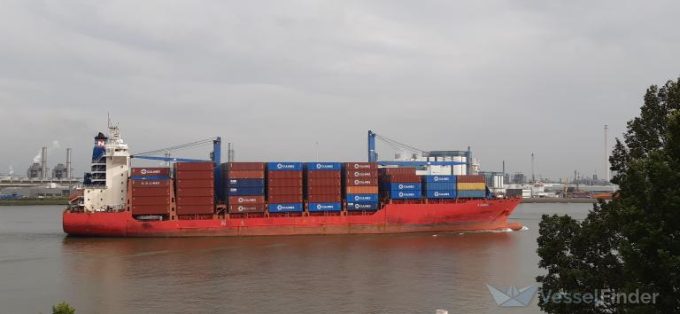
By 30 September, CHNL counted four voyages linking Asia and Europe, with no Russian port at either end. Sea Legend's China-Europe Arctic Express completed eight sailings on seven ships of 1,500 to 4,900 teu, the last two leaving China early, on 27 September, because ice was forecast. Ningbo Customs says they carried 7,761 teu; other reports claim more than 14,000 teu, against about 15,700 teu offered.
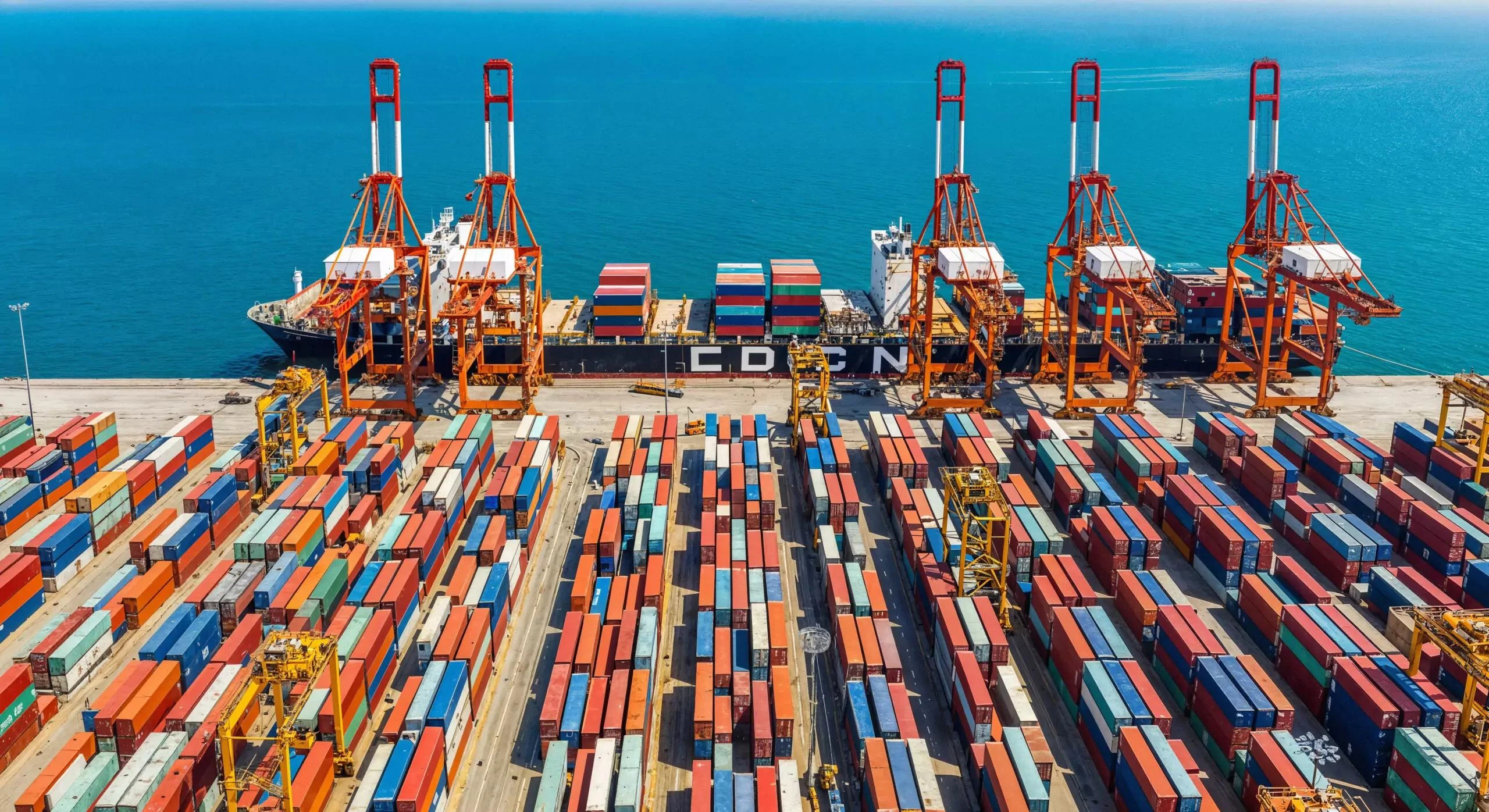
Whatever the final figure, it is clear the season moved less than one 24,000 teu ship carries on a single Suez sailing.
Physical limits unchanged
About 12.5 metres of draught in the Sannikov Strait caps containerships at roughly 5,000 teu, while ships without high ice-class have a three-month window, in a good year. Every voyage needs a permit from Rosatom's NSR Administration, which also sets the route and the escort.
I costed the loop the way a carrier's network team would: a 4,900 teu ship, eight seasonal sailings, west through the Arctic and back via Suez. At October charter and bunker prices and half-full ships, a slot costs about twice a Suez slot, despite a shorter distance of 2,200 nautical miles. Per slot per day, a 4,900 teu ship costs nearly three times as much to charter as a 24,000 teu vessel.
The escort adds $150,000-$280,000 a transit, and Chinese sources put Arctic hull and P&I cover at three to five times normal rates. If the higher volume claim is right and the ships sailed nearly full, the gap narrows, but does not close. The carbon case fails too: small, part-loaded ships at 18 knots emit more CO₂ per box than a Suez ULCV.
Shippers paying that premium are buying neither speed nor lower emissions. They are buying a corridor the Houthis, Iran, and the US Navy cannot close. Only Russia can, since it issues the permits and runs the icebreakers.
Who pays?
The price is low because Moscow keeps it low. Escort tariffs were capped in roubles in 2014, so their dollar value has more than halved, and about half of the icebreaker programme is funded from the federal budget. The Far East ministry says escorting one ship now costs about RUB60m, against RUB16m a decade ago. A new tariff order is in draft, and in September the transport ministry proposed a per-tonne levy on Russian exporters to fund two more icebreakers.
The bill is being moved around; it has not gone away. The delivery schedule of 120MW Rossiya - a nuclear-powered tug, and flagship of the year-round promise which is expected to be break ice up to four metres thick and create a 50-metre wide channel - has slipped from 2027 to the end of 2029.
Western carriers will not fill the gap. Atomflot has been under US sanctions since 2023, and MSC, CMA CGM, and Hapag-Lloyd have pledged not to use Arctic routes. Cosco has stayed out since 2022, leaving the risk to private operators such as Sea Legend and NewNew Shipping.
The case for patience
The strongest counter-argument is that ice is retreating, Beijing is patient and transit has beaten every forecast, so the planners may have been wrong only about timing.
I am not convinced. Transit grew in exactly the years the Red Sea was shut, Hormuz was fought over, and Russia's westbound exports were blocked. Those are shocks, not trends. With Hormuz still contested, the eastbound crude may hold up for a while. The battery and EV boxes are another matter. Once Asia-North Europe strings are back on weekly Suez rotations with 24,000 teu ships, a Chinese exporter will be offered a cheaper, year-round, sanctions-free alternative.
Next season will tell us: whether Sea Legend can fill its NSR ships with Suez in use; what Russia's new tariff will cost for foreign transits; and whether Cosco comes back, which would mean Beijing judges the sanctions-risk worth taking.
Until then, the NSR is not a tradelane. It is an insurance policy that Russia writes and Russia underwrites, and which China buys only when the other routes are on fire.