Air cargo e-commerce growth flatlines in July
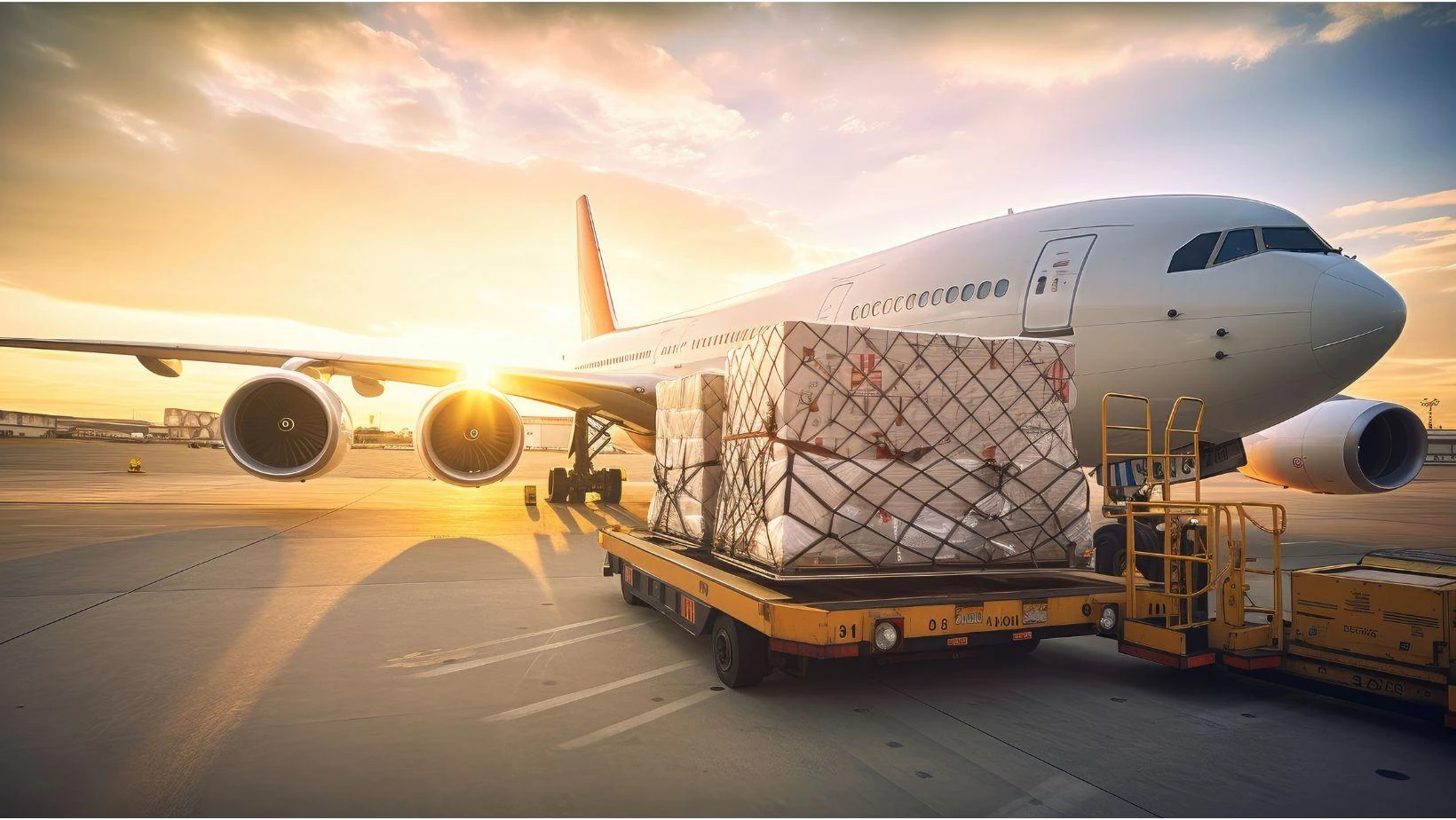
Air cargo e-commerce shipment volume growth flatlined in July as the European Union's (EU) new small package import charge took effect. Speaking at this week's EU cross-border e-commerce forum in Liege, Ryan Keyrouse, chief executive of consultant and data provider Rotate, examined how e-commerce demand growth had changed over the past two years. The most recent development, the EU's introduction of a €3 charge for packages worth less than €150, had seen e-commerce year-on-year volume growth come to a halt as of July 2026. Indeed, e-commerce demand from China to Europe fell 24% in July to 112,000 tonnes compared with a month earlier. Keyrouse said that in response to the new EU charge, carriers had reacted by reducing freighter capacity on the China/Hong Kong-Europe trade by around 28% over the same time frame. Air China Cargo had cut 25 weekly flights to Europe to bring its weekly total to 35 flights per week, China Central Airlines had reduced from 30 to 20 flights per week, SF Express had gone from 20 weekly flights to 10 and CMA CGM had reduced from 12 to three flights, Rotate research showed. However, the July reduction in flying may also have been influenced by some front-loading ahead of the regulatory change. Looking at the impact on airports, Keyrouse said that declines are concentrated in e-commerce gateways such as Budapest, Liege, Urumqi and Hong Kong. Rotate figures show that direct China/Hong Kong to Europe freighter capacity between 1-21 June and 1-21 August fell by 58% to Budapest, 35% to Liege, 28% to Schiphol, 20% to East Midlands, 16% to Frankfurt and 15% to Milan. On the outbound side, direct European freighter capacity over the period from Urumqi was down 72%, Beijing 43%, Zhengzhou 38%, Ezhou 51%, Chongqing 38% and Hong Kong 28%. However, Keyrouse pointed out that e-commerce volumes to the US and Brazil have now recovered since they removed their de minimis exemptions for low-value packages in May 2025 and August 2024, respectively. Meanwhile, e-commerce volumes on a global basis increased by 23% to 295,000 tonnes in July 2026 compared with two years earlier, showing the underlying strength of the vertical.
Source: aircargonews.net
Read more
No expectations of an imminent EU ecommerce rebound
Global ecommerce air cargo growth has flattened this year following a surge in capacity and regulatory intervention, delegates at the EU CBEC ecommerce forum in Liege heard today. Speaking at the forum, CEO of Rotate Ryan Keyrouse said ecommerce volumes had grown 23% since 2024 but were now flat. Mr Keyrouse noted that political intervention has emerged as the biggest threat - something industry respondents had already identified as the leading risk two years ago in a Rotate survey. "Politically marketed policies. That definitely happened," he said, pointing to the recent de minimis measures introduced in Europe and the US. Rotate highlighted the impact of the EU's regulatory changes that became apparent in July, shorty after their introduction. That month witnessed 24% decline in ecommerce volumes, alongside a 28% fall in freighter capacity to Europe. Mr Keyrouse illustrated that this is the equivalent of around 5,000 freighter flights a year having disappeared from the market. He revelaed that these capacity reductions have been unevenly distributed, creating winners and losers among European gateways. EU ecommerce gateways such as Liège, Amsterdam and Budapest all suffered significant declines, with Budapest's capacity falling by almost 60% between June and August. "We didn't really see that capacity out of China be redistributed elsewhere," Mr Keyrouse commented. Instead, the reduction has largely come through lower utilisation and the parking of older, converted freighters, particularly less fuel-efficient aircraft. Rotate's latest sentiment survey, based on more than 100 industry responses, found most respondents did not expect European ecommerce volumes to rebound immediately after the summer. "The answer is not for another six months," Mr Keyrouse said. Others believe the market will settle into a permanent but stable decline, while only a minority expect an immediate recovery. Any displaced ecommerce demand is nevertheless expected to find new markets, with respondents identifying Latin America and the Middle East and Africa as the most likely areas for future growth, although Southeast Asia and non-EU European markets also featured. However, ecommerce is not the only major growth engine for air cargo. Technology and AI-related hardware have expanded rapidly, with cloud computing, computers and semiconductors driving demand. Outside China, technology-related goods now account for 68% of Asia-Pacific exports, according to Rotate, reflecting the acceleration of the "China plus one" manufacturing strategy. Overall, Rotate forecasts total air cargo demand will grow 3% over the next 12 months, broadly in line with projected capacity growth of 3.3%.
Source: theloadstar.com
Read more
New US sanctions 'a warning to anyone supporting Iran's airlines'
Supply chain operatives active in the Middle East could find themselves exposed to new US sanctions against the Iranian aviation sector, with the threat of increasing delays in cargo processing also on the cards. Amid increasing its military activity against Iranian targets, the Trump administration yesterday issued 36 sanctions targeting not only Iranian aviation, but companies considered to be supporting it, with Turkish, Malaysian, and Emirati firms explicitly listed. US treasury secretary Scott Bessent said: "We promised severe consequences for those providing financial lifelines to the Iranian regime. Let this be a warning to anyone doing business with Iran's remaining airlines: you are at risk of being cut off from the global financial system." Going after third-country firms supporting the activity of sanctioned Mahan Air, for example, is something of a step-change in the US approach, with Washington paying particularly close attention to those providing aircraft transfers, cargo services, or GSSA support. Worryingly for businesses, operating through the Office of Foreign Assets Control (OFAC) the sanctions announcement exposes businesses to possible repercussions even if they have unwittingly supported Iranian aviation, if it is deemed they "should have known". The treasury also noted that its Financial Crimes Enforcement Network (FinCEN) would be "highlighting several key red flag indicators to help detect, prevent, and report potentially suspicious activity". Forwarders handling parts and maintenance materials to countries neighbouring Iran will need to carry out more stringent compliance checks to make sure they are not ultimately servicing sanctioned Iranian airlines. If a shipment listed for a UAE-based company ends up with one of the sanctioned carriers, OFAC will ask whether the forwarder "should have known" this was a procurement front for the Iranian airline before deciding how to act. With previous sanctions, SME forwarders have often found themselves caught in a balancing act between the cost of compliance and the risk of the getting it wrong, which led them to opt out of potentially exposed markets rather than continue. Miad Maleki, ,former senior treasury official and fellow at the Foundation for Defense of Democracies, said the suspension would hit major airfreight hubs, including Doha, Dubai, and Istanbul, leaving forwarders with yet another conundrum from the US war on Iran. Kuehne+Nagel (K+N) subsidiary Apex Logistics recently found itself in hot water with the US authorities, the Singapore-based firm being investigated over suspicions it has been defying US sanctions on China by supplying the country with restricted AI chips. Despite K+N telling The Loadstar it had not been contacted by US authorities and that Apex was cooperating in the investigation, it said this and the new sanctions on Iran pointed to "a more hawkish approach" from Washington on sanctions policing.
Source: theloadstar.com
Read more
This website uses cookies and similar technologies, (hereafter “technologies”), which enable us, for example, to determine how frequently our internet pages are visited, the number of visitors, to configure our offers for maximum convenience and efficiency and to support our marketing efforts. These technologies incorporate data transfers to third-party providers based in countries without an adequate level of data protection (e. g. United States). For further information, including the processing of data by third-party providers and the possibility of revoking your consent at any time, please see your settings under “Consent Preferences” and our