We understand the ever changing needs of our customers

we provide a high level of service dedicated to fulfilling all your shipping requirements

Watch Video
Road Freight

Keep all your data in one place which can be accessed from anywhere and anyplace

Let us help you 24/7 manage your supply chain needs

Back to Global Coverage

Comoros Freight Forwarding Services
Air and Sea Freight Between Comoros and the UK

Intercargo provides freight forwarding services between Comoros and the United Kingdom, helping businesses import and export cargo by air and sea freight. As an island nation in the Indian Ocean, Comoros relies on both air and sea freight for international trade.

Whether you are importing goods from Comoros into the UK, exporting products from the UK to Comoros, or managing international shipments, our freight forwarding team helps plan air and sea freight with careful route planning, carrier screening, customs support, and customs compliance. We coordinate airport-to-airport, port-to-door and door-to-door services, and our team can help manage lead times and service availability based on carrier availability and customs requirements.
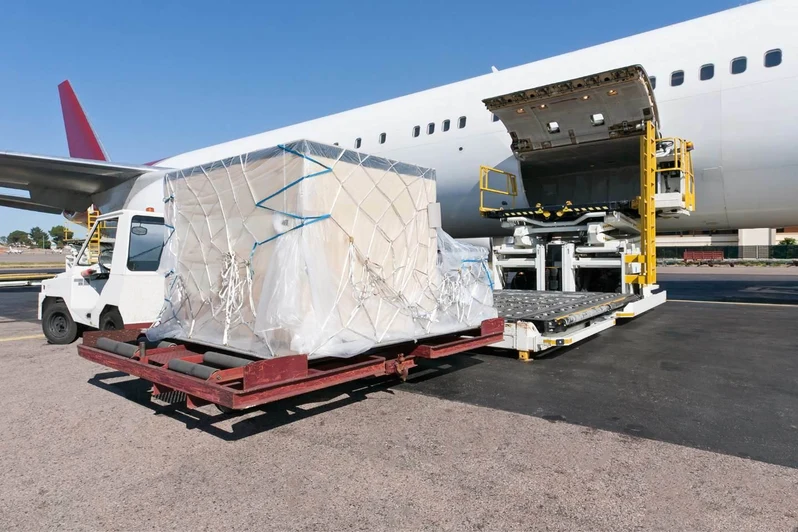
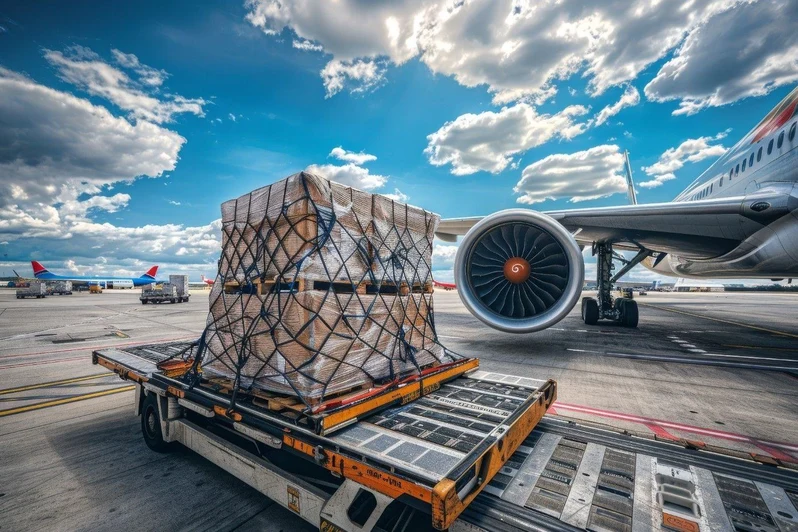
Air Freight Comoros to UK
When speed matters, our Comoros air freight services provide fast, secure and reliable transportation between Comoros and the United Kingdom.
We arrange air freight from Prince Said Ibrahim International Airport (HAH) in Moroni with onward connections to the UK through London Heathrow, London Stansted, London Luton, Manchester Airport and Birmingham Airport. Our team can help manage lead times and service availability based on carrier availability and customs requirements.
Our air freight solutions include:

  • Air freight from Comoros to the UK
  • Air freight from the UK to Comoros
  • Express and economy air cargo
  • Airport to airport services
  • Door to door delivery
  • Customs clearance support
  • Time critical shipments
  • High value and commercial cargo

Whether you need urgent delivery of vanilla, essential oils, spices, agricultural products or commercial goods, our air freight specialists can help plan the most efficient solution for your shipment.
Logistics solutions
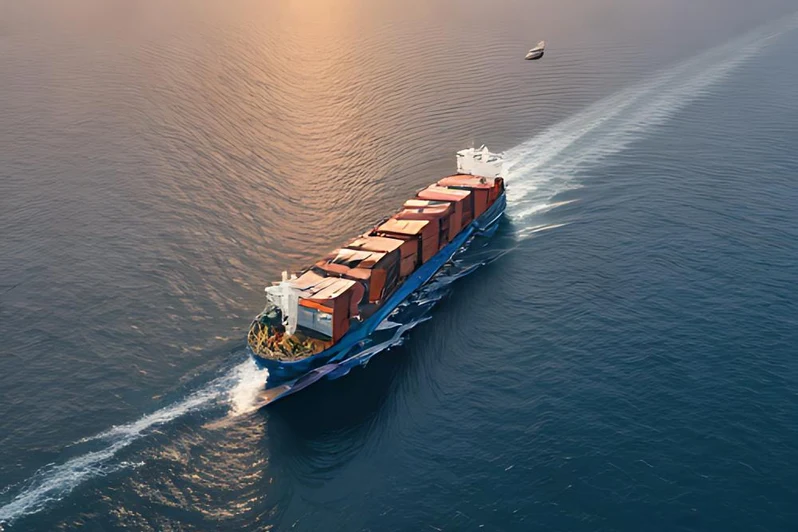
Sea Freight Comoros to UK
For larger volumes, our sea freight services provide shipping solutions between Comoros and the UK.
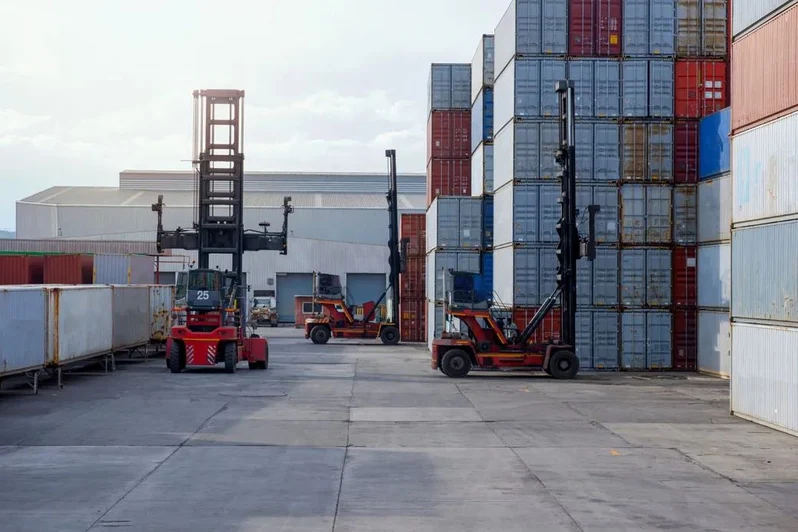
Sea freight from Comoros typically departs from the Port of Moroni or the Port of Mutsamudu, with onward connections to the UK through Felixstowe, Southampton, or other major ports. Our team can help manage lead times and service availability based on carrier availability and customs requirements.
Our sea freight services include:

  • FCL and LCL sea freight
  • Transshipment via regional hub ports
  • Port to port and door to door options
  • Customs clearance support
  • Duty and tax guidance
  • Prior shipment approval checks
  • Carrier screening and route planning
  • End to end shipment visibility

Whether shipping vanilla, cloves, ylang ylang oil, copra, cinnamon, spices, essential oils, agricultural produce or commercial goods, our sea freight specialists can help plan the most efficient solution for your shipment.
Logistics solutions
Import from Comoros to the UK
Intercargo helps UK businesses import products and cargo from Comoros through a fully managed freight forwarding service.
Our import services include:

  • Supplier coordination
  • Collection from Comorian businesses, warehouses and commercial premises
  • Air and sea freight transportation
  • Final delivery throughout the UK
  • UK customs clearance
  • Duty and VAT guidance
  • Warehousing and distribution

We regularly support imports including Comorian goods:

  • Vanilla and vanilla products
  • Cloves and clove oil
  • Ylang ylang essential oil
  • Copra and coconut products
  • Cinnamon and spices
  • Essential oils and perfume ingredients
  • Tropical fruits and agricultural goods

Our experienced team ensures your cargo moves efficiently from Comoros to the UK while remaining compliant with all customs and import requirements.
Logistics solutions
Export from the UK to Comoros
We also help UK businesses export goods to customers, distributors and partners throughout Comoros.
Whether shipping to Moroni, Mutsamudu, Fomboni or other destinations, our export specialists can arrange freight solutions by air or sea freight. Our team can help manage lead times and service availability based on carrier availability and customs requirements.
Our export services include:

  • Air freight exports
  • Sea freight exports
  • Export documentation
  • Customs compliance
  • Cargo insurance
  • Door to door delivery
  • Commercial and industrial shipments

From single shipments to regular freight movements, we provide scalable logistics solutions designed around your business requirements.
Logistics solutions
Customs Clearance & Comoros Freight Forwarding
Successful international shipping between Comoros and the UK depends on accurate customs documentation, compliance, carrier screening, and customs compliance.
Intercargo provides:

  • Import customs clearance
  • Export customs clearance
  • Commodity code guidance
  • Shipping documentation
  • Duty and tax assistance
  • Freight forwarding management
  • End to end shipment visibility

Our experienced freight forwarding team helps minimise delays and keeps your cargo moving smoothly between Comoros and the United Kingdom.
Logistics solutions
Why Choose Intercargo for Comoros Freight?
We support importers, exporters, manufacturers, distributors, retailers and e-commerce businesses moving cargo between Comoros and the UK, with careful route planning, carrier screening, customs support, and customs compliance.
Restricted Air And Sea Freight Specialists
Uk And Comoros Trade Lane Expertise
Import And Export Sea Freight Solutions
Customs Clearance Support
Door To Door Logistics
Dedicated Account Management
Global Carrier Network
Competitive Freight Rates
Get a Comoros Freight Quote

Looking for air freight from Comoros to the UK, sea freight from Comoros to the UK, or export services from the UK to Comoros?
Contact Intercargo today for a tailored freight forwarding quotation and expert advice on the most efficient shipping solution for your cargo.
Logistics solutions
Latest News & Updates

Final-mile costs rising faster than revenue, say hard-pressed carriers

The cost of final-mile delivery in the US has risen more than 10% over the past year, according to the Final Mile Delivery Index, published by logistics provider Geodis. It shows cost in Q3 up 10.5% on the same period in 2025, following a 10.6% year-on-year increase in the second quarter -more than three times the inflation rate of consumer prices, 3.2% in Q3, the index's authors pointed out. Since 2019 final-mile delivery prices have increased 49.8%, while consumer prices rose 30.8%. Inflation is hitting both shippers and carriers: the index shows 46% of delivery operators reported costs rising faster than revenue, while 42% reported cost and revenue rising at the same pace. Not surprisingly, the index identifies fuel as the biggest cost pressure, followed by driver cost and availability, vehicle operating costs, administration, plus compliance, inefficient routing, and drop density. While driver costs have been impacted by the decimation of the driver pool, due to Washington's crusade to eliminate non-domiciled drivers and those with insufficient command of English, compliance costs are largely tied to the rise in cargo crime. Although the number of reported incidents actually contracted from a year earlier, losses more than doubled, from about $135.7m in Q2 25 to $304.6m in the same period this year. This development has been attributed to the increased activity of organised crime in the transport sector. Whereas food, beverages, and groceries emerged as the most-affected sector, in terms of the number of incidents, the hi-tech industry (ranked third by number of incidents) led the rankings in severity of losses from crime. Theft of consumer electronics declined, but hi-tech hardware and crypto mining equipment emerged as top-tier targets for criminals. While organised crime has brought a higher level of sophistication to the heists on the final mile, the transport industry needs to do better in crime prevention; it has to take accountability and ownership, said Rob Greene, Geodis's EVP transportation, pointing to instruments that are available to prevent cargo theft. The higher impact of cargo crime is hitting carriers and brokers in their compliance costs, notably increased insurance premiums, which tend to be higher for high-value types of cargo. Carriers with general liability cover of $100,000-$150,000, let alone the minimum $75,000 cover required by the Federal Motor Carrier Safety Association, are not used by shippers of server racks for AI centres, Mr Greene noted. Such contracts typically carry rafts of exclusions, such as the use of secure locks, GPS on tractors and trailers, and clauses forbidding stops along the way. Carriers may also be required to run in convoys. These elements, plus the value of servers shipped and the size of the shipment, account for a large range of potential cost outcomes, both in terms of transport charges and insurance premiums, he said. Insurance costs have been pushed up further by the US Supreme Court's ruling that brokers can be held liable for negligence in cases where truckers assigned by them cause accidents. This has caused brokers to tighten their requirements for insurance coverage and financial security of the truckers they use. The travails of the large integrated carriers and their shift away from e-commerce, other than high-margin traffic, reflect the cost pressure on the final mile from crowd-sourced operations using gig drivers. Mr Greene said this did not make the latter model an automatic choice. While there is evidence suggesting that using gig drivers is more cost-effective per route, when cost of ownership and volume are taken into account, this works out better if they are used as a supplementary option; employed in a dedicated role is an option not as profitable as it was during Covid, he added. The index cites a survey by FarEye, which suggests 76% of delivery operators prioritise predictable delivery, whereas only 6% view the fastest possible delivery as the top priority. Besides offering a lid on cost, this could also have a positive impact on crime prevention. Mr Greene mentioned that Geodis employees were encouraged to slow down and check if they felt rushed by a potential client or business partner. Cost will continue to pressure supply chains next year 2027, according to the latest edition of the Supply Chain Navigator, produced by the Kearney Supply Chain Institute. This projects global costs to rise 2.7% or more by Q3 27, and its authors predict a broad range of variation by markets, with inflation in the US potentially as high as 5%, 3.1% in Germany, and 8.3% in India.

Source: theloadstar.com

Read more

Condor continues cargo investment with time-critical service

Condor is continuing to invest in its air cargo product portfolio with the launch of a new service targeting the movement of time-critical spare parts. The moveFirst solution is aimed at companies in the aviation, maritime, automotive, manufacturing and mechanical engineering sectors, where a missing component can have an immediate impact on operations. Shipments booked through the service receive priority, dedicated points of contact, digital booking options, dedicated operational coordination and proactive updates on key transport milestones. Thilo Schäfer, director of cargo at Condor, said: "With moveFIRST, Condor is adding a specialised solution for urgent spare parts shipments to its existing cargo portfolio. "The focus is not solely on speed of transport. By providing priority support throughout the transport process, we also aim to help limit the impact of missing components on ongoing operations and keep our customers in a position to act," The airline emphasised that "moveFIRST" is the product with the highest transport priority and receives "particularly close operational support to help ensure prompt delivery and minimise disruption to customers' operations". The additional service comes shortly after Condor rebranded its air cargo products as part of efforts to provide clarity on what each of the services provides and ahead of an expansion of products on offer. Under the new product structure, standard freight will be carried under JUSTmove product, while its pharma services will be known as moveCOOL, perishables will become moveFRESH and express services will be called moveFAST. Meanwhile, Condor launched its express product in May.

Source: aircargonews.net

Read more

Air cargo volumes forecast to grow 2-4% and rates to slide in 2027

Air cargo demand growth is expected to ease back next year, while rates are expected to fall as developments that boosted demand growth in 2026 continue to ease, according to Xeneta. The data provider and consultant said that next year air cargo demand was likely to grow by around 2-4% compared with the 5% registered so far in 2026. Xeneta chief airfreight officer Niall van de Wouw said that this year's demand growth had been driven by AI hardware, manufacturers building inventory against ongoing conflicts and ocean disruption that pushed volumes from sea to air. "Those boosts are likely to soften in 2027, so we expect demand growth of 2-4%, close to the pace of GDP," said van de Wouw. "Growth is also concentrated. The IMF expects it to come from fewer economies, with AI-hardware and energy exporters gaining while energy importers such as Europe lag. Air cargo will be just as uneven." Xeneta said that while AI would still be a growth engine for air cargo, it has "passed peak acceleration". "Month-on-month chip-sales growth peaked at about 11% in March-June and has eased to about 7%," it pointed out. Meanwhile, the e-commerce market is going through a period of reset. Xeneta pointed out that China's low-value exports are heading for their first annual fall since 2018 after Europe introduced a €3 duty per item. "Consumers are still buying, but platforms are changing how the goods arrive," Xeneta said. Meanwhile, ocean supply chains are continuing to return to normal, with half of pre-crisis Red Sea capacity now back after needing to divert around southern Africa due to the threat of Houthi missile attacks. Xeneta believes that if the Suez return continues, Asia-Europe cargo that moved to air for reliability, not speed, will start shifting back to sea from the second quarter, although it added that "a renewed Houthi threat would put that on hold for a third year". Rate and capacity predictions Meanwhile, Xeneta is expecting overall airfreight rates to fall by about 5-10% next year as supply outstrips demand. The consultant is expecting capacity to increase between 3-5% next year, although much of this is expected to be as a result of the easing of the Middle East conflict as opposed to new aircraft being added to the fleet. "Boeing's 777 freighter line has been halted by a supplier dispute; the 777-8F is now (at least) a 2029 aircraft, and Airbus's A350 freighter will not enter service before the end of 2027. "We expect fleet growth of a little over 3%, so anything above that has to come from the Gulf [as carriers return to the region as the conflict eases]. Where 2027 lands within our 3-5% range depends on whether a peace deal is reached early in the year and holds." The fall in rates will mostly fall in the second half of the year as Gulf capacity returns and fuel eases with it. "It will be more of a rate slide than a slump," Xeneta said. However, the consultant warns there will be variances depending on the trade lane in question. "Asia Pacific-North America is likely to keep more of its premium, because AI cargo is now part of the price of space," it said. "Shippers on Asia-Europe have more room to negotiate with forwarders than a year ago." Xeneta caveated that its prediction assumes no new shocks but added that recent history gives little reason for comfort. It pointed out that military conflicts, weather anomalies, and cyber attacks could all affect the market. "If the Middle East fails to recover, supply and demand grow in step, fuel stays high, and rates hold close to 2026 levels," Xeneta said. "We should stop calling these events black swans. They happen far too often to hold that title."

Source: aircargonews.net

Read more

Privacy Preference Center

This website uses cookies and similar technologies, (hereafter “technologies”), which enable us, for example, to determine how frequently our internet pages are visited, the number of visitors, to configure our offers for maximum convenience and efficiency and to support our marketing efforts. These technologies incorporate data transfers to third-party providers based in countries without an adequate level of data protection (e. g. United States). For further information, including the processing of data by third-party providers and the possibility of revoking your consent at any time, please see your settings under “Consent Preferences” and our Privacy Notice.


Manage Consent Preferences
Strictly Necessary Cookies
Always Active

Performance Cookies

Functional Cookies

Targeting Cookies