We understand the ever changing needs of our customers

we provide a high level of service dedicated to fulfilling all your shipping requirements

Watch Video
Road Freight

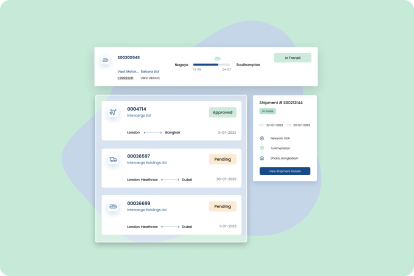
Keep all your data in one place which can be accessed from anywhere and anyplace

Let us help you 24/7 manage your supply chain needs

Back to Global Coverage

Cameroon Freight Forwarding Services
Air & Sea Freight Between Cameroon and the UK

Intercargo provides reliable freight forwarding services between Cameroon and the United Kingdom, helping businesses import and export cargo efficiently by air and sea.

Whether you are importing goods from Cameroon into the UK, exporting products from the UK to Cameroon, or managing regular international shipments, our experienced freight forwarding team provides complete end to end logistics solutions. From collection and customs clearance to final delivery, we manage every stage of the shipment process. Please note that carrier and security restrictions may apply to certain shipments involving Cameroon.
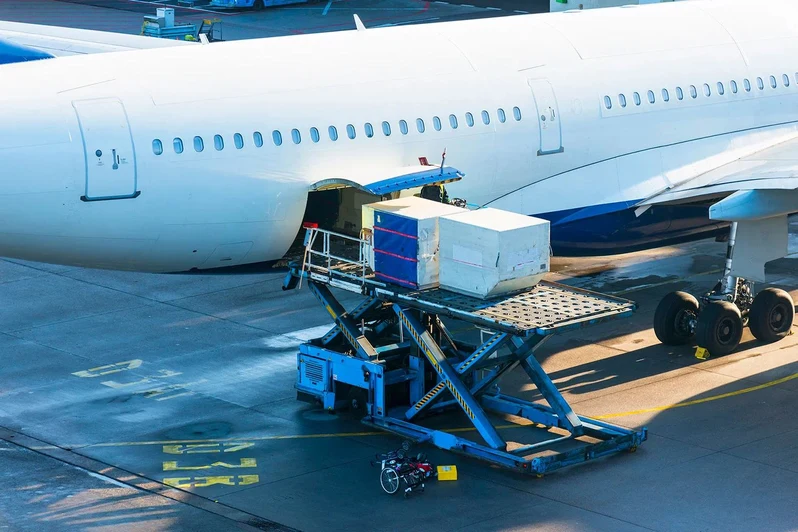
Air Freight Cameroon to UK
When speed matters, our Cameroon air freight services provide fast, secure and reliable transportation between Cameroon and the United Kingdom.
We arrange air freight through Douala International Airport (DLA) and Yaoundé Nsimalen International Airport (NSI), with UK arrivals through London Heathrow, London Stansted, London Luton, Manchester Airport and Birmingham Airport. Carrier and security restrictions may apply on certain routes.
Our air freight solutions include:

  • Air freight from Cameroon to the UK
  • Air freight from the UK to Cameroon
  • Express and economy air cargo
  • Airport to airport services
  • Door to door delivery
  • Customs clearance support
  • Time critical shipments
  • High value and commercial cargo

Whether you need urgent delivery of agricultural produce, cocoa, coffee, timber products, electronics, automotive parts or commercial goods, our air freight specialists can provide the most efficient solution for your shipment.
Logistics solutions
Sea Freight Cameroon to UK
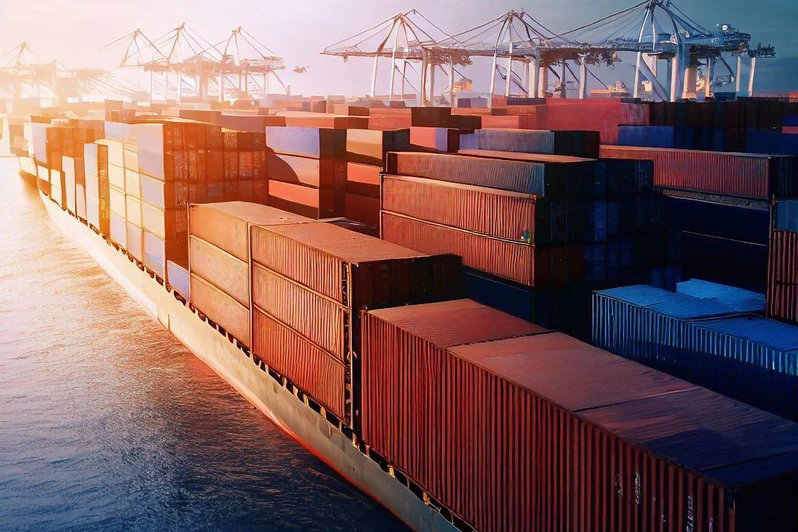
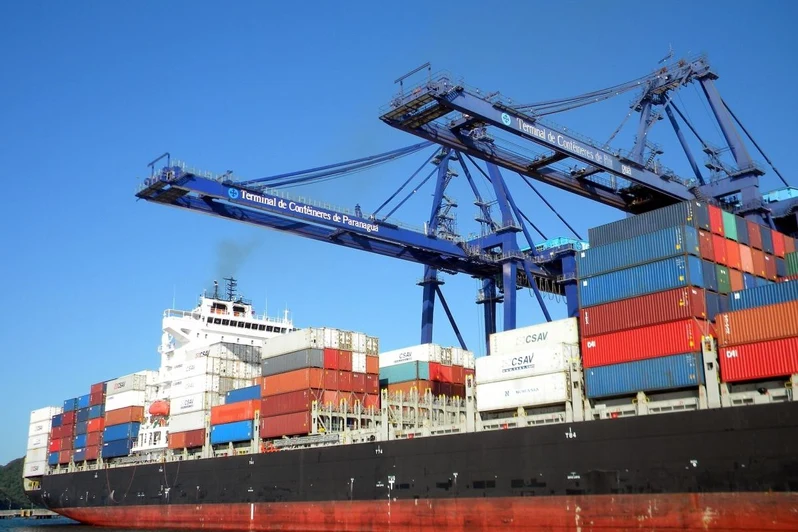
For regular and cost effective transportation, our sea freight services provide reliable ocean shipping solutions between Cameroon and the UK.
Sea freight from Cameroon travels via the Gulf of Guinea and the Atlantic Ocean, with UK arrivals through major ports such as Felixstowe, Southampton, Tilbury and Liverpool. Carrier and security restrictions may apply on certain routes.
Our sea freight services include:

  • Full Container Load (FCL)
  • Less than Container Load (LCL)
  • Scheduled and express sea freight
  • Door to door logistics
  • Customs documentation
  • Cargo insurance
  • Temperature controlled transport
  • Oversized and heavy load shipments

Whether shipping cocoa, coffee, timber, rubber, cotton, aluminium, crude oil, agricultural produce or commercial stock, we can tailor a sea freight solution to suit your budget and transit requirements.
Logistics solutions
Import from Cameroon to the UK
Intercargo helps UK businesses import products and cargo from Cameroon through a fully managed freight forwarding service.
Our import services include:

  • Supplier coordination
  • Collection from Cameroonian businesses, warehouses and commercial premises
  • Air and sea freight transportation
  • Final delivery throughout the UK
  • UK customs clearance
  • Duty and VAT guidance
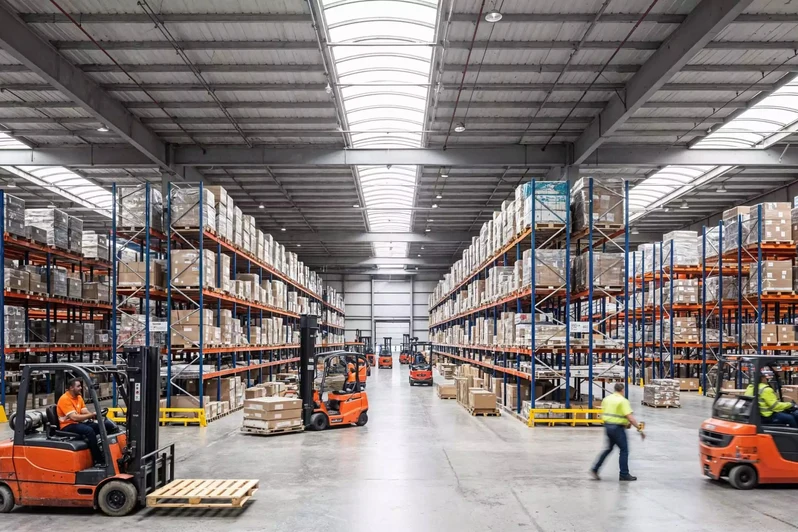
  • Warehousing and distribution

We regularly support imports including Cameroonian goods:

  • Cocoa and cocoa products
  • Coffee and tea
  • Timber and wood products
  • Rubber and rubber products
  • Cotton and textiles
  • Aluminium and metals
  • Crude oil and petroleum products

Our experienced team ensures your cargo moves efficiently from Cameroon to the UK while remaining compliant with all customs and import requirements.
Logistics solutions
Export from the UK to Cameroon
We also help UK businesses export goods to customers, distributors and partners throughout Cameroon.
Whether shipping to Douala, Yaoundé, Bamenda, Bafoussam, Limbé or other major Cameroonian destinations, our export specialists can arrange a seamless freight solution by air or sea.
Our export services include:

  • Air freight exports
  • Sea freight exports
  • Export documentation
  • Customs compliance
  • Cargo insurance
  • Door to door delivery
  • Commercial and industrial shipments

From single shipments to regular freight movements, we provide scalable logistics solutions designed around your business requirements.
Logistics solutions
Customs Clearance & Freight Forwarding
Successful international shipping depends on accurate customs documentation and compliance.
Intercargo provides:

  • Import customs clearance
  • Export customs clearance
  • Commodity code guidance
  • Shipping documentation
  • Duty and tax assistance
  • Freight forwarding management
  • End to end shipment visibility

Our experienced freight forwarding team helps minimise delays and keeps your cargo moving smoothly between Cameroon and the United Kingdom.
Logistics solutions
Why Choose Intercargo for Cameroon Freight?
We support importers, exporters, manufacturers, distributors, retailers and e commerce businesses moving cargo between Cameroon and the UK.
Air Freight And Sea Freight Specialists
Uk And Cameroon Trade Lane Expertise
Import And Export Solutions
Customs Clearance Support
Door To Door Logistics
Dedicated Account Management
Global Carrier Network
Competitive Freight Rates
Get a Cameroon Freight Quote

Looking for air freight from Cameroon to the UK, sea freight from Cameroon to the UK, or export services from the UK to Cameroon?
Contact Intercargo today for a tailored freight forwarding quotation and expert advice on the most efficient shipping solution for your cargo.
Logistics solutions
Latest News & Updates

Cargo benefits forgotten in Heathrow third runway setback

The UK Transport Committee has told ministers to "go back to the drawing board" before proceeding with plans to add a third runway at Heathrow after they failed to make the case for expansion. A Commons Select Committee report released today said that the draft Heathrow Expansion National Policy Statement (HENPS) must be strengthened and the full costs of building a third runway clarified before moving ahead with the proposed project. Responding, Logistics UK chief executive Ben Fletcher said the full benefits of additional freight capacity and potential for increased international trade must be reflected in its final economic assessment. "Air cargo capacity at this, the UK's primary hub airport, is currently constrained by a lack of runway access and, as we highlighted in our evidence to the committee, Heathrow expansion is central to resolving this issue," said Fletcher. "This is why it is essential that the economic contribution of airfreight is properly captured in the government's proposed national planning policy framework for Heathrow expansion. "We are confident that, if the full benefits for freight and trade are taken into account, the economic case for a third runway will be overwhelming." The trade body pointed out that Heathrow is the UK's biggest port in terms of value and a vital gateway for British businesses around the world, already handling over £200bn worth of cargo every year. "Increasing its capacity will strengthen those connections, boost trade and support the economic growth across the UK that we all want to see," said Fletcher. Transport Committee chair Ruth Cadbury said the government should have set out its overall strategy for aviation before publishing the draft HENPS. The committee's report found that the Department for Transport (DfT) did not give itself enough time to produce "the most complete economic analysis", and said the Climate Change Commission's conclusion in September that Heathrow expansion was incompatible with UK climate targets under the current policy framework provided a "damning verdict" which the government "cannot overlook". "Plans for a third runway should be grounded for now and the government should go back to the drawing board before proceeding any further," said Cadbury.

Source: aircargonews.net

Read more

Shipping faces more red tape and higher costs if MEPC 85 fails to deliver

Shipping faces additional regulatory burdens, higher freight costs, and prolonged uncertainty if governments fail to agree meaningful economic measures this month, warned maritime emissions specialists. Ahead of the International Maritime Organization (IMO) Marine Environment Protection Committee meeting (MEPC 85), in London from 30 November to 4 December, OceanScore MD Albrecht Grell warned that negotiations focusing on technical measures could undermine investment in cleaner fuels and vessels. "If only technical measures can be agreed, more measuring, tracking, and reporting work will be forced upon shipping without any real progress towards net-zero shipping," he told The Loadstar. "My concern is that the discussion increasingly centres around technical measures. Standalone, these are not helpful - think of CII," he added, referring to the IMO's Carbon Intensity Indicator. Mr Grell argued that economic measures were essential to stimulating investment in alternative-fuel production, fleet renewal, and fuel-ready vessels. He pointed to the impact of the EU Emissions Trading System (ETS) and FuelEU Maritime, which he estimated affected only around 30% of the global fleet. "A meaningful IMO Net-Zero Framework (NZF) could help to close that gap," he said. However, failure to agree economic measures could delay an effective IMO NFZ for a prolonged period, potentially encouraging more countries to introduce their own emissions regulations, he added. His comments follow a joint appeal from nine shipping associations, including BIMCO, the International Chamber of Shipping (ICS) and World Shipping Council (WSC), urging governments to establish a global greenhouse gas framework providing investment certainty and preventing overlapping regional requirements. Friederike Hesse, co-founder and MD of maritime emissions management specialist zero44, told The Loadstar that although IMO member states had become "more constructive", a final agreement was more likely in 2027 than at December's meeting. She highlighted that governments had previously converged on several principles, including prioritising emissions reductions, allowing ships to trade compliance surpluses and incentivising zero-emission fuels. However, disagreements remained over the ambition and duration of emissions targets and how revenues would be used. Ms Hesse warned that continued uncertainty would carry direct commercial consequences, adding: "Uncertainty itself is a cost. Companies price-in risk premiums, put their eggs in multiple baskets instead of focusing investments, add contractual buffers, and spend more on legal and administrative work - and that ends up in freight rates." She also warned that delaying emissions reductions would require steeper cuts later, potentially leaving fuel production and fleet renewal struggling to keep pace. "Postponing cuts doesn't make them disappear," she urged, warning that the resulting transition could become more expensive and risk disruption to global trade. For shipowners and fuel suppliers making investments over 20 to 30 years, regulatory uncertainty could discourage fuel offtake agreements and slow alternative-fuel production. Mr Grell argued that decarbonisation costs would ultimately fall on cargo owners, although operators' ability to adapt would determine the impact on profitability. "Shipping is highly competitive - any cost will eventually be passed on to the cargo owners," he said. "The profit pool will not change but be redistributed within the industry." Both experts warned against proliferating regional schemes without effective global regulation. Ms Hesse said this could concentrate alternative-fuel infrastructure around regulated markets, rather than global trade routes, while exposing operators to overlapping compliance obligations. Mr Grell agreed: "Nobody benefits from overlapping reporting regimes, admin layers and compliance efforts." According to Ms Hesse, regional measures such as the EU ETS should complement an eventual IMO framework, potentially recognising payments already made under global rules. "Whether regional schemes disappear entirely matters less than making sure no tonne of CO₂ is charged twice," she said.

Source: theloadstar.com

Read more

Cargo owners will foot the bill for IMO net-zero framework, warns FMC chair

Maritime decarbonisation costs will ultimately be passed on to cargo owners under the present structuring of the proposed IMO Net-Zero Framework, according to the Federal Maritime Commission's (FMC) chair Laura Di Bella. With industry leaders backing her assessment, Ms Di Bella said the competitive nature of shipping would see additional compliance expenses eventually fed through to cargo owners, with ongoing regulatory uncertainty already forcing costs up. When asked precisely how much of the IMO Framework's estimated cost - which could be anywhere from $50bn-$260bn - would be passed on to shippers, Ms Di Bella told The Loadstar, "a very large percentage of it". "Shippers are hit with so many pass-through expenses. We're constantly looking at all of the ways to tamp down any sort of inflationary measures, be it fuel surcharges or any surcharges, but what makes us think that this isn't going to be treated the same way?" she explained. Managing director of OceanScore Albrecht Grell agreed that the financial burden would ultimately be shouldered by cargo owners, arguing that shipping companies would seek to recover additional expenses through their commercial arrangements. "Shipping is highly competitive - any cost will eventually be passed on to the cargo owners," Mr Grell told The Loadstar, before warning that the redistribution of costs will not affect all shipping companies equally. He said those able to adapt more effectively to the changing regulatory and operational environment would be able to pass on a higher share of their compliance expenses, adding "the profit pool will not change but be redistributed within the industry". Similarly, zero44 co-founder and managing director Friederike Hesse told The Loadstar uncertainty surrounding the regulatory framework is itself creating additional costs for the industry, as companies factor potential risks into their commercial decisions. "Uncertainty is a cost too, companies price in risk premiums, put their eggs in multiple baskets instead of focusing investments, add contractual buffers and spend more on legal and administrative work, and that ends up in freight rates," Ms Hesse said. She added that this financial burden is then distributed through charter contracts, with responsibility depending on which party controls the operational decisions affecting fuel consumption and emissions. "Whoever controls speed, route and fuel consumption pays for the emissions. Under time charters that is usually the charterer; under voyage charters it is priced into the freight. Cargo owners and consumers pay their share through rates and surcharges." Reiterating that the cost of transitioning could be anywhere between $50bn-$260bn, Ms Di Bella said there were clear questions as to whether the infrastructure required for it had been properly accounted for in discussions surrounding the framework. Pointing to an infrastructure study commissioned by the IMO in April, which Ms Di Bella said has not yet been completed, she called for clearer understanding of the investment required before moving ahead. "There is no infrastructure to support many of these alternative fuels. LNG is probably the closest that we have. So, we need to know what is it going to cost to get there? And then we work backwards." But Ms Hesse warned delaying emissions reductions would not cut decarbonisation's eventual costs and could make the transition more expensive by leaving companies with less time to prepare through investment in vessels, fuels and infrastructure. "Postponing cuts now does not make them disappear, it means much steeper targets later, at a point when companies will not have had time to prepare through early investment in ships, fuels and infrastructure," she added.

Source: theloadstar.com

Read more

Privacy Preference Center

This website uses cookies and similar technologies, (hereafter “technologies”), which enable us, for example, to determine how frequently our internet pages are visited, the number of visitors, to configure our offers for maximum convenience and efficiency and to support our marketing efforts. These technologies incorporate data transfers to third-party providers based in countries without an adequate level of data protection (e. g. United States). For further information, including the processing of data by third-party providers and the possibility of revoking your consent at any time, please see your settings under “Consent Preferences” and our Privacy Notice.


Manage Consent Preferences
Strictly Necessary Cookies
Always Active

Performance Cookies

Functional Cookies

Targeting Cookies