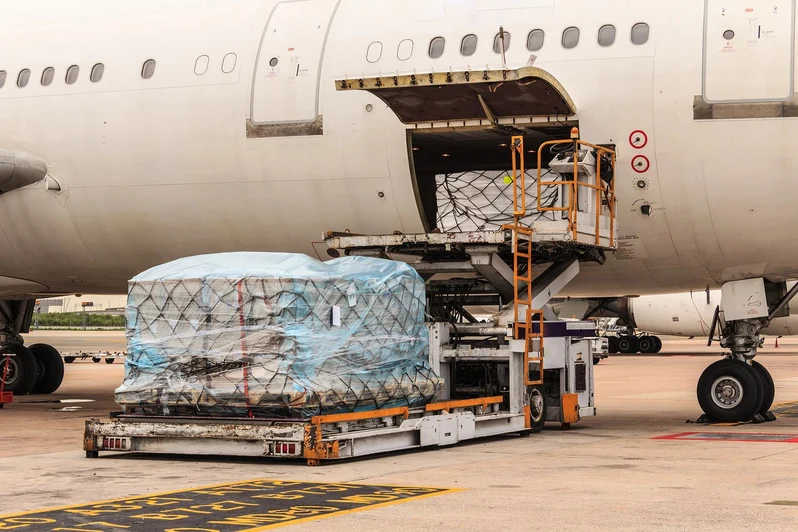
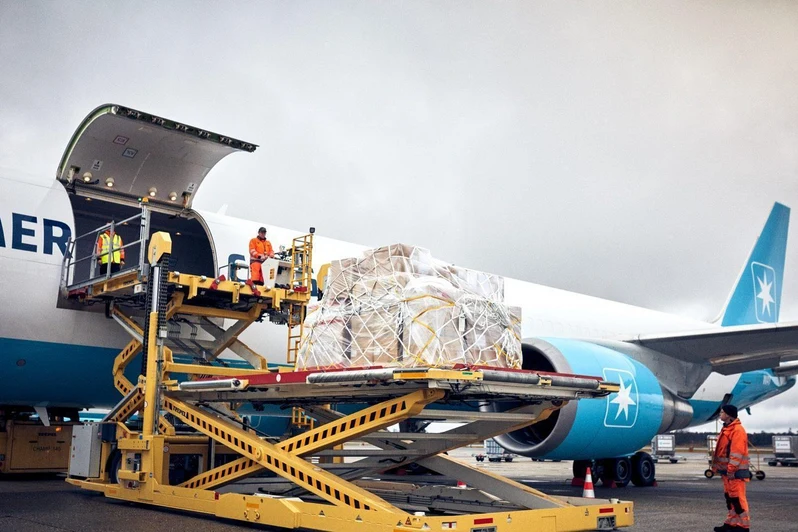
We understand the ever changing needs of our customers

we provide a high level of service dedicated to fulfilling all your shipping requirements

Watch Video
Road Freight

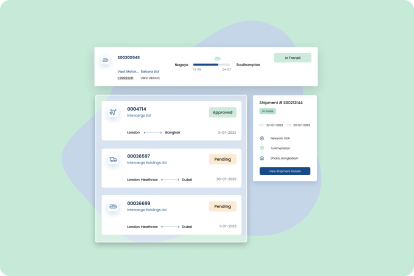
Keep all your data in one place which can be accessed from anywhere and anyplace

Let us help you 24/7 manage your supply chain needs

Back to Global Coverage

Burundi Freight Forwarding Services
Air Freight Between Burundi and the UK

Intercargo provides reliable air freight forwarding services between Burundi and the United Kingdom, helping businesses import and export cargo efficiently.

Whether you are importing goods from Burundi into the UK, exporting products from the UK to Burundi, or managing regular international shipments, our experienced freight forwarding team provides complete end to end logistics solutions. From collection and customs clearance to final delivery, we manage every stage of the shipment process.
Air Freight Burundi to UK
When speed matters, our Burundi air freight services provide fast, secure and reliable transportation between Burundi and the United Kingdom.
As Burundi is landlocked, air freight provides a direct international option for businesses that need fast, secure and reliable transportation.
We arrange air freight through Melchior Ndadaye International Airport (BJM) and other key Burundi gateways, with UK arrivals through London Heathrow, London Gatwick, Manchester Airport, Birmingham Airport and East Midlands Airport.
Our air freight solutions include:

  • Air freight from Burundi to the UK
  • Air freight from the UK to Burundi
  • Express and economy air cargo
  • Airport to door air freight services
  • Door to door delivery
  • Customs clearance support
  • Time critical shipments
  • High value and commercial cargo

Whether you need urgent delivery of coffee, tea, minerals, machinery, electronics or commercial goods, our air freight specialists can provide the most efficient solution.
Logistics solutions
Import from Burundi to the UK
Intercargo helps UK businesses import products and cargo from Burundi through a fully managed freight forwarding service.
Our import services include:

  • Supplier coordination
  • Collection from Burundi businesses, warehouses and commercial premises
  • Air freight transportation
  • Final delivery throughout the UK
  • UK customs clearance
  • Duty and VAT guidance
  • Warehousing and distribution

We regularly support imports including Burundi goods:

  • Coffee and tea
  • Minerals and ores
  • Handicrafts and textiles
  • Commercial and industrial goods
  • Electronics and machinery
  • Time-critical shipments
  • High-value commercial cargo

Our experienced team ensures your cargo moves efficiently from Burundi to the UK while remaining compliant with all customs and import requirements.
Logistics solutions
Export from the UK to Burundi
We also help UK businesses export goods to customers, distributors and partners throughout Burundi.
Whether shipping to Bujumbura, Gitega or other major Burundi destinations, our export specialists can arrange a seamless freight solution by air.
Our export services include:

  • Air freight exports
  • Export documentation
  • Customs compliance
  • Cargo insurance
  • Door to door delivery
  • Commercial and industrial shipments
  • Time critical shipments

From single shipments to regular freight movements, we provide scalable logistics solutions designed around your business requirements. For sea freight requirements, cargo typically routes through a regional port such as Mombasa or Dar es Salaam, with onward road transport to or from Burundi.
Logistics solutions
Customs Clearance & Freight Forwarding
Successful international shipping to and from Burundi depends on accurate customs documentation and regulatory compliance.
Intercargo provides:

  • Import customs clearance
  • Export customs clearance
  • Commodity code guidance
  • Shipping documentation
  • Duty and tax assistance
  • Freight forwarding management
  • End to end shipment visibility

Our experienced freight forwarding team helps minimise delays and keeps your cargo moving smoothly between Burundi and the United Kingdom, in full compliance with all applicable regulations.
Logistics solutions
Why Choose Intercargo for Burundi Freight?
We support importers, exporters, retailers, distributors and e-commerce businesses moving cargo between Burundi and the UK.
Air Freight Specialists
Uk And Burundi Trade Lane Expertise
Import And Export Solutions
Customs Clearance Support
Door To Door Logistics
Dedicated Account Management
Global Carrier Network
Competitive Freight Rates
Get a Burundi Freight Quote

Looking for air freight from Burundi to the UK, or export services from the UK to Burundi?
Contact Intercargo today for a tailored freight forwarding quotation and expert advice on the most efficient shipping solution for your cargo.
Logistics solutions
Latest News & Updates

Cargo owners will foot the bill for IMO net-zero framework, warns FMC chair

Maritime decarbonisation costs will ultimately be passed on to cargo owners under the present structuring of the proposed IMO Net-Zero Framework, according to the Federal Maritime Commission's (FMC) chair Laura Di Bella. With industry leaders backing her assessment, Ms Di Bella said the competitive nature of shipping would see additional compliance expenses eventually fed through to cargo owners, with ongoing regulatory uncertainty already forcing costs up. When asked precisely how much of the IMO Framework's estimated cost - which could be anywhere from $50bn-$260bn - would be passed on to shippers, Ms Di Bella told The Loadstar, "a very large percentage of it". "Shippers are hit with so many pass-through expenses. We're constantly looking at all of the ways to tamp down any sort of inflationary measures, be it fuel surcharges or any surcharges, but what makes us think that this isn't going to be treated the same way?" she explained. Managing director of OceanScore Albrecht Grell agreed that the financial burden would ultimately be shouldered by cargo owners, arguing that shipping companies would seek to recover additional expenses through their commercial arrangements. "Shipping is highly competitive - any cost will eventually be passed on to the cargo owners," Mr Grell told The Loadstar, before warning that the redistribution of costs will not affect all shipping companies equally. He said those able to adapt more effectively to the changing regulatory and operational environment would be able to pass on a higher share of their compliance expenses, adding "the profit pool will not change but be redistributed within the industry". Similarly, zero44 co-founder and managing director Friederike Hesse told The Loadstar uncertainty surrounding the regulatory framework is itself creating additional costs for the industry, as companies factor potential risks into their commercial decisions. "Uncertainty is a cost too, companies price in risk premiums, put their eggs in multiple baskets instead of focusing investments, add contractual buffers and spend more on legal and administrative work, and that ends up in freight rates," Ms Hesse said. She added that this financial burden is then distributed through charter contracts, with responsibility depending on which party controls the operational decisions affecting fuel consumption and emissions. "Whoever controls speed, route and fuel consumption pays for the emissions. Under time charters that is usually the charterer; under voyage charters it is priced into the freight. Cargo owners and consumers pay their share through rates and surcharges." Reiterating that the cost of transitioning could be anywhere between $50bn-$260bn, Ms Di Bella said there were clear questions as to whether the infrastructure required for it had been properly accounted for in discussions surrounding the framework. Pointing to an infrastructure study commissioned by the IMO in April, which Ms Di Bella said has not yet been completed, she called for clearer understanding of the investment required before moving ahead. "There is no infrastructure to support many of these alternative fuels. LNG is probably the closest that we have. So, we need to know what is it going to cost to get there? And then we work backwards." But Ms Hesse warned delaying emissions reductions would not cut decarbonisation's eventual costs and could make the transition more expensive by leaving companies with less time to prepare through investment in vessels, fuels and infrastructure. "Postponing cuts now does not make them disappear, it means much steeper targets later, at a point when companies will not have had time to prepare through early investment in ships, fuels and infrastructure," she added.

Source: theloadstar.com

Read more

Port of Manzanillo gears up for expansion as box traffic grows

Mexico's premier Pacific gateway is moving closer to a massive expansion after the national environmental agency gave its conditional approval for the first phase of the Puerto Nuevo Manzanillo project. This is a M$118.39bn (US$6.26bn) initiative to boost the port's operating area from 450ha to more than 1,880ha and triple its container throughput capacity. The Secretariat of Environment and Natural Resources approved a revised proposal by Asipona Manzanillo, the port administration, after the original submission had been closed last December. Work on phase one, which should take about six years, is expected to commence in January and will see the creation of platforms for two container terminals and navigation channels. The second phase, if approved, would commence in January 2049, adding two more box terminals and a multi-use facility, and expand the rail infrastructure. The project has the backing of the administration in Mexico City, which is eager to expand the nation's transpacific trade, after the Pacific gateways clocked up record growth this year. Manzanillo, the nation's largest container port, saw throughput rise nearly 10% in the first half, to 2.07m teu, and for the first nine months, the port registered close to 3.16m teu, up 9.5% year on year. Lazaro Cardenas, Mexico's second-largest Pacific cargo gateway, saw box volume climb 7% in the January-September period, to almost 1.58m teu, while tonnage jumped 14% to 17.48m tonnes. And traffic looks set to continue to increase in the new year. Hapag Lloyd announced two new services between Asia and Latin America last week for the coming year. The first, scheduled to launch in January, will be the Asia-Mexico Express, a weekly operation using panamax vessels from Ningbo and Qingdao via Busan to Ensenada, Manzanillo, and Lazaro Cardenas, with transits from Mexican ports to destinations on the west coast of Latin America. The other new service, scheduled for April, will serve ports on South America's east coast. This month, Mexican president Claudia Sheinbaum led a government delegation to the APEC summit in Guangzhou, aiming to develop and grow commercial ties with Asian nations. Talks included a meeting with Chinese officials and produced an agreement to set up a working group to explore mechanisms to bolster Mexican exports to China, primarily agricultural. According to Marcelo Ebrard, Mexico's secretary of economy, China's exports to Mexico will exceed $130bn this year, whereas trade in the opposite direction is just $10bn.

Source: theloadstar.com

Read more

Container spot rates set to rise as carriers launch peak season surcharges

Container spot freight rates on the Asia-Mediterranean trade were the only deepsea route prices that gained this week, as Transpacific and Asia-Europe rates further diverged. According to this week's World Container Index (WCI) by Drewry, its spot rate for Shanghai-Genoa saw an 8% week-on-week increase, to end at $4,802 per 40ft, while Shanghai-Rotterdam was unchanged for a second week. at $3,485 per 40ft. Meanwhile, next week could see a renewed hike in Asia-Europe spot rates, with carriers clearly shaping up to push for higher short-term prices for December with a series of peak season surcharges (PSS) scheduled to be applied on 1 December. Justified on the basis of an early Chinese New Year in 2027, both CMA CGM and Hapag-Lloyd have set a PSS of $1,000 per 40ft on Asia-North Europe shipments. Hapag-Lloyd also introducing a $1,500 per 40ft PSS on Asia-Mediterranean bookings on the same day. These are expected to be supported by further surcharges and new FAK levels introduced by other carriers next month. Maersk has set a PSS of $1,500 per 40ft for Asia-North Europe and $2,000 per 40ft to the Mediterranean, both for implementation on 14 December. On the same day, MSC will revise its FAK pricing on the two routes - rising from $4,600 to $5,600 per 40ft on Asia-North Europe, and a much more aggressive $7,500 per 40ft on Asia-Mediterranean shipments, currently $5,300 per 40ft, following its 15 November FAK notice. Xeneta chief analyst Peter Sand said the price hikes were beginning to filter into the platform's short-term rate outlook. "Early Xeneta data indicates average spot rates to Mediterranean will increase a further 10% to 15% at the start of December, having already increased 27% since 14 October. "An uptick is also expected into North Europe," he added. While next week's rate increases are set to be accompanied by a higher degree of blanked sailings - Drewry's Container Capacity Insight records seven - three Asia-North Europe and four Asia-Mediterranean - for next week, compared with four that took place this week, three Asia-North Europe and one Asia- Mediterranean. The forecast December rate increases will coincide with predictions that capacity next month could be among the highest on record. "Rates for the last week of November range from $2,700 to $3,200 per 40ft, against last week's SCFI [Shanghai International Freight Index] assessment at $3,356 per 40ft, with capacity pressure building and December sailings expected to reach a new record high," Linerlytica noted this week. The analyst's forward-looking capacity projections are for a monthly average of 400,000 teu capacity a week in December, up from around 350,000 teu a week this month. According to Xeneta data, current capacity into North Europe is 4.9% higher than a month ago, and up 6.7% to the Mediterranean. With yesterday's Thanksgiving holiday bringing a quiet week on the Transpacific trade, rates on the WCI's Shanghai-Los Angeles route fell 8% week on week, to end at $6,437 per 40ft, while its Shanghai-New York leg was down 7%, to $7,615 per 40ft. "The upward trend into Europe contrasts with fronthauls into the US, where early Xeneta data indicates further spot rate declines at the start of December," Mr Sand said. "Average spot rates have already fallen 12% into US east coast and 7.6% into US west coast since 14 October. "The most recent Xeneta data paints a rosier picture for US shippers, but a wider market perspective changes the situation dramatically: despite the softening in October and November, average spot rates to US west coast remain up 310%, compared with pre-Hormuz crisis levels on 28 February. Into the US east coast, average spot rates are up 283%. "From the Far East to Mediterranean and North Europe, the recent increases mean average spot rates are up a much smaller 54% and 53% respectively, compared with pre-Hormuz crisis levels," he added.

Source: theloadstar.com

Read more

Privacy Preference Center

This website uses cookies and similar technologies, (hereafter “technologies”), which enable us, for example, to determine how frequently our internet pages are visited, the number of visitors, to configure our offers for maximum convenience and efficiency and to support our marketing efforts. These technologies incorporate data transfers to third-party providers based in countries without an adequate level of data protection (e. g. United States). For further information, including the processing of data by third-party providers and the possibility of revoking your consent at any time, please see your settings under “Consent Preferences” and our Privacy Notice.


Manage Consent Preferences
Strictly Necessary Cookies
Always Active

Performance Cookies

Functional Cookies

Targeting Cookies