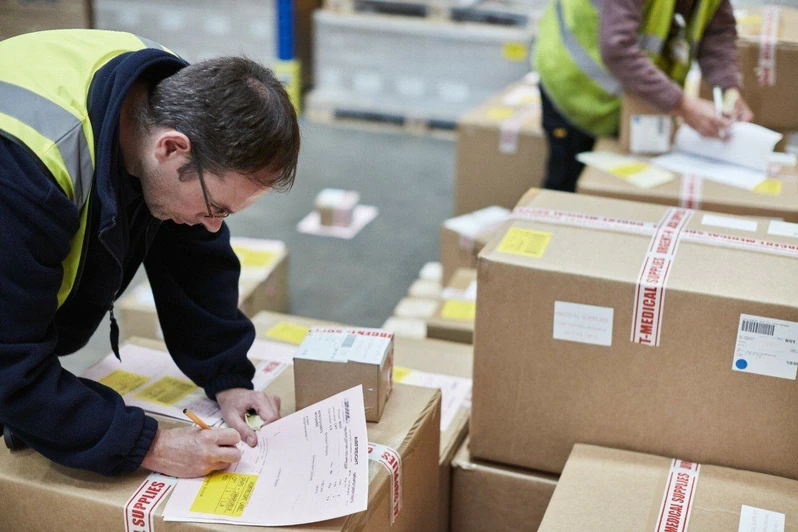
We understand the ever changing needs of our customers

we provide a high level of service dedicated to fulfilling all your shipping requirements

Watch Video
Road Freight

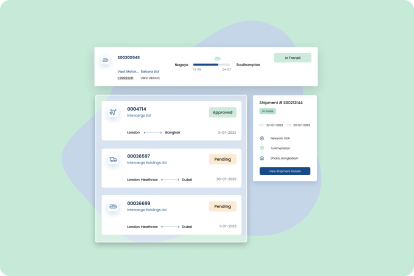
Keep all your data in one place which can be accessed from anywhere and anyplace

Let us help you 24/7 manage your supply chain needs

Back to Global Coverage

Bolivia Freight Forwarding Services
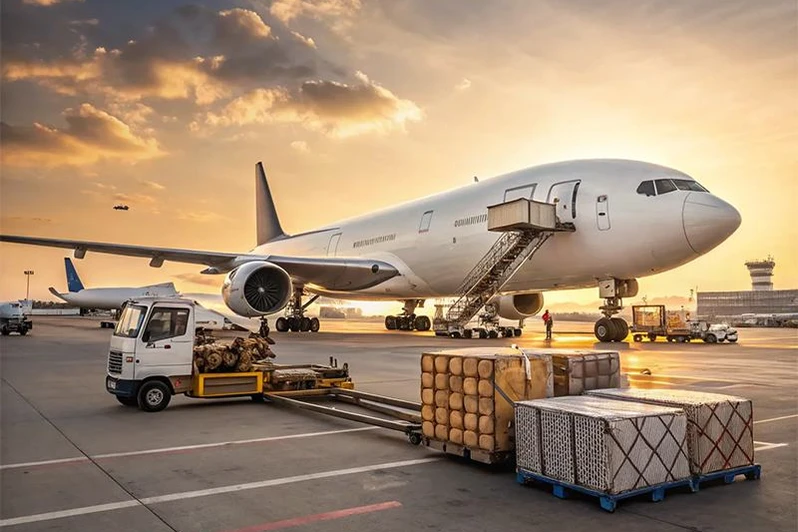
Air Freight Between Bolivia and the UK

Intercargo provides reliable freight forwarding services between Bolivia and the United Kingdom, helping businesses import and export cargo efficiently by air. Bolivia is a landlocked country; sea freight is available via neighbouring ports in Chile, Peru or Brazil with onward road connections. Road freight services are not directly available.

Whether you are importing goods from Bolivia into the UK, exporting products from the UK to Bolivia, or managing regular international shipments, our experienced freight forwarding team provides complete end to end logistics solutions. From collection and customs clearance to final delivery, we manage every stage of the shipment process.
Air Freight Bolivia to UK
When speed matters, our Bolivia air freight services provide fast, secure and reliable transportation between Bolivia
and the United Kingdom.
We arrange air freight through El Alto International Airport (LPB) in La Paz and Viru Viru International Airport (VVI) in
Santa Cruz, with UK arrivals through London Heathrow, London Gatwick, Manchester Airport and other major UK
airports.
Our air freight solutions include:

  • Air freight from Bolivia to the UK
  • Express and economy air cargo
  • Door to door delivery
  • Time critical shipments
  • Air freight from the UK to Bolivia
  • Airport to airport services
  • Customs clearance support
  • High value and commercial cargo

Whether you need urgent delivery of quinoa, tin, zinc, soy, lithium products, machinery or commercial cargo, our air freight specialists can provide the most efficient solution for Bolivia air cargo.
Logistics solutions
Multimodal Sea Freight for Bolivia
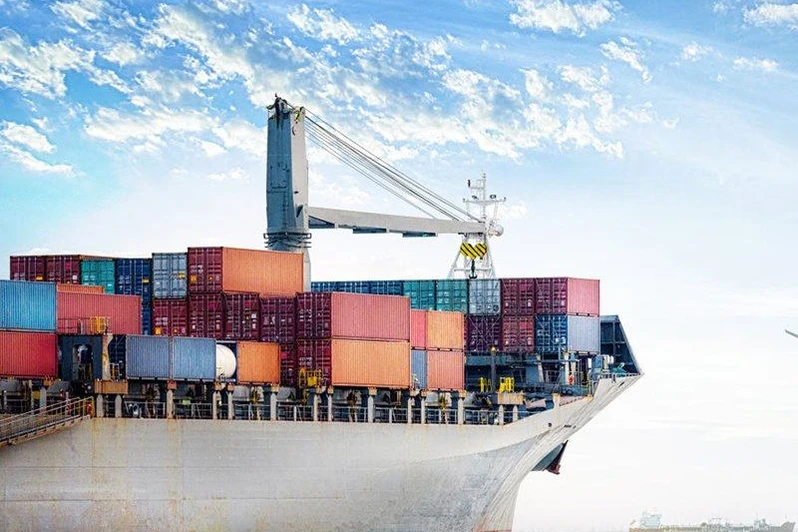
As a landlocked country, Bolivia does not have direct sea port access. For larger or cost sensitive shipments, we
arrange multimodal freight solutions combining road transport from Bolivia to neighbouring sea ports in Chile (Arica,
Iquique), Peru (Ilo) or Brazil (Santos), with onward ocean shipping to the UK.
Our multimodal sea freight solutions include:

  • Full Container Load (FCL)
  • Road to port to port shipping
  • Transit and customs documentation
  • Project cargo
  • Less than Container Load (LCL)
  • Door to door multimodal logistics
  • Cargo insurance
  • Oversized and heavy lift shipments

Whether shipping minerals, soy products, quinoa, timber, lithium products, project cargo or oversized equipment, we can tailor a multimodal freight solution to suit your budget and transit requirements for Bolivia cargo.
Logistics solutions
Import from Bolivia to the UK
Intercargo helps UK businesses import products and cargo from Bolivia through a fully managed freight forwarding
service.
Our import services include:

  • Supplier coordination
  • Air freight transportation
  • Duty and VAT guidance
  • Final delivery throughout the UK
  • Collection from Bolivian businesses, warehouses and commercial premises
  • UK customs clearance
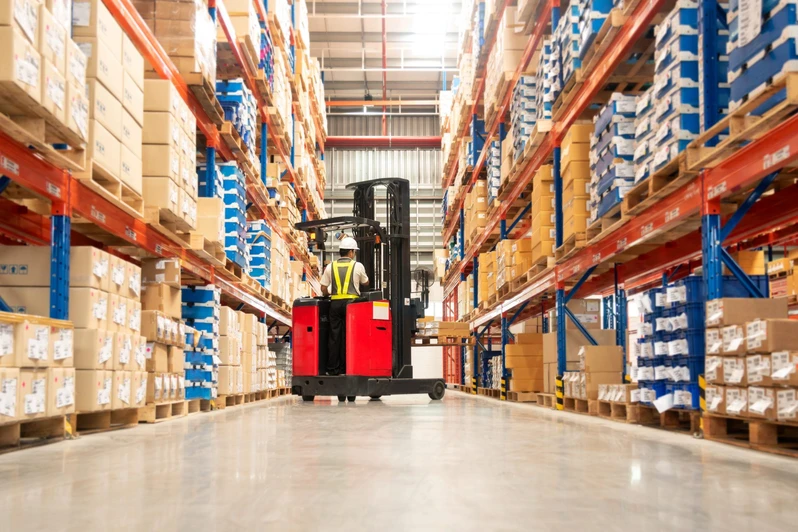
  • Warehousing and distribution

We regularly support imports including:

  • Quinoa and superfoods
  • Tin and zinc ore
  • Soy and agricultural products
  • Lithium and minerals
  • Machinery and equipment
  • Textiles and clothing
  • Project cargo
  • Timber and wood products

Our experienced team ensures your cargo moves efficiently from Bolivia to the UK while remaining compliant with all customs and import requirements.
Logistics solutions
Export from the UK to Bolivia
We also help UK businesses export goods to customers, distributors and partners throughout Bolivia.
Whether shipping to La Paz, Santa Cruz, Cochabamba or other major Bolivian destinations, our export specialists can
arrange a seamless freight solution by air or multimodal sea route.
Our export services include:

  • Air freight exports
  • Export documentation
  • Cargo insurance
  • Commercial and industrial shipments
  • Sea freight exports
  • Customs compliance
  • Door to door delivery

From single shipments to regular freight movements, we provide scalable logistics solutions designed around your business requirements for Bolivia exports.
Logistics solutions
Customs Clearance & Freight Forwarding
Successful international shipping depends on accurate customs documentation and compliance.
Intercargo provides:

  • Import customs clearance
  • Commodity code guidance
  • Duty and tax assistance
  • End to end shipment visibility
  • Export customs clearance
  • Shipping documentation
  • Freight forwarding management

Our experienced freight forwarding team helps minimise delays and keeps your cargo moving smoothly between Bolivia and the United Kingdom.
Logistics solutions
Why Choose Intercargo for Bolivia Freight?
We support importers, exporters, manufacturers, distributors, retailers and e-commerce businesses moving cargo between Bolivia and the UK.
Bolivia Air And Sea Freight Specialists
Uk And Bolivia Trade Lane Expertise
Bolivia Import And Export Solutions
Bolivia Customs Clearance Support
Door To Door Logistics
Dedicated Account Management
Global Carrier Network
Competitive Freight Rates
Get a Bolivia Freight Quote

Looking for air freight from Bolivia to the UK, sea freight from Bolivia to the UK, or export services from the UK to Bolivia?
Contact Intercargo today for a tailored freight forwarding quotation and expert advice on the most efficient air and sea shipping solution for your cargo.
Logistics solutions
Latest News & Updates

Maersk and ONE tipped to create first global north-south alliance

The formation of container shipping's first global liner alliance covering the north-south trades appears to be taking shape, The Loadstar has learned. Container lines have traditionally treated the north-south trades as a set of separate marriages, on the assumption that the right partner depends on the trade. However, according to sources in Asia, Maersk and Ocean Network Express (ONE) are working to develop a vessel-sharing agreement (VSA) covering the trades globally, rather than lane by lane. The Loadstar has approached both carriers for comment but has yet to receive a formal response, and the form the VDSA would take is unclear. Nonetheless, if confirmed it would be the first VSA of its kind - and its logic rests on ONE's fleet, according to our provisional analysis below. Their respective groupings, the Gemini Cooperation for Maersk and Premier Alliance for ONE, stop at east-west trades, while north-south has remained a patchwork of classic VSAs, where each carrier's slots follow the ships it provides, and an agreement rarely covers more than two or three services. Why not Hapag-Lloyd? The obvious choice of partner for Maersk would be Hapag-Lloyd, its Gemini compatriot - but two things rule it out. The first is that CSAV owns 30% of it and sits in the shareholder pact that controls more than 70% of the carrier, so combining West Coast South America networks would join two incumbents serving the same Chilean and Peruvian exporters. In that context, it is worth noting that Maersk and Hapag-Lloyd do not cooperate on any of their respective Asia-WC South America services - according to Xeneta's eeSea liner database, Maersk operates two standalone strings, the AC1 and AC3, while Hapag-Lloyd's three offerings are run in cooperation with MSC, HMM, and ONE. Secondly, Hapag-Lloyd has relatively few ships coming - its orderbook is 19% of its fleet, the lowest of the eight largest carriers, on trades where Far East-Latin America capacity grew 14% in a year. ONE poses fewer of those problems. On Far East-WC South America, for example, Linerlytica puts Maersk at 16.1% of weekly capacity and ONE at 9%; together a quarter of the trade, ahead of CMA CGM and MSC, from two carriers whose customers overlap less. The ships are the point ONE has the fleet those trades are moving towards. Alphaliner puts 36% of its operated capacity in ships of 10,000-15,100 teu, against 14% at Maersk. Of the 55 ships ONE has on order, 29 - representing 60% of the total 647,000 teu expected - fall in the same bracket. Linerlytica puts the average ship on Far East-Latin America already at 10,032 teu. However, only 10 of ONE's 62 ships in that class currently work Latin American routes. Under the classic formula, ships buy slots, so tonnage converts directly into share. A global partner gives ONE's newbuilds work without ONE building Latin American and African franchises alone. Maersk, whose next order according to Linerlytica is for 24,000 teu ships, would thus get mid-size capacity without ordering it. What it will probably look like "Global" may describe the scope more than the mechanics. North-south shippers pay for direct calls, Brazil reserves feeder legs for Brazilian-flag operators, and Mexico's ports do little relay business. That points to core loops on one carrier's ships where its fleet fits, and shared loops where the ship mix demands it, rather than a Gemini-style hub network. The obstacles are real. Hapag-Lloyd sits alongside ONE in several of these consortia, so the deal means reordering them with Maersk's own Gemini partner, and a quarter of Asia-WC South America capacity will interest regulators in Chile and Peru. And similar disentanglements will be necessary on other north-south trades: for example, Maersk continues to cooperate with CMA CGM on Asia-West Africa services. And although there were rumours that that cooperation might be coming to an end, they have subsided for now. The quay question... ...will be where ONE's 13,724 teu newbuilds are deployed in 2027. The industry has assumed north-south partners must be chosen trade by trade. A Maersk-ONE framework tests a different premise: that the scarce input is the right ship, and a carrier holding them can be a partner almost everywhere.

Source: theloadstar.com

Read more

APM Terminals plans 1.4m teu expansion at Rotterdam's Maasvlakte II

APM Terminals and the port of Rotterdam have unveiled plans to add a further 1.4m teu of capacity to the operator's flagship Maasvlakte II facility in the Dutch hub. With the terminal's first phase of expansion recently completed, the new second phase will see a further 711 metres of quay built and 25ha of terminal yard space added. "This expansion marks the next step in the long-term development of our terminal," said Harold Kunst, managing director, APM Terminals, Maasvlakte II. "We are creating space for future growth while continuing to develop a terminal that can serve our customers safely, reliably, and efficiently over the long term. "Our collaboration with the Port of Rotterdam Authority is essential to achieving this. Together, we are laying the foundations for the next phase of Maasvlakte II," he added. However, formal approval for the terminal and the necessary investment by the port authority still requires its shareholders - comprising Rotterdam municipality with 70% and the national government with the remaining 30% - to vote for it unanimously, which is currently expected to be granted in February 2027. As per usual in the landlord port model, the port authority will be responsible for funding and constructing the quay walls as well as dredging the access channel - the project is expected to require some 1.3m cu metres of sand to be dredged. "The further development of APM Terminals Maasvlakte II marks an important step in our shared ambition to prepare the Port of Rotterdam for the future," Boudewijn Siemons, chief executive of the Port of Rotterdam Authority, said. "By investing in additional capacity and modern infrastructure, we are strengthening Rotterdam's position as Europe's leading container port. "In doing so, we are increasing the resilience of logistics chains, contributing to security of supply for businesses and consumers, and strengthening the competitiveness of the Dutch economy," he added. Assuming it wins port authority shareholder approval, construction of the new area will begin in October 2027 and is scheduled to be completed by January 2030. While the current APMT Maasvlakte II terminal is one of the key nodes in Gemini's hub-and-spoke network, it has been constrained by its capacity so far - it hosts four of the partnership's Asia-North Europe loops, but has only recently, with the opening of the phase one expansion, begun to service other Gemini trades. In October the first of Gemini's four North Europe-North America transatlantic services, the AL1, moved from the nearby Hutchison Delta facility to APMT, and the second phase of expansion will clearly allow the Gemini partners to consolidate more of their calls there. The development will likely take Rotterdam's overall capacity near 25m teu per year. According to Xeneta's eeSea platform, other terminal improvements in Rotterdam will take combined capacity up to 23.3m teu a year by 2030, before the additional AMPT capacity is factored in. Meanwhile, in the first nine months of this year total container throughput at Rotterdam hit 10.7m teu, which was just 0.1% up on the same period in 2025 - with an 8.9% increase in laden imports and a 1% growth in laden exports offset by a 20% decline in transhipment boxes. "Due to long-standing capacity restraints at deep-sea terminals in Rotterdam, more cargo is being handled via other ports," the port authority noted.

Source: theloadstar.com

Read more

Port of Manzanillo gears up for expansion as box traffic grows

Mexico's premier Pacific gateway is moving closer to a massive expansion after the national environmental agency gave its conditional approval for the first phase of the Puerto Nuevo Manzanillo project. This is a M$118.39bn (US$6.26bn) initiative to boost the port's operating area from 450ha to more than 1,880ha and triple its container throughput capacity. The Secretariat of Environment and Natural Resources approved a revised proposal by Asipona Manzanillo, the port administration, after the original submission had been closed last December. Work on phase one, which should take about six years, is expected to commence in January and will see the creation of platforms for two container terminals and navigation channels. The second phase, if approved, would commence in January 2049, adding two more box terminals and a multi-use facility, and expand the rail infrastructure. The project has the backing of the administration in Mexico City, which is eager to expand the nation's transpacific trade, after the Pacific gateways clocked up record growth this year. Manzanillo, the nation's largest container port, saw throughput rise nearly 10% in the first half, to 2.07m teu, and for the first nine months, the port registered close to 3.16m teu, up 9.5% year on year. Lazaro Cardenas, Mexico's second-largest Pacific cargo gateway, saw box volume climb 7% in the January-September period, to almost 1.58m teu, while tonnage jumped 14% to 17.48m tonnes. And traffic looks set to continue to increase in the new year. Hapag Lloyd announced two new services between Asia and Latin America last week for the coming year. The first, scheduled to launch in January, will be the Asia-Mexico Express, a weekly operation using panamax vessels from Ningbo and Qingdao via Busan to Ensenada, Manzanillo, and Lazaro Cardenas, with transits from Mexican ports to destinations on the west coast of Latin America. The other new service, scheduled for April, will serve ports on South America's east coast. This month, Mexican president Claudia Sheinbaum led a government delegation to the APEC summit in Guangzhou, aiming to develop and grow commercial ties with Asian nations. Talks included a meeting with Chinese officials and produced an agreement to set up a working group to explore mechanisms to bolster Mexican exports to China, primarily agricultural. According to Marcelo Ebrard, Mexico's secretary of economy, China's exports to Mexico will exceed $130bn this year, whereas trade in the opposite direction is just $10bn.

Source: theloadstar.com

Read more

Privacy Preference Center

This website uses cookies and similar technologies, (hereafter “technologies”), which enable us, for example, to determine how frequently our internet pages are visited, the number of visitors, to configure our offers for maximum convenience and efficiency and to support our marketing efforts. These technologies incorporate data transfers to third-party providers based in countries without an adequate level of data protection (e. g. United States). For further information, including the processing of data by third-party providers and the possibility of revoking your consent at any time, please see your settings under “Consent Preferences” and our Privacy Notice.


Manage Consent Preferences
Strictly Necessary Cookies
Always Active

Performance Cookies

Functional Cookies

Targeting Cookies