We understand the ever changing needs of our customers

we provide a high level of service dedicated to fulfilling all your shipping requirements

Watch Video
Road Freight

Keep all your data in one place which can be accessed from anywhere and anyplace

Let us help you 24/7 manage your supply chain needs

Back to Global Coverage

Benin Freight Forwarding Services
Air and Sea Freight Between Benin and the UK

Intercargo provides freight forwarding services between Benin and the United Kingdom, helping businesses import and export cargo by air and sea freight with careful route planning, carrier screening, customs support, and customs compliance.

Whether you are importing goods from Benin into the UK, exporting products from the UK to Benin, or managing international shipments, our freight forwarding team helps plan air freight with careful route planning, carrier screening, customs support, and customs compliance. We coordinate airport to airport and door to door services, and our team can help manage lead times and service availability based on carrier availability and customs requirements.
Air Freight Benin to UK
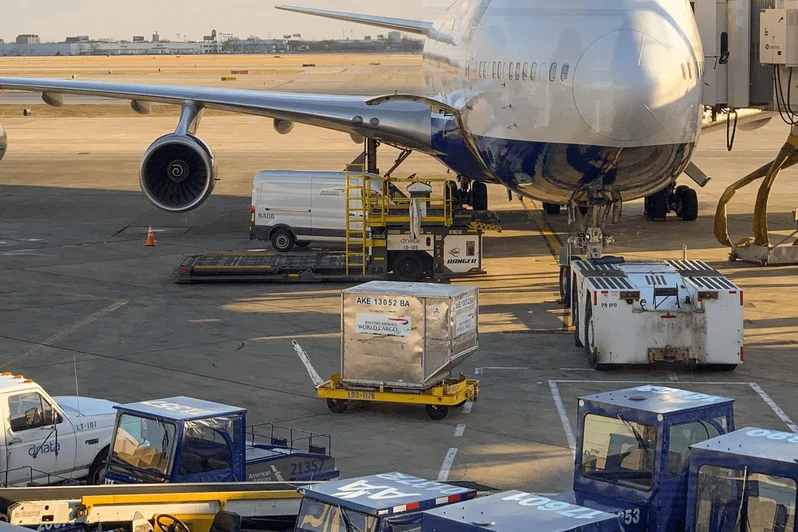
When speed matters, our Benin air freight services provide fast, secure and reliable transportation between Benin and the United Kingdom.
We arrange air freight from Cotonou International Airport (COO) with onward connections to the UK through London Heathrow, London Stansted, London Luton, Manchester Airport and Birmingham Airport. Our team can help manage lead times and service availability based on carrier availability and customs requirements.
Our air freight solutions include:

  • Air freight from Benin to the UK
  • Express and economy air cargo
  • Door to door delivery
  • Time critical shipments
  • Air freight from the UK to Benin
  • Airport to airport services
  • Customs clearance support
  • High value and commercial cargo

Whether you need urgent delivery of textiles, automotive parts, tobacco products, iron and steel, food products, electronics or commercial goods, our air freight specialists can help plan the most efficient solution for your shipment.
Logistics solutions
Sea Freight Benin to UK
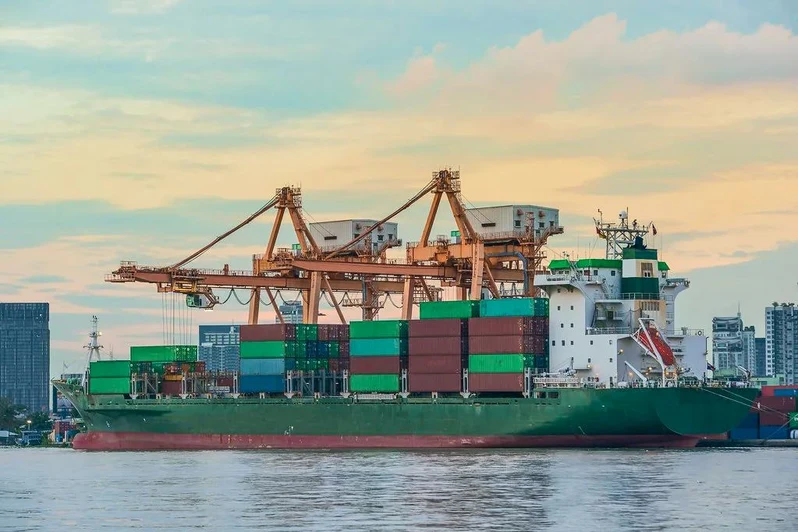
For larger volumes, our sea freight services provide shipping solutions between Benin and the UK.
Sea freight from Benin typically departs from the Port of Cotonou, with onward connections to the UK through Felixstowe, Southampton, or other major ports. Our team can help manage lead times and service availability based on carrier availability and customs requirements.
Our sea freight services include:

  • FCL and LCL sea freight
  • Port to port and door to door options
  • Duty and tax guidance
  • Carrier screening and route planning
  • Transshipment via regional ports
  • Customs clearance support
  • Prior shipment approval checks
  • End to end shipment visibility

Whether shipping textiles, automotive components, iron and steel products, tobacco, agricultural produce, food products, electronics or commercial goods, our sea freight specialists can help plan the most efficient solution for your shipment.
Logistics solutions
Import from Benin to the UK
Intercargo helps UK businesses import products and cargo from Benin through a fully managed freight forwarding service.
Our import services include:

  • Supplier coordination
  • Air and sea freight transportation
  • Duty and VAT guidance
  • Final delivery throughout the UK
  • Collection from Beninese factories, warehouses and commercial premises
  • UK customs clearance
  • Warehousing and distribution

We regularly support imports including:

  • Textiles and clothing
  • Tobacco and tobacco products
  • Agricultural and food products
  • Wine and beverages
  • Machinery and mechanical equipment
  • Iron, steel and metal products
  • Automotive parts and components
Our experienced team ensures your cargo moves efficiently from Benin to the UK while remaining compliant with all customs and import requirements.
Logistics solutions
Export from the UK to Benin
We also help UK businesses export goods to customers, distributors and partners throughout Benin.
Whether shipping to Cotonou, Porto-Novo or other destinations, our export specialists can arrange freight solutions by air or sea freight. Our team can help manage lead times and service availability based on carrier availability and customs requirements.
Our export services include:

  • Air freight exports
  • Export documentation
  • Cargo insurance
  • Commercial and industrial shipments
  • Sea freight exports
  • Customs compliance
  • Door to door delivery

From single shipments to regular freight movements, we provide scalable logistics solutions designed around your business requirements.
Logistics solutions
Customs Clearance & Benin Freight Forwarding
Successful international shipping between Benin and the UK depends on accurate customs documentation, compliance, carrier screening, and customs compliance.
Intercargo provides:

  • Import customs clearance
  • Commodity code guidance
  • Duty and tax assistance
  • End to end shipment visibility
  • Export customs clearance
  • Shipping documentation
  • Freight forwarding management

Our experienced freight forwarding team helps minimise delays and keeps your cargo moving smoothly between Benin and the United Kingdom.
Logistics solutions
Why Choose Intercargo for Benin Freight?
We support importers, exporters, manufacturers, distributors, retailers and e commerce businesses moving cargo between Benin and the UK, with careful route planning, carrier screening, customs support, and customs compliance.
Restricted Air And Sea Freight Specialists
Uk And Benin Trade Lane Expertise
Import And Export Sea Freight Solutions
Customs Clearance Support
Door To Door Logistics
Dedicated Account Management
Global Carrier Network
Competitive Freight Rates
Get a Benin Freight Quote

Looking for air freight from Benin to the UK, sea freight from Benin to the UK, or export services from the UK to Benin?
Contact Intercargo today for a tailored freight forwarding quotation and expert advice on the most efficient shipping solution for your cargo.
Logistics solutions
Latest News & Updates

'Black Friday or Red Friday?' Ecommerce air hubs take a capacity hit

Air cargo rates continue to face upward pressure as capacity constraints, rather than a surge in peak season demand, increasingly dictate pricing - with freighter capacity into Europe taking a significant hit ahead of Black Friday. Data published today by aviation consultant Aevean shows freighter capacity from Asia and the Middle East into Europe fell 15% year on year in the two weeks to 24 November, equivalent to some 27,500 tonnes. "Black Friday... or Red Friday?" asked Maarten Wormer, head of consulting at Aevean, noting that "integrator and general cargo hubs are largely holding up, as ecommerce gateways take the hit". Budapest recorded the steepest percentage decline among the eight major gateways tracked, at 36%, followed by Paris CDG, down 27%, and Liège, down 24% - the latter losing some 5,800 tonnes of capacity. Meanwhile, Frankfurt saw an 11% reduction, while Cologne bucked the trend with a 16% increase. Capacity into Amsterdam remained flat. The figures come amid a resurgence in global airfreight rates, following a period of easing in the third quarter. According to Transport Intelligence's (Ti) latest Air Freight Rate Tracker, global headhaul rates reached $3.92 per kg in early November, up 7.6% on October, 8.7% against the Q3 average, and 45.2% year on year. Backhaul rates climbed 6.2% month on month, to $3 per kg, up 22.3% year on year. However, it is the withdrawal of bellyhold capacity during winter passenger schedules, coupled with persistently high fuel costs, rather than exceptional demand growth, that Ti identified as driving the increases. Westbound transatlantic rates recorded the largest quarterly increase, at 21.7%, largely reflecting seasonal capacity reductions. But technology shipments continue to underpin demand elsewhere, with South Asia-North America remaining the most expensive tradelane tracked by Ti, at $7.08 per kg, up 70.5% year on year. And the strength of demand for AI infrastructure, servers and semiconductors could see freighters redeployed to the Transpacific, further tightening capacity elsewhere. Meanwhile, there is little consensus over whether shippers can expect much respite in the new year. Despite 72% of respondents to Ti's industry survey anticipating rate increases over the next three months, the consultant expects prices to ease in Q1 27, recalling that rates fell between Q4 and Q1 in each of the past four years. Some 81% of respondents expected increases on the Asia-US West Coast trade. While softer e-commerce, consumer, and industrial demand following the peak season should weigh on pricing, sustained technology shipments and limited capacity are expected to cushion any decline. Ti also suggested shippers should avoid locking-in November rates on 12-month contracts - shorter-term agreements or index-linked pricing potentially offering greater flexibility. And Transatlantic shippers could benefit from delaying tenders until the return of summer passenger schedules in late March, when the additional bellyhold capacity could bring some relief.

Source: theloadstar.com

Read more

Port of Manzanillo gears up for expansion as box traffic grows

Mexico's premier Pacific gateway is moving closer to a massive expansion after the national environmental agency gave its conditional approval for the first phase of the Puerto Nuevo Manzanillo project. This is a M$118.39bn (US$6.26bn) initiative to boost the port's operating area from 450ha to more than 1,880ha and triple its container throughput capacity. The Secretariat of Environment and Natural Resources approved a revised proposal by Asipona Manzanillo, the port administration, after the original submission had been closed last December. Work on phase one, which should take about six years, is expected to commence in January and will see the creation of platforms for two container terminals and navigation channels. The second phase, if approved, would commence in January 2049, adding two more box terminals and a multi-use facility, and expand the rail infrastructure. The project has the backing of the administration in Mexico City, which is eager to expand the nation's transpacific trade, after the Pacific gateways clocked up record growth this year. Manzanillo, the nation's largest container port, saw throughput rise nearly 10% in the first half, to 2.07m teu, and for the first nine months, the port registered close to 3.16m teu, up 9.5% year on year. Lazaro Cardenas, Mexico's second-largest Pacific cargo gateway, saw box volume climb 7% in the January-September period, to almost 1.58m teu, while tonnage jumped 14% to 17.48m tonnes. And traffic looks set to continue to increase in the new year. Hapag Lloyd announced two new services between Asia and Latin America last week for the coming year. The first, scheduled to launch in January, will be the Asia-Mexico Express, a weekly operation using panamax vessels from Ningbo and Qingdao via Busan to Ensenada, Manzanillo, and Lazaro Cardenas, with transits from Mexican ports to destinations on the west coast of Latin America. The other new service, scheduled for April, will serve ports on South America's east coast. This month, Mexican president Claudia Sheinbaum led a government delegation to the APEC summit in Guangzhou, aiming to develop and grow commercial ties with Asian nations. Talks included a meeting with Chinese officials and produced an agreement to set up a working group to explore mechanisms to bolster Mexican exports to China, primarily agricultural. According to Marcelo Ebrard, Mexico's secretary of economy, China's exports to Mexico will exceed $130bn this year, whereas trade in the opposite direction is just $10bn.

Source: theloadstar.com

Read more

Final-mile costs rising faster than revenue, say hard-pressed carriers

The cost of final-mile delivery in the US has risen more than 10% over the past year, according to the Final Mile Delivery Index, published by logistics provider Geodis. It shows cost in Q3 up 10.5% on the same period in 2025, following a 10.6% year-on-year increase in the second quarter -more than three times the inflation rate of consumer prices, 3.2% in Q3, the index's authors pointed out. Since 2019 final-mile delivery prices have increased 49.8%, while consumer prices rose 30.8%. Inflation is hitting both shippers and carriers: the index shows 46% of delivery operators reported costs rising faster than revenue, while 42% reported cost and revenue rising at the same pace. Not surprisingly, the index identifies fuel as the biggest cost pressure, followed by driver cost and availability, vehicle operating costs, administration, plus compliance, inefficient routing, and drop density. While driver costs have been impacted by the decimation of the driver pool, due to Washington's crusade to eliminate non-domiciled drivers and those with insufficient command of English, compliance costs are largely tied to the rise in cargo crime. Although the number of reported incidents actually contracted from a year earlier, losses more than doubled, from about $135.7m in Q2 25 to $304.6m in the same period this year. This development has been attributed to the increased activity of organised crime in the transport sector. Whereas food, beverages, and groceries emerged as the most-affected sector, in terms of the number of incidents, the hi-tech industry (ranked third by number of incidents) led the rankings in severity of losses from crime. Theft of consumer electronics declined, but hi-tech hardware and crypto mining equipment emerged as top-tier targets for criminals. While organised crime has brought a higher level of sophistication to the heists on the final mile, the transport industry needs to do better in crime prevention; it has to take accountability and ownership, said Rob Greene, Geodis's EVP transportation, pointing to instruments that are available to prevent cargo theft. The higher impact of cargo crime is hitting carriers and brokers in their compliance costs, notably increased insurance premiums, which tend to be higher for high-value types of cargo. Carriers with general liability cover of $100,000-$150,000, let alone the minimum $75,000 cover required by the Federal Motor Carrier Safety Association, are not used by shippers of server racks for AI centres, Mr Greene noted. Such contracts typically carry rafts of exclusions, such as the use of secure locks, GPS on tractors and trailers, and clauses forbidding stops along the way. Carriers may also be required to run in convoys. These elements, plus the value of servers shipped and the size of the shipment, account for a large range of potential cost outcomes, both in terms of transport charges and insurance premiums, he said. Insurance costs have been pushed up further by the US Supreme Court's ruling that brokers can be held liable for negligence in cases where truckers assigned by them cause accidents. This has caused brokers to tighten their requirements for insurance coverage and financial security of the truckers they use. The travails of the large integrated carriers and their shift away from e-commerce, other than high-margin traffic, reflect the cost pressure on the final mile from crowd-sourced operations using gig drivers. Mr Greene said this did not make the latter model an automatic choice. While there is evidence suggesting that using gig drivers is more cost-effective per route, when cost of ownership and volume are taken into account, this works out better if they are used as a supplementary option; employed in a dedicated role is an option not as profitable as it was during Covid, he added. The index cites a survey by FarEye, which suggests 76% of delivery operators prioritise predictable delivery, whereas only 6% view the fastest possible delivery as the top priority. Besides offering a lid on cost, this could also have a positive impact on crime prevention. Mr Greene mentioned that Geodis employees were encouraged to slow down and check if they felt rushed by a potential client or business partner. Cost will continue to pressure supply chains next year 2027, according to the latest edition of the Supply Chain Navigator, produced by the Kearney Supply Chain Institute. This projects global costs to rise 2.7% or more by Q3 27, and its authors predict a broad range of variation by markets, with inflation in the US potentially as high as 5%, 3.1% in Germany, and 8.3% in India.

Source: theloadstar.com

Read more

Privacy Preference Center

This website uses cookies and similar technologies, (hereafter “technologies”), which enable us, for example, to determine how frequently our internet pages are visited, the number of visitors, to configure our offers for maximum convenience and efficiency and to support our marketing efforts. These technologies incorporate data transfers to third-party providers based in countries without an adequate level of data protection (e. g. United States). For further information, including the processing of data by third-party providers and the possibility of revoking your consent at any time, please see your settings under “Consent Preferences” and our Privacy Notice.


Manage Consent Preferences
Strictly Necessary Cookies
Always Active

Performance Cookies

Functional Cookies

Targeting Cookies