Priority airfreight squeezed as UK cargo recovers from NATS failure
UK air cargo operators are working through backlogs, following yesterday's air traffic control failure, with pressure emerging on express and priority capacity as forwarders seek to protect customer delivery commitments. "We will see forwarders fighting for express capacity by upgrading the priority status on general cargo - with them absorbing any express or priority rate to ensure they meet their customer's SLA," a UK forwarder told The Loadstar. Carriers could respond by temporarily restricting acceptance of express bookings or raising priority rates until backlogs had been cleared, the forwarder added. However, the disruption is not expected to have a significant impact on general airfreight rates, while flight data suggests dedicated freighter operations at East Midlands and Stansted proved more resilient than Heathrow's bellyhold network. The disruption followed a technical problem with the NATS flight-processing system yesterday afternoon, which resulted in widespread restrictions on UK flights. NATS announced the problem at 1.46pm and, around three hours later, said it had implemented a fix and its flight system was beginning to recover. More than 1,750 flights were reported cancelled across the UK. The biggest impact on UK air cargo appears to have been at Heathrow, where cancellations of long-haul passenger services removed belly capacity on a number of major cargo routes. And Heathrow suspended arrivals for the remainder of yesterday, although departures resumed later. This morning, the airport said: "Heathrow's operations are recovering. Flights are operating today, however some knock-on disruption is expected as airlines reposition aircraft and crew." Flight data reviewed by The Loadstar confirmed the cancellation of a number of long-haul widebody services from Heathrow, including flights to North America, Asia, and Africa, while other long-haul services suffered significant delays. The UK forwarder said backlogs were inevitable, but carriers had continued accepting cargo despite the disruption, and some had recovered considerably faster than others. Virgin Atlantic Cargo and American Airlines Cargo were singled out as having recovered particularly well. Virgin Atlantic told customers: "While the technical issue affecting the NATS air traffic control system has now been resolved, recovery across the wider aviation industry is ongoing. Virgin Atlantic expects to operate its planned flying programme on Wednesday 9th September, although some shipments will continue to experience disruption as a result of the outage. Customers should check Track and Trace for the latest status update. "We have seen some carriers adopt creative routings to maximise all capacity ex-LHR and utilise alternative airports too." The forwarder added: "There will inevitably be backlogs and delays and each airline is recovering as best they can, in a way operationally suitable to them. "Carriers have continued to accept cargo despite backlogs, which is good." The relatively short duration of the underlying NATS problem should also limit the impact on the wider airfreight market. "NATS rectified the issue fairly quickly in the grand scheme of things, so we will not see any significant rate impact," the forwarder said. The forwarder warned that carriers could temporarily halt acceptance of express bookings or increase priority rates while backlogs were cleared. Meanwhile, flight data indicates that a number of key dedicated freighter services continued to operate despite the disruption. East Midlands Airport initially suspended 19 departures yesterday while awaiting further guidance from NATS, although arrivals remained unaffected at that stage. However, key freighter departures subsequently operated during the evening, including from Maersk Air Cargo and DHL, according to flight data reviewed by The Loadstar. DHL confirmed that its operation had been affected, but indicated that it had maintained services. "While yesterday's disruption had some operational impact, our teams responded quickly and worked throughout the day and night to minimise customer impact and maintain service continuity," a DHL spokesperson told The Loadstar. The movements suggest the UK's freighter gateways proved relatively resilient to the disruption, in contrast to Heathrow, where the cancellation of long-haul passenger flights immediately removed bellyhold capacity. While the full impact on freight volumes remains unclear, the relatively rapid restoration of the NATS system, continued operation of key freighter services, and airlines' efforts to reroute cargo suggest the disruption is likely to result in a short-lived capacity squeeze rather than a wider shock to the UK airfreight market.
Source: theloadstar.com
Read more
Airbus secures eight A350 freighter orders from unnamed customer
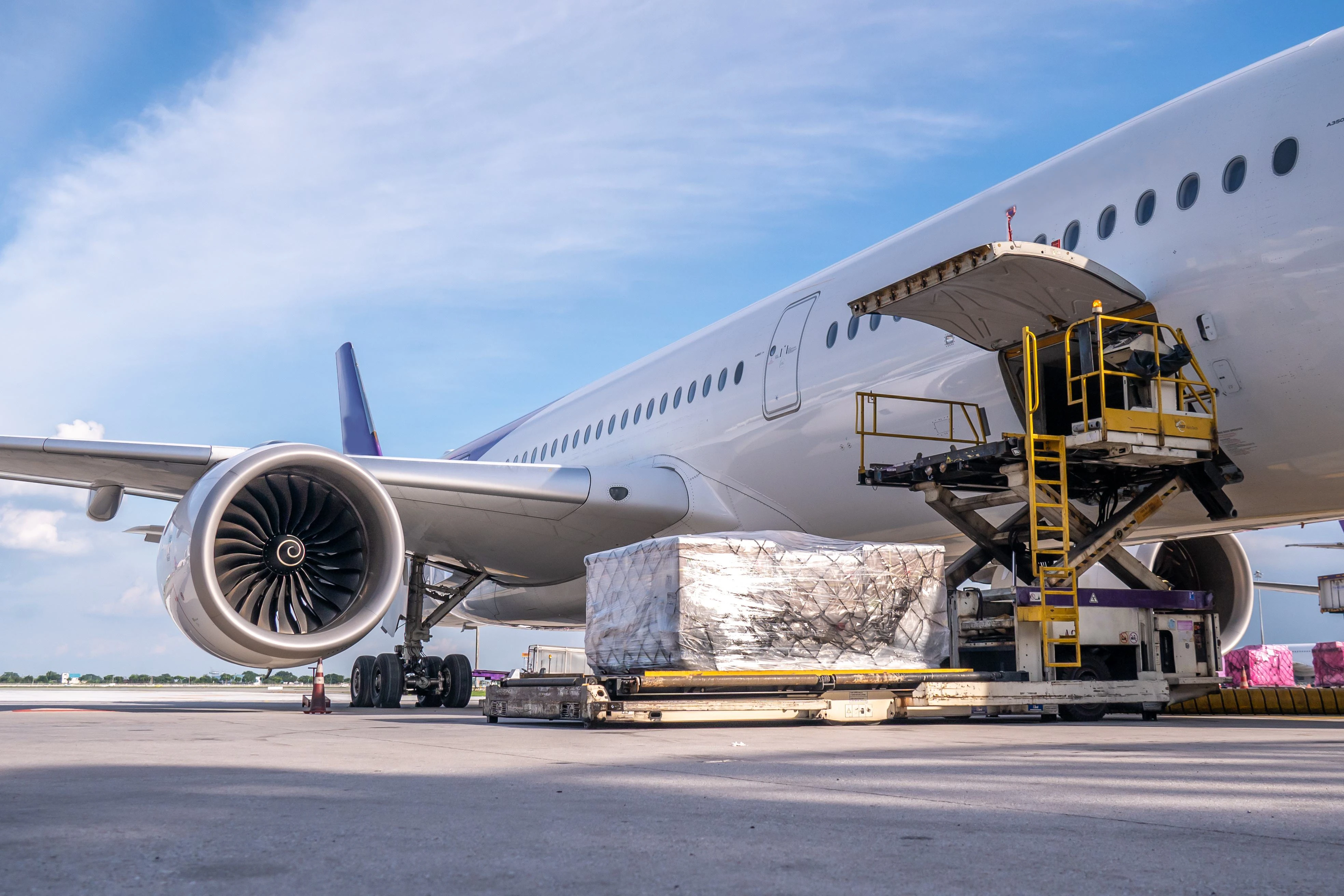
Airbus has secured eight orders for its soon-to-launch A350 freighter from an unnamed customer. The order for the eight freighters was secured on 31 August and was listed on the airframer's orders and deliveries report for the month. In total, Airbus has now secured orders for 115 A350 freighters from 15 customers. The order comes as Airbus prepares to start its test flight campaign for the model. Last month, Reuters reported that Airbus was hoping to carry out the first flight of the aircraft towards the end of September. Quoting industry sources, the newswire said the airframer is hopeful the first flight will take place on around 24 September, although there is always the chance that technical issues or inclement weather could push that date back into October. In response to questions from Air Cargo News, Airbus said: "The maiden flight is expected later in 2026, followed by the first delivery in the second half of 2027." Airbus is hoping to start to deliver the aircraft to customers by the end of next year, which would give it a maximum of 14 months to gain certification for the model. The company is targeting simultaneous certification from EASA and the FAA under the latest Amendment 27 safety regulations. The last order for the aircraft came in May when Cathay Cargo added an additional two Airbus A350 freighters to its existing order for six of the new-generation aircraft type. Also in May, Airbus and Air China Cargo confirmed the airline's purchase agreement for four A350Fs to add to its existing order of six. In March, Atlas Air also placed a "landmark" order for a total of 20 of the aircraft, with options for 20 more of the model. Meanwhile, last week, Boeing signed a letter of intent with Indian air cargo solutions company Afcom Holdings Limited for up to four of its rival Boeing 777-8 freighters. Rumours have also emerged that Ethiopian Airlines is reportedly considering purchasing up to 10 freighters from Boeing, including 777Fs and new generation 777-8Fs. However, in terms of total confirmed orders, Boeing has secured 81 orders for the 777-8F.
Source: aircargonews.net
Read more
CH Robinson warns of Asia cargo capacity shortages
CH Robinson has warned its customers to expect capacity shortages on certain lanes out of Asia in the second half of September. The forwarder said that quarter-end shipments, technology-related cargo, and a pre-holiday export push could "narrow departure options during the second half of the month", particularly on the transpacific and Asia-Europe trade lanes. There will also be an export push ahead of the Mid-Autumn Festival at the end of the month and China's National Day holiday from 1-7 October. The company added that the ongoing conflict in the Middle East continues to affect airspace availability and routing decisions. "Expect booking pressure to build during the middle of September and intensify ahead of the holiday period," CH Robinson said. "On affected Asia origins, the first indication of tightening may be earlier cutoffs and fewer workable flight options rather than an immediate market-wide rate increase." However, the company added that the tightening of capacity in September does not reflect a broad-based increase in general cargo demand, other than AI infrastructure. The biggest impact will be on services out of China, CH Robinson said, with market conditions outside of China depending on how airlines adjust freighter rotations or commercial allocations toward major China gateways. "Taiwan, South Korea, Japan, Vietnam, and Thailand should therefore be treated as origin-specific watchpoints," the forwarder said. "Each may see quarter-end or technology-related demand, but the timing and degree will vary. Belly capacity, airline allocations, local cargo mix, and gateway performance will determine which origins tighten first." General cargo will be the first affected by a tightening of capacity, with later flights or less direct services a likely outcome. Rates are also likely to rise: "On affected Asia export lanes, spot rates could begin to firm from mid-September as preferred flights fill," the forwarder added. "The change is unlikely to be uniform. Rates may rise first on the most sought-after flights rather than across every departure on the route."
Source: aircargonews.net
Read more
This website uses cookies and similar technologies, (hereafter “technologies”), which enable us, for example, to determine how frequently our internet pages are visited, the number of visitors, to configure our offers for maximum convenience and efficiency and to support our marketing efforts. These technologies incorporate data transfers to third-party providers based in countries without an adequate level of data protection (e. g. United States). For further information, including the processing of data by third-party providers and the possibility of revoking your consent at any time, please see your settings under “Consent Preferences” and our