We understand the ever changing needs of our customers

we provide a high level of service dedicated to fulfilling all your shipping requirements

Watch Video
Road Freight

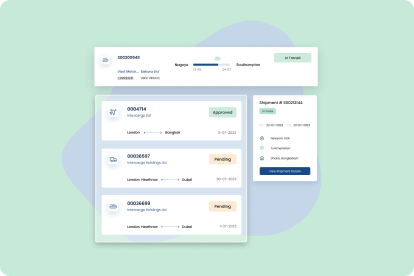
Keep all your data in one place which can be accessed from anywhere and anyplace

Let us help you 24/7 manage your supply chain needs

Back to Global Coverage

Algeria Freight Forwarding Services
Air & Sea Freight Between Algeria and the UK

Intercargo provides reliable freight forwarding services between Algeria and the United Kingdom, helping businesses import and export cargo efficiently by air and sea.

Whether you are importing goods from Algeria into the UK, exporting products from the UK to Algeria, or managing regular international shipments, our experienced freight forwarding team provides complete end-to-end logistics solutions. From collection and customs clearance to final delivery, we manage every stage of the shipment process.

Logistics solutions
Air Freight Algeria to UK
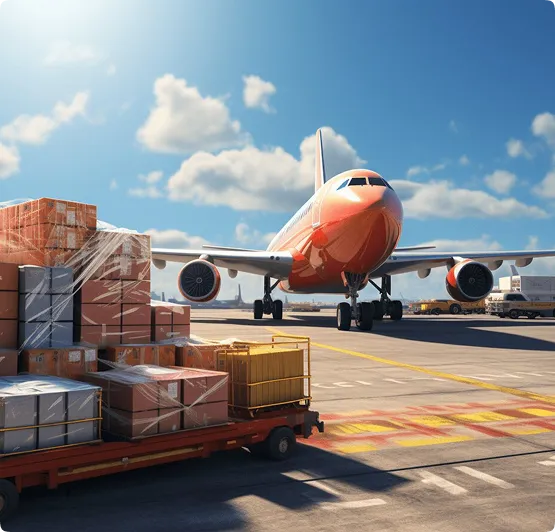
When speed matters, our Algeria air freight services provide fast, secure and reliable transportation between Algeria and the United Kingdom.
We arrange air freight through Houari Boumediene Airport (Algiers), Ahmed Ben Bella Airport (Oran), Mohamed Boudiaf International Airport (Constantine) and Rabah Bitat Airport (Annaba), with UK arrivals through London Heathrow, London Stansted, Manchester Airport, Birmingham Airport and East Midlands Airport.

Our air freight solutions include:

  • Air freight from Algeria to the UK
  • Express and economy air cargo
  • Door to door delivery
  • Time critical shipments
  • Air freight from the UK to Algeria
  • Airport to airport services
  • Customs clearance support
  • High value and commercial cargo

Whether you need urgent delivery of pharmaceuticals, electronics, automotive components, machinery, textiles, food products or commercial goods, our air freight specialists can provide the most efficient solution.
Logistics solutions
Sea Freight Algeria to UK
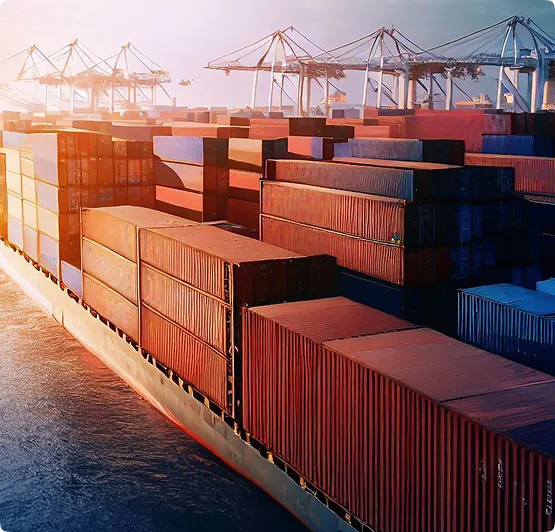
For larger shipments and cost effective transportation, our sea freight services provide dependable shipping solutions between Algeria and the UK.
We regularly arrange cargo movements through the Port of Algiers, Port of Oran, Port of Béjaïa, Port of Annaba and Port of Djen Djen, with UK arrivals through Port of Felixstowe, Southampton, London Gateway, Liverpool, Tilbury and Immingham.

Our sea freight services include:

  • Full Container Load (FCL)
  • Port to port shipping
  • Customs documentation
  • Project cargo
  • Less than Container Load (LCL)
  • Door to door logistics
  • Cargo insurance
  • Oversized and heavy lift shipments

Whether shipping machinery, construction materials, industrial equipment, chemicals, manufacturing products or commercial cargo, we can tailor a sea freight solution to suit your budget and transit requirements.
Logistics solutions
Import from Algeria to the UK
Intercargo helps UK businesses import products and cargo from Algeria through a fully managed freight forwarding service.

Our import services include:

  • Supplier coordination
  • Air and sea freight transportation
  • Duty and VAT guidance
  • Final delivery throughout the UK
  • Collection from Algerian factories, warehouses and commercial premises
  • UK customs clearance
  • Warehousing and distribution

We regularly support imports including:

  • Dates and agricultural products
  • Textiles and garments
  • Manufacturing components
  • Food and beverage products
  • Leather goods
  • Chemicals and petrochemical products
  • Industrial materials

Our experienced team ensures your cargo moves efficiently from Algeria to the UK while remaining compliant with all customs and import requirements.
Logistics solutions
Export from the UK to Algeria
We also help UK businesses export goods to customers, distributors and partners throughout Algeria.

Whether shipping to Algiers, Oran, Constantine, Annaba, Blida, Sétif or other commercial and industrial locations across Algeria, our export specialists can arrange a seamless freight solution by air or sea.

Our export services include:

  • Air freight exports
  • Export documentation
  • Cargo insurance
  • Commercial and industrial shipments
  • Sea freight exports
  • Customs compliance
  • Door to door delivery

From single shipments to regular freight movements, we provide scalable logistics solutions designed around your business requirements.
Logistics solutions
Customs Clearance & Freight Forwarding
Successful international shipping depends on accurate customs documentation and compliance.

Intercargo provides:

  • Import customs clearance
  • Commodity code guidance
  • Duty and tax assistance
  • End to end shipment visibility
  • Export customs clearance
  • Shipping documentation
  • Freight forwarding management

Our experienced freight forwarding team helps minimise delays and keeps your cargo moving smoothly between Algeria and the United Kingdom.
Logistics solutions
Why Choose Intercargo for Algeria Freight?
We support importers, exporters, manufacturers, distributors, retailers, construction companies and industrial businesses moving cargo between Algeria and the UK.
Air Freight And Sea Freight Specialists
Uk And Algeria Trade Lane Expertise
Import And Export Solutions
Customs Clearance Support
Door To Door Logistics
Dedicated Account Management
Global Carrier Network
Competitive Freight Rates
Get an Algeria Freight Quote

Looking for air freight from Algeria to the UK, sea freight from Algeria to the UK, or export services from the UK to Algeria?

Contact Intercargo today for a tailored freight forwarding quotation and expert advice on the most efficient shipping solution for your cargo.
Logistics solutions
Latest News & Updates

IATA calls for stronger approach to dangerous goods across the supply chain

IATA has called for more to be done across the supply chain to tackle the risks from undeclared and misdeclared dangerous goods. The airline association today published a whitepaper in which it argued for a stronger and more collaborative multilayered approach to dangerous goods. The call comes amid discussions among regulators on the role of existing aviation security screening processes as a key line of defence. "IATA stresses that security screening is an important layer of protection, but not a primary solution," the association said. IATA global head of cargo Brendan Sullivan added: "Dangerous goods are transported safely by air every day. The risk comes when they enter the system undeclared or incorrectly declared. "Every part of the supply chain has a role to play in identifying and stopping such incidents as soon as possible. Security screening, which is primarily focused on terror threats, is one layer of protection against rogue shippers, but it is not a complete solution. "A comprehensive multi-layer approach beginning as far upstream the supply chain as possible is essential." IATA said that Dangerous Goods Regulations enable the safe passage or properly declared shipments. However, the issue often stems from hidden items. Figures from the airline association show that in the first half of 2025, some 80% of incidents reported to IATA that involved dangerous goods stemmed from undeclared or hidden dangerous goods. "Lithium batteries and other concealed hazardous commodities, such as undeclared e-Cigarettes and aerosols, were among the products most commonly identified," IATA said. IATA said that existing security controls, including cargo screening, may provide an additional opportunity to identify anomalies and intercept some unauthorised dangerous goods. However, screening should not be regarded as the sole or primary solution. Current cargo screening technologies, certification standards, algorithms and training programmes were primarily developed to detect weapons, explosives and other security threats. Therefore, in the white paper, IATA urged governments to strengthen oversight and enforcement of dangerous goods requirements; Manufacturers and online marketplaces to ensure dangerous goods are correctly identified; shippers, freight forwarders, and postal operators to strengthen training and acceptance controls and enhance the use of customer and shipment data; airlines and ground handlers to strengthen checks before cargo is loaded; and airports to improve coordination and information sharing across the cargo community.

Source: aircargonews.net

Read more

Delays mount as port disruption in Asia ties up 3m teu of box capacity

A surge in vessel delays, driven by typhoons and port disruption in Asia, has left 8.5% of the global container fleet effectively unavailable. New analysis from Sea-Intelligence suggests this equates to some 3m teu of vessel capacity - a fleet roughly equivalent in size to that of the world's fifth-largest carrier. Schedule reliability fell to just below 50% in August, following an already sharp deterioration in July. Sea-Intelligence said reliability had fallen 12.7% over the two months, with only three periods since measurement began in 2011 recording a steeper decline. The average delay of vessels arriving late also increased, to 6.8 days, a level exceeded only during the worst disruptions of Covid. The consultancy said June-August had represented the largest two-month increase in vessel delays in its dataset. "The main driver of the worsening delays, and hence capacity absorption, is a continuing stream of typhoons impacting major ports in Asia," Sea-Intelligence explained. It argued that the impact on available capacity was particularly significant against the pre-pandemic baseline. Between 2011 and 2019, an average 2.2% of global capacity was absorbed by vessel delays. The current 8.5% represents a deviation of more than six percentage points, which Sea-Intelligence said was having a significant effect on the global supply/demand balance. The consultancy also warned that the congestion could persist well into next year. It explained that during the pandemic, capacity absorption from congestion peaked at 13.8%, before falling to 3.6%, over 16 months. During the Red Sea crisis, absorption reached 6.5% before declining to 3.7% within six months. Those episodes suggest congestion can improve by around 0.5-0.6 percentage points a month. Applying that recovery rate to current conditions, Sea-Intelligence estimated it could take seven to ten months for capacity absorption to return to the low point recorded in June 2025. And, by this calculation, a return just to the level at the end of 2025 could take six to eight months. And the analyst added: "The current situation is therefore unlikely to be fully resolved before Chinese New Year peak in 2027." That holiday falls on 6 February, meaning Asian ports could still be dealing with congestion as carriers and shippers prepare for the pre-CNY cargo surge. The consultancy said the extent to which the current disruption proved temporary, or developed into a more persistent constraint on capacity, would become clearer as the typhoon season and its effects on Asian port operations subsided.

Source: theloadstar.com

Read more

Slower demand growth emerging in Asia Pacific

Asia Pacific demand last month was dampened by a reduction of e-commerce parcels to Europe, although sustained volumes of AI-related goods helped airlines achieve a healthy year on year growth margin. Preliminary August traffic figures released by the Association of Asia Pacific Airlines (AAPA) found that international air cargo demand, as measured in freight tonne kilometres (FTK), grew by 1.1% year on year. This reflected a slower emerging pattern of growth since the EU ended the de minimis exemption on 1 July. Demand growth was up 1.1% year on year for July. In comparison, there was a 4.1% increase in April, a 2.5% increase in May, and a 3.2% increase in June. The AAPA said that "air cargo markets continued to benefit from rising export activity and brisk demand for AI-related goods, although e-commerce shipments to Europe showed some weakness following the introduction of charges on small parcels". Meanwhile, offered freight capacity expanded by 1.6%. As a result of the demand and capacity changes, the average international freight load factor fell by 0.3 percentage points to 59.3% for the month. Wong Hong, director general of AAPA, said that international "air cargo demand rose by a strong 5.5%"over the first eight months of the year, However, he added that elevated jet fuel prices, airspace restrictions and weaker Asian currencies are raising costs, meaning airlines have faced profitability challenges. Airlines also have to contend with geopolitical developments and changes in trade policies. Despite this, Hong said regional economic growth and trade activity should continue to support air cargo demand "although growth is likely to remain uneven across markets".

Source: aircargonews.net

Read more

Privacy Preference Center

This website uses cookies and similar technologies, (hereafter “technologies”), which enable us, for example, to determine how frequently our internet pages are visited, the number of visitors, to configure our offers for maximum convenience and efficiency and to support our marketing efforts. These technologies incorporate data transfers to third-party providers based in countries without an adequate level of data protection (e. g. United States). For further information, including the processing of data by third-party providers and the possibility of revoking your consent at any time, please see your settings under “Consent Preferences” and our


Privacy Notice


Privacy Preference Center

Strickly Necessary Cookies
Always Active

Performance Cookies

Functional Cookies

Targeting Cookies