We understand the ever changing needs of our customers

we provide a high level of service dedicated to fulfilling all your shipping requirements

Watch Video
Road Freight

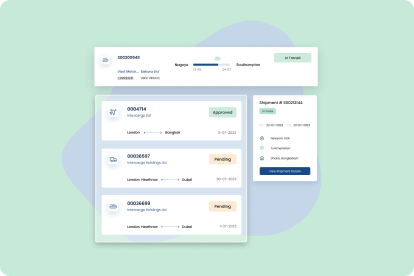
Keep all your data in one place which can be accessed from anywhere and anyplace

Let us help you 24/7 manage your supply chain needs

Back to Blogs

Customs Clearance Explained: A Guide for Importers and Exporters

Moving goods internationally involves more than arranging transportation from one country to another. Whether your shipment travels by air freight, sea freight or road freight, it may need to complete customs procedures before it can continue its journey.
For importers and exporters, understanding customs clearance is an important part of keeping international shipments moving efficiently.
Incorrect documentation, inaccurate commodity information or unexpected customs requirements can potentially result in delays and additional costs. Good preparation, on the other hand, can make the customs process considerably smoother.

In this guide, we explain what customs clearance is, how the process works and what businesses should consider when importing or exporting goods.
Logistics solutions
What Is Customs Clearance?
Customs clearance is the process of completing the necessary customs formalities when goods enter or leave a country or customs territory.
Customs authorities use information supplied about a shipment to determine whether the goods can enter or leave, whether restrictions apply and what duties or taxes may be payable.
The exact requirements depend on several factors, including:
  • The goods being transported
  • Their value
  • Their origin
  • Their destination
  • Their commodity classification
  • The reason for import or export
  • Applicable customs procedures
  • Any licences or restrictions

This means customs clearance should be considered before goods are dispatched rather than only when they reach the border.
For official guidance on importing goods into the UK, businesses can also refer to GOV.UK import guidance.
Logistics solutions
How Does Customs Clearance Work?
Although every shipment is different, customs clearance will generally involve providing information about the goods and submitting the appropriate customs declaration.

The process can include:
Shipment information → Documentation → Commodity classification → Customs declaration → Duties and taxes where applicable → Customs checks → Release of goods

Customs authorities may review the information submitted and, in some circumstances, request additional documentation or inspect the goods.
Once the relevant requirements have been satisfied and the shipment has been released, the goods can continue to their destination.
Logistics solutions
Why Is Customs Clearance Important?
Customs clearance is a fundamental part of international freight.
Without the correct customs procedures, goods may not be released for import or permitted to leave for export.
For businesses, problems with customs can affect much more than a single shipment. Delays may interrupt production, create stock shortages, affect customer deliveries or result in additional storage and handling costs.
Accurate information and good preparation can therefore play an important role in maintaining a reliable international supply chain.
Logistics solutions
What Documents Are Needed for Customs Clearance?
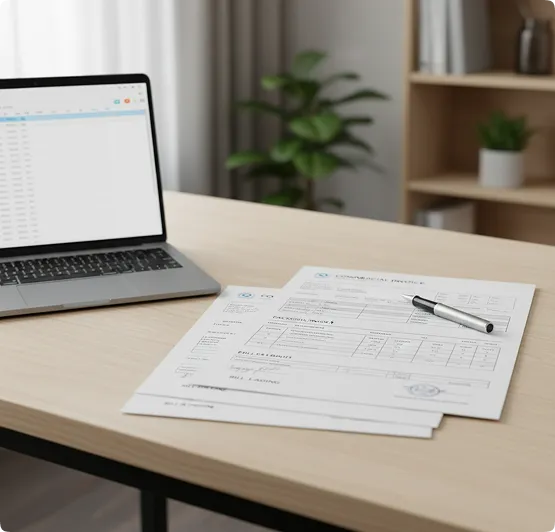
The documentation required will vary according to the shipment, but businesses commonly need to provide documents such as:

  • Commercial invoice
  • Packing list
  • Transport documentation
  • Commodity information
  • Country of origin information
  • Import or export licences where required
  • Certificates where applicable

For sea freight, transport documentation may include a Bill of Lading, while air freight shipments commonly use an Air Waybill.
The commercial invoice is particularly important because it provides key information about the transaction and goods.
Details should be complete and consistent across the relevant documentation.
Logistics solutions
What Is a Commodity Code?
Commodity codes are used to classify goods for customs purposes.
The correct classification can help determine the customs treatment of a product, including applicable duties and whether particular controls or requirements apply.
Choosing a commodity code shouldn't simply be a matter of selecting a description that appears roughly similar to the product.
Businesses need to understand exactly what they are importing or exporting and ensure their goods are classified appropriately.
Product details such as the material, function, composition and intended use may all be relevant when determining the correct classification.
Businesses importing or exporting through the UK can use the UK Trade Tariff to search for commodity codes and relevant tariff information.
Logistics solutions
What Are Customs Duties?
Customs duty is a charge that may apply when goods are imported.
Whether duty is payable and the amount charged can depend on factors including the type of product, its customs value, its origin and the applicable tariff treatment.
Not every shipment will be treated in the same way.
Businesses importing goods should therefore understand the potential customs costs before completing a purchase or agreeing a selling price.
Unexpected duty can have a significant effect on the final landed cost of imported goods.
Check UK tariffs and commodity codes
Logistics solutions
What Is Import VAT?
Import VAT may also apply when goods are imported.
This is separate from customs duty and businesses should account for it when calculating the overall cost of an international shipment.
Depending on the country, business and customs procedure involved, different arrangements may be available for accounting for import VAT.
Importers should understand their obligations before the goods arrive rather than discovering an unexpected tax liability during clearance.
UK businesses can find further information through GOV.UK guidance on VAT and overseas goods.
Logistics solutions
Why Does the Value of Goods Matter?
The declared customs value is an important part of customs clearance.
Customs authorities use valuation information when assessing duties and taxes, so businesses need to provide accurate values supported by appropriate documentation.
Deliberately undervaluing goods to reduce customs charges can create serious compliance problems.
Importers and exporters should ensure invoices and declarations accurately reflect the relevant transaction and follow the applicable customs valuation rules.
Logistics solutions
What Is an EORI Number?
An Economic Operators Registration and Identification (EORI) number is used to identify businesses when interacting with customs authorities.
For UK businesses involved in importing or exporting, checking whether the appropriate EORI registration is in place should be one of the early steps when preparing to trade internationally.
Without the required registration, customs processing can become more difficult and shipments may be delayed.
Businesses can check whether they need an EORI number through GOV.UK.
Logistics solutions
Who Is Responsible for Customs Clearance?
Responsibility will depend on the commercial arrangement between the buyer and seller.
This is one reason Incoterms® are important in international trade.
The agreed Incoterm helps define responsibilities between the buyer and seller for areas such as transportation, costs, risk and certain customs obligations.
Businesses should therefore understand the Incoterm agreed with their supplier or customer before goods are shipped.
Assuming the other party is dealing with customs without confirming the arrangement can lead to delays, unexpected charges and disputes.
More information about Incoterms® rules is available from the International Chamber of Commerce.
Logistics solutions
What Can Cause Customs Delays?
There are many reasons why a shipment might experience difficulties during customs clearance.
Common problems can include:
  • Missing documentation
  • Incorrect commodity codes
  • Incomplete product descriptions
  • Inconsistent shipment information
  • Incorrect declared values
  • Missing licences or certificates
  • Questions regarding the origin of goods
  • Unpaid duties or taxes
  • Customs inspections
  • Incorrect importer or exporter information

Some customs checks cannot be avoided, but many administrative problems can be reduced through accurate documentation and preparation.
Logistics solutions
How Can Businesses Make Customs Clearance Smoother?
The best time to deal with customs requirements is before the shipment leaves.
Importers and exporters should establish what information and documentation will be required and make sure the details are accurate.
Before shipping, consider checking:
What exactly are the goods? What is their commodity code? What are they worth? Where did they originate? Are any licences required? Who is responsible for import clearance? Are duties and taxes expected?
Answering these questions in advance can help identify potential problems before the goods reach customs.
Logistics solutions
Customs Clearance for Air Freight
Air freight is often chosen because speed is important.
That makes efficient customs clearance particularly valuable.
There is little benefit in transporting an urgent shipment internationally by air if incomplete documentation causes it to be delayed after arrival.
Businesses using air freight should therefore prepare customs information alongside the transportation arrangements rather than treating clearance as a separate final step.
Logistics solutions
Customs Clearance for Sea Freight
Sea freight provides more time in transit, but customs preparation remains equally important.
Importers should ensure the necessary documentation and information are available before the vessel arrives at the destination port.
Delays after arrival can potentially result in additional port, storage or equipment related costs, depending on the circumstances.
Preparing clearance arrangements early can help reduce unnecessary disruption once the goods arrive.
Explore Intercargo's international freight services.
Logistics solutions
Why Use a Freight Forwarder for Customs Clearance?
International customs procedures can be complicated, particularly for businesses moving different products across multiple markets.
Working with an experienced international freight forwarder can make it easier to coordinate transportation and customs requirements as part of the same shipment.
A freight forwarder can help businesses understand what information is required, coordinate customs clearance and identify potential issues before they become delays.
However, importers and exporters should still maintain accurate information about their products and understand their own customs responsibilities.
Good customs clearance depends on cooperation between everyone involved in the shipment.
Logistics solutions
Customs Clearance Services With Intercargo Logistics
Intercargo Logistics helps businesses coordinate customs clearance alongside their international freight requirements.
Whether goods are travelling by air freight, sea freight, road freight or another transport solution, having the correct customs arrangements in place can help reduce avoidable delays and keep the supply chain moving.
Intercargo's wider freight and logistics services include:
  • Air freight
  • Sea freight
  • Road freight
  • Rail freight
  • Customs clearance
  • Warehousing
  • Project cargo
  • Aircraft charter
  • Dangerous goods services
  • International freight forwarding
Logistics solutions
Need Help With Customs Clearance?
If you're planning an international shipment and need support with customs clearance, speak to Intercargo Logistics.
Provide details of your goods, their origin and destination, commodity information and shipment requirements so the appropriate freight and customs arrangements can be considered.
Contact Intercargo Logistics to discuss your customs clearance and international freight requirements.
Read more freight and logistics guides.
Logistics solutions

Privacy Preference Center

This website uses cookies and similar technologies, (hereafter “technologies”), which enable us, for example, to determine how frequently our internet pages are visited, the number of visitors, to configure our offers for maximum convenience and efficiency and to support our marketing efforts. These technologies incorporate data transfers to third-party providers based in countries without an adequate level of data protection (e. g. United States). For further information, including the processing of data by third-party providers and the possibility of revoking your consent at any time, please see your settings under “Consent Preferences” and our


Privacy Notice


Privacy Preference Center

Strickly Necessary Cookies
Always Active

Performance Cookies

Functional Cookies

Targeting Cookies