We understand the ever changing needs of our customers

we provide a high level of service dedicated to fulfilling all your shipping requirements

Watch Video
Road Freight

Keep all your data in one place which can be accessed from anywhere and anyplace

Let us help you 24/7 manage your supply chain needs

Back to Blogs

Air Freight vs Sea Freight: Which Is Right for Your Business?

When importing or exporting goods internationally, one of the most important decisions you'll make is how your cargo gets from origin to destination. For many businesses, the choice comes down to two options: air freight or sea freight.

Both play an important role in international trade, but they offer very different advantages when it comes to speed, cost, capacity and flexibility. The right choice will depend on your shipment, your deadlines and the priorities of your business.

In this guide, we compare air freight and sea freight to help importers and exporters decide which option is best for their next shipment.
Logistics solutions
What Is Air Freight?
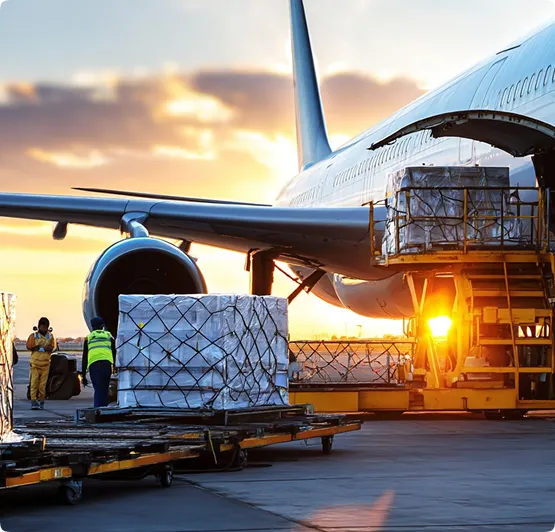
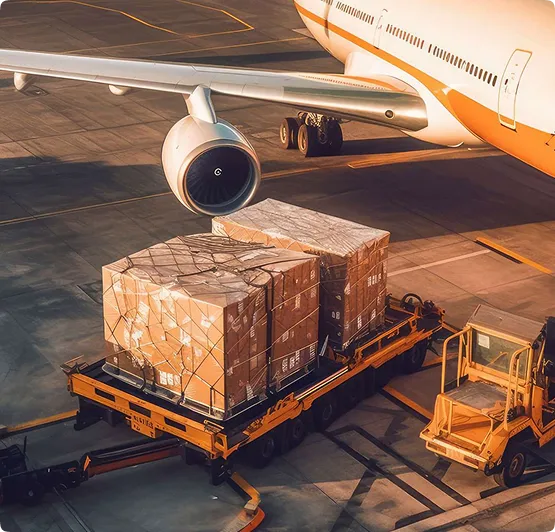
Air freight is the transportation of goods by aircraft, typically through commercial cargo capacity or dedicated freighter services.
Its biggest advantage is speed. Goods can move between major international markets in a matter of days, making air freight particularly valuable for businesses dealing with urgent, time sensitive or high value shipments.

Air freight can be suitable for products such as:

  • Electronics and technology
  • Fashion and seasonal goods
  • Automotive components
  • Pharmaceuticals and medical supplies
  • High value products
  • Samples and prototypes
  • Urgent replacement parts
For importers and exporters working to tight deadlines, the shorter transit times offered by air freight can make a significant difference.
Explore Intercargo's air freight services
Logistics solutions
What Is Sea Freight?
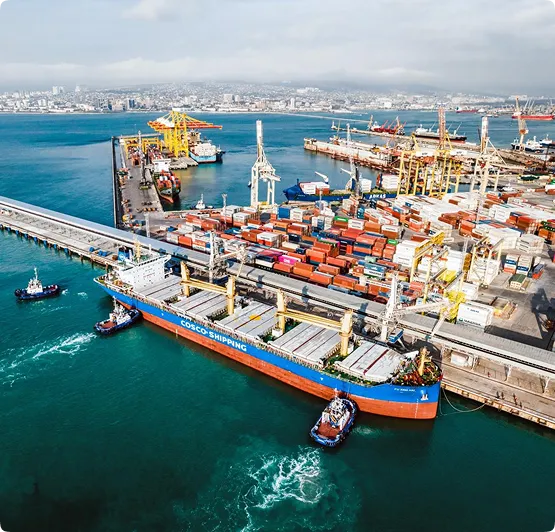
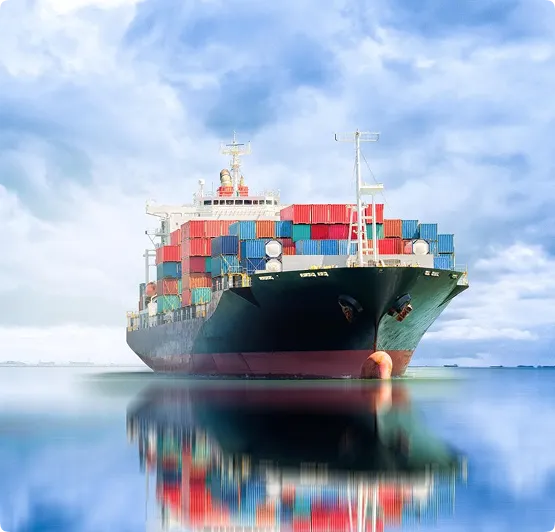
Sea freight transports goods internationally aboard container ships and is one of the most widely used methods of moving cargo around the world.
Businesses can typically ship using a Full Container Load (FCL) when they have enough cargo for a dedicated container, or a Less than Container Load (LCL) service when their goods share container space with other shipments.
Common examples include:

  • Machinery
  • Furniture
  • Raw materials
  • Building products
  • Large quantities of consumer goods
  • Palletised & bulk cargo
For businesses moving significant volumes internationally, sea freight offers an economical way to transport goods over long distances.
Explore Intercargo's international freight services.
Logistics solutions
Air Freight vs Sea Freight: What's the Difference?

The most appropriate transportation method depends on the type of shipment, its destination, required delivery time and handling requirements.

Speed
Speed

When speed is the priority, air freight is usually the clear choice.
International air freight can significantly reduce transit times compared with shipping goods by sea. This can be crucial when stock is urgently required, production is waiting for components or products need to reach customers within a specific timeframe. Sea freight takes considerably longer and can involve several weeks of transit depending on the origin, destination, route and service. For businesses with flexible supply chains and sufficient inventory planning, this may not be an issue. For urgent shipments, however, air freight is often more practical.

Cost
Cost

Sea freight will generally be more economical for large, heavy or high volume shipments.
Air freight is typically more expensive because aircraft have much more limited cargo capacity and higher operating costs.
Air freight charges can also be influenced by both the actual and volumetric weight of a shipment.
However, freight cost should not always be considered in isolation. A faster shipment may help a business avoid production delays, replenish stock sooner, fulfil urgent customer orders or reduce the amount of inventory held within its supply chain. The cheapest freight rate does not necessarily represent the lowest overall cost to the business.

Capacity
Capacity

For very large shipments, sea freight has a major advantage.
Shipping containers can accommodate substantial quantities of cargo, making ocean transport suitable for businesses moving heavy equipment, large numbers of pallets or regular high volume shipments.
Aircraft have stricter weight, size and capacity limitations.
This means air freight is generally better suited to smaller, lighter and higher value shipments where speed justifies the additional transportation cost.

Reliability & Planning

Both air and sea freight can provide reliable international transport when shipments are properly planned.
Air freight generally operates over much shorter transit periods, which can make it attractive for businesses with tight supply chains or limited tolerance for long lead times.
Sea freight requires more forward planning because of its longer transit times. Importers need to consider sailing schedules, port operations, customs clearance and onward transportation when calculating the complete lead time.
Whichever method you choose, allowing sufficient time for documentation and customs procedures remains essential.

When Should You Choose Air Freight?
Air freight may be the better option when:
  • Your shipment is urgent
  • Delivery deadlines are tight
  • The goods are relatively small, lightweight
  • Products have a high value relative to their size
  • Stock shortages could affect sales
  • Components are needed to keep production moving
  • You're launching a time-sensitive product
  • Faster transit provides greater commercial value than the extra freight cost

Imagine, for example, that a manufacturer is waiting for a critical component before production can continue. Sea freight may offer a lower transportation cost, but several weeks of lost production could cost substantially more than sending the component by air. In situations like this, speed becomes a commercial advantage rather than simply a transport feature.
View Intercargo's air freight solutions.
Logistics solutions
When Should You Choose Sea Freight?
Sea freight may make more sense when:
  • You're transporting large volumes
  • Cargo is particularly heavy
  • Delivery dates are flexible
  • Your supply chain can accommodate longer lead times
  • Minimising transportation cost is a priority
  • You're shipping regular container loads (FCL or LCL) internationally

With effective forecasting and inventory management, businesses can take advantage of the economies offered by sea freight without creating unnecessary stock shortages.
Explore Intercargo's freight and logistics services.
Logistics solutions
Can You Use Air and Sea Freight Together?
Absolutely.
For many importers and exporters, the best solution isn't choosing one method exclusively.
A business might transport the majority of its regular inventory by sea while using air freight for urgent replenishment, product launches or unexpected increases in demand.
This approach can provide a balance between cost efficiency and supply chain flexibility.
For example, if a container of stock is already travelling by sea but demand suddenly increases, a smaller quantity could potentially be sent by air to maintain availability until the main shipment arrives.
A freight strategy should therefore consider the needs of individual shipments rather than automatically using the same transport method every time.
For more complex movements, an international freight forwarder can help coordinate different transport methods within the same supply chain.
Logistics solutions
Air Freight Vs Sea Freight: Which Should You Choose?
There is no single answer that works for every shipment.
If your priority is speed, shorter lead times and getting urgent goods to their destination quickly, air freight is likely to be the better choice.
If your priority is moving larger volumes economically and your delivery schedule allows for longer transit times, sea freight will often make more sense.

The key is understanding the complete requirements of your shipment, including:
What are you shipping? How much does it weigh? How much space does it occupy? When does it need to arrive? What happens if it arrives late?
Those questions can reveal much more than simply comparing two freight rates.
Logistics solutions
Need Help Choosing Between Air and Sea Freight?
At Intercargo Logistics, we help businesses manage international freight movements and find solutions suited to their cargo, timescales and supply chain requirements.
Whether you need the speed of air freight, the capacity of sea freight or a combination of both, our team can help you assess the available options and plan your shipment from origin to destination.
You can also explore our wider international freight and logistics services or read more advice on the Intercargo blog.
Planning an international shipment? Contact Intercargo Logistics to discuss your air and sea freight requirements and find the right solution for your business.
Logistics solutions

Privacy Preference Center

This website uses cookies and similar technologies, (hereafter “technologies”), which enable us, for example, to determine how frequently our internet pages are visited, the number of visitors, to configure our offers for maximum convenience and efficiency and to support our marketing efforts. These technologies incorporate data transfers to third-party providers based in countries without an adequate level of data protection (e. g. United States). For further information, including the processing of data by third-party providers and the possibility of revoking your consent at any time, please see your settings under “Consent Preferences” and our


Privacy Notice


Privacy Preference Center

Strickly Necessary Cookies
Always Active

Performance Cookies

Functional Cookies

Targeting Cookies